Tips & Advice
Best Security System for Chula Vista Homes: Wired vs Wireless
Key Takeaways
- The choice between wired and wireless security systems in Chula Vista depends primarily on home age, wall construction type, and HOA restrictions - not personal preference alone.
- Older homes near Hilltop Drive, Third Avenue, and Castle Park almost always benefit from wireless systems due to plaster walls and limited attic access that make wired installation costly.
- New construction in Otay Ranch and Millennia often has accessible wall cavities or pre-run conduit, making wired systems more practical and cost-effective in those communities.
- Every Chula Vista security system should include cellular backup monitoring - Wi-Fi-only systems can be disabled by power outages or router disruptions, leaving the home unprotected.
- Wired systems typically cost $800-$2,500 installed while wireless systems start at $300-$1,200, but monthly monitoring fees of $15-$45 should factor into the total cost comparison.
- HOA rules in communities like Otay Ranch and Eastlake restrict camera placement and visible wiring, making wireless systems the standard choice for those managed communities.
- Chula Vista's false alarm ordinance charges fees of $100 or more per incident after repeated unverified police responses, making professional monitoring with verification calls a practical financial safeguard.
- Smart Shield Systems conducts an in-home assessment before recommending any system, checking entry points, wall construction, Wi-Fi coverage, and HOA documentation to match the right solution to each specific home.
In This Article
A homeowner in Eastlake got the call no neighbor wants to receive. The house two doors down had been broken into on a Tuesday afternoon, and by Wednesday morning, she was on the phone asking one question: should she get a wired or wireless security system? It is a fair question, and the answer depends on more than just personal preference. The age of her home, the rules in her HOA, and even the construction of her walls all play a role in which system will actually work best.
Chula Vista is not a single neighborhood - it is a collection of very different communities, from older bungalows near Third Avenue to sprawling new builds in Otay Ranch and Millennia. Each of those communities has its own installation realities, and a system that works beautifully in one home can be the wrong call in another just a few miles away.
Let's walk Chula Vista homeowners through the real differences between wired and wireless security systems. It covers what affects that choice locally, how the housing stock across South San Diego shapes the decision, and how Smart Shield Systems helps families across Chula Vista find the right fit for their specific home - not just the most popular option on the market.
What are The Best Security System for Chula Vista Homes?
Chula Vista homeowners have several strong options available, but not every system suits every home. The table below shows the top-performing security system types for this area, rated across the factors that matter most locally - including HOA compatibility, installation complexity, and monitoring options.
| System Type | Best For | Avg. Install Cost | Monthly Monitoring | HOA Friendly | Cellular Backup |
|---|---|---|---|---|---|
| Hardwired with Professional Monitoring | New construction in Otay Ranch, Millennia | $800 - $2,500 | $25 - $45/mo | Varies by HOA | Yes (with add-on) |
| Wireless with Cellular Backup | Older homes near Hilltop, Castle Park, condos | $300 - $1,200 | $15 - $40/mo | Yes | Yes |
| Hybrid Wired/Wireless | Mid-age homes in Eastlake, Rolling Hills Ranch | $900 - $2,000 | $25 - $45/mo | Yes (with planning) | Yes |
| Wireless Self-Monitored | Budget-conscious renters, small condos | $150 - $600 | $0 - $15/mo | Yes | Sometimes |
| Video-First System with Smart Integration | Corner lots, busy streets like Olympic Parkway | $500 - $1,800 | $20 - $45/mo | Usually yes | Yes |
These ranges reflect real installations Smart Shield Systems has completed across Chula Vista. The right pick depends heavily on home type and neighborhood - something the sections below cover in detail.
Why Chula Vista Homes Have Unique Security Needs
Chula Vista home security is not a one-size-fits-all topic. The city stretches from the bayfront all the way east past the Otay Lakes, and the homes along that corridor are wildly different in age, layout, and construction. A security installer who treats a 1960s ranch home on F Street the same as a 2022 build in Otay Ranch Village 13 is going to make the wrong recommendation every time.
South Bay San Diego also has specific geographic factors that shape security needs. The proximity to the US-Mexico border corridor means that property crime patterns here differ from what you see in North County communities like Carlsbad or Escondido. HOA rules in newer master-planned communities add another layer of complexity that does not exist in older, unincorporated-style streets west of I-805.
Getting the right system means starting with the neighborhood, not the equipment catalog.
Older Neighborhoods vs. New Developments: How Construction Age Changes Everything
Homes near F Street and Broadway built in the 1950s through 1970s present real challenges for wired security installation. Plaster walls, cramped attic spaces, and no pre-run conduit make fishing new low-voltage wire both slow and expensive. A job that takes three hours in a 2018 Eastlake Greens home can take eight hours or more in an older Chula Vista home - and cost significantly more.
Newer builds in Eastlake Greens or the Village of Montecito are a different story. Builders often run low-voltage wire during construction, leaving accessible wall cavities and clear pathways from panel to sensor locations. In those homes, hardwired sensors are often the more practical and cost-effective choice.
The age of a home's construction is usually the single biggest factor in the wired-vs-wireless decision. Smart Shield Systems checks this before recommending anything.
HOA Restrictions in Communities Like Otay Ranch and Eastlake
Many Chula Vista HOAs - including those managing homes near Olympic Parkway and Hunte Parkway - have CC&R rules about exterior camera placement, visible wiring, and mounting hardware on facades. Some HOAs require that cameras be mounted only at approved locations or that wires be concealed within conduit. Violating those rules can result in fines or forced removal.
Wireless systems are almost always the cleaner answer for HOA-controlled communities because they require no exterior wiring runs. But even wireless cameras need to be positioned in HOA-approved locations. Smart Shield Systems reviews HOA documentation before any install so homeowners are not caught off guard after the job is done.
If a homeowner is not sure what their HOA allows, checking the CC&Rs or contacting the management company before scheduling an install is the right first move.
Crime Patterns Near the I-805 and SR-54 Corridors
From working regularly in neighborhoods near the I-805 interchange, Castle Park, and the Palomar Street area, Smart Shield Systems has seen firsthand that residential burglaries in those zones tend to happen during daylight hours - often mid-morning when homes are empty. That pattern makes rapid alarm response and reliable cellular backup more important than it might be in lower-risk areas.
The SR-54 corridor, particularly near the National City border, also sees higher foot traffic from non-residential areas, which can translate into opportunistic property crime on nearby residential streets. Homeowners in these areas benefit most from systems that do not rely solely on home Wi-Fi, since a downed connection should never mean a downed alarm.
Local knowledge like this shapes how Smart Shield Systems approaches every install in the South Bay area.
Need Help in San Diego?
Smart Shield Systems serves San Diego and all of San Diego County.
Get Your Free Quote
Tell us about your property and we'll get back to you fast.
How Wired Security Systems Actually Work in a Home
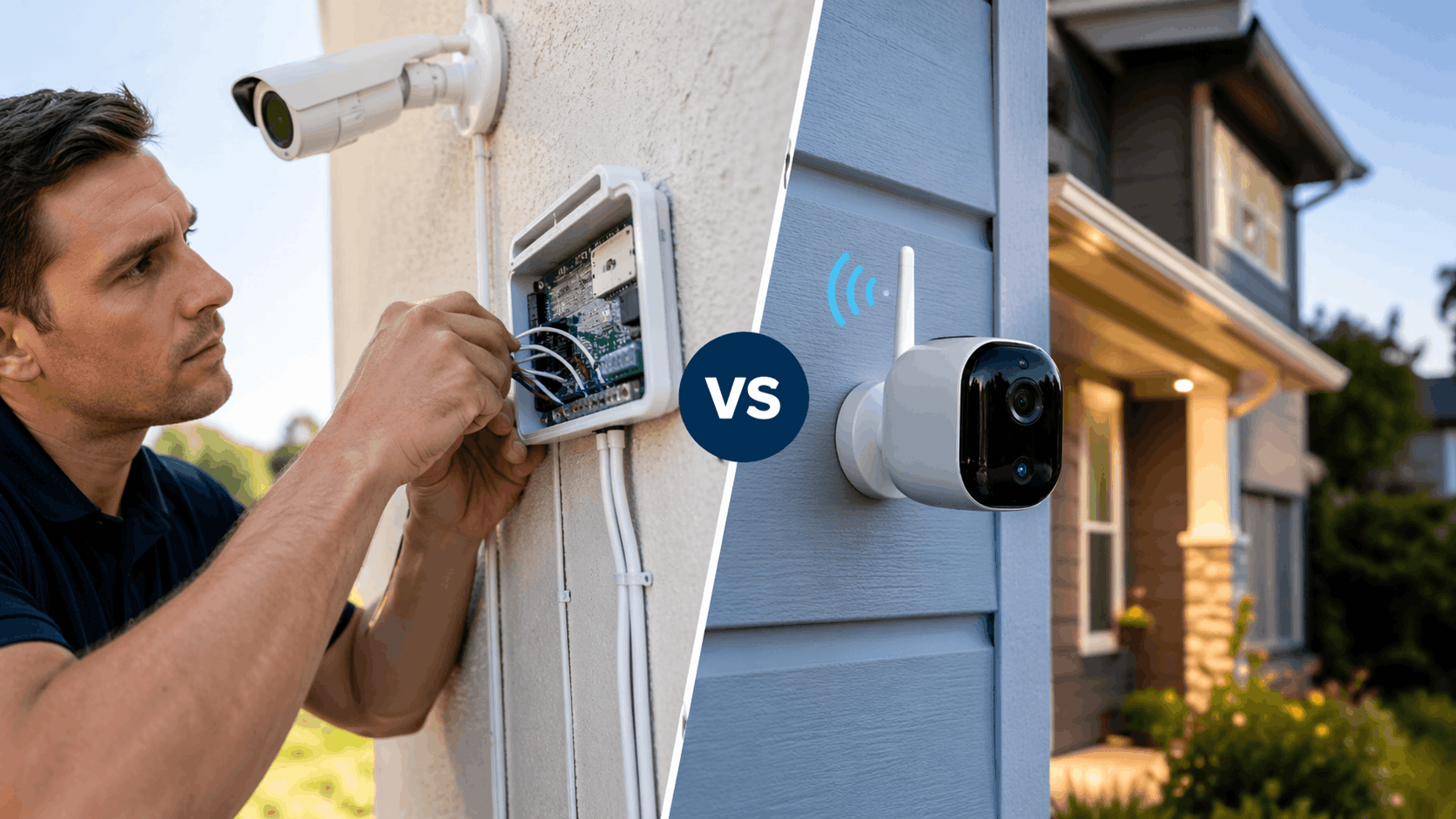
A wired security system runs physical cable from each sensor location back to a central control panel - typically installed in a closet, utility room, or garage. Each door contact, window sensor, and PIR motion detector connects to the panel via dedicated low-voltage wire. When a sensor trips, the signal travels instantly along that wire to the panel, which then triggers the alarm or sends a signal to the monitoring center.
There is no radio frequency involved, no batteries in the sensors, and no wireless interference to worry about. The system either works or it does not - and when it is installed correctly, it almost always works.
For many Chula Vista homeowners, the wired system's reliability over time is the biggest selling point. The drawback is the installation process, which is more involved than a wireless setup.
The Components: What Gets Installed and Where
A standard wired system in a neighborhood like Rice Canyon or Rolling Hills Ranch includes hardwired door and window contacts at every ground-floor entry point, PIR motion detectors in main living areas and hallways, a central control panel (usually in a utility closet or garage), one or two keypads near entry doors, and an interior or exterior siren.
The control panel is the brain. All sensor wires run to it, and it connects to the monitoring center via phone line, broadband, or cellular communicator. The wired door sensors are small magnetic contacts - one piece mounts on the door, one on the frame - and the wire runs through the wall cavity back to the panel.
Motion detector placement matters a lot. Installing them in corners at roughly 6-7 feet high gives the broadest coverage without generating false triggers from pets or HVAC vents.
Installation Time and What Homeowners Should Expect
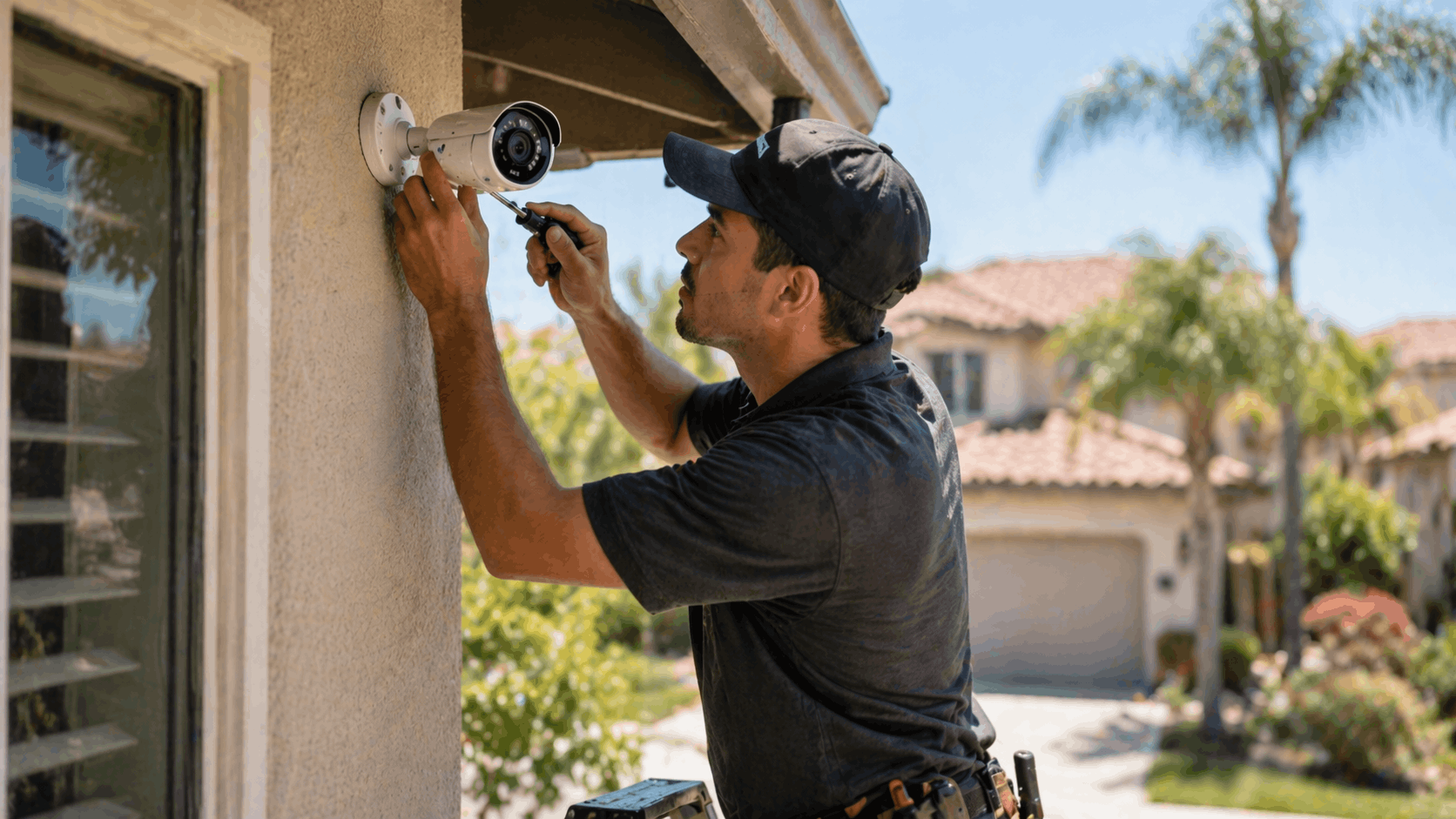
Honest answer: wired installation is a real construction project. The team will drill through walls, fish wire through wall cavities or attic spaces, mount hardware at each sensor location, and run wire back to the panel location. For a standard three-bedroom Chula Vista home with accessible attic space, that process takes 4-8 hours.
Older homes near Broadway can run longer if attic access is limited or walls are plaster rather than drywall. Homeowners should expect some patching or touchup work after wire runs, though a skilled installer minimizes visible disruption.
Certain wired security installations - particularly those involving new low-voltage wiring runs in finished spaces - may require a permit through the City of Chula Vista Development Services Department. Smart Shield Systems handles permit coordination when needed so homeowners are not navigating that process alone.
Power and Backup: What Happens During an Outage
Wired systems draw power from household current, with a battery backup unit built into the control panel. That backup battery typically provides 4-24 hours of operation depending on the panel and battery size. The industry standard recommendation is at least 24 hours of backup capacity.
In Chula Vista, this matters during Santa Ana wind season. SDG&E outages during high-wind events can last several hours, and a system without adequate battery backup will go offline at exactly the moment it is most needed. When asking about a wired system, homeowners should confirm the backup battery capacity and whether the system sends a low-battery notification to the monitoring center.
A good rule of thumb: ask for a panel with at least a 24-hour backup battery and verify that the cellular communicator has its own separate backup power as well.
How Wireless Security Systems Work and Why They Have Grown Popular
Wireless security systems use radio frequency (RF) or Z-Wave protocols to communicate between sensors and a central hub. Each sensor has its own small radio transmitter that sends a signal to the hub when it is triggered. The hub then decides whether to sound the alarm, notify the homeowner via app, or contact the monitoring center - or all three at once.
The rise in popularity is easy to understand. Installation is faster, less disruptive, and works in homes where running new wires would be either impossible or prohibitively expensive. Residential alarm system installation using wireless components has become the go-to solution for a wide range of Chula Vista home types.
The trade-off is ongoing battery management and the need for a system that stays connected to its monitoring center even when the home's internet goes down.
How Wireless Sensors Communicate With the Hub
Z-Wave is one of the most common communication protocols used in modern wireless security systems. It operates on the 908 MHz frequency band, which is separate from Wi-Fi and less prone to interference from other household devices. Typical range is 30-100 feet between sensor and hub, but walls reduce that range.
Chula Vista's newer stucco-heavy construction in communities like Millennia and Otay Ranch West can reduce wireless signal strength more than standard drywall construction. Stucco with wire mesh backing is particularly problematic. In those homes, sensor placement needs to account for signal path - keeping the line-of-sight between sensor and hub as clear as possible and avoiding installation on exterior stucco walls where signal loss is highest.
This is something Smart Shield Systems tests during the pre-installation walkthrough, not after the sensors are already mounted.
Wi-Fi Dependency vs. Cellular Backup: A Real Difference
Not all wireless security systems are created equal when the internet goes down. Systems that rely solely on home Wi-Fi to communicate with the monitoring center are vulnerable to a very simple attack - cutting the power or unplugging the router disables the alarm's connection to help. That is not theoretical; it is a known tactic.
Cellular backup-equipped systems use a separate cellular communicator to reach the monitoring center, completely independent of the home's internet connection. Even during an SDG&E outage or a deliberate router disruption, the system stays online. This matters in neighborhoods where Chula Vista Police Department response times can vary based on call volume and district coverage.
Any wireless system worth installing in Chula Vista should have cellular backup as a standard feature - not an optional add-on.
Battery Life, Maintenance, and What Homeowners Often Forget
Wireless sensor batteries typically last 3-5 years under normal conditions. But "normal conditions" in Chula Vista does not always apply. Inland areas near Bonita Road and East H Street regularly hit the low 90s in summer, and sensors mounted on east or south-facing walls can see elevated temperatures that drain batteries faster than the manufacturer's estimate.
Most modern systems send a low-battery notification to the app when a sensor battery drops below a set threshold. But homeowners who dismiss those alerts for weeks or months can find themselves with a dead sensor during exactly the wrong moment. A simple annual check of all sensor batteries - scheduled for early spring before the heat sets in - keeps the system running without surprises.
Smart Shield Systems includes battery status checks as part of scheduled security system maintenance service visits for Chula Vista clients.
Wired vs Wireless: A Direct Comparison for Chula Vista Homeowners
Side-by-side comparisons are useful, but only when they use real numbers and local context. Generic articles often ignore the fact that installation cost in a 1965 Chula Vista home is very different from the same job in a 2020 new build. The comparison below reflects what Smart Shield Systems actually sees working across different Chula Vista zip codes - from 91910 near the bayfront to 91915 in Otay Ranch.
Both system types work well when matched to the right home. The goal here is to give homeowners a clear picture so the choice is based on facts, not marketing.
Upfront Cost and Installation Expenses
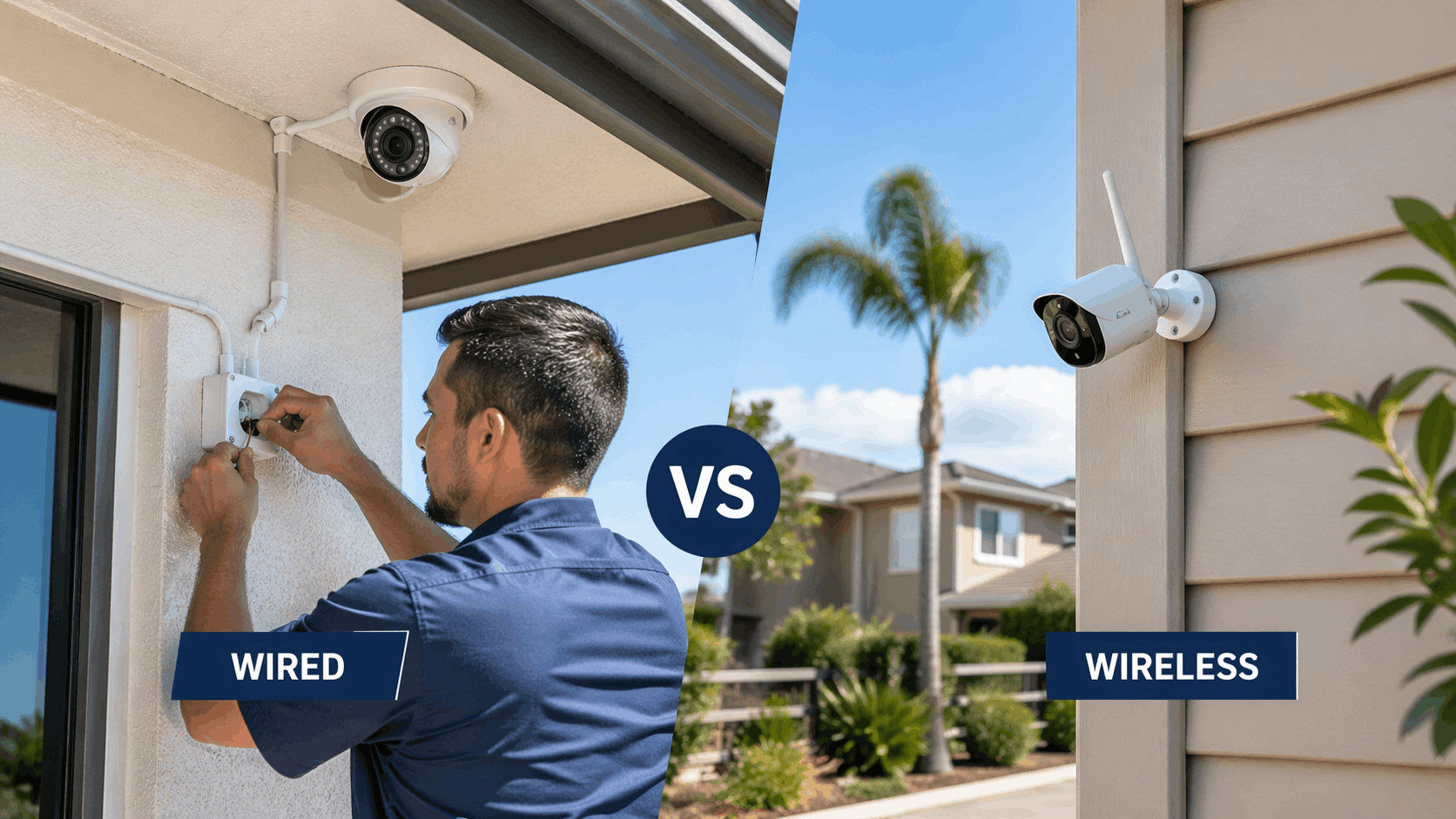
Wired systems in Chula Vista typically run $800-$2,500 for a complete installation depending on home size, wall construction type, and the number of sensors. A single-story, three-bedroom home in Rolling Hills Ranch with accessible attic space will land closer to the lower end. A two-story older home near Hilltop Drive with plaster walls will push toward the top of that range or beyond.
Wireless systems often start lower - $300-$1,200 for equipment and installation in a comparable home. However, ongoing costs matter too. Cellular backup service typically adds $10-$20 per month on top of the base monitoring fee, so the long-term cost difference narrows over time.
The honest math: wireless is usually cheaper upfront, but the five-year total cost of ownership for both system types often lands within a few hundred dollars of each other.
Long-Term Reliability and False Alarm Rates
Wired systems generally produce fewer false alarms over time. There are no batteries to drain unexpectedly, no RF signal drops, and no interference from neighboring devices. A properly installed hardwired system can run for 15-20 years with minimal issues beyond occasional panel servicing.
Wireless systems can trigger false alerts from low batteries, signal drops during heavy wireless traffic, or sensor misalignment. These issues are manageable but real. The reason this matters locally is that Chula Vista has a false alarm ordinance that charges fees for repeated unverified false alarm responses from Chula Vista Police Department. After a set number of false calls, fees can reach $100 or more per incident. Keeping a system well-maintained - whether wired or wireless - is the most direct way to avoid those charges.
Professional monitoring with a verification call before dispatch is the other layer of protection against unnecessary police responses.
Which System Adds More Value When Selling a Home
Chula Vista's real estate market - particularly in communities like Eastlake Trails and Heritage - has become more competitive, and buyers in those neighborhoods increasingly ask about existing security infrastructure. A built-in wired system is treated as a home feature, similar to a central vacuum or upgraded HVAC. It stays with the house and can be listed as an included amenity.
Wireless systems are portable. Homeowners can take the sensors and hub with them when they move, which is great for the seller but means the next buyer starts from scratch. Some sellers choose to leave the wireless equipment as a sale incentive, which adds value without the permanence of a wired install.
For homeowners planning to stay in their Chula Vista home for 10-plus years, wired often makes more sense from a long-term value perspective. For those who may move within five years, wireless offers more flexibility.
Need Help in San Diego?
Smart Shield Systems serves San Diego and all of San Diego County.
Specific Home Types in Chula Vista and Which System Fits Best
After working in hundreds of homes across Chula Vista, Smart Shield Systems has developed a pretty clear sense of which system type fits which home. The housing stock in this city is genuinely diverse - from 1960s single-story ranch homes near Hilltop Drive to large two-story new builds in Otay Ranch MacMillin to stacked condos near the Chula Vista Bayfront. Each type has its own set of installation realities.
This section matches those home types to the right system choice, based on actual installation experience - not general advice.
Older Single-Story Homes Near Hilltop and Third Avenue
In pre-1980 Chula Vista homes near Hilltop Drive and Third Avenue, wireless is almost always the right answer. The wall construction in these homes - often plaster over wood lath, or early drywall with no low-voltage conduit runs - makes fishing new wire genuinely difficult. Attic spaces are typically cramped, and the time required to run wire properly often doubles the installation cost compared to a newer home.
Castle Park homes face a similar situation. Many were built in the 1960s and 1970s as affordable tract housing, and while they are solid structures, they were not built with future wiring runs in mind. A wireless system with cellular backup gives these homeowners reliable coverage without the disruption of a wired install.
The only caveat: wireless sensor placement in these homes needs to account for wall thickness and potential signal attenuation, especially if the home has been retrofitted with additional insulation.
New Construction in Otay Ranch and Millennia
New builds in communities like Otay Ranch Village 13 and the Millennia development near Birch Road are often already partially wired or have open wall cavities that make wired installation far more practical. Builders in these developments sometimes run low-voltage conduit during framing, which means a wired security system can be added with minimal disruption and at a lower labor cost.
Smart Shield Systems works directly with new homeowners in these developments, often completing installs within weeks of move-in when walls are still accessible and the home is not yet fully furnished. Pre-wired security in these communities can be a significant selling point when the time comes to sell.
For Otay Ranch homeowners who missed the new-construction window, hybrid systems - wired sensors on the ground floor via attic runs, wireless sensors on upper floors - offer a practical middle ground.
Condos and Townhomes in Western Chula Vista
Condos near H Street and the Chula Vista Bayfront area present a different set of challenges. Shared walls limit where sensors can be mounted, and HOA rules in most condo complexes prohibit any visible exterior wiring. Wireless is the clear fit here - it satisfies HOA requirements, works within shared-wall construction, and can be taken by the owner when they move or rent the unit.
For stacked units, sensor placement should prioritize the front door, any sliding patio doors, and windows accessible from a common area or parking structure. Cellular monitoring matters more in condo buildings because shared network infrastructure can make building-wide Wi-Fi unreliable during high-usage periods.
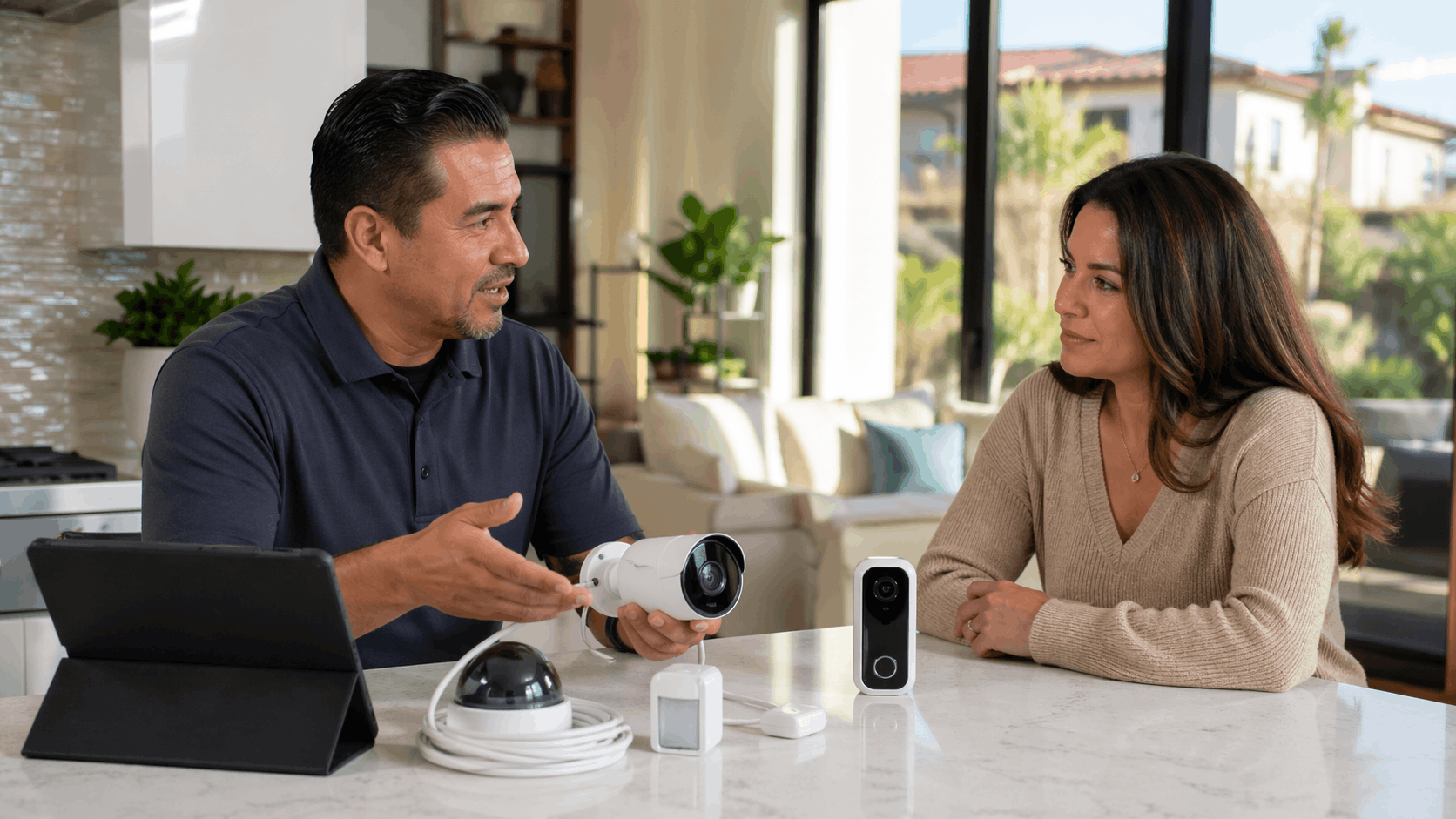
Smart Shield Systems also offers video doorbell installation for condo and townhome owners looking to add visual verification at the front door without exterior wiring.
Professional Monitoring Options and What Local Response Looks Like
A security system without professional monitoring is an alarm that makes noise. Monitoring is what turns that noise into an actual response. When an alarm triggers, the signal hits a monitoring center - typically within seconds - and a trained operator attempts to verify the event before contacting police.
For Chula Vista homeowners, 24/7 alarm monitoring provides the layer of protection that self-managed apps simply cannot replicate at 2:00 AM on a Tuesday. Smart Shield Systems connects clients to professional monitoring centers with direct dispatch capability to Chula Vista PD and other South Bay agencies.
How Monitoring Centers Coordinate With Chula Vista Police
The process works like this: a sensor triggers, the monitoring center receives the signal, and an operator attempts to reach the homeowner or a designated contact within 30-60 seconds. If the homeowner cannot confirm a false alarm, the operator contacts Chula Vista PD dispatch with the alarm details - address, zone triggered, and any available verification information.
Chula Vista participates in a verified alarm response program in certain districts, where video verification or two-trip verification can speed up police prioritization of the call. Systems with on-site cameras that feed verified clips to the monitoring center can qualify for faster dispatch. Smart Shield Systems can configure systems to support verified alarm protocols where available in Chula Vista.
Realistic timeframes: monitoring center response runs 30-90 seconds from alarm trigger to dispatch request. Police response time in Chula Vista varies widely by district and time of day, typically 5-20 minutes for a priority alarm call.
Monthly Monitoring Costs and What Is Actually Included
Basic professional monitoring starts at around $15-$20 per month and covers 24/7 alarm response with police dispatch. Mid-tier plans at $25-$35 per month typically add cellular backup connectivity, remote arm/disarm via app, and email or SMS notifications for all system events.
Premium plans at $35-$45 per month usually include video monitoring - where operators can view a camera clip when an alarm triggers to verify the event before dispatch. This tier also often includes smart home device integration and cloud video storage. Homeowners should ask specifically what is included at each tier rather than assuming - some plans charge separately for cellular connectivity even at mid-tier prices.
Smart Shield Systems is transparent about monitoring costs during the sales conversation, so Chula Vista clients know their full monthly cost before signing anything.
Self-Monitoring vs. Professional Monitoring: Honest Pros and Cons
Self-monitoring through an app saves $15-$45 per month and gives the homeowner instant personal notification when something triggers. For a homeowner who is reliably reachable, works from home, and lives in a lower-risk area, self-monitoring can be genuinely sufficient. It is a real option, not just a fallback.
The honest trade-off: if the homeowner is unavailable, asleep, or in a poor cell service area, that alarm notification goes unanswered and no police are called. Families who travel frequently, work unpredictable hours, or live in areas near the I-805 corridor where response time and break-in probability are both higher will likely find professional monitoring worth the cost. A simple rule - if missing an alarm notification has real consequences, professional monitoring is the safer choice.
Smart Home Integration and Camera Options for Chula Vista Properties
Modern security systems - both wired and wireless - connect with a broader set of smart home devices than most homeowners realize. Video doorbells, outdoor cameras, smart locks, and motion-activated lighting can all be tied into a single platform, managed from one app, and monitored as part of a unified security setup.
Smart Shield Systems installs and configures these integrated setups across Chula Vista. The combination of video surveillance cameras with a monitored alarm system gives homeowners both deterrence and documentation - two very different but complementary layers of protection.
Outdoor Camera Placement for Chula Vista Lot Layouts
Chula Vista lot layouts vary considerably. Zero-lot-line homes in Heritage have almost no side yard, meaning camera coverage needs to focus tightly on the front elevation and back patio. Wider properties near Bonita Long Canyon allow for side-yard coverage and longer driveway views. Corner lots along East H Street or Olympic Parkway need cameras covering two street-facing elevations, which most homeowners do not think about until after an incident.
Based on local break-in patterns, the highest-priority camera locations are the front door, the garage door, and any side gate or fence access point. Back sliding doors are the second most common entry point in Chula Vista tract homes, particularly in neighborhoods where homes back to open space or parking areas.
Night vision capability is non-negotiable for outdoor cameras in this area. Many Chula Vista streets have inconsistent street lighting, especially in older western neighborhoods. A camera that performs well in low-light conditions - rated for at least 30 feet of infrared night vision - covers the gaps that ambient lighting leaves behind.
Smart Locks and Door Sensors: Where They Matter Most
The three entry points that Smart Shield Systems focuses on first in any Chula Vista home are the front door, the garage-to-home interior door, and any sliding back door. The garage-to-home door is often overlooked but is one of the most commonly used entry points in forced entry incidents, particularly when the garage door itself is left partially open.
Smart lock integration with both wired and wireless security systems allows homeowners to receive notifications when any door is unlocked, set time-based access codes for housekeepers or contractors, and remotely lock doors from anywhere. The smart lock installation process typically takes 1-2 hours per door and works with popular brands like Schlage, Yale, and Kwikset on most standard door prep configurations common in Chula Vista homes.
Sliding back doors need a different approach - a door sensor on the frame combined with a secondary pin lock or bar provides both detection and physical reinforcement that a smart lock alone cannot offer.
Video Doorbell Cameras and Package Theft on Busy Streets
Package theft has become a consistent problem on delivery-heavy streets like Olympic Parkway, Proctor Valley Road, and East Palomar Street. With multiple daily deliveries from Amazon, FedEx, and UPS to high-density communities, porch piracy follows the same predictable daily windows that delivery trucks do - mid-morning to early afternoon on weekdays.
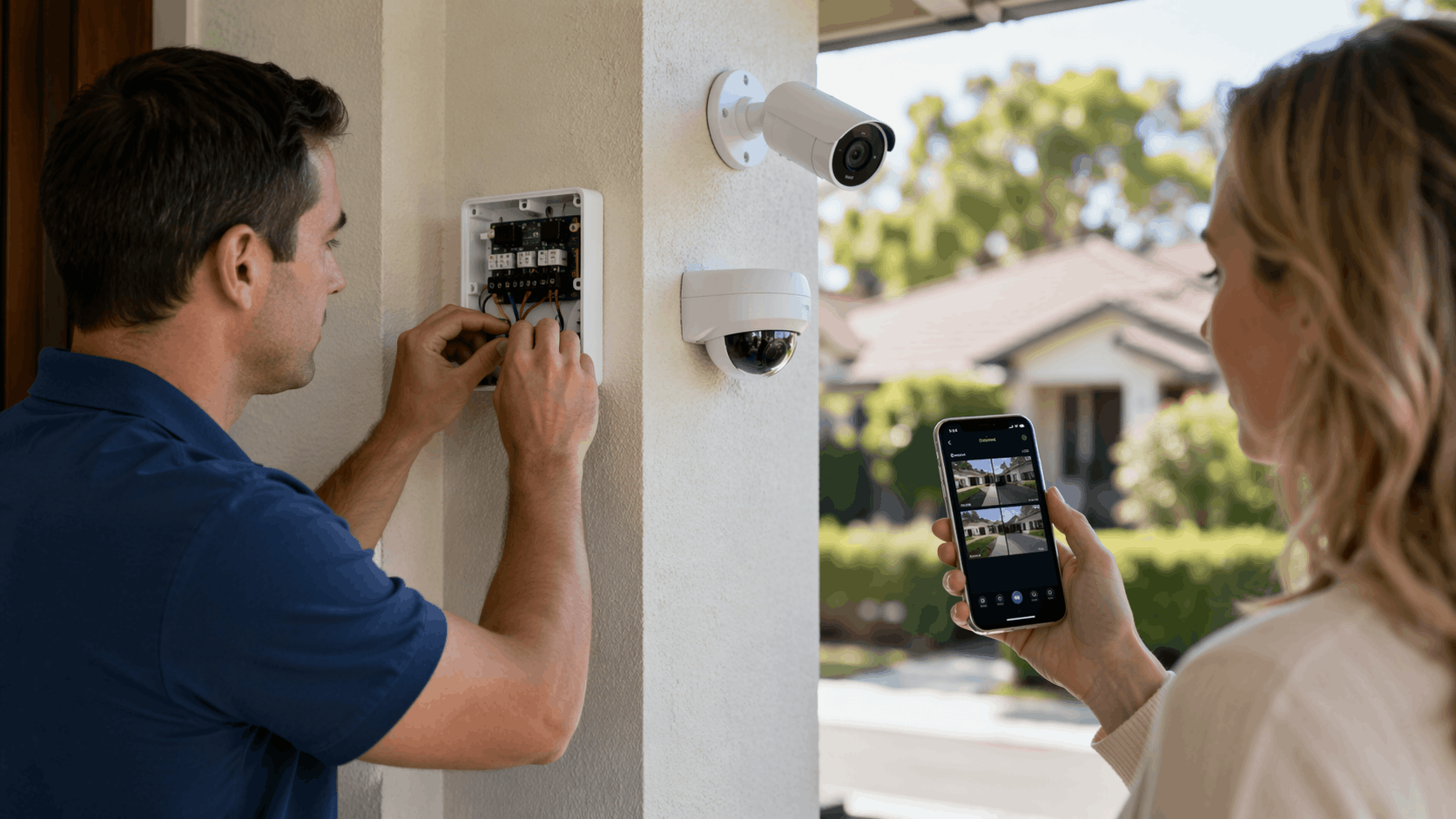
A video doorbell works with the home's security system to capture footage of anyone approaching the front door and can trigger a real-time notification when motion is detected. For identifying a person clearly enough for a police report, a doorbell camera should offer at least 1080p resolution and a field of view of 160 degrees or wider. Some models with head-to-toe framing are worth the premium on properties with short walkways where a visitor would otherwise only appear from the shoulders up.
Smart Shield Systems handles complete video doorbell installation and integration with existing alarm systems, so the footage is tied to the same platform homeowners already use for their security panel.
Need Help in San Diego?
Smart Shield Systems serves San Diego and all of San Diego County.
How Smart Shield Systems Approaches Security Installs in Chula Vista
Smart Shield Systems is a San Diego-based team that works regularly across all of Chula Vista - from Castle Park and the bayfront neighborhoods in the west to Eastlake, Rolling Hills Ranch, and Otay Ranch in the east. The team has worked in enough local homes to know that the neighborhoods here have genuinely different needs, and that an install done right the first time saves everyone time and money later.
The approach is straightforward: assess the home first, recommend a system second. That order matters. Learn more about Smart Shield Systems and the team's background serving South Bay San Diego communities.
The In-Home Assessment: What the Team Looks At First
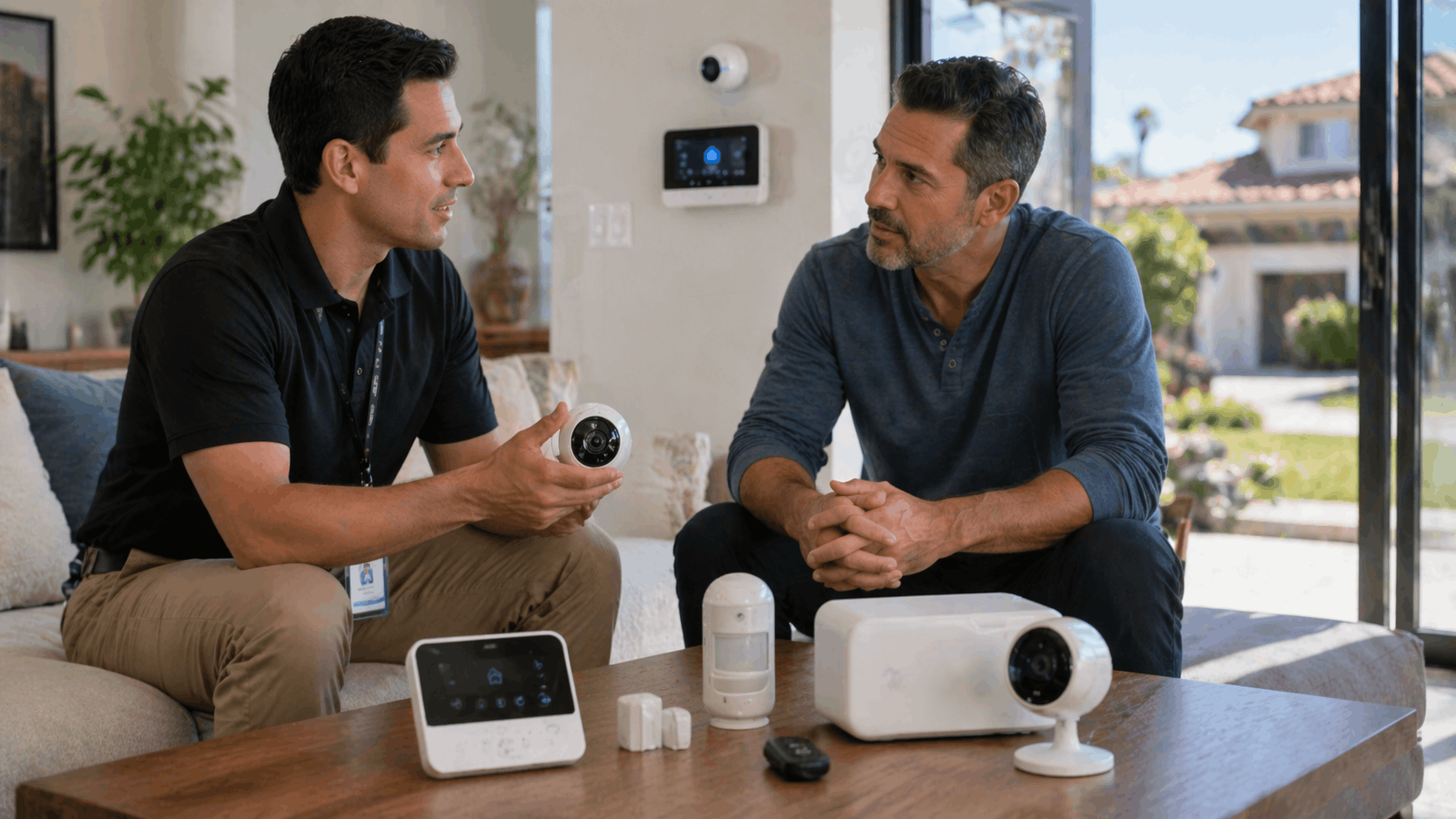
Before recommending wired or wireless, the Smart Shield Systems team checks entry points, wall construction type, existing low-voltage wiring, Wi-Fi signal coverage across the home, and HOA documentation if the property is in a managed community. Those factors often determine the system type before any conversation about features or price even begins.
In HOA communities like Otay Ranch or Eastlake, the team reviews the CC&Rs to confirm what camera placements and mounting methods are permitted. This step prevents homeowners from purchasing equipment that their HOA will require them to remove. The assessment also identifies any dead zones in wireless coverage that would need to be addressed with a signal repeater or adjusted sensor placement.
The whole process typically takes 30-45 minutes and gives the team the information needed to make a specific, accurate recommendation - not a generic one.
Installation Day: What Homeowners in Chula Vista Actually Experience
The Smart Shield Systems team arrives within the scheduled window, walks the homeowner through the planned sensor locations before drilling anything, and gets sign-off on placement before starting work. This step catches any last-minute changes - a homeowner who wants the keypad moved to the bedroom hallway instead of the entry, or a camera angle adjusted to avoid pointing toward a neighbor's window.
For wired installs in a standard Chula Vista home, the full job takes 4-8 hours. Wireless installs run 2-4 hours. The team cleans up after each sensor location - no drywall dust left on shelves, no wire scraps in the yard. The final hour of any install is a complete system walkthrough where the homeowner learns how to arm and disarm, check sensor status, use the mobile app, and what to do if an alarm triggers accidentally.
Homeowners leave install day knowing their system, not just having one installed in their house.
After Installation: Support, Warranties, and Service Calls
Smart Shield Systems backs its installations with a warranty on both equipment and labor. Equipment warranties vary by manufacturer but typically cover defects for 1-3 years. Labor warranty covers any installation-related issues for the first year. If a sensor falls off a door frame because of a mounting issue, that is covered - no charge.
Service calls for Chula Vista clients in the South Bay area are typically scheduled within 24-48 hours for non-emergency issues and same-day for urgent problems like a panel that has gone offline. Emergency technical support is available for situations that cannot wait. The team's proximity to the South Bay - compared to companies dispatching from North County or downtown San Diego - means faster response times for clients in Chula Vista, National City, and surrounding communities.
Final Thoughts
The wired vs. wireless question does not have a universal answer for Chula Vista homeowners. It has a right answer for each specific home, and that answer comes from looking at the home's age, construction, HOA rules, and the neighborhood's actual risk profile - not from picking the cheapest option or the one with the most features advertised on the box.
Older homes near Hilltop and Third Avenue almost always benefit from wireless. Newer builds in Otay Ranch and Millennia are often well-suited for wired. Condos near the bayfront and H Street should almost always go wireless. And every home in Chula Vista - regardless of system type - should have cellular backup monitoring.
If you are ready to find the right system for your specific home, contact Smart Shield Systems to schedule an in-home assessment. The team serves all of Chula Vista and the broader South Bay area, and the assessment is the best first step toward a system that actually fits where you live.
Frequently Asked Questions
- Is a wired or wireless security system better for a Chula Vista home?
- The answer depends on three things: the age of the home, the construction type, and any HOA restrictions. Newer builds in Otay Ranch with accessible wall cavities are often good candidates for wired systems. Older homes near Hilltop Drive or Broadway - where running new wire through plaster walls is costly and disruptive - usually work better with wireless. Check those three factors first, and the decision often becomes clear on its own.
- How much does a home security system cost in Chula Vista?
- Wired system installation in Chula Vista typically runs $800-$2,500 depending on home size and wall construction. Wireless systems often start lower at $300-$1,200. Monthly professional monitoring adds $15-$45 per month depending on plan features like cellular backup and video monitoring. When comparing total cost, factor in both the upfront installation and the ongoing monthly fee over the time you plan to stay in the home.
- Will my Eastlake or Otay Ranch HOA allow outdoor security cameras?
- Most Chula Vista HOAs allow outdoor cameras but restrict placement locations, mounting hardware, and visible wiring. Communities near Olympic Parkway and Hunte Parkway each have their own CC&R language. Smart Shield Systems reviews HOA documents before any install to confirm what is permitted and recommends camera placements that meet both security and HOA compliance requirements. Checking with your HOA management company before purchasing equipment is always a good first step.
- What happens if my internet goes out - will my security system still work?
- It depends on the system. Wi-Fi-only systems lose their connection to the monitoring center when internet goes down - whether from an SDG&E outage during Santa Ana wind season or a deliberate router disruption. Systems with cellular backup maintain their monitoring connection regardless of home internet status. Smart Shield Systems recommends cellular backup for all Chula Vista installations as a baseline requirement, not an optional upgrade.
- How long does it take to install a security system in a typical Chula Vista home?
- Wired installations in a standard three-bedroom Chula Vista home typically take 4-8 hours. Wireless installs usually run 2-4 hours for a similar home. What affects that timeline: home size, wall construction type (plaster takes longer than drywall), attic accessibility, number of sensors, and the number of cameras being added. Smart Shield Systems gives homeowners a realistic time estimate during the pre-installation assessment so the day is not a surprise.
- Do I need a permit to install a security system in Chula Vista?
- Most wireless security system installations do not require a permit from the City of Chula Vista Development Services Department. However, certain wired installations - specifically those involving new low-voltage wiring runs through finished wall spaces - may require a permit depending on the scope of work. Smart Shield Systems handles permit coordination when required, so homeowners are not managing that process themselves. When in doubt, asking during the assessment is the right move.
- Can I take my wireless security system with me if I move?
- Wireless systems are generally portable. Sensors detach from their mounting hardware, the hub unplugs, and the whole system moves with the homeowner. What stays behind is the mounting hardware - small brackets and screws - and any hardwired components if a hybrid setup was used. Smart Shield Systems helps Chula Vista clients who are relocating within San Diego County transfer their system to the new address, including re-assessing the new home for sensor placement and any coverage adjustments needed.
- What is the Chula Vista Police Department's false alarm policy?
- Chula Vista's false alarm ordinance charges fees for repeated unverified alarm responses after a set number of annual incidents. Fees can reach $100 or more per call once a property exceeds the allowable threshold. Proper system setup - correct sensor sensitivity, professional monitoring with a verification call before dispatch, and regular maintenance to prevent low-battery false triggers - is the most effective way to avoid those charges. The Chula Vista Police alarm program outlines current fee schedules and registration requirements.
- How do I choose between self-monitoring and professional monitoring?
- Self-monitoring saves $15-$45 per month and works well for homeowners who are reliably reachable and live in lower-risk areas. The honest downside: if the homeowner misses the app notification at 3:00 AM, no police are called. Professional monitoring makes sense for families who travel frequently, have unpredictable schedules, or live near higher-risk corridors like the I-805 or SR-54 areas. A simple decision framework: if you cannot guarantee you will see and act on every alarm notification within minutes, professional monitoring is the right choice.
- Does Smart Shield Systems service all parts of Chula Vista?
- Yes - Smart Shield Systems serves all Chula Vista neighborhoods, from western communities near the Chula Vista Bayfront and H Street to eastern developments including Otay Ranch, Eastlake, and Rolling Hills Ranch. As a San Diego-based security company , the team's proximity to the South Bay means faster scheduling and service response times across all Chula Vista zip codes compared to companies dispatching from further north in the county. Contact the team to schedule service or a consultation.
S
Smart Shield Systems Team Team
Licensed security systems professionals serving San Diego and San Diego County.
Licensed in California · License #7623
Why trust Smart Shield Systems?
Founded in 2016, Smart Shield Systems is a licensed and insured security systems serving San Diego and San Diego County. All content is reviewed by our licensed technicians.

Need Help in San Diego?
Smart Shield Systems serves San Diego and all of San Diego County.
Related Articles
How-To Guides
How to Choose the Right Home Security System for Your San Diego Home
Picking the right home security system in San Diego means weighing your layout, budget, and goals. This guide walks you through assessing your needs, comparing equipment types, and choosing monitoring so your home in San Diego County is protected.
Cost Guides
Wired vs Wireless Security Cameras: Which is Right for Your Property?
Wired and wireless security cameras each have pros and cons. Compare reliability, power, and installation for your San Diego home or business.
Safety & Prevention
Home Security for Linda Vista Homes and Rentals That Actually Works
Discover proven home security solutions for Linda Vista homes and rentals. Smart Shield Systems provides neighborhood-specific security systems that actually work.