How-To Guides
Mission Hills and Hillcrest: Security Solutions for Older Craftsman Homes
Key Takeaways
- Original Craftsman doors, single-pane windows, plaster walls, and knob-and-tube wiring require a different installation approach than modern homes - wireless sensors are usually the right fit.
- Alley access behind Washington Street and detached 1920s-1930s garages are the most common entry points for burglars in Mission Hills and Hillcrest - both need dedicated sensors and cameras.
- Wireless security systems protect original plaster and trim and comply with historic preservation and Mills Act restrictions; hybrid systems work well in partially renovated Hillcrest properties.
- Outdoor equipment in coastal San Diego should be rated IP66 or higher - the daily marine layer causes condensation inside lower-rated housings and degrades image quality within 18 months.
- San Diego requires an annual alarm permit and has a fee schedule for unverified false alarm responses from SDPD - Smart Shield Systems helps new customers register before the system goes live.
- Retrofit smart locks like the August and Schlage Encode attach to the interior thumb turn and leave original Craftsman exterior hardware completely untouched.
- Santa Ana winds cause false alarms from PIR motion sensors on Mission Hills ridgeline properties - dual-technology sensors and sensitivity adjustments resolve this reliably.
- A full security installation in a Craftsman bungalow takes four to seven hours; Smart Shield Systems schedules full-day windows to handle original finishes carefully and without rushing.
In This Article
Picture a Saturday morning in Mission Hills. A homeowner is walking through their 1924 Craftsman bungalow on Ibis Street and notices the front door still has its original mortise lock - the same one installed when Woodrow Wilson was still a recent memory. The single-pane windows rattle when a truck rolls down Ft. Stockton Drive. There is no alarm system, no cameras, and the side gate latch is a bent nail hooked over a post. That moment of realization hits hard: a beautiful, well-maintained historic home is also a relatively easy target.
Mission Hills and Hillcrest are two of San Diego's most architecturally rich neighborhoods. The blocks near Balboa Park and along Randolph Street are lined with bungalows and Foursquares built between 1910 and 1945 - homes that have survived earthquakes, the Pacific Fleet buildup, and decades of San Diego growth. What they were not built to survive was the modern burglary toolkit. Smart Shield Systems works regularly with homeowners in both neighborhoods to bring current security technology into these older homes without damaging the original woodwork, plaster, or trim that makes them worth protecting in the first place.
Why Craftsman Homes in Mission Hills and Hillcrest Have Unique Security Challenges
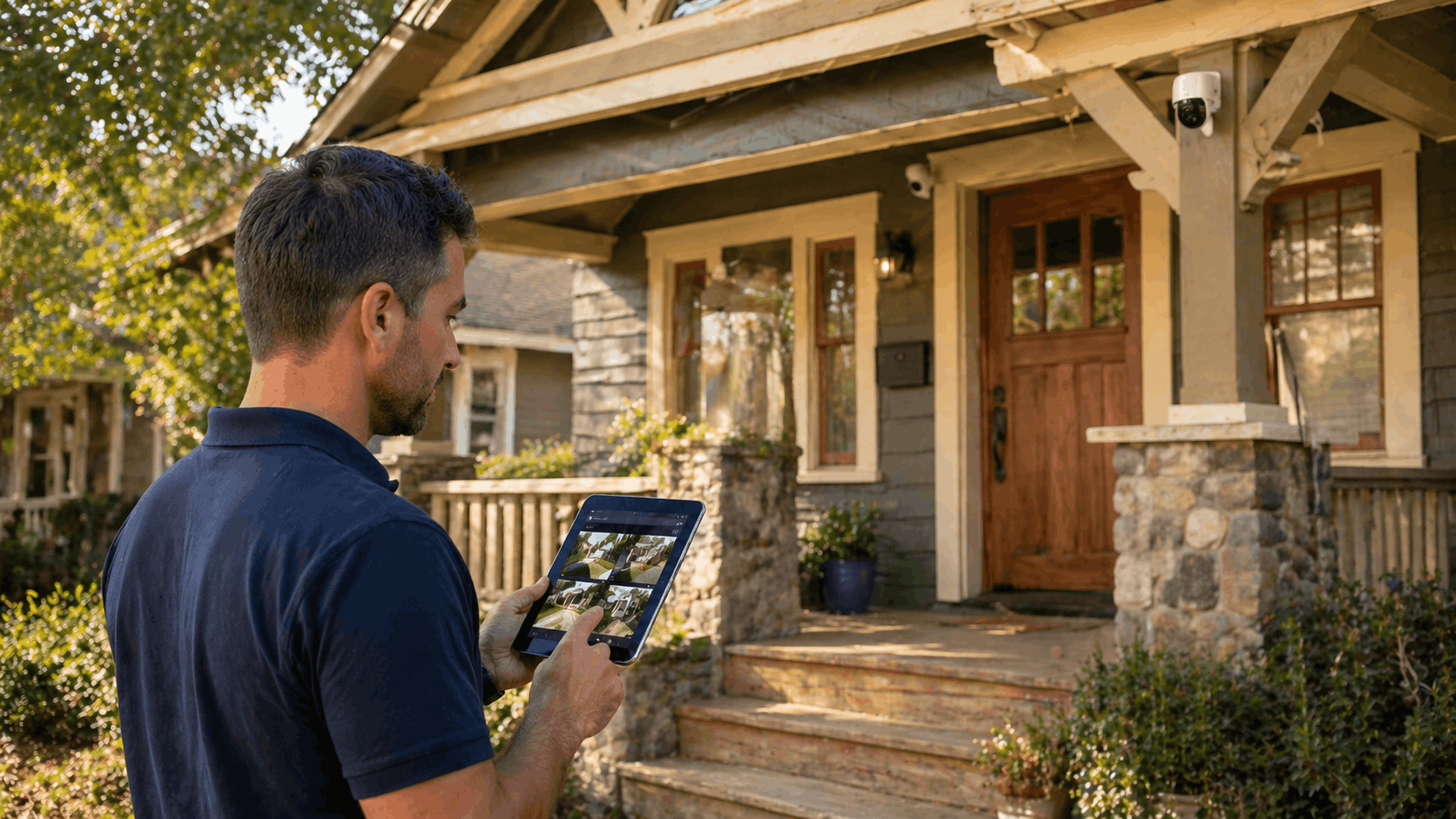
Craftsman home security is not the same conversation as security for a 2005 stucco build in Mira Mesa. The construction methods used in Mission Hills San Diego between 1910 and 1940 create a specific set of conditions that standard installers sometimes do not account for. Historic home vulnerabilities here are architectural, not just cosmetic.
The bones of these homes - old-growth Douglas fir framing, horsehair plaster walls, and knob-and-tube wiring in many cases - require a different assessment before any equipment goes in. Getting that assessment right is the difference between a clean, reliable install and one that damages original materials or fails within a year.
Original Doors and Windows That Look Great but Offer Little Protection
The original wood-frame windows on homes along Randolph Street and Fort Stockton Drive are genuinely beautiful. They are also single-pane glass set in frames that have had a century to dry out and loosen. A firm shoulder check or a quick strike with a tool can breach most of them without much noise.
Single-pane window security does not require replacing the glass. Glass break sensors detect the acoustic signature of breaking glass and trigger the alarm before an intruder gets through. These sensors mount on the interior wall or ceiling near windows and do not require any modification to the original frame.
Door reinforcement for Craftsman homes follows the same principle - work with the existing door, not against it. Strike plate reinforcement kits with 3-inch screws anchor into the wall stud behind the door jamb, dramatically improving kick-in resistance without touching the original door or its hardware. The ornate front doors on these homes deserve to stay exactly as they are.
Plaster Walls and Knob-and-Tube Wiring Complications
Drilling through original horsehair plaster is not impossible, but it requires the right bit, the right speed, and someone who knows what they are doing. The wrong approach cracks the plaster in a radius around the hole, which creates a repair job that is difficult to make invisible on a textured historic surface.
Plaster wall wiring is a separate problem. Running new wire through solid plaster walls - even for a small door contact sensor - can mean opening up sections of wall that then need professional patching. Older home electrical systems add another layer. Routing wires near knob-and-tube systems is not something any security installer should do without an electrician's sign-off first.
This is why Smart Shield Systems evaluates the wall construction and existing electrical before recommending wired versus wireless options. In most Mission Hills homes with original plaster intact, wireless security sensors are the practical answer. Homes that have been fully replastered or drywalled over the years may allow for more flexible routing options.
Historic Preservation Rules and What They Mean for Your Install
The City of San Diego's Historical Resources guidelines set standards for what can and cannot be changed on designated historic properties. Some homes near the Mission Hills Historic District carry formal designations that restrict exterior modifications - including mounting hardware, conduit runs along exterior walls, and changes to the visible facade.
Historic preservation San Diego rules vary by property. Some homes are individually designated; others fall within a broader historic district overlay. Homeowners with Mills Act contracts - a tax benefit program for historic properties - have additional reason to be careful about what gets attached to the exterior.
Non-invasive security installs fit within these rules because they avoid permanent exterior changes. Wireless sensors on window frames use adhesive mounts. Cameras mount under eave overhangs using small screws into wood, which is generally reversible. Smart Shield Systems reviews any historic designation paperwork before the install begins, so there are no surprises.
The Most Common Break-In Patterns We See in These Neighborhoods
Mission Hills property crime follows patterns that are specific to the neighborhood layout. The grid of older streets, the alley systems, and the mix of occupied homes and rental units creates particular weak points. Hillcrest break-in patterns share some of the same features but add the foot traffic and commercial density near University Avenue into the picture.
The San Diego Police Department's Northern Division, which covers both neighborhoods, has shared publicly that residential burglaries in these areas tend to happen during daylight hours and frequently involve rear or side entry. Home security in San Diego's older urban neighborhoods needs to account for alley access specifically.
Side Gates and Alley Access Along Washington Street and Beyond
The alley systems running behind homes along Washington Street and the blocks between Goldfinch and Falcon Streets give would-be burglars a way to approach rear yards out of view from the street. A person walking an alley looks unremarkable. Someone testing side gates does not attract attention the way they would on the front sidewalk.
Alley security cameras mounted to the rear fence line or garage exterior change that dynamic immediately. A visible camera is a deterrent. A recording camera is evidence. Motion lighting triggered by movement in the alley removes the darkness that makes alley access appealing in the first place.
Side gate sensors are a straightforward addition - a wireless contact sensor on the gate frame alerts the system when the gate opens. Paired with a motion-activated light and a rear-facing camera, this combination covers the most common entry route in the neighborhood without any major construction.
Detached Garages and Older Outbuildings as Entry Points
The detached garages built in the 1920s and 1930s throughout Mission Hills and Hillcrest were not built with security in mind. Many have original wooden swinging doors or early roll-up doors with simple latches. They sit at the back of the lot, often facing the alley, and they are rarely connected to any alarm system.
Detached garage security starts with door contacts - wireless sensors on the garage door that alert the system if it opens unexpectedly. These structures can be added as separate monitoring zones on the same alarm plan, so the homeowner gets an alert whether the breach happens at the front door or the back garage. Garage door automation also lets homeowners check and close the door remotely - helpful for the moments when leaving in a hurry means the garage gets left open.
Outbuilding alarm sensors work on battery power and communicate wirelessly back to the main panel. On lots where the garage is 60 or 70 feet from the house, a signal extender may be needed - but that is a $40 to $80 fix, not a reason to leave the structure unprotected.
Need Help in San Diego?
Smart Shield Systems serves San Diego and all of San Diego County.
Get Your Free Quote
Tell us about your property and we'll get back to you fast.
Choosing Between Wired and Wireless Security Systems for Older Homes
This is the question Smart Shield Systems gets most often from Craftsman homeowners: do I need a wired system or will wireless work? The honest answer is that it depends on the specific home, and anyone who gives a blanket answer without looking at the property first is guessing. A Craftsman home alarm system choice should be based on wall construction, existing electrical, renovation history, and how many zones the homeowner wants to cover.
San Diego security installation in older homes also involves a cost conversation. Wired systems cost more to install because labor is higher - running wire through old walls is slow work. Wireless systems cost less to install but require battery management over time. Neither answer is wrong; they just fit different homes.
When Wireless Systems Are the Smarter Call in Historic Homes
A wireless alarm system for a historic home makes the most sense when the plaster is original, the attic access is limited, and the homeowner has a Mills Act contract or a historic designation that discourages interior modifications. In these cases, the cost of a wired install is not just money - it is risk to irreplaceable original materials.
Modern Z-Wave sensors and wireless door and window contacts have battery lives of two to five years depending on the manufacturer and usage frequency. Signal range in thick-walled homes can be a factor. Standard wireless sensors communicate well up to 100 feet in open air, but horsehair plaster walls attenuate that signal. Smart Shield Systems tests signal strength at each sensor location during the site assessment to catch any dead spots before equipment gets mounted.
For most Mission Hills homes with intact original plaster, our team recommends a wireless-first approach. The install goes faster, the walls stay intact, and the system performs reliably when the equipment is properly placed.
Where a Wired Setup Still Makes Sense
Hillcrest properties that have been partially or fully renovated - where the plaster has been replaced with drywall, or where the electrical has been updated to a modern panel - open up the option for a hardwired security system. Wire routing through drywall is straightforward, and attic access in renovated homes is usually cleaner.
A hybrid alarm system splits the difference. Hardwired sensors go on the most-used entry points - the front door, back door, and first-floor windows - where reliability matters most. Wireless sensors cover the detached garage, attic access points, and any locations where running wire would damage original finishes. This approach is common in Hillcrest home renovation security projects where part of the home is original and part has been updated.
The residential alarm system installation process at Smart Shield Systems always starts with a walk-through before any equipment gets ordered. The right system type becomes obvious once the wall construction and electrical situation are clear.
Cost Ranges for Each Approach in San Diego
For a Craftsman bungalow in the 900 to 1,800 square foot range typical of Mission Hills and Hillcrest, here is what realistic budgets look like. A wireless-only system covering the main entry points, a few interior motion sensors, and two to three cameras runs $600 to $1,100 in equipment. Installation labor adds $300 to $500 depending on complexity.
A fully hardwired system in a home that allows for clean wire routing runs higher - typically $1,200 to $2,200 installed, including panel, sensors, and keypads. A hybrid approach usually lands between $900 and $1,700 all in, depending on how many zones get hardwired versus wireless.
Monitoring plan costs run $25 to $60 per month depending on the level of service. Basic monitoring with alarm dispatch sits at the lower end. Plans that include video verification, smart home integration, and two-way voice through the panel sit at the higher end. Homes with detached garages or long alley exposures typically need more sensors and fall toward the top of these ranges.
Smart Cameras for Craftsman Homes: What Works and What Looks Wrong
A dome camera bolted to the front trim of a 1920s Craftsman looks exactly as wrong as it sounds. Home security cameras for Mission Hills homes need to cover the property without clashing with the architecture that makes these homes worth owning. The good news is that Craftsman construction - with its generous eave overhangs, natural wood tones, and clean lines - actually lends itself well to discreet camera placement when the right equipment and mounting positions get used.
Outdoor security cameras in San Diego also need to be chosen with the local climate in mind. The marine layer, the coastal air, and the occasional Santa Ana event all affect equipment longevity. Camera placement strategy and equipment selection go together.
Front Porch and Entry Coverage Without Ruining Curb Appeal
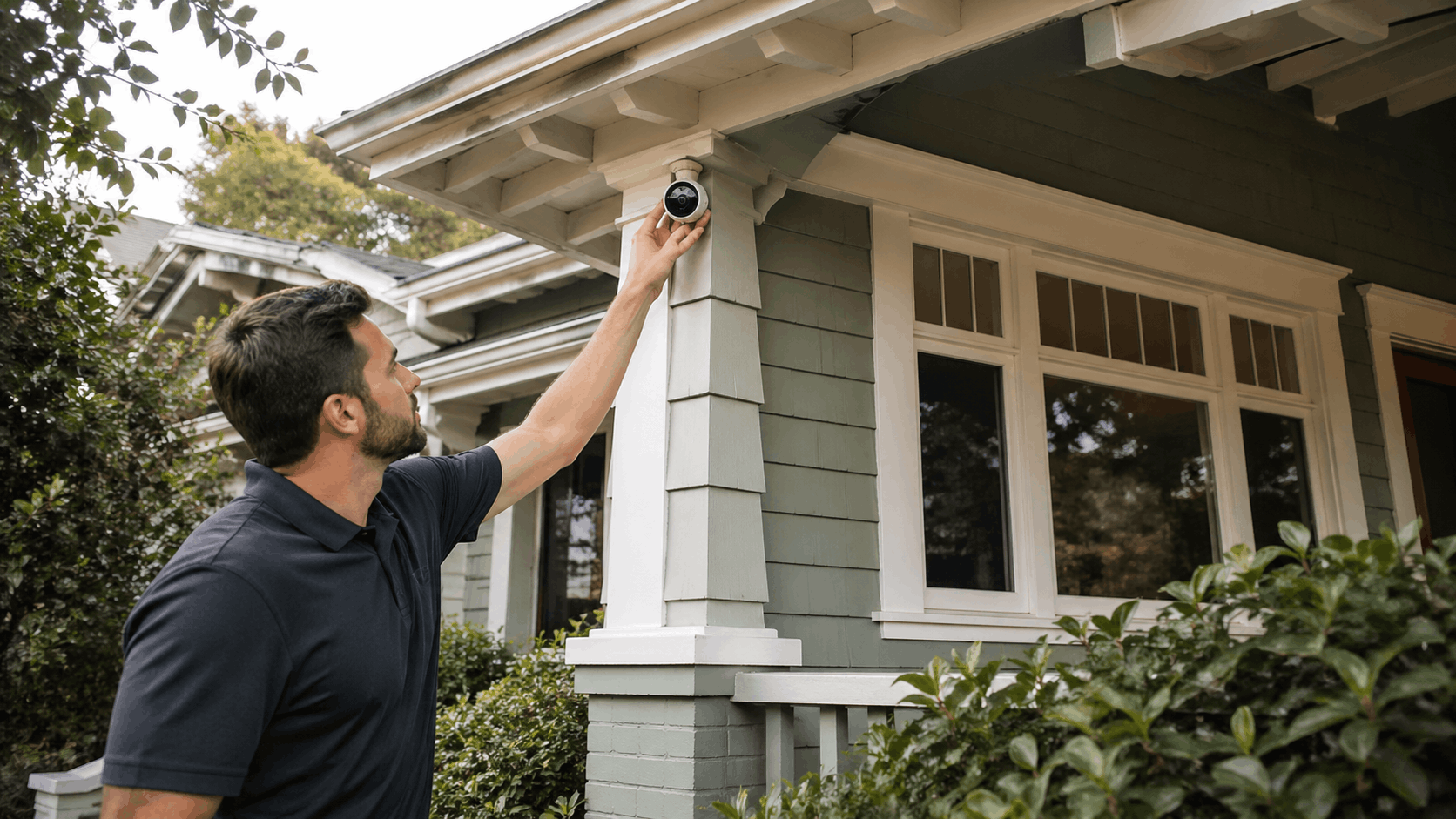
Craftsman bungalows typically have 18 to 24-inch eave overhangs above the front porch - sometimes deeper. These overhangs are ideal camera mounting spots. The camera stays out of direct sun and rain, the marine layer moisture does not hit it as directly, and the downward viewing angle covers the porch, front walkway, and street approach without requiring a visible pole or wall bracket.
Smaller form-factor cameras - roughly 3 to 4 inches in diameter or smaller barrel-style units - disappear into eave soffits far better than large dome cameras. A 110 to 130-degree field of view handles the typical front yard depth in Mission Hills without distortion at the edges. Video doorbell installation is another option for front entry coverage, and the low-profile format of most current video doorbells fits the original door hardware aesthetic better than a mounted camera.
Porch camera mounting under the eave also keeps the unit within reach for annual cleaning - which matters in a neighborhood where the marine layer deposits a fine film on lenses over time.
Backyard and Alley-Facing Camera Placement
The rear of the property is where camera placement decisions get more consequential. For the narrow lot layouts typical between Goldfinch Street and the I-163 corridor, wide-angle cameras work better than PTZ models. PTZ cameras require active monitoring to be useful. A fixed wide-angle camera covering the entire rear yard and alley-facing fence line does the job passively, recording everything continuously.
Backyard security cameras mount well to the rear eave of the main house, the garage exterior, or a fence post - whichever gives the widest coverage angle. In a typical Mission Hills rear yard with a detached garage at the back, two cameras often work better than one: one mounted high on the house facing the yard, and one on the garage facing the alley gate. Home security camera installation in these yards also considers neighbor sight lines - cameras should be angled to cover the homeowner's property, not the neighbor's yard or windows.
Local Storage vs. Cloud Recording: What to Know
NVR local storage records footage to a network video recorder kept inside the home. There is no monthly fee for storage, footage is retained on-site, and the system keeps recording even when internet service goes down. The downside is that if the NVR gets stolen or damaged, the footage goes with it - which is why placing the NVR in a locked cabinet or closet matters.
Cloud camera recording sends footage off-site automatically. If the camera gets stolen or the power goes out, whatever was recorded before the outage is already on the server. This matters in Mission Hills specifically - the neighborhood sits on a hillside and sees power interruptions during Santa Ana wind events more often than flatter parts of San Diego. A cloud-connected system backed by cellular communication keeps recording even when the local internet drops.
Remote video monitoring through a cloud plan gives homeowners the ability to check live footage from anywhere, which is particularly useful during travel. Many homeowners in these neighborhoods choose a hybrid - local NVR storage with cloud backup for the most critical cameras.
Smart Locks on 100-Year-Old Doors: Making It Work
The front door on a 1920s Craftsman bungalow is often one of the most intact original features left in the home. Solid wood panels, original hardware, mortise lock sets - these are not things to drill into carelessly. Smart Shield Systems gets asked regularly whether a smart lock can go on an original Craftsman door without compromising the exterior hardware or the door itself. The answer is yes, with the right product and the right assessment first.
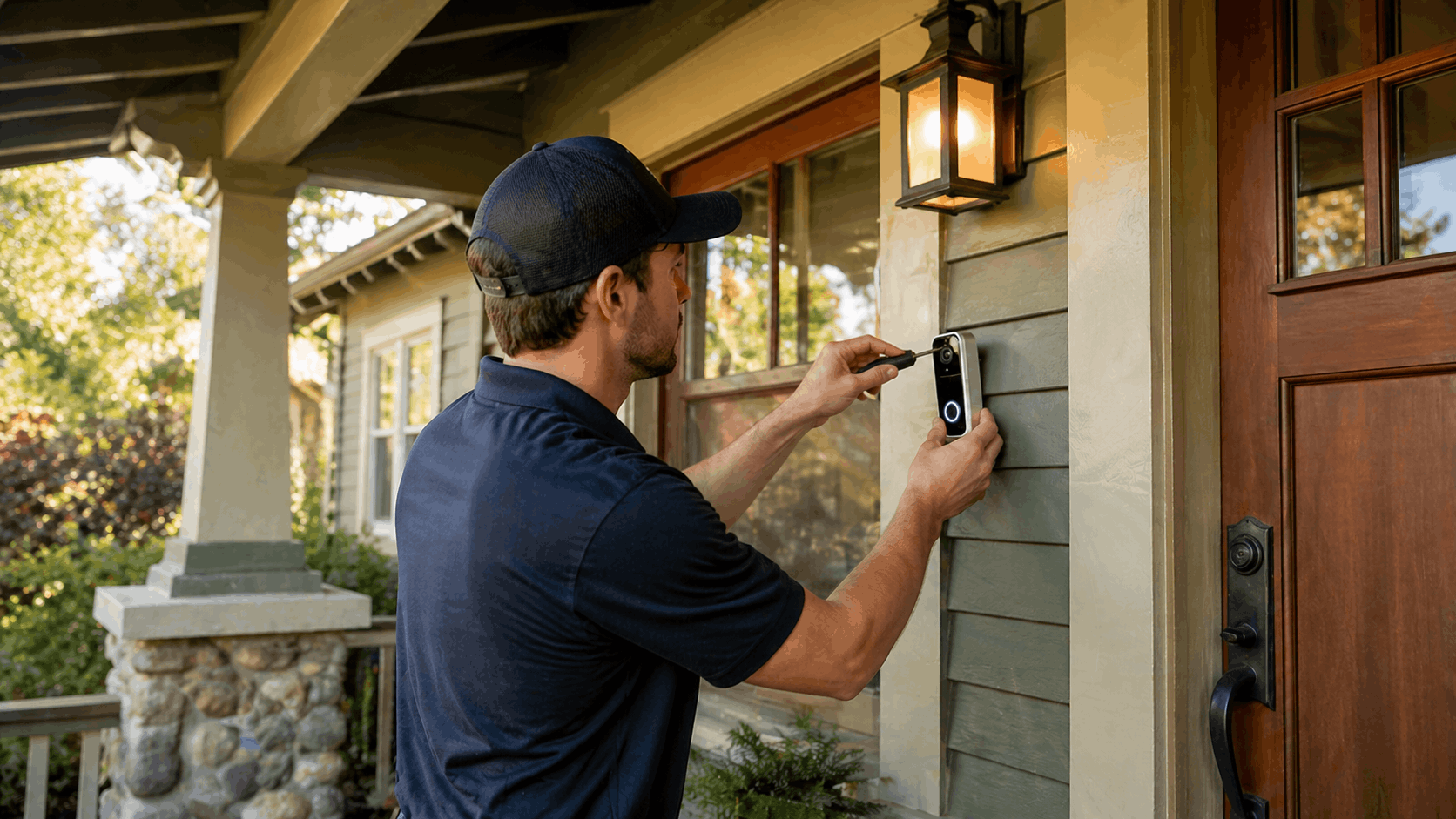
Retrofit smart locks attach to the interior of the door and leave everything visible from the outside completely untouched. This approach works for most original Craftsman deadbolts and avoids any exterior modification that might conflict with historic preservation guidelines.
Retrofit Smart Locks That Work With Existing Deadbolts
Interior-mount retrofit smart locks like the August Smart Lock and the Schlage Encode Plus attach to the interior thumb turn of an existing deadbolt. From outside, the door looks identical to how it always has. From inside, the thumb turn has been replaced with a motorized unit that responds to the app, a keypad, or auto-unlock when the homeowner's phone approaches.
Compatibility is the first check. Craftsman doors often have thick stile widths - the vertical edge of the door where the lock set mounts - and some retrofit locks require specific backset measurements (typically 2-3/8 inch or 2-3/4 inch) to fit correctly. Smart lock installation should not happen until those measurements are confirmed. Smart lock installation from a trained technician includes this compatibility check before any hardware gets ordered.
What to Do When the Door Frame Has Shifted or Settled
Homes along Terrace Drive and Arista Street - and most of Mission Hills, honestly - are 80 to 100 years old. The door frames in these homes have had a century to settle, shift, and drift out of square. A deadbolt that technically works may have a throw that hits the strike plate at an angle, or a bolt that drags when the door swells in humid weather.
A misaligned deadbolt throw is a problem for smart lock function. The motorized mechanism in a retrofit lock needs the bolt to move freely. If the bolt is binding or the frame is significantly out of square, the motor works harder and fails earlier. In these cases, a locksmith consultation before the smart lock install is the right call. A small adjustment to the strike plate position or a slight planing of the door edge often resolves the issue and protects the smart lock investment long-term.
Need Help in San Diego?
Smart Shield Systems serves San Diego and all of San Diego County.
How San Diego's Marine Layer and Climate Affect Outdoor Security Equipment
Security companies that operate primarily inland often miss this. The daily marine layer that rolls into Mission Hills and Hillcrest from San Diego Bay is not just fog - it is moisture-laden air that deposits a fine film on every outdoor surface. Over weeks and months, this affects camera lenses, sensor contacts, and camera housing seals in ways that show up as degraded image quality and false alerts. Outdoor sensor moisture is a real operational issue for San Diego homeowners, not a hypothetical one.
Choosing the right equipment for this climate is not optional. It is the difference between a system that performs well for seven to ten years and one that starts showing problems at the eighteen-month mark.
IP Ratings That Actually Hold Up in Coastal San Diego Air
IP ratings describe how well an enclosure resists solid particles and liquids. IP65 protects against water jets from any direction. IP66 protects against powerful water jets. IP67 protects against temporary immersion. For homes a few miles from San Diego Bay, IP66 is the practical minimum for any outdoor camera or sensor housing.
The problem with lower-rated housings is not that they fail immediately in rain - San Diego does not get much of that. The problem is condensation. Cool marine layer air hits a warmer camera housing, moisture forms inside the enclosure, and over 12 to 18 months that moisture fogs the lens from the inside and corrodes the circuit board connections. An IP65-rated camera that costs $60 less than an IP67 unit often costs far more in replacement and labor within two years. Smart Shield Systems does not install cameras below IP66 rating in coastal San Diego neighborhoods for exactly this reason.
Santa Ana Season and What It Does to Motion Sensors
Mission Hills sits on a ridge, and that elevation means the dry, fast-moving Santa Ana winds hit harder here than in the flatlands below. PIR motion sensors - the standard passive infrared detectors used in most outdoor security setups - work by detecting changes in heat signatures moving across their field of view. Wind-blown palm fronds, tumbling debris, and the rapid temperature swings that come with Santa Anas create exactly the conditions that trigger false alerts.
Santa Ana wind false alarms are a known frustration for homeowners who install PIR sensors without adjusting sensitivity settings for this climate. The fix is usually a combination of lowering sensor sensitivity during Santa Ana season and switching to dual-technology sensors that require both PIR detection and microwave motion confirmation before triggering. Pet-immune sensor options add another layer of filtering for homes with animals.
Our team adjusts sensitivity settings during the post-install walkthrough and revisits them seasonally for customers who want that level of support. The goal is a sensor that catches real events without crying wolf every time the offshore flow picks up.
Annual Maintenance Checks Smart Shield Systems Recommends
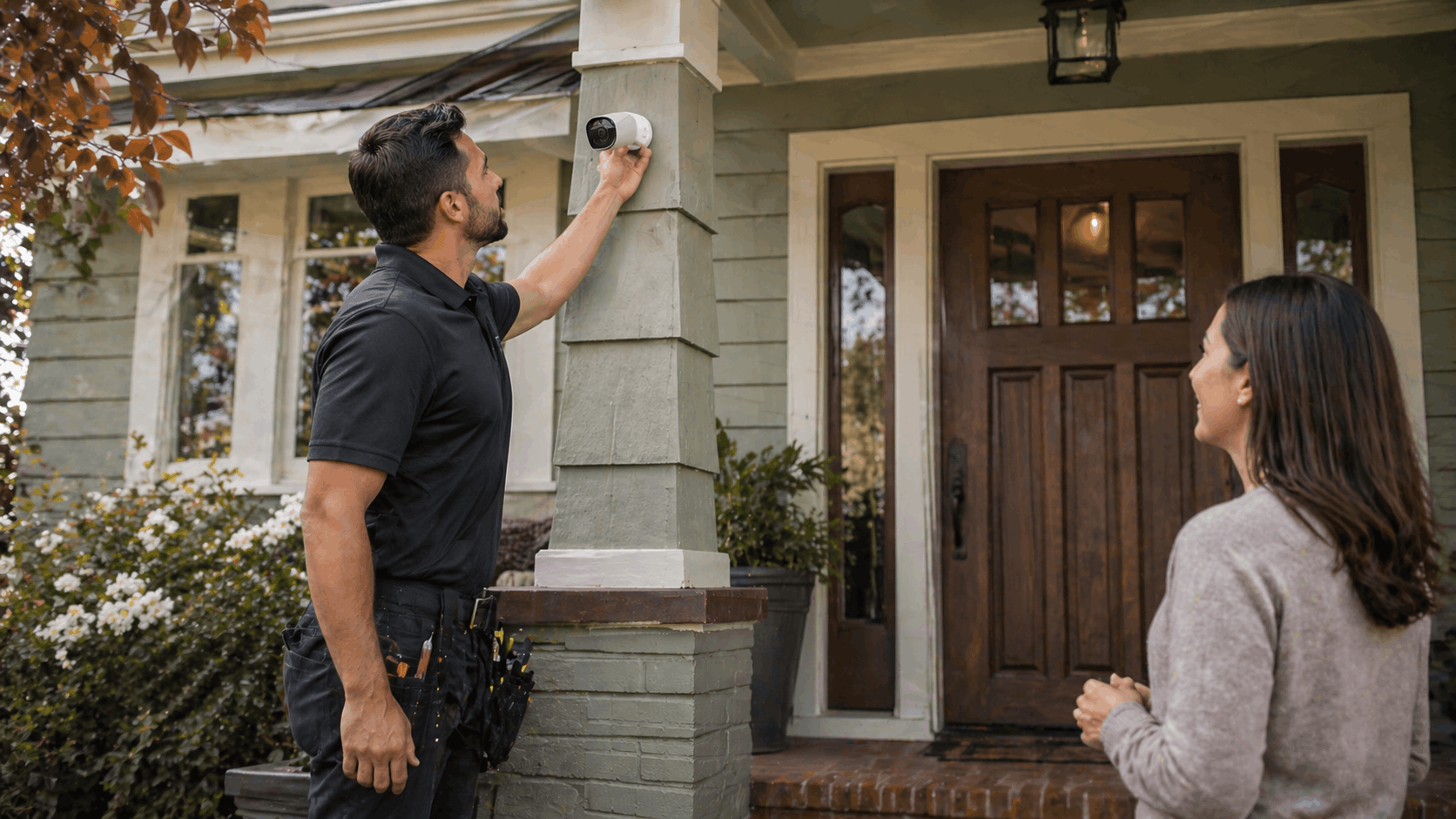
A yearly maintenance visit catches the small problems before they become failures. The checklist is straightforward: clean camera lenses with a microfiber cloth and lens-safe solution, check battery levels on all wireless sensors, test every door and window contact by opening and confirming the alarm panel registers the trip, and inspect outdoor equipment housings for corrosion or cracking seals.
Outdoor equipment in coastal San Diego air lasts seven to twelve years with regular maintenance and four to six years without it. The difference comes down to catching corroded contacts and degraded seals before moisture gets inside. Camera cleaning matters too - a film of marine layer residue on a lens reduces night vision quality significantly before the homeowner notices anything is wrong in daytime footage. Security system maintenance service from Smart Shield Systems covers all of this in a single annual visit.
Monitoring Plans and Emergency Response Times in Mission Hills and Hillcrest
Professional security monitoring means a staffed center receives the alarm signal, attempts to verify whether an actual emergency is occurring, and contacts SDPD for dispatch if the situation warrants it. For Mission Hills and Hillcrest homeowners, the practical question is what that actually looks like when an alarm goes off at 2 a.m. - and whether the response time is fast enough to matter.
SDPD Northern Division covers both neighborhoods. The station at 4275 Eastgate Mall is the primary Northern Division facility, though patrol units are distributed throughout the service area at any given time. SDPD response time to Mission Hills and Hillcrest varies with call volume, but alarm calls classified as verified emergencies receive priority over unverified alarm calls.
What Happens After Your Alarm Goes Off
The sequence runs like this: a sensor triggers, the alarm panel sends a signal to the monitoring center, the monitoring center attempts to reach the homeowner by phone, and if the homeowner does not respond with the correct disarm code, the center contacts SDPD for dispatch. Most monitoring centers complete this sequence in 30 to 90 seconds.
San Diego requires homeowners to register their alarm systems with the city and obtain a permit. The current fee runs approximately $26 to $35 annually depending on the permit category. Unregistered systems that generate false alarm responses from SDPD are subject to fines - the false alarm fee schedule in San Diego increases with each unverified response, starting around $113 for the first false alarm and rising from there. Smart Shield Systems walks new customers through the alarm permit San Diego registration process as part of the post-install checklist, so this does not catch anyone off guard after the system goes live.
Self-Monitoring vs. Professional Monitoring: A Honest Look
Self-monitoring home security saves the monthly monitoring fee - typically $25 to $60 per month - but it creates a gap in coverage that matters. When the homeowner is asleep, stuck in a meeting, traveling, or simply does not check their phone for twenty minutes, a self-monitored alarm is an alert that goes nowhere. Nobody calls SDPD on the homeowner's behalf.
In walkable, higher-foot-traffic areas like Hillcrest near University Avenue, foot traffic creates more opportunities for opportunistic property crime. A professional monitoring plan that contacts SDPD even when the homeowner cannot respond is meaningful coverage in this context. 24/7 alarm monitoring through Smart Shield Systems costs less than most homeowners expect and covers the hours when self-monitoring fails most often.
Need Help in San Diego?
Smart Shield Systems serves San Diego and all of San Diego County.
Working With Smart Shield Systems: What the Installation Process Looks Like
A lot of homeowners in Mission Hills and Hillcrest have called us after a bad experience with a national security company that sent an installer who had never worked in an older home. The installer drilled through plaster in the wrong spot, could not figure out the knob-and-tube situation, and left with the job half done. Our process is built around older homes specifically because that is where most of our work in this part of San Diego happens.
From the first call to a live, tested system typically takes seven to fourteen days depending on scheduling and equipment availability. The process has three distinct phases: site assessment, installation day, and post-install walkthrough.
The Site Assessment: What Our Team Looks at First
A Smart Shield Systems technician visits the home before any equipment gets ordered. During the security site assessment, the team evaluates every entry point - doors, windows, skylights, and any attic hatches. Wall construction gets checked: is it original horsehair plaster, standard drywall, or a mix? What does the electrical situation look like, and is there any knob-and-tube in the walls near planned sensor locations?
Exterior lighting, sight lines from the street to the rear yard, alley access points, and the distance from the main house to any detached structures all factor into the equipment recommendation. If the property has a historic designation or a Mills Act contract, the technician documents that and adjusts the plan accordingly. This step matters more for older homes than for new construction because there are more variables that cannot be seen until someone actually walks the property.
Installation Day: Timeline and What Homeowners Should Expect
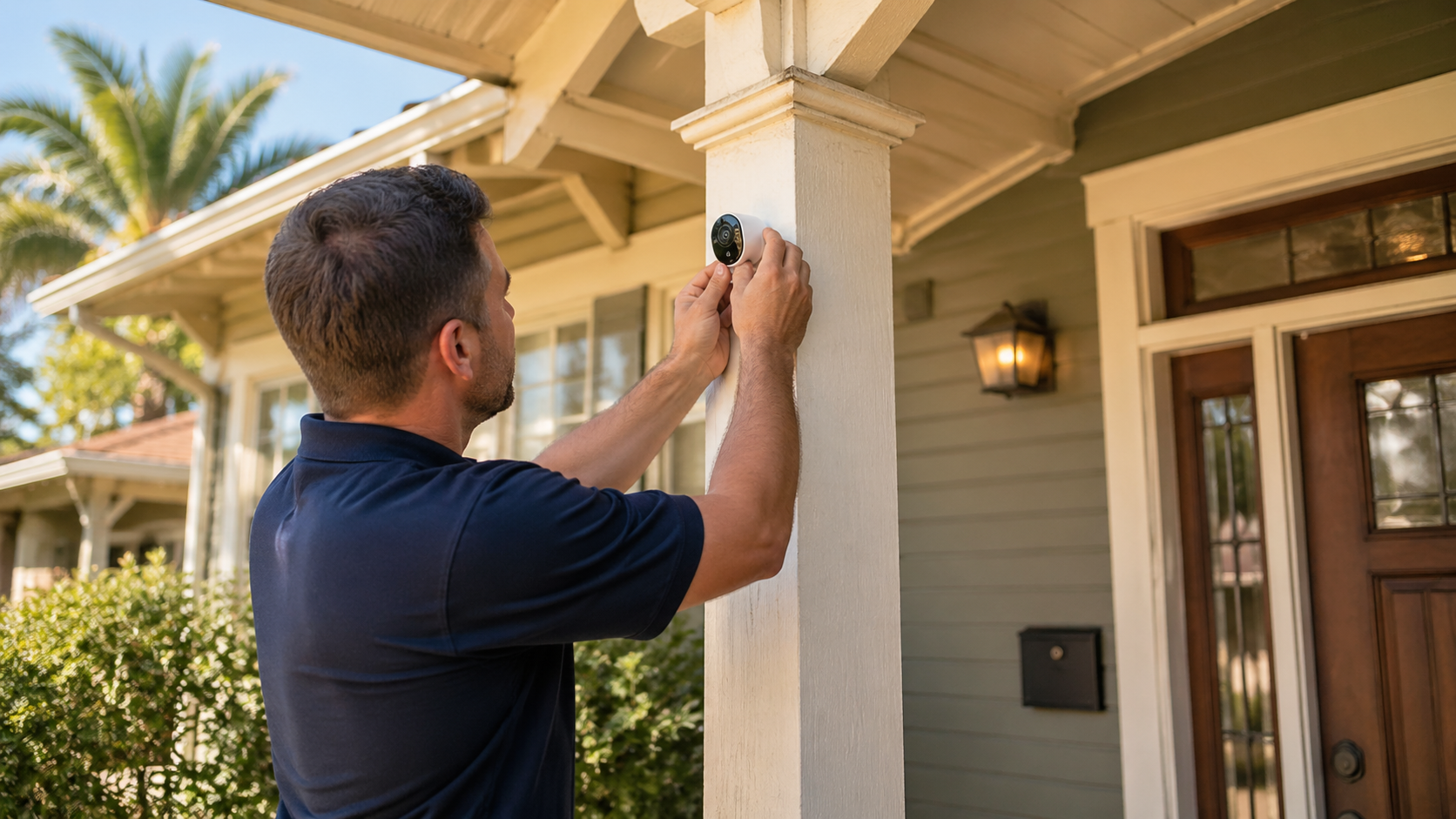
Most Craftsman homes in the 900 to 1,800 square foot range take four to seven hours to install a full system. Homes with more than ten sensors, difficult attic access, or long alley-facing coverage requirements sometimes run longer. Smart Shield Systems schedules full-day windows for older home installs specifically to avoid rushing through the parts that require care.
The team works with original finishes throughout the install. Low-impact mounting hardware - adhesive sensor mounts where appropriate, small screws into wood eave soffits rather than large lag bolts - keeps the impact on original materials minimal. Before anything goes on a wall or trim piece, the installer photographs the original surface. That documentation protects both the homeowner and the team if any question comes up later about the condition of original materials.
Post-Install: Testing, Training, and Getting Comfortable With the System
After the hardware is in place, every sensor gets tested individually. Each door and window contact trips the panel. Each motion sensor walks. Each camera gets reviewed for field of view and image quality. The monitoring center gets a test signal. Only after everything checks out does the walkthrough begin.
Alarm system training covers the panel operation, the mobile app setup, user code creation for household members, and the monitoring center contact protocol. Homeowners learn what to expect when the alarm trips accidentally and how to communicate the all-clear to avoid a false alarm dispatch. Smart Shield Systems offers follow-up support for the first 30 days after install - phone calls, remote diagnostics, and a return visit if anything needs adjustment. Reaching our team during that first month is straightforward, and most questions get resolved without a truck roll.
Final Thoughts
Mission Hills and Hillcrest Craftsman homes deserve security systems that respect their age and craftsmanship. The right approach is not a one-size-fits-all package from a national company - it is a system built around the specific construction, layout, and historic status of each individual property.
Smart Shield Systems has worked throughout these neighborhoods and understands the difference between a plaster wall install and a drywall install, between a Mills Act property and a standard resale, and between what works under a Craftsman eave and what looks out of place. The security challenges are real, and so are the solutions.
If the home on Ibis Street, Fort Stockton Drive, or Randolph Street has been on your mind, a site assessment is the right place to start. Contact Smart Shield Systems to schedule one - no pressure, no prepackaged quote, just an honest look at what the home needs.
Frequently Asked Questions
- Will installing a security system damage my historic Craftsman home's original woodwork or plaster?
- Wireless systems require minimal drilling, and experienced installers use adhesive mounts on original trim wherever the surface allows it. Smart Shield Systems specifically photographs original finishes before any install begins, creating a documented baseline of the home's condition. For plaster wall sensor mounts, small adhesive clips handle most window and door contacts without touching the plaster surface at all. Any drilling that does happen uses bits sized for the smallest possible hole.
- How much does a home security system typically cost for a Craftsman bungalow in Mission Hills or Hillcrest?
- Equipment costs for a typical Craftsman bungalow run $400 to $1,500 depending on the number of zones and camera count. Installation labor adds $300 to $600. Monthly monitoring plans run $25 to $60 depending on the service tier. Homes with detached garages, long alley exposures, or more than eight sensor zones typically land at the higher end of these ranges. A site assessment gives a specific quote based on the actual property.
- Do I need an alarm permit from the City of San Diego before getting a system installed?
- San Diego requires homeowners to register alarm systems with the city and obtain a permit. The current annual fee runs approximately $26 to $35. False alarm responses from SDPD carry a fee schedule that starts around $113 for the first unverified response and increases with each subsequent call. Smart Shield Systems helps new customers complete the alarm registration process as part of the post-install walkthrough, so the permit is in place before the system goes live.
- Can smart locks be installed on original Craftsman doors without replacing the hardware?
- Retrofit smart locks work on most original Craftsman deadbolts by attaching to the interior thumb turn and leaving the exterior hardware completely untouched. The exterior of the door looks identical after installation. The main exceptions are doors with non-standard backset measurements or heavily warped frames where the deadbolt throw is already binding. Those situations warrant a locksmith assessment before any smart lock gets ordered, to protect both the lock investment and the original door.
- How does the marine layer affect outdoor security cameras in Mission Hills and Hillcrest?
- Marine layer moisture causes condensation inside camera housings rated below IP66, which fogs lenses from the inside and corrodes circuit board connections over 12 to 18 months. Lens fogging is the most common complaint from homeowners who installed budget cameras themselves. Smart Shield Systems uses IP66-rated or higher equipment on all outdoor installations in coastal San Diego neighborhoods to avoid this failure pattern. Annual lens cleaning also extends image quality significantly in this climate.
- What is the average police response time to an alarm in Mission Hills or Hillcrest?
- SDPD Northern Division covers both neighborhoods, and response times vary with call volume and patrol unit positioning. Verified alarm calls - where the monitoring center has confirmed a likely intrusion before dispatching - receive priority over unverified calls. This distinction matters when choosing a monitoring plan. A plan that includes video verification, where the monitoring center reviews camera footage before calling dispatch, typically gets faster SDPD response than a basic sensor-only alert. Alarm systems with monitoring that include verification are worth the slightly higher monthly cost.
- Can my detached 1930s garage be added to the same system as my main house?
- Detached structures can be covered as separate zones on the same monitoring plan using wireless sensors. The garage gets its own contact sensors on doors, and those sensors report back to the main panel just like any other zone. On deeper lots along Albatross Street where the garage sits 60 to 80 feet from the main house, a wireless signal extender - typically a $40 to $80 addition - bridges the distance reliably. There is no need for a separate monitoring plan or panel for the outbuilding.
- Will a security system interfere with my home's Mills Act contract or historic designation?
- Security system installation generally does not affect Mills Act contracts as long as exterior modifications are minimal and reversible. Wireless systems with adhesive-mounted sensors and cameras mounted under eave overhangs with small screws meet this standard in most cases. Homeowners with individually designated properties should check with the City of San Diego's Historical Resources Board before any exterior hardware gets mounted. Smart Shield Systems reviews designation status during the site assessment and adjusts the installation plan accordingly.
- How long does a typical security system installation take in an older home?
- Most Craftsman homes in the 900 to 1,800 square foot range take four to seven hours for a complete installation. Homes with thicker original plaster, limited attic access, more than ten sensors, or long alley-facing camera runs may take longer. Smart Shield Systems schedules full-day windows for older home installs specifically because rushing through the detail work on original finishes creates problems that are expensive to fix. Homeowners should plan to be present for the full install day.
- Does Smart Shield Systems service both Mission Hills and Hillcrest, and how do I get started?
- Smart Shield Systems is based in San Diego and regularly works throughout Mission Hills, Hillcrest, and surrounding neighborhoods including Bankers Hill, North Park, and beyond. To get started, contact us to schedule a site assessment. Have the property address ready, along with any information about historic designation status or Mills Act contracts if applicable. The assessment takes about an hour, covers the full property, and results in a specific equipment recommendation and cost range - not a generic package price. Our San Diego service area covers the neighborhoods where Craftsman home security matters most.
S
Smart Shield Systems Team Team
Licensed security systems professionals serving San Diego and San Diego County.
Licensed in California · License #7623
Why trust Smart Shield Systems?
Founded in 2016, Smart Shield Systems is a licensed and insured security systems serving San Diego and San Diego County. All content is reviewed by our licensed technicians.

Need Help in San Diego?
Smart Shield Systems serves San Diego and all of San Diego County.
Related Articles

How-To Guides
Smart Locks for San Diego Homes - What to Choose and What to Avoid
Learn which smart locks perform best in San Diego's coastal climate and which models to avoid. Expert guide covers salt air resistance, neighborhood compatibility, and installation considerations for local homes.
Safety & Prevention
Home Security for Linda Vista Homes and Rentals That Actually Works
Discover proven home security solutions for Linda Vista homes and rentals. Smart Shield Systems provides neighborhood-specific security systems that actually work.

Cost Guides
Security System Installation in Kearny Mesa for Homes and Businesses
Professional security system installation in Kearny Mesa by Smart Shield Systems. Comprehensive home and business security solutions with expert installation, monitoring, and support.