Safety & Prevention
How Carjacking Trends in San Diego Are Changing Home Security Priorities
Key Takeaways
- San Diego carjacking and vehicle theft rates have measurably increased in neighborhoods like City Heights, Logan Heights, and National City, with spillover into quieter areas like Tierrasanta and Allied Gardens.
- Relay attacks allow criminals to steal keyless-entry vehicles from driveways in under 60 seconds with no forced entry - a Faraday pouch for key fobs and passive entry disabling are the primary defenses.
- A stolen vehicle containing a garage opener and registration document can give criminals both the address and physical access to a home - removing openers from vehicles and switching to smart controllers closes this gap.
- License plate recognition cameras placed 6 to 8 feet high at the driveway entry, paired with motion-activated lighting, provide the most actionable evidence for SDPD investigations after an incident.
- Outdoor camera selection in San Diego should match coastal or inland conditions - IP67-rated corrosion-resistant housings for areas near Pacific Beach or La Jolla, and high-temperature-rated units for El Cajon and Santee.
- A basic professional driveway camera and lighting installation runs $400 to $900, while a full perimeter system covering driveway, backyard, side gates, and smart garage integration costs $1,500 to $3,500 in San Diego.
- Free protective steps - removing garage openers from vehicles, storing key fobs in Faraday pouches, and monitoring activity via SDPD crime mapping - reduce exposure meaningfully before any hardware is purchased.
- Smart Shield Systems conducts on-site property assessments before recommending or installing any system, accounting for sight line obstructions, lighting gaps, garage opener age, and property-specific angles that generic setups miss.
In This Article
A Clairemont homeowner steps outside on a Tuesday morning and notices something off - the neighbor's Tacoma, usually parked in the driveway by 8 p.m., is gone. No broken glass, no skid marks, no obvious sign of anything wrong. Just an empty concrete slab where a truck used to be. That quiet moment of unease is exactly what Smart Shield Systems hears about on service calls across San Diego every week. The car disappears, the neighbor files a report, and suddenly everyone on the block starts asking the same question: how secure is my own driveway?
That question used to stop at "do I have an alarm?" Now it goes much further. Rising vehicle theft and carjacking incidents across San Diego - from City Heights to Kensington to pockets of Mira Mesa - are pushing homeowners to look at their entire property perimeter differently. The driveway is no longer just a place to park. It is the first point of contact between a criminal and everything else on the property.
What the Carjacking Numbers Actually Look Like in San Diego Right Now
Vehicle theft in San Diego is not just a feeling. The numbers from the San Diego Association of Governments (SANDAG) and SDPD crime data have shown measurable increases in auto-related crime across multiple zip codes over the past several years. Carjacking - which involves taking a vehicle by force or intimidation - is a distinct category from standard auto theft, though both are rising in parts of the city.
The distinction matters because the security response is different. Auto theft from a parked car with no one present calls for better passive deterrents: cameras, lighting, and relay-attack defenses. Carjacking, which involves a person being present, is a more immediate personal safety concern and often happens during predictable moments like pulling into a driveway or stopped at a light.
| Crime Type | Definition | Most Common San Diego Locations | Trend Direction |
|---|---|---|---|
| Carjacking | Vehicle taken by force with occupant present | City Heights, Logan Heights, Mid-City corridors | Increasing in residential areas |
| Auto Theft (Unoccupied) | Vehicle stolen without owner present | National City, Southeastern SD, Mid-City | Rising, especially keyless models |
| Relay Attack Theft | Keyless entry exploited via signal amplification | Citywide, higher in newer vehicle areas | Growing rapidly |
| Vehicle Break-In | Entry without theft of the vehicle itself | Tourist areas, older residential streets | Steady to slightly elevated |
Which San Diego Neighborhoods Are Seeing the Most Incidents
City Heights and Mid-City have consistently appeared in SDPD incident reports for vehicle-related crime. Logan Heights has seen carjacking incidents cluster near surface streets that provide quick access to freeway on-ramps. Parts of National City near the 805 corridor also show up frequently in vehicle theft data - the access to multiple freeway exits makes it easier to move a stolen vehicle quickly.
That said, the assumption that vehicle crime stays contained to these areas is wrong. Tierrasanta, Allied Gardens, and even quieter pockets of San Carlos have recorded spillover incidents. Opportunistic theft follows parked cars, not zip code boundaries. A well-lit driveway in a lower-crime area still attracts attention if a high-value vehicle is visible and unprotected.
City Heights auto theft and Logan Heights carjacking incidents tend to draw media coverage, but National City vehicle crime numbers deserve equal attention from homeowners in adjacent neighborhoods.
Why Carjacking Patterns Are Shifting Toward Residential Streets
Parking lots at large retailers and shopping centers have added more cameras, better lighting, and security patrols in recent years. That visibility pushed activity elsewhere. Residential driveways, side streets, and blocks near trolley stops have fewer cameras, inconsistent lighting, and less foot traffic - which makes them more attractive targets.
El Cajon Boulevard and University Avenue are two corridors where this dynamic plays out. The streets branching off these main roads have mixed housing density, scattered streetlights, and quick freeway access. A residential carjacking on a side street near these corridors gives a thief a 60-second window and multiple escape routes before anyone calls 911.
Driveway vehicle theft is also rising because criminals have learned that homeowners often park the same car in the same spot at the same time each evening - creating a predictable pattern that is easy to observe from a slow-moving car over a few days.
How Relay Attacks and Keyless Entry Theft Changed the Game
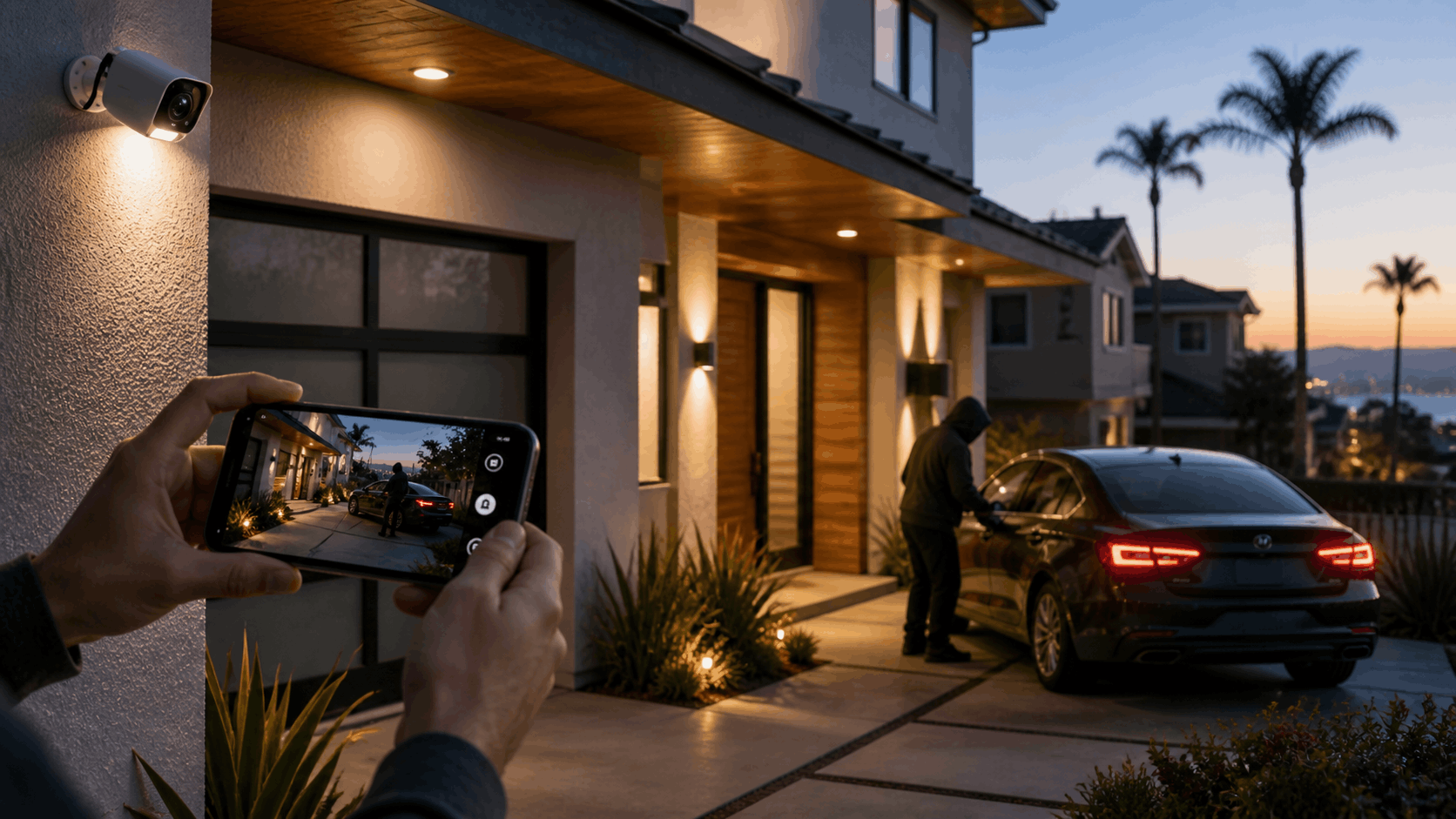
Relay attack car theft sounds complicated but the execution is simple. Two people work together. One stands near the target home - sometimes within feet of the front door - and uses a signal amplifier to capture the key fob's broadcast. A second person near the vehicle receives that amplified signal with a relay device. The car thinks the key is right there and unlocks. The second person gets in and drives away.
The whole thing takes under 60 seconds and leaves no sign of forced entry. No broken window, no scratched lock, no alarm trigger. The homeowner often does not know the car is gone until morning. Keyless entry theft in San Diego has risen alongside the adoption of push-button ignition vehicles, which now make up a large share of cars parked in driveways across the city.
Standard home security setups were not built with relay attacks in mind. Addressing this threat requires different tools - signal-blocking pouches, passive entry disabling, and physical security layers that a camera alone cannot provide.
How Homeowners Are Rethinking Driveway and Garage Security
The calls coming into Smart Shield Systems have changed over the past two years. It used to be mostly alarm system upgrades and camera replacements. Now, a large portion of new consultations start with the driveway. Homeowners want to know what a criminal sees when they approach, and whether any part of the setup would actually stop them - not just record them after the fact.
Driveway security upgrades in San Diego are happening in layers. A single camera is rarely the answer. What actually moves the needle is a combination of license plate capture, smart garage access control, and motion lighting - installed with proper placement for the specific property layout. Video surveillance systems built around these principles perform meaningfully better than off-the-shelf setups installed without a site assessment.
Driveway Cameras That Actually Capture License Plates at Night
A standard outdoor camera captures motion and general shapes. A license plate recognition (LPR) camera is built for a different job - it captures plates clearly at distance, in low light, and without motion blur from a moving vehicle. The image sensors, shutter speed settings, and lens focal length are all different.
Placement matters as much as the camera itself. Most residential LPR installations sit 6 to 8 feet high, angled toward the street entry point at roughly a 15-to-30 degree downward angle. In hillside neighborhoods like Mount Helix or Encanto, that angle calculation changes because the driveway grade affects the camera's line of sight. A camera that works well on a flat Mira Mesa lot may miss plates entirely on a steep Encanto driveway without custom mounting.
License plate recognition camera installation done right captures the full plate, not just a blurry image that investigators cannot use. That detail makes a measurable difference in whether SDPD can actually act on footage after an incident.
Smart Garage Door Controllers and Why Older Openers Are a Liability
Homes in Rancho Bernardo and Mira Mesa built in the 1990s and early 2000s often still have the original garage door openers. Many of those use a fixed radio code that does not change between uses. A cheap radio scanner - available for under $30 online - can capture that code from across the street and replay it to open the door.
Rolling-code openers are more secure because they generate a new code after each use. But even rolling-code systems do not tell you when the garage was opened, how long it stayed open, or whether it closed fully before you went to sleep. Smart garage controllers add that layer. They log every open and close event with a timestamp, send real-time phone alerts, and allow remote locking from anywhere. Garage door automation upgrades are one of the most requested additions to existing San Diego home security setups right now.
Motion-Activated Lighting as a First Line of Detection
Motion lights do not stop a determined thief alone, but they change the risk calculation for opportunists. A driveway that floods with 2,000 lumens the moment someone approaches it is a much less comfortable working environment than a dark one. Most casual car thieves will move on to a less visible target.
Placement makes the difference. For homes on corner lots - common throughout North Park and Normal Heights - a single motion light covering only the front driveway leaves the side street approach completely dark. Those properties benefit from dual-direction coverage with sensors on both exposed sides. Smart lighting systems that pair with camera motion zones give homeowners both visual deterrence and an automatic camera trigger when the light fires.
Need Help in San Diego?
Smart Shield Systems serves San Diego and all of San Diego County.
Get Your Free Quote
Tell us about your property and we'll get back to you fast.
The Connection Between Vehicle Theft and Broader Home Vulnerability
A stolen car from the driveway can be the beginning of a bigger problem, not the end of one. Most people do not think about what was inside the car until after they file the police report. That is when the second wave of concern hits - the garage door opener clipped to the visor, the spare house key in the center console, the registration document in the glove box with the home address printed on it.
That combination - opener plus address - hands a criminal a map and a key to the house. The stolen vehicle becomes a stepping stone to a garage break-in or home invasion. This is not a rare scenario. It shows up in SDPD case reports and in conversations with homeowners who call Smart Shield Systems after the fact, wishing they had thought about this connection earlier.
What Thieves Do With Garage Openers and Registration Documents
The stolen garage opener theft risk is highest in neighborhoods with attached garages, because access through the garage goes directly into the living space without any exterior door in between. Newer developments in Otay Ranch and Eastlake in Chula Vista have a high proportion of attached two-car garages, which makes this exact scenario more common in those areas.
Registration document theft adds a time pressure element. A criminal now knows the home address and can return within hours, before the owner even realizes the car is gone and changes access codes. Otay Ranch home security consultations at Smart Shield Systems frequently include this exact conversation - how to break the chain between a stolen vehicle and a subsequent home entry attempt.
The fix is not complicated: remove the garage opener from every vehicle, store a physical house key separately from the car, and program smart garage controllers so a stolen physical remote can be deactivated remotely. Keyless entry systems eliminate the physical remote vulnerability entirely.
How Smart Shield Systems Evaluates Your Full Property Perimeter
A perimeter security assessment is not a sales walkthrough. It is a systematic check of every point where someone could approach, enter, or observe the property without being detected. Smart Shield Systems technicians check sight line obstructions - trees, fences, hedges - that create blind spots for cameras. They look at lighting gaps, entry points including side gates and alley access, and whether existing cameras cover what homeowners think they cover.
Properties along canyon-edge streets in Scripps Ranch and Del Cerro are a good example of where this matters most. The rear and side exposures on those lots often face undeveloped canyon land with no ambient lighting and no neighbor line of sight. Those are exactly the blind spots that a standard front-door camera setup misses entirely. A full property security assessment in San Diego accounts for those site-specific conditions, not just the standard driveway and front door.
Video Surveillance Systems Built for San Diego's Outdoor Conditions
San Diego's climate looks mild on paper but puts outdoor cameras through conditions that shorten lifespans and degrade image quality faster than most manufacturers' spec sheets suggest. The marine layer that rolls in from the coast brings moisture and salt air that corrodes cheap housing. Summer heat in El Cajon and Santee regularly pushes past 100 degrees, which stresses electronics that were not rated for it. Then Santa Ana wind events dump dust and debris into camera housings that were not properly sealed.
Choosing outdoor security cameras in San Diego means matching the hardware to the specific conditions at that address. A camera that performs well in Pacific Beach will not survive five years in Santee without the right heat tolerance rating. A camera built for inland heat may corrode in two seasons if installed within a mile of the Ocean Beach waterfront.
Camera Housing Ratings That Matter in Coastal vs. Inland San Diego
IP65 and IP67 are the two ratings that come up most often in security camera specs. IP65 means the housing is protected against low-pressure water jets from any direction - fine for most inland locations. IP67 means the camera can handle temporary submersion, which also means it handles salt-laden coastal air and heavy condensation much better. Homes in Pacific Beach, La Jolla, and Coronado benefit from IP67-rated housings with corrosion-resistant materials, not just standard weatherproof finishes.
Inland homes in El Cajon and Spring Valley face a different issue. Salt air is not the threat there - sustained high heat is. Cameras installed in south-facing positions on El Cajon homes can see surface temperatures well above ambient air temperature during summer afternoons. Operating temperature ratings matter more than moisture ratings for those installations. A camera rated to 122°F handles El Cajon summers. One rated to 104°F does not.
Night Vision and Low-Light Performance for San Diego Driveways
Color night vision cameras use larger sensors and wider apertures to pull in available ambient light and produce full-color footage even in dim conditions. Infrared cameras use IR LEDs to illuminate a scene in a spectrum invisible to the human eye, producing black-and-white footage regardless of ambient light levels. Both have their place in San Diego driveway setups.
Older sections of Southeast San Diego and Linda Vista have inconsistent streetlight coverage - some blocks are well-lit and others are nearly dark. On those darker blocks, color night vision relies on ambient light that may not be there, making IR or hybrid cameras more reliable. On well-lit streets in Mission Hills or Bankers Hill, color night vision produces more useful footage for identifying faces and vehicle colors. Smart Shield Systems matches the camera type to the actual light conditions at each specific address, not just a default specification.
Local Storage vs. Cloud Recording - What Makes Sense for Most San Diego Homes
NVR and DVR local storage keeps footage on-site, which means no monthly fees and no dependence on internet bandwidth. The drawback is that if the recorder is damaged, stolen, or loses power during an outage, footage can be lost. Santa Ana wind events in fire-adjacent areas like Rancho Santa Fe and Valley Center bring real power disruption risk, and local-only recording without battery backup can wipe the exact footage that investigators need after an incident.
Cloud recording solves the power-outage footage loss problem but introduces ongoing costs and bandwidth requirements. A hybrid setup - local NVR with automatic cloud backup for critical camera feeds - gives most San Diego homeowners the best of both. Rancho Santa Fe home security setups frequently include hybrid recording because the fire and wind risk in that area makes footage redundancy genuinely worth the added cost.
Smart Home Integration - Linking Car Security to Your Home System
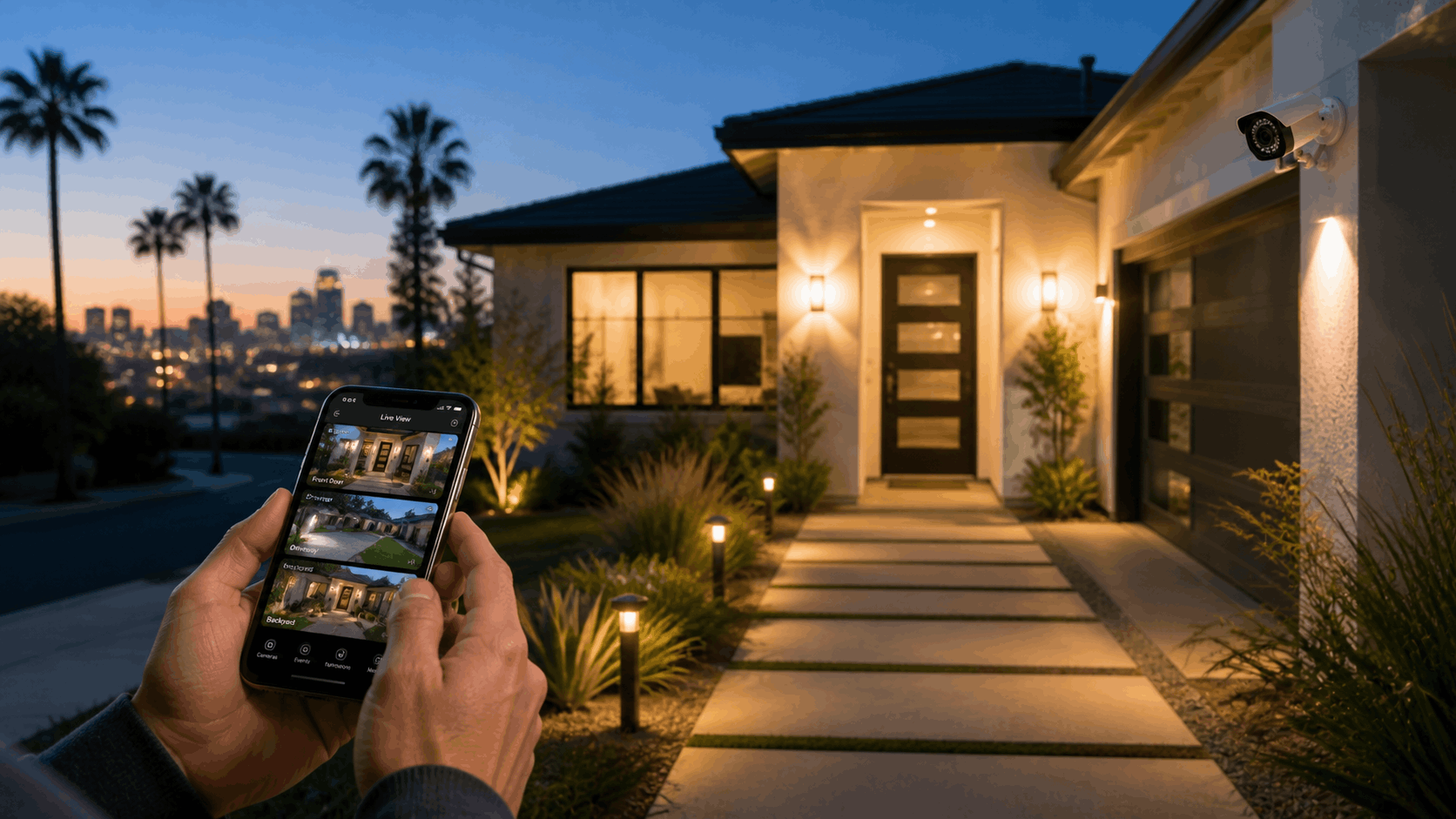
The shift toward integrated home security platforms is visible in the service calls Smart Shield Systems handles across San Diego. Homeowners no longer want five separate apps for the alarm, the garage, the cameras, the doorbell, and the locks. They want one view that shows everything happening on the property in real time - and the ability to act from that same interface.
New construction in areas like Carmel Valley comes pre-wired for smart home integration in many cases. Older homes in Lemon Grove, College Area, and similar neighborhoods require retrofit wiring - which is workable but needs to be planned carefully. Smart home security integration for an older home is a different project than in a new build, but the end result - a single unified platform - is achievable in both cases.
Connecting Driveway Alerts to Your Phone in Real Time
Modern camera systems with vehicle detection AI can distinguish between a car moving through the frame and a person approaching on foot - and send different alerts for each. A homeowner in Hillcrest gets a push notification at 2 a.m. that a person has been detected in the driveway motion zone. They open the app, see a live feed, confirm it is an unknown individual, and call 911 before anything escalates. That sequence takes under 90 seconds from alert to call.
Without real-time vehicle detection and app integration, that same scenario ends with a stolen car in the morning and no footage because the camera recorded to a full card that overwrote itself. The alert is what makes the difference between response and discovery after the fact. South Park homeowners with integrated systems have used exactly this sequence to report active incidents to SDPD with enough lead time for a patrol response.
Smart Locks, Garage Controllers, and Alarm Panels on One Platform
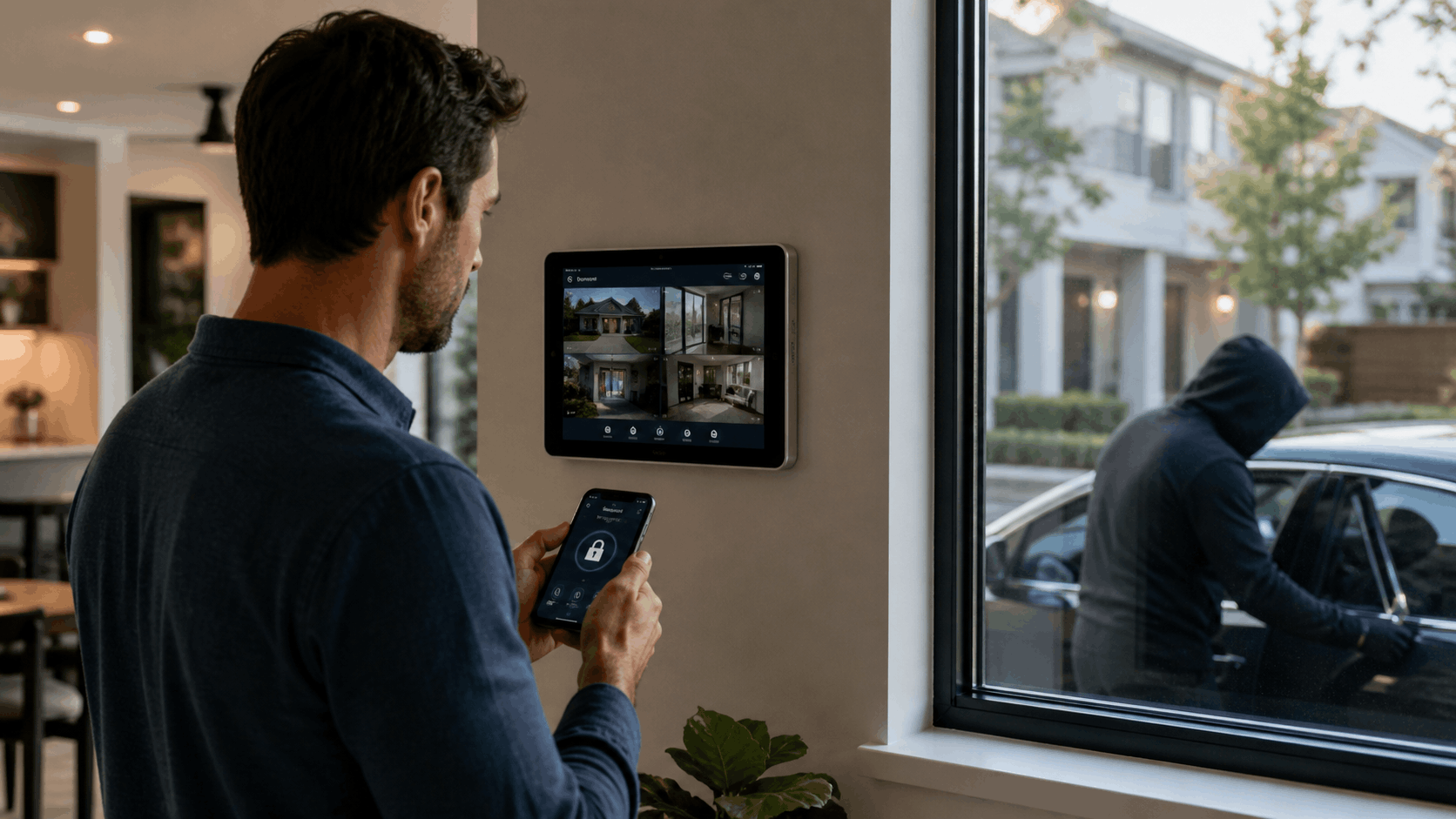
An integrated platform means the homeowner can arm the alarm, verify the garage is closed, lock all smart-lock equipped doors, and review the last hour of driveway camera footage from a single app screen. If the garage shows as open at midnight, they close it remotely. If a camera shows an unfamiliar vehicle idling in front of the house, they can trigger the exterior lights and pull up the live feed simultaneously.
Smart Shield Systems installs and programs these systems for both Carmel Valley new builds and retrofit projects in older neighborhoods. The programming step - setting up automation rules, motion zones, and alert thresholds - is where most DIY setups fall short. Getting those settings right for a specific property layout takes time and local knowledge that a remote setup wizard does not provide. Access control and smart lock systems installed as part of an integrated platform work significantly better than the same hardware installed independently.
Need Help in San Diego?
Smart Shield Systems serves San Diego and all of San Diego County.
What a Realistic Home Security Upgrade Actually Costs in San Diego
Security upgrade pricing in San Diego varies more than most homeowners expect, and the variation is not random. Property layout, existing wiring, garage door opener age, number of access points, and whether the home has an attached or detached garage all affect the final number. Smart Shield Systems gives customers honest, specific estimates after seeing the property - not a price over the phone based on a zip code.
That said, there are realistic ranges for the most common upgrade packages. These numbers reflect professional installation in San Diego, including labor, hardware, and initial configuration. They do not include ongoing monitoring fees, which are separate and vary by plan.
Entry-Level Driveway Camera and Lighting Packages
A single-camera driveway setup with a motion-activated floodlight and professional installation runs $400 to $900 depending on camera type and wiring complexity. At this price point, homeowners get one well-positioned camera covering the driveway entry, motion lighting integrated with the camera trigger, and basic app connectivity. This setup makes sense for a single-family home in Tierrasanta with one exposed driveway and no particularly complex angles.
A corner lot in Normal Heights with two street-facing sides, or a Clairemont home with both a driveway and a side yard gate, will need more than one camera to cover the exposure properly. At the entry-level price point, those properties are only partially covered. The motion light installation in San Diego adds $150 to $300 to the hardware cost depending on the fixture type and whether existing electrical is accessible nearby.
Mid-Range Perimeter Systems for Typical San Diego Homes
The $1,500 to $3,500 range covers what most San Diego single-family homes actually need for meaningful perimeter coverage. A typical mid-range system includes three to six cameras covering the driveway, backyard, and side gates; a smart garage controller; and connection to a monitored alarm panel. Installation and initial configuration are included.
Homes with detached garages or alley access - common in older neighborhoods like Normal Heights and North Park - often need additional coverage points that push toward the higher end of that range. A detached garage on an alley requires its own camera position, its own lighting, and potentially a dedicated cable run that adds both time and material cost. The home security system cost in San Diego for these configurations is higher, but the coverage gap that a detached garage creates without dedicated protection is significant.
When a Full System Overhaul Makes More Financial Sense Than Piecemeal Upgrades
The tipping point usually comes when a homeowner already has two or more outdated analog cameras, a basic alarm panel from a previous decade, and wants to add two more cameras plus a smart garage controller. Adding new IP cameras to an old analog system requires a separate recorder, separate app, and a setup that cannot share a single interface. Over three to five years, the cost of maintaining two parallel systems - plus replacing aging analog components as they fail - typically exceeds what a single replacement system would have cost upfront.
The math works like this: two old analog cameras plus a basic alarm plus a new IP driveway camera plus a smart garage controller bought separately costs $1,200 to $1,800 in hardware alone, requires two or three different apps, and produces footage that investigators struggle to work with. A unified analog to IP camera upgrade with a single NVR and integrated alarm connection costs $1,800 to $2,800 installed but runs on one platform, produces better footage, and does not require separate maintenance contracts for each component.
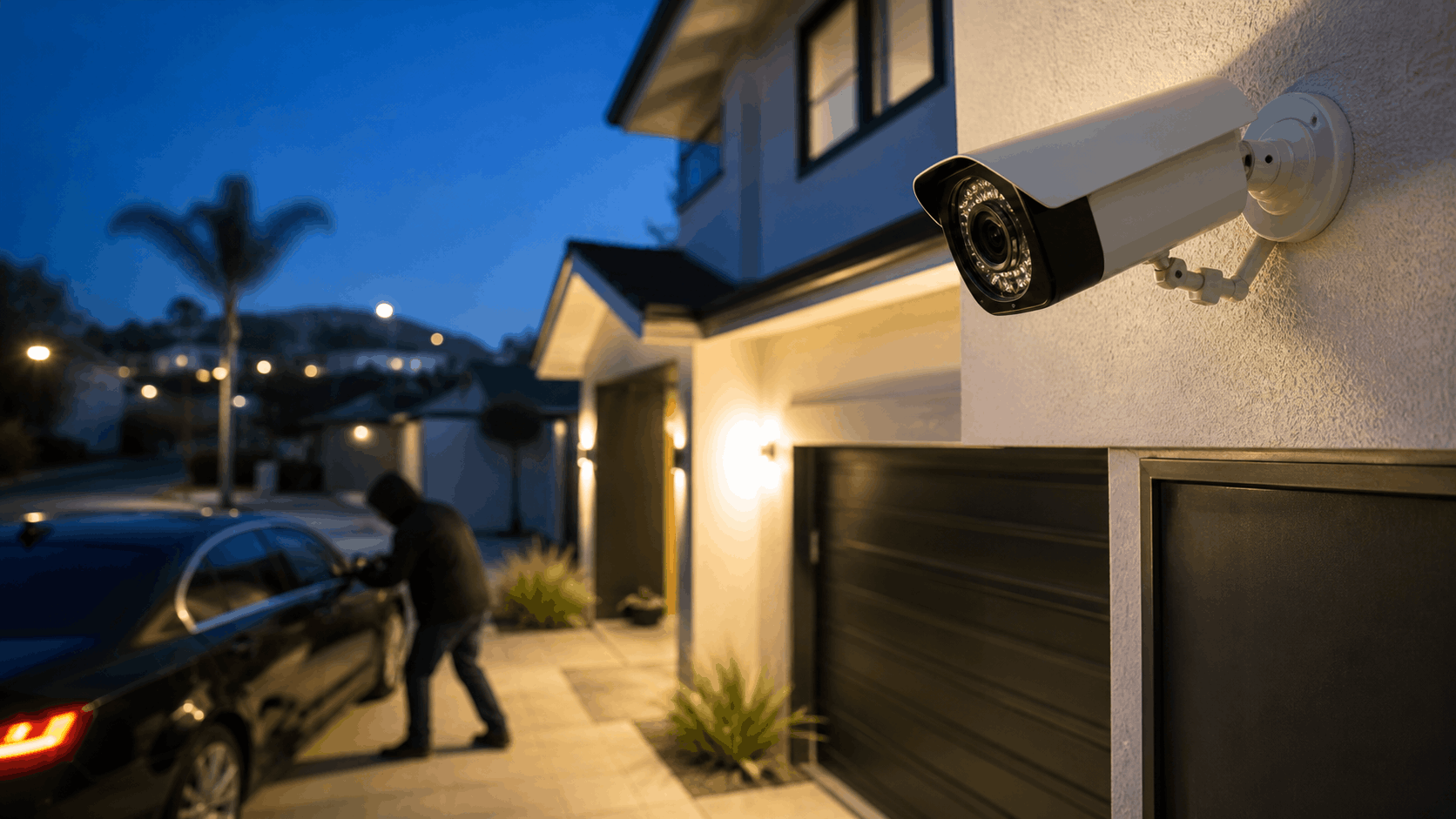
How Smart Shield Systems Approaches Vehicle and Driveway Security in San Diego
Every new driveway security project at Smart Shield Systems starts with a site visit - not a phone estimate, not a Google Maps review of the address. The technician who does the assessment is typically the same one who does the installation, which means nothing gets lost between the evaluation and the actual work. That continuity matters on complicated properties where the assessment notes are not a substitute for the technician's direct observations.
Smart Shield Systems serves San Diego and the surrounding region, including Chula Vista, National City, and El Cajon. The local knowledge that comes from working across these specific neighborhoods every week informs every assessment and installation recommendation.
The Site Walkthrough - What Our Team Looks for First
The first thing a Smart Shield Systems technician checks is sight lines - specifically, what can be seen from the street and what cannot. Trees, hedges, fences, and parked vehicles all create potential blind spots that a camera placed at the standard mounting position will miss. The technician walks the property from the street perspective first, then from the interior, noting where the gaps are.
After sight lines, the check moves to existing wiring, the garage door opener model and age, Wi-Fi signal strength at the driveway edge, and current lighting coverage after dark. Hilly properties in Kensington and Rolando often have angles that require custom camera brackets or extended mounting arms to achieve the right field of view. A Kensington home security assessment that does not account for grade changes and fence heights will produce a camera layout that looks right on paper but misses the actual approach angles a thief would use.
Installation Timeline and What to Expect on the Day
A mid-range driveway and garage system installation on a standard San Diego single-family home takes four to six hours. The first hour is typically cable routing and bracket installation. The second and third hours cover camera mounting, garage controller installation, and alarm panel integration. The final phase is configuration - motion zone setup, alert threshold tuning, app pairing, and the walkthrough with the homeowner.
Homeowners should clear vehicle access from the driveway before the technician arrives and make sure the interior garage wall and attic access points are reachable. After the installation is complete, the technician walks through every camera angle on the app with the homeowner, adjusts any zones that do not cover the right areas, and confirms that remote access and alerts are working before leaving the property.
Ongoing Monitoring and Support After Installation
Smart Shield Systems offers both 24/7 professional alarm monitoring and app-based self-monitoring options after installation. Professional monitoring means a dispatch center is automatically notified when an alarm triggers and can contact emergency services without the homeowner needing to do anything. Self-monitoring means the homeowner gets the alert and makes the call.
Local support is a practical advantage that a national call center cannot replicate. A technician familiar with Chula Vista street layouts or Miramar's industrial zone access patterns can diagnose a false alarm cause or respond to a service call faster and more accurately than remote support. 24/7 alarm monitoring services through Smart Shield Systems are backed by local technician support - not just a national phone line. Scheduled maintenance checks are also available to catch camera drift, firmware issues, and motion zone changes before they become problems.
Practical Steps San Diego Homeowners Can Take Right Now
Not every protective measure requires a service call or a hardware purchase. Some of the most effective changes cost nothing and can be made before the end of the day. Smart Shield Systems recommends a layered approach: start with free behavioral changes, add low-cost hardware where it makes sense, and bring in professional installation for the parts of the system where placement and configuration actually determine whether the hardware works.
The goal is not to spend as much as possible - it is to close the specific gaps that exist on each property. A homeowner in Tierrasanta with one driveway and good ambient lighting has different gaps than a homeowner on a corner lot in North Park with alley access, a detached garage, and no motion lighting on the side street. The steps below apply broadly, but the priority order shifts depending on the property.
Free and Low-Cost Changes That Make a Real Difference
The single most impactful free action is removing the garage door opener from every vehicle in the household and programming a smart controller or keypad instead. Right behind that: storing key fobs in a Faraday pouch at night to block relay attack amplification. Both of these cost nothing beyond the pouch, which runs $10 to $25.
Parking near lights - even just choosing the brighter end of a street when parallel parking - reduces exposure for opportunistic theft. Registering on the SDPD online resources and using their crime mapping tools to track activity near a specific address helps homeowners calibrate how active their block actually is, rather than relying on secondhand accounts. Free vehicle theft prevention starts with awareness and simple habit changes that most people skip because they seem too easy to matter. They do matter.
Hardware Upgrades Under $300 Worth Prioritizing
A quality motion floodlight camera for the driveway - a single unit that combines a 1080p or better camera with a motion-triggered floodlight - runs $80 to $200 for a well-reviewed model. Position it 9 to 10 feet high at the garage corner or eave, angled to capture the driveway entry point without pointing directly into the street where oncoming headlights create glare and wash out license plates.
A steering wheel club lock for older vehicles without factory immobilizers adds a visible deterrent that slows down a thief long enough to make the vehicle less attractive than the next one down the block. A Faraday bag for key fobs - kept near the front door, never on an exterior wall - blocks the signal amplification that relay attacks depend on. These three items together cost under $250 and address three different vectors: visible deterrence, passive entry attack prevention, and driveway monitoring.
When to Call a Professional Security Installer
DIY setups work for simple, single-camera situations on properties with one clear access point and good existing lighting. They fall short when the property has multiple access points, a detached garage, alley entry, previous break-in attempts, or sits on a high-traffic street near a transit corridor like the Blue Line trolley route or an Interstate 15 off-ramp. Those conditions require placement decisions that affect whether the system actually captures usable footage.
A professional security assessment adds camera angle verification, motion zone calibration, system integration, and documentation of the full camera layout for insurance purposes. The difference between a professionally placed camera and a self-installed one in the wrong position is often the difference between footage that identifies a vehicle and footage that shows a blur near the street edge. Professional home security camera installation is worth the added cost when the property has complexity that self-installation guidance does not account for.
Need Help in San Diego?
Smart Shield Systems serves San Diego and all of San Diego County.
Final Thoughts
Carjacking trends and vehicle theft in San Diego have pushed driveway and garage security from an afterthought to a genuine priority for homeowners across the city. The patterns have changed - criminals are moving toward residential streets, relay attacks have made keyless vehicles vulnerable without any obvious sign of tampering, and a stolen car can open the door to a much larger problem if a garage opener or registration document was inside.
The right response is proportionate and property-specific. Not every home needs a complete system overhaul. But most San Diego driveways have at least one meaningful gap - a camera blind spot, an outdated opener, inconsistent lighting, or no real-time alert capability. Finding and closing those gaps is what actually reduces risk. Smart Shield Systems is here to help San Diego homeowners do exactly that, starting with a straightforward site assessment and honest recommendations. Contact Smart Shield Systems to schedule a property walkthrough and find out where your driveway security actually stands.
Frequently Asked Questions
Is carjacking actually increasing in San Diego, or does it just feel that way?
The data supports the concern. Both SDPD incident reports and SANDAG crime analysis have documented measurable increases in vehicle-related crimes across several San Diego zip codes over recent years. Carjacking specifically - involving force or intimidation with a person present - has risen in Mid-City corridors and parts of Southeastern San Diego. The increase is real and confirmed, not just a perception driven by social media coverage or news cycles.
What parts of San Diego have the highest vehicle theft risk right now?
Areas around zip codes 92105 (City Heights), 92113 (Logan Heights), and corridors near transit hubs in National City and Mid-City show elevated vehicle theft reports in SDPD data. That said, opportunistic theft is not confined to high-crime zip codes. Quieter neighborhoods like Allied Gardens and Tierrasanta have recorded incidents because thieves follow visible, unprotected vehicles - not neighborhood boundaries. Risk exists citywide and varies by lighting, visibility, and vehicle type.
Can a home security camera actually deter carjacking, or just record it?
Cameras play both roles, and which one matters more depends on the type and placement. Visible camera housings with posted signage deter casual opportunists who prefer an unmonitored target. That deterrence effect is measurable against low-effort, low-planning theft. For determined or time-pressured criminals, visible cameras are less of a deterrent but become evidence. Hidden cameras sacrifice deterrence entirely in favor of evidence collection. Most residential setups benefit from visible placement with the best possible capture angles.
How does a relay attack work and how do I stop it?
A relay attack involves two people. One stands near the home and uses a device to amplify the key fob's wireless signal through walls. The second person, standing near the vehicle, receives that extended signal and tricks the car into thinking the authorized key is present. The car unlocks and starts. Defenses include keeping key fobs in a Faraday-lined pouch at night, disabling passive entry on compatible vehicles through the settings menu, and storing fobs away from exterior walls and windows.
What should I do if my car is stolen from my driveway in San Diego?
Call SDPD immediately - 911 if the theft happened within the last few minutes, the non-emergency line (619-531-2000) for a theft discovered after the fact. Have the vehicle's VIN, license plate number, and a description ready. Pull up your home camera footage right away and save it before any overwrite cycle runs. If you have a Smart Shield Systems NVR or cloud account, footage can be pulled and exported quickly for the responding officer. Notify your auto insurance provider after filing the police report.
Is my garage door opener actually a security risk?
Older fixed-code openers, common in homes built before the mid-1990s, broadcast the same code every use. A scanner can capture and replay that code. Rolling-code openers generate a new code after each activation, which closes that vulnerability. Even rolling-code systems, however, provide no alert if left open and no remote locking capability. Smart garage controllers add real-time open and close alerts, activity logs, remote lock capability, and auto-close timers - features that fixed and rolling-code openers simply do not have.
How much does a basic driveway security setup cost in San Diego?
A professionally installed single camera with motion lighting runs $400 to $900 depending on camera resolution, housing type, and wiring complexity. That covers a standard single-access driveway on a typical San Diego lot. A more complete perimeter setup covering the driveway, side yard, backyard, and garage with a smart controller runs $1,500 to $3,500 installed. Homes with complex layouts, detached garages, or alley access typically fall at the higher end of that range due to additional cable runs and mounting positions.
Does homeowner's insurance in California cover vehicle theft from a driveway?
Homeowner's insurance does not cover vehicle theft - that falls under auto insurance with comprehensive coverage. However, personal items inside the stolen vehicle, such as a laptop or tools, may be covered by a homeowner's policy depending on the policy terms and deductible. California auto insurance with comprehensive coverage is required to cover vehicle theft. Some insurers also offer reduced premiums for homes with professionally monitored alarm systems, which can partially offset the cost of a security upgrade over time.
How long does it take Smart Shield Systems to install a driveway security system?
A standard mid-range installation on a typical San Diego single-family home takes four to six hours from arrival to completion walkthrough. That covers camera mounting, garage controller installation, NVR or cloud recorder setup, app pairing, and motion zone configuration. Larger properties in areas like Scripps Ranch or Sabre Springs with longer driveway runs, multiple outbuildings, or older wiring that requires new conduit runs may require a full eight-hour day. The technician confirms the estimated timeframe after the site assessment.
What is the difference between self-monitored and professionally monitored home security?
With self-monitoring, the homeowner receives app alerts when sensors trigger and decides personally whether to call 911. It requires the homeowner to be reachable and attentive at any hour. Professional monitoring means a 24/7 dispatch center receives the alert automatically and can contact emergency services without the homeowner doing anything - useful during travel, deep sleep, or when the phone is silenced. Professional monitoring typically costs $20 to $50 per month depending on the plan and coverage level. Both options are available through Smart Shield Systems.
Frequently Asked Questions
- Is carjacking actually increasing in San Diego, or does it just feel that way?
- The data supports the concern. Both SDPD incident reports and SANDAG crime analysis have documented measurable increases in vehicle-related crimes across several San Diego zip codes over recent years. Carjacking specifically - involving force or intimidation with a person present - has risen in Mid-City corridors and parts of Southeastern San Diego. The increase is real and confirmed, not just a perception driven by social media coverage or news cycles.
- What parts of San Diego have the highest vehicle theft risk right now?
- Areas around zip codes 92105 (City Heights), 92113 (Logan Heights), and corridors near transit hubs in National City and Mid-City show elevated vehicle theft reports in SDPD data. That said, opportunistic theft is not confined to high-crime zip codes. Quieter neighborhoods like Allied Gardens and Tierrasanta have recorded incidents because thieves follow visible, unprotected vehicles - not neighborhood boundaries. Risk exists citywide and varies by lighting, visibility, and vehicle type.
- Can a home security camera actually deter carjacking, or just record it?
- Cameras play both roles, and which one matters more depends on the type and placement. Visible camera housings with posted signage deter casual opportunists who prefer an unmonitored target. That deterrence effect is measurable against low-effort, low-planning theft. For determined or time-pressured criminals, visible cameras are less of a deterrent but become evidence. Hidden cameras sacrifice deterrence entirely in favor of evidence collection. Most residential setups benefit from visible placement with the best possible capture angles.
- How does a relay attack work and how do I stop it?
- A relay attack involves two people. One stands near the home and uses a device to amplify the key fob's wireless signal through walls. The second person, standing near the vehicle, receives that extended signal and tricks the car into thinking the authorized key is present. The car unlocks and starts. Defenses include keeping key fobs in a Faraday-lined pouch at night, disabling passive entry on compatible vehicles through the settings menu, and storing fobs away from exterior walls and windows.
- What should I do if my car is stolen from my driveway in San Diego?
- Call SDPD immediately - 911 if the theft happened within the last few minutes, the non-emergency line (619-531-2000) for a theft discovered after the fact. Have the vehicle's VIN, license plate number, and a description ready. Pull up your home camera footage right away and save it before any overwrite cycle runs. If you have a Smart Shield Systems NVR or cloud account, footage can be pulled and exported quickly for the responding officer. Notify your auto insurance provider after filing the police report.
- Is my garage door opener actually a security risk?
- Older fixed-code openers, common in homes built before the mid-1990s, broadcast the same code every use. A scanner can capture and replay that code. Rolling-code openers generate a new code after each activation, which closes that vulnerability. Even rolling-code systems, however, provide no alert if left open and no remote locking capability. Smart garage controllers add real-time open and close alerts, activity logs, remote lock capability, and auto-close timers - features that fixed and rolling-code openers simply do not have.
- How much does a basic driveway security setup cost in San Diego?
- A professionally installed single camera with motion lighting runs $400 to $900 depending on camera resolution, housing type, and wiring complexity. That covers a standard single-access driveway on a typical San Diego lot. A more complete perimeter setup covering the driveway, side yard, backyard, and garage with a smart controller runs $1,500 to $3,500 installed. Homes with complex layouts, detached garages, or alley access typically fall at the higher end of that range due to additional cable runs and mounting positions.
- Does homeowner's insurance in California cover vehicle theft from a driveway?
- Homeowner's insurance does not cover vehicle theft - that falls under auto insurance with comprehensive coverage. However, personal items inside the stolen vehicle, such as a laptop or tools, may be covered by a homeowner's policy depending on the policy terms and deductible. California auto insurance with comprehensive coverage is required to cover vehicle theft. Some insurers also offer reduced premiums for homes with professionally monitored alarm systems, which can partially offset the cost of a security upgrade over time.
- How long does it take Smart Shield Systems to install a driveway security system?
- A standard mid-range installation on a typical San Diego single-family home takes four to six hours from arrival to completion walkthrough. That covers camera mounting, garage controller installation, NVR or cloud recorder setup, app pairing, and motion zone configuration. Larger properties in areas like Scripps Ranch or Sabre Springs with longer driveway runs, multiple outbuildings, or older wiring that requires new conduit runs may require a full eight-hour day. The technician confirms the estimated timeframe after the site assessment.
- What is the difference between self-monitored and professionally monitored home security?
- With self-monitoring, the homeowner receives app alerts when sensors trigger and decides personally whether to call 911. It requires the homeowner to be reachable and attentive at any hour. Professional monitoring means a 24/7 dispatch center receives the alert automatically and can contact emergency services without the homeowner doing anything - useful during travel, deep sleep, or when the phone is silenced. Professional monitoring typically costs $20 to $50 per month depending on the plan and coverage level. Both options are available through Smart Shield Systems.
S
Smart Shield Systems Team Team
Licensed security systems professionals serving San Diego and San Diego County.
Licensed in California · License #7623
Why trust Smart Shield Systems?
Founded in 2016, Smart Shield Systems is a licensed and insured security systems serving San Diego and San Diego County. All content is reviewed by our licensed technicians.

Need Help in San Diego?
Smart Shield Systems serves San Diego and all of San Diego County.
Related Articles
How-To Guides
How to Choose the Right Home Security System for Your San Diego Home
Picking the right home security system in San Diego means weighing your layout, budget, and goals. This guide walks you through assessing your needs, comparing equipment types, and choosing monitoring so your home in San Diego County is protected.
Safety & Prevention
Home Security for Linda Vista Homes and Rentals That Actually Works
Discover proven home security solutions for Linda Vista homes and rentals. Smart Shield Systems provides neighborhood-specific security systems that actually work.

Safety & Prevention
Best No-Drill Security Cameras for San Diego Apartments and Renters
Discover the best no-drill security cameras perfect for San Diego apartment renters. Learn about wireless, magnetic mount, and battery-powered options that protect your rental without lease violations.