Tips & Advice
Solana Beach Security Systems: Coastal Affluent Property Service

Key Takeaways
- Salt air near Fletcher Cove and the bluffs corrodes standard security gear fast, so marine-grade housings and IP66/IP67 cameras are needed on the coast.
- Part-time and seasonal Solana Beach homes benefit from remote monitoring, automated lighting, and alerts that keep an empty house looking lived in.
- Design review boards and California Coastal Commission rules can limit visible equipment, so discreet placement and hidden wiring keep installs compliant.
- Weather-rated cameras with strong low-light and wide dynamic range handle the morning marine layer and coastal glare better than standard units.
- Pet-immune and dual-technology motion sensors cut false alarms from coastal wind and wildlife, while 24/7 monitoring coordinates with the San Diego County Sheriff.
- Larger coastal systems commonly run $5,000 to $15,000-plus with $30 to $75 monthly monitoring, and marine-grade hardware adds 10 to 25 percent.
- Guest houses, garages, pools, and bluff-edge rear approaches all need dedicated coverage on larger Solana Beach lots.
- Monitored systems can lower coastal insurance premiums, and professional-grade gear outlasts cheap DIY kits in salt air conditions.
In This Article
It was a foggy Tuesday morning along Highway 101, and a Solana Beach homeowner near Fletcher Cove woke up to a blaring alarm and no idea why. The marine layer had rolled in thick overnight, and a motion sensor on the ocean-facing patio kept tripping every time the fog shifted and the wind moved a hanging plant. By the time she found the app, silenced the siren, and confirmed nobody was in the yard, she had already annoyed two neighbors and lost her morning coffee to the panic.
That scene plays out more often than people think in coastal neighborhoods. Living this close to the water changes the rules for home security in ways that inland homes never deal with. Salt air, seasonal vacancies, high property values, and strict design review rules all shape what actually works here.
Our team at Smart Shield Systems has walked hundreds of properties from the bluffs off Pacific Avenue to the hillside lots near Lomas Santa Fe Drive. In this guide, we will cover why coastal homes need a different approach, which cameras and alarms hold up near the ocean, how smart home features protect part-time residents, what installation looks like, and what it all costs.
Why Coastal Homes in Solana Beach Need Different Security?
Coastal home security is not just regular security placed near the water. The ocean, the price of these homes, and the way owners come and go all push the equation in a different direction. A system built for a home in the middle of the county will underperform within sight of the surf.
Property values along the coast raise the stakes too. When a home is worth several million dollars and sits empty for weeks, the margin for error shrinks. Below is a quick look at how coastal factors compare to a typical inland home.
| Factor | Inland Home | Solana Beach Coastal Home |
|---|---|---|
| Equipment wear | Normal wear over years | Salt air speeds corrosion within months |
| Occupancy | Usually year-round | Often part-time or seasonal |
| Property value | Moderate | High, attracts targeted theft |
| Install rules | Standard permits | Design review and coastal permits |
Salt Air and Equipment Wear Near the Ocean
Salt air corrosion is the first thing that separates a coastal install from an inland one. Homes near Fletcher Cove and Del Mar Beach sit in a constant mist of salt that settles on every outdoor surface. Standard cameras and sensors that would last a decade inland can start failing in a year or two right on the water.
We see it in the connectors first. The tiny metal contacts inside camera housings and sensor terminals pit and rust, which leads to dropped footage and false readings. Screws seize, mounting brackets streak with rust, and cheap plastic housings turn brittle from the salt and sun combination.
Outdoor cameras take the worst of it because they face the weather all day. A unit mounted on an ocean-facing wall gets far more coastal wear than one tucked under a covered entry. That is why placement and material choice matter as much as the camera brand itself.
Our approach is to plan for the salt from day one. We use marine-grade hardware, seal every entry point, and schedule checks that catch corrosion before it becomes a failure. It costs a little more upfront and saves owners from replacing gear every couple of years.
High-Value Targets and Seasonal Vacancies
Homes along Pacific Avenue and the bluffs often sit empty for weeks at a time. Owners travel, spend summers elsewhere, or keep these as second properties. An empty high-value home is exactly what an experienced thief looks for.
Vacant home security has to do two jobs at once. It has to detect a break-in fast, and it has to make the home look lived in so nobody targets it in the first place. Seasonal residents who leave in the off months need both layers working together.
We have seen how patterns give a home away. Newspapers piling up, dark windows every night, and no cars in the driveway all signal an empty house. Our systems for these owners lean on automated lighting, remote alerts, and video that owners can pull up from anywhere.
For part-time residents, a monitored system paired with residential alarm installation gives real coverage while they are gone. The goal is a home that never looks unwatched, even when the owner is a thousand miles away.
Privacy Concerns for Affluent Households
Wealthy homeowners in Solana Beach care about discretion as much as protection. They do not want a system that broadcasts their absence or puts bulky boxes on the front of a carefully designed home. Home privacy is part of the job here.
Discreet security means equipment that blends into the architecture. Cameras that mount flush, sensors hidden in trim, and control panels tucked out of sight all keep the home looking like a home rather than a fortress. The protection is there, but it does not announce itself.
Data protection matters just as much as physical hardware. Interior footage should stay private, encrypted, and stored where only the owner can reach it. We set up systems so cloud footage is locked down and access is limited to people the owner names.
Owners also worry about who can see their cameras. We walk through exactly how footage is stored, who has access, and how alerts are handled so there are no surprises. Privacy is built into the plan, not added as an afterthought.
HOA and Coastal Building Rules That Affect Installs
Solana Beach has design review boards and coastal permit rules that shape what equipment can go where. Some streets near the bluffs limit visible hardware on the ocean side entirely. An installer who ignores these rules can create a headache for the homeowner later.
HOA rules in certain communities also restrict exterior changes. A camera mounted where it violates a design guideline can trigger a complaint or a required removal. We check these limits before we quote so the plan fits the rules from the start.
The California Coastal Commission oversees development in the coastal zone, and its guidelines can affect exterior work. You can review the state coastal program through the California Coastal Commission for background on how coastal rules work.
Our team designs around these rules using discreet placement and hidden wiring. That keeps the home compliant and protected without a fight with the design review board. Doing it right the first time saves everyone time and money.
Security Camera Systems Built for Beach Neighborhoods
Security cameras near the coast have to survive conditions that would wreck a standard unit. Salt, fog, wind, and glare all work against clear footage. The right hardware and placement make the difference between usable video and a blurry mess.
Beach neighborhoods also have odd lot shapes and long sightlines that need thought. Below is a quick guide to camera choices for coastal surveillance.
| Camera Need | Feature to Look For | Why It Matters Here |
|---|---|---|
| Salt and fog exposure | IP66/IP67, marine housing | Resists corrosion near the ocean |
| Morning marine layer | Strong low-light and IR | Keeps footage clear in fog |
| Bluff and hillside lots | Wide dynamic range | Covers angled blind spots |
| Part-time owners | Cloud and mobile app | View from anywhere, anytime |
Weather-Rated Cameras for Salt and Fog Conditions
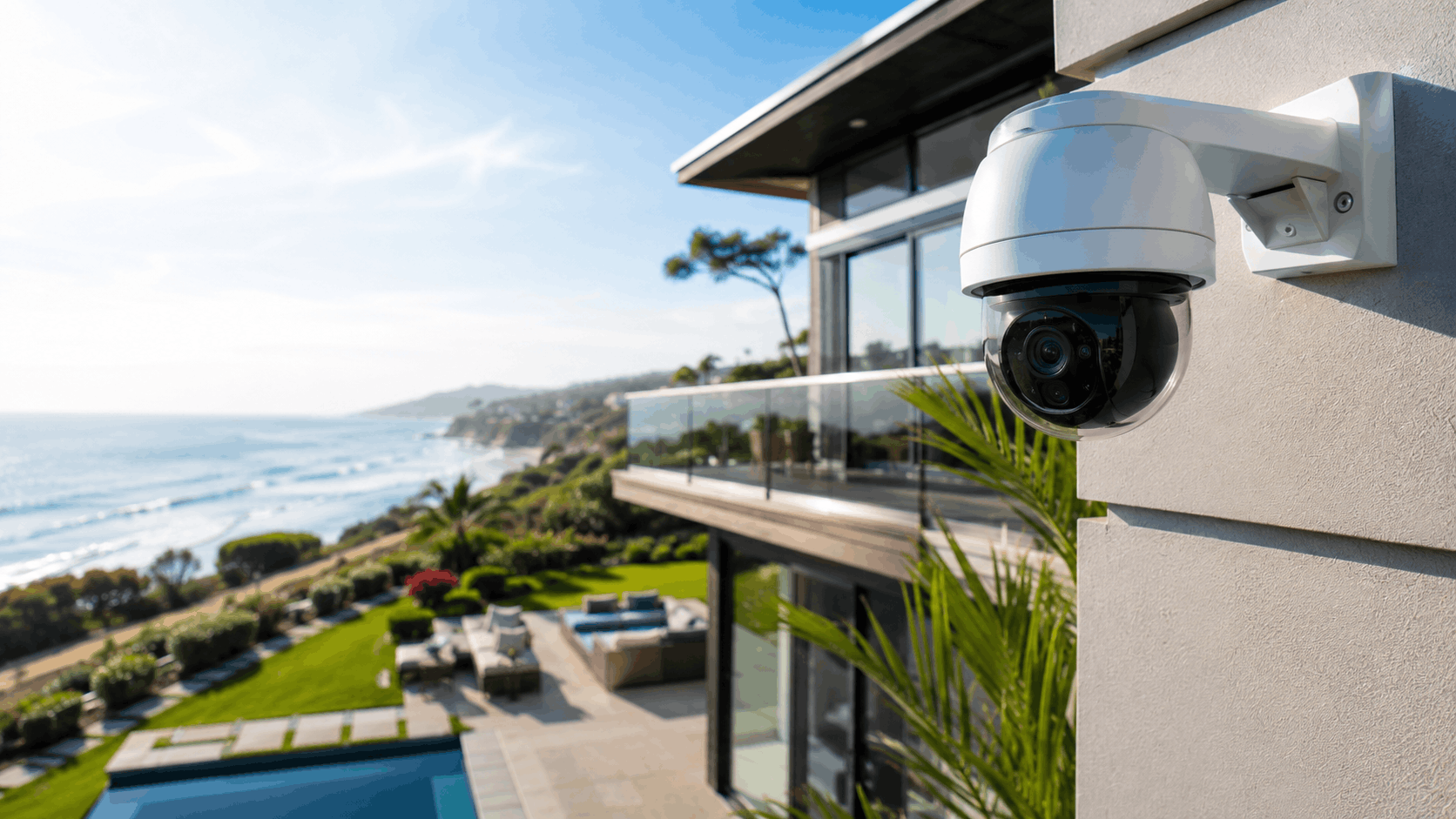
Weatherproof cameras carry an IP rating that tells you how well they resist dust and water. For coastal homes, we look for IP66 or IP67 units that keep salt mist and blowing spray out of the electronics. A standard indoor-rated camera will not last a season on an ocean-facing wall.
Marine-grade housings go a step further with corrosion-resistant materials and sealed gaskets. These are built for boats and docks, so they shrug off salt that eats through cheaper hardware. Paired with quality cabling, they hold up for years near the water.
The rating alone is not enough if the install is sloppy. A high IP rating means nothing if the cable entry is left open or the gasket gets pinched during mounting. We seal every penetration and test the housing before we call it done.
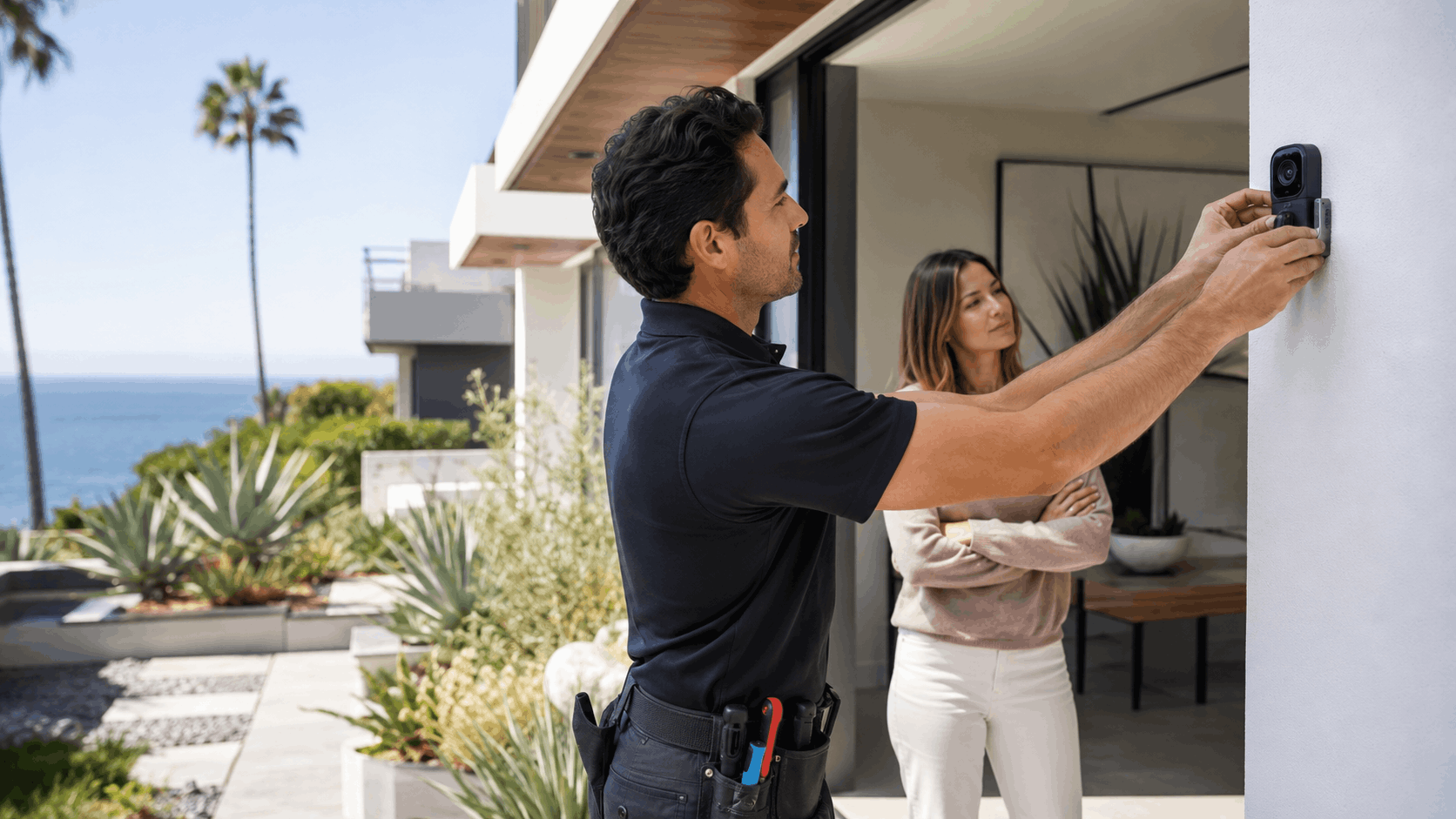
Our video surveillance camera installs use hardware chosen for the exact exposure at each mounting spot. A camera under a deep eave can be lighter duty than one out on the bluff side. Matching the gear to the location keeps costs reasonable and life spans long.
Camera Placement for Bluff and Hillside Lots
Lots off Lomas Santa Fe Drive and along the bluffs are rarely flat. Angled hillside lots create blind spots that a standard four-corner camera plan will miss. Camera placement has to follow the actual shape of the land.
Rear access points are the trickiest part on bluff-edge homes. Beach paths and coastal stairs can give someone a way up to the back of the property where nobody is watching. We map those routes and cover them before anything else.
Height and angle change what a camera can see on a slope. A unit mounted too low on a hillside lot captures a hedge instead of a driveway. We test sightlines during the walkthrough so every camera earns its spot.
Long driveways and gated entries need their own coverage too. Homes set back from the street require a camera at the road and another at the door. That way the whole approach is on video, not just the front step.
Night Vision and Low-Light Coastal Fog
The morning marine layer is a real problem for cameras in Solana Beach. Thick fog scatters infrared light and can wash out footage right when people are moving around at dawn. Low-light cameras built for these conditions handle it far better.
We look for cameras with large sensors and strong night vision that pull detail out of dim, foggy light. Some units use color night vision that keeps footage usable when standard black-and-white IR turns to a gray blur. That difference matters when you need to identify a face or a plate.
Settings help as much as hardware. Adjusting exposure, shutter speed, and IR intensity for the local fog keeps images sharp instead of blown out. We tune each camera to its spot rather than leaving factory defaults in place.
Glare off the water and headlights on a wet street add more challenges. Cameras with wide dynamic range balance bright and dark areas in the same frame. That keeps a license plate readable even against a bright coastal sky.
Remote Viewing for Part-Time Homeowners
Owners who split time between Solana Beach and a second home need to check in from anywhere. Remote monitoring through a mobile app lets them see live video and recent clips on a phone or tablet. That kind of access is what makes a second home feel safe while empty.
Cloud storage keeps footage available even if someone tampers with a local recorder. If a camera catches an event, the clip is already saved off-site. Owners can review it later or hand it to the sheriff if needed.
Alerts turn the app from a passive tool into an active one. A motion event at the back door sends a push notification, and the owner can look right away. For part-time residents, that speed is the whole point.
Our remote video monitoring and analytics setups add smart detection that separates a person from a passing cat. That cuts down on pointless alerts and keeps owners paying attention to the ones that matter.
Need Help in San Diego?
Smart Shield Systems serves San Diego and all of San Diego County.
Get Your Free Quote
Tell us about your property and we'll get back to you fast.
Alarm and Intrusion Detection Options
Larger coastal homes have more doors, more glass, and more ground to cover than a typical house. Alarm systems here need enough layers to catch a real intrusion without crying wolf over the wind. Intrusion detection has to be smart about the coastal setting.
The right mix of entry sensors, motion detection, monitoring, and backup power keeps a home covered around the clock. Each layer does a specific job.
Door and Window Sensors for Ocean-Facing Walls
Coastal homes love glass. Large sliders, folding walls, and rows of windows facing the water are common near the coastline. Every one of those openings is a potential entry point that needs a door or window sensor.
Contact sensors tell the system the moment a door or slider opens. On homes with five or six exterior doors, that coverage has to be complete or a gap invites trouble. We map every opening during the walkthrough so nothing gets skipped.
Glass break sensors add a second layer for those big panes. They listen for the specific sound of shattering glass, so even if the frame stays shut, a broken window still trips the alarm. That matters when a slider is mostly glass.
Our intrusion sensor installation covers the ocean-facing walls that get the least attention and the most exposure. Those walls are often out of sight from the street, which is exactly why they need coverage.
Motion Detection That Ignores Wildlife and Wind
The homeowner near Fletcher Cove learned the hard way that coastal breezes and animals trigger cheap motion sensors. False alarms from wind-blown plants and passing wildlife are a constant near the ocean. The fix is better sensors, not fewer of them.
Pet-immune motion sensors ignore movement below a set weight, so a cat or a raccoon does not set off the siren. That alone cuts a huge share of false trips. Owners with pets can arm the system without worry.
Wind-resistant placement matters too. We avoid aiming sensors at hanging plants, flags, or spots where fog and drafts move objects around. Good placement stops most false alarms before they start.
Dual-technology sensors confirm motion two ways before they trigger. They combine heat detection with movement, so a warm draft alone will not fool them. That combination is well suited to breezy coastal patios and yards.
Professional Monitoring and Local Response
An alarm only helps if someone responds to it. Professional monitoring means a central station watches the system around the clock and dispatches help when an alarm trips. For a home that sits empty, that human backup is the difference between a scare and a loss.
The monitoring center verifies the alarm and contacts the San Diego County Sheriff, which serves Solana Beach. Response times depend on the situation, but verified alarms get priority. Our 24/7 alarm monitoring keeps that chain moving day and night.
Verification cuts down on wasted trips. When the station can confirm a real event through video or a second sensor, deputies know it is worth the drive. That keeps the home on the priority list and avoids false-alarm fines.
Owners also get notified at the same time as the station. So the homeowner in Solana Beach and the second-home owner in another state both know what is happening in real time. Everyone stays in the loop.
Backup Power for Coastal Outages
Coastal storms knock out power along the coast more than people expect. When the grid goes down, an unprotected system goes dark right when it is needed most. Backup power keeps the alarm working through the outage.
Battery backup carries the system for hours during a power loss. The alarm, sensors, and communication stay alive while the lights are out. For a winter storm rolling in off the Pacific, that runtime buys real protection.
Cellular backup handles the internet side. If a storm takes down the cable or phone line, the system still reaches the monitoring center over a cellular connection. A cut line no longer means a silent alarm.
We test both backups during install and again at maintenance visits. A battery that has aged out does no good in an outage. Regular checks confirm the system will still call for help when the power fails.
Smart Home Integration for Luxury Properties
Security works better when it connects to the rest of the home. On larger Solana Beach properties, tying alarms into lighting, locks, and automation makes the whole system smarter. Smart home integration turns separate gadgets into one coordinated setup.
For a luxury property with staff, guests, and multiple structures, that coordination saves time and closes gaps. Everything works together instead of fighting for attention.
Smart Locks and Keyless Entry for Guests and Staff
Handing out physical keys to cleaners, landscapers, and guests is a security risk. Keys get copied, lost, or never returned. Smart locks with access codes solve that by giving each person their own code.
Keyless entry lets owners assign a code to the housekeeper for Tuesday mornings and shut it off the rest of the week. A vacation guest gets a code that works only during their stay. Our keyless entry systems make that control simple.
Temporary codes are perfect for part-time owners who are not there to let people in. A contractor can get a code that expires when the job ends. No key handoff, no lockbox on the door, no loose ends.
Every entry is logged, so owners see who came and went and when. That record is useful when several people have access to a property. It removes the guesswork about who was in the home.
Automated Lighting to Deter Break-Ins
A dark home every night tells thieves nobody is home. Automated lighting fixes that by making a vacant house look lived in. Scheduled and motion-triggered lights change the pattern so the home never looks empty.
Vacation mode varies the timing so lights do not click on at the exact same second every night. That randomness reads as real activity rather than a timer. For seasonal residents, it is one of the strongest deterrents available.
Motion-triggered exterior lights startle anyone approaching the property after dark. A light that snaps on as someone crosses the driveway often ends the attempt right there. It also gives cameras a clearer shot.
Tying lighting into the security system lets the alarm trigger lights during an event. A tripped sensor can flood the yard with light, which draws attention and scares off an intruder. Our smart home automation ties these pieces together.
Video Doorbells and Package Protection
Homes with long driveways off Stevens Avenue and gated entries have a gap at the front. A video doorbell at the door helps, but on a large lot you also want a camera at the gate. Together they cover the whole front entry.
Package theft is a real problem even in nice neighborhoods. A video doorbell records deliveries and sends an alert when someone approaches. Owners can watch a package arrive and know it is safe or catch someone taking it.
Two-way audio lets owners speak to a visitor from anywhere. A delivery driver at a gated entry can be told where to leave a package. That works whether the owner is upstairs or across the country.
For gated properties, we tie the doorbell into gate access so owners can let people in remotely. A guest arrives, the owner sees them, and the gate opens from the app. It keeps the entry secure without anyone standing by the gate.
Connecting Everything to One App
Juggling separate apps for cameras, locks, and alarms wears people out fast. Single app control puts all of it in one place. Owners arm the alarm, check a camera, and lock a door from the same screen.
Integration means the devices talk to each other, not just to the owner. Arming the system at night can lock the doors and set the lights in one tap. That kind of coordination is what a smart platform delivers.
For busy owners who split time between homes, one interface saves real effort. There is no hunting through three apps to figure out if the back door is locked. Everything is right there.
Our voice and app control setup brings cameras, alarms, and locks under one roof. We configure it so the daily routines an owner actually uses are one tap away. The tech stays in the background where it belongs.
Need Help in San Diego?
Smart Shield Systems serves San Diego and all of San Diego County.
Protecting Detached Structures and Outdoor Spaces
Larger Solana Beach lots come with more than a main house. Guest houses, pools, garages, and open yards all need coverage. Outdoor security has to reach past the front door to every part of the property.
Detached structures are often the weak point because owners forget them. A casita or a garage full of gear deserves the same attention as the main home.
Securing Guest Houses and ADUs
Many properties east of Highway 101 have a guest house or ADU on the lot. These accessory units often get overlooked when the main house gets a system. That leaves a whole building unprotected.
Separate coverage means the casita gets its own sensors and cameras tied into the main system. Owners can arm the guest house on its own or with the rest of the property. That flexibility matters when guests come and go.
ADU security also protects whoever lives or stays there. A long-term tenant or a visiting family member gets the same safety as the main house. Everyone on the property is covered.
We tie the ADU into the same app so owners manage both buildings in one place. There is no separate system to remember or maintain. It all works as one property.
Garage and Driveway Monitoring
Garages on these properties often hold valuable vehicles and equipment. A garage packed with cars, bikes, and tools is a target worth watching. Garage security keeps eyes on what is inside.
Driveway cameras catch activity before anyone reaches the house. A camera at the driveway records plates and faces as vehicles arrive. That footage is gold if something goes missing.
Vehicle protection includes sensors on the garage doors themselves. If a door opens when it should not, the system knows. Owners get an alert whether they are home or away.
We can add garage door automation so owners close a door left open from the app. No more driving back to check. A quick look at the phone confirms it and shuts it if needed.
Pool and Yard Safety Sensors
For families with young children, a pool is both a joy and a worry. Pool safety sensors add a layer of protection around the water. They alert when someone enters the pool area unexpectedly.
Perimeter sensors around the yard catch movement before anyone reaches the house. On a large lot, that early warning gives owners time to react. It also keeps track of who is wandering the property.
Yard monitoring cameras cover the open spaces that sensors alone miss. A camera over the pool and patio records what happens in those areas. That helps with both safety and security.
We place these sensors and cameras to cover the spots kids and visitors actually use. A gate sensor on the pool fence and a camera on the patio together give parents a real safety net. The setup fits how the family lives.
Perimeter Coverage for Bluff-Edge Lots
Homes along the coastal bluffs face a unique problem. Beach access paths and coastal stairs create blind spots at the rear of the property. Perimeter security has to reach those bluff-edge approaches.
Rear coverage is where bluff homes get exposed. Someone can come up from the beach and reach the back of the house away from any street view. We cover those routes with cameras and sensors aimed at the water side.
Bluff access points shift with the tide and the seasons. A path that is hard to use in winter opens up in summer. We plan coverage for the full range of conditions, not just the day of the visit.
Lighting helps on the bluff side too. A motion light at the top of a beach stair removes the cover of darkness. Combined with rear cameras, it closes the gap that makes bluff homes vulnerable.
What a Professional Installation Looks Like
Homeowners often ask what actually happens during a security installation. Knowing the process removes the mystery and helps owners plan. Here is how our team handles a Solana Beach project from first visit to final training.
A good install is not just bolting up cameras. It starts with an assessment and ends with an owner who knows how to use the system.
On-Site Assessment of the Property
Every project starts with a walkthrough of the property. Our team walks the lot, notes every entry point, and looks at the sightlines and blind spots. On a coastal home, we also factor in salt exposure at each mounting location.
The site visit is where we learn how the home is actually used. Where do people come and go, which doors get used, where does the family spend time outside. That shapes where sensors and cameras go.
We also check the coastal exposure of each spot. A wall facing the ocean needs tougher hardware than a sheltered entry. Noting that during the assessment keeps the quote accurate.
By the end of the walkthrough, we have a plan matched to the property. The quote reflects the real home, not a generic package. That is how owners avoid paying for coverage they do not need or missing coverage they do.
Clean Wiring and Discreet Placement
A clean install respects the look of the home. We hide cables inside walls and along trim so wiring does not show. On a carefully designed coastal home, that discretion matters as much as the coverage.
Discreet mounting keeps equipment low-profile. Cameras sit flush and sensors tuck into corners where they do the job without drawing the eye. The home stays a home, not a security display.
Good wiring also lasts longer near the coast. Sealed runs and protected connections resist salt and moisture better than exposed cable. Clean work is durable work.
We treat the property like it is our own during the install. Drop cloths, careful drilling, and a full cleanup are standard. Owners come back to a working system, not a mess.
Testing and Homeowner Training
Once everything is mounted, we test the whole system end to end. Every sensor, camera, and alarm gets checked to confirm it works. System testing catches any weak spot before we leave.
Then we walk the owner through the app. Arming and disarming, checking cameras, and setting up alerts are all covered. App setup is only useful if the owner knows how to use it.
We also cover the daily routines that owners actually use. How to give a guest a code, how to check a camera from the road, how to respond to an alert. Real training beats a manual left on the counter.
For part-time owners, we make sure remote features are set up before they leave. They should be able to run the whole system from a second home. We confirm that works before the job is done.
Ongoing Maintenance for Coastal Systems
Coastal systems need regular care that inland systems can skip. Salt drives corrosion and sensor drift over time. Scheduled maintenance catches those issues before they turn into failures.
During a service visit, we check housings for corrosion, test batteries, and confirm every sensor still reads correctly. A sensor that has drifted out of alignment gets fixed on the spot. Our security system maintenance service keeps coastal gear reliable.
Battery and backup checks are part of every visit. A dead backup battery is useless in a storm outage. We swap aging batteries before they fail.
Regular upkeep also protects the investment. Catching a corroding connector early beats replacing a whole camera later. For homes near the ocean, that maintenance pays for itself.
Need Help in San Diego?
Smart Shield Systems serves San Diego and all of San Diego County.
Costs and What Affects the Price
Homeowners always want to know what a security system costs. The honest answer is that it depends on the home. Here are real ranges and the factors that move the price for a Solana Beach property.
| Cost Factor | Typical Range | Notes |
|---|---|---|
| Basic camera and alarm setup | $1,500 - $4,000 | Smaller home, fewer points |
| Larger coastal home system | $5,000 - $15,000+ | Multiple structures, more coverage |
| Monthly monitoring | $30 - $75 | Varies by service tier |
| Marine-grade hardware | Adds 10-25% | Coastal durability upgrade |
Equipment and Property Size Factors
The biggest driver of cost is the size of the property. A larger home needs more cameras and sensors to cover every door, window, and blind spot. More coverage means a higher camera count and more equipment.
Multiple structures push the number up further. A main house plus a guest house, a garage, and a pool area all add points to protect. Each building needs its own coverage tied into the system.
Coastal hardware costs a bit more than standard gear. Marine-grade housings and higher IP-rated cameras carry a premium. That upgrade pays off in years of extra life near the ocean.
We size the system to the actual home, so owners are not paying for gear they do not need. A precise assessment keeps the equipment cost matched to the real coverage required. That is fairer than a one-size package.
Monthly Monitoring and Service Plans
Monitoring fees are the ongoing cost after install. Typical monthly monitoring runs from about $30 to $75 depending on the tier. The lower tiers cover the basics while higher tiers add video and smart features.
Service plans differ in what they include. A basic plan covers alarm monitoring, while a fuller plan adds video verification, cloud storage, and priority support. Owners pick the tier that fits how they use the system.
For part-time residents, the monthly cost buys real coverage while the home sits empty. It is a small price against the value of the property. The monitoring keeps working whether the owner is home or away.
We explain exactly what each tier includes before an owner commits. No surprise charges, no fluff. The plan matches the protection the home needs.
Insurance Discounts for Monitored Homes
A monitored system can lower homeowner insurance premiums. Insurers view professionally monitored homes as lower risk. That discount can offset part of the monitoring fee over time.
Coastal properties already carry higher insurance costs, so any reduction helps. A monitored alarm and fire system often qualifies for a premium credit. It is worth asking the insurer what documentation they need.
The federal government's consumer resources at USA.gov home insurance guidance explain how coverage and risk factors interact. A monitored system fits into that risk picture in the owner's favor.
We provide the paperwork owners need to claim the discount. A certificate of monitoring goes to the insurer, and the credit follows. That turns a security expense into a partial savings.
Long-Term Value Over Cheap DIY Kits
Store-bought DIY kits look cheap up front. On the coast, they rarely last and rarely cover a large home well. The salt air alone kills budget hardware fast.
A professional system uses gear built for coastal conditions and placed by people who know the area. That difference shows up in years of reliable service instead of yearly replacements. For a high-value home, that reliability is worth the cost.
DIY kits also lack real monitoring and local response. An alarm nobody answers does little for an empty home. A professional system with a monitoring center actually brings help.
Long-term value comes from a system that holds up, gets serviced, and protects a valuable property. On the Solana Beach coast, that professional approach beats a store kit every time. The math favors doing it right.
Final Thoughts
Coastal living in Solana Beach brings real beauty and real security challenges. Salt air, seasonal vacancies, high property values, and strict design rules all shape what works here. A system built for these conditions protects the home without fighting the setting.
The right approach combines weather-rated cameras, smart alarms, discreet placement, and monitoring that actually responds. Add smart locks, automated lighting, and coverage for guest houses and bluff-edge yards, and the whole property stays protected year-round.
Our team at Smart Shield Systems knows these neighborhoods, from Fletcher Cove to the bluffs off Pacific Avenue. Contact us or call for a consultation, and we will walk your property and build a plan that fits your coastal home. Serving Solana Beach and the greater San Diego area, we are ready to help you protect what matters.
Frequently Asked Questions
- How does salt air affect security cameras in Solana Beach?
- Salt air corrodes camera housings, connectors, and mounting hardware far faster than inland air. Homes near Fletcher Cove and Del Mar Beach see cheap gear fail within a year or two. Marine-grade housings and IP66 or IP67 rated cameras resist that corrosion much better. Regular maintenance checks catch rust and sensor drift early, before a small issue turns into a failed camera on an ocean-facing wall.
- How much does a home security system cost in Solana Beach?
- A smaller home with a basic camera and alarm setup often runs $1,500 to $4,000. Larger coastal properties with multiple structures can range from $5,000 to $15,000 or more. Monthly monitoring typically falls between $30 and $75 depending on the tier. Marine-grade hardware adds roughly 10 to 25 percent, but it lasts far longer near the ocean and pays off over time.
- Can a system protect a home that sits empty part of the year?
- Yes, and that is exactly what seasonal residents need. Remote monitoring lets owners check live video and clips from anywhere through a mobile app. Automated lighting makes the home look lived in so it does not read as vacant. Alerts push straight to the owner's phone the moment a sensor trips, and a monitoring center responds even when nobody is home.
- Do coastal fog and marine layer hurt camera footage?
- The morning marine layer can scatter infrared light and wash out standard cameras. Low-light cameras with large sensors and color night vision hold detail far better in fog. We also tune exposure, shutter, and IR settings for local conditions rather than leaving factory defaults. Wide dynamic range helps balance bright coastal skies against darker areas so plates and faces stay readable.
- Will HOA or coastal rules limit where equipment can go?
- They can, especially on streets near the bluffs with design review boards and coastal permit rules. Some communities restrict visible hardware on the ocean side of a home. We check these limits before quoting and design around them with discreet placement and hidden wiring. That keeps the home compliant with local rules and the California Coastal Commission guidelines while still fully protected.
- How fast do authorities respond to a triggered alarm?
- When an alarm trips, our monitoring center verifies the event and dispatches the San Diego County Sheriff, which serves Solana Beach. Verified alarms get priority, which speeds the response. Video and second-sensor verification help confirm a real event so deputies know the trip is worth the drive. Owners are notified at the same time, so they always know what is happening.
- Can one app control cameras, locks, and alarms together?
- Yes. An integrated platform brings cameras, smart locks, and alarms into a single interface. Owners arm the system, check a camera, and lock a door from the same screen. Devices can also work together, so arming at night locks the doors and sets the lights in one tap. For busy owners splitting time between homes, that single app saves real effort.
- How long does installation take for a larger coastal home?
- A smaller home might take a single day. A larger coastal property with multiple structures, long driveways, and bluff-edge coverage often takes two to four days. The timeframe depends on the number of cameras, sensors, and buildings plus any hidden wiring the design calls for. We give a realistic schedule after the on-site assessment so owners know what to expect.
- Does a monitored system lower home insurance costs?
- Often yes. Insurers view professionally monitored homes as lower risk and offer premium credits. Coastal properties already carry higher premiums, so any reduction helps offset the monitoring fee. A monitored alarm and fire system usually qualifies for a discount. We provide the certificate of monitoring your insurer needs to apply the credit to your policy.
- How often should coastal security equipment be serviced?
- We recommend a maintenance check at least once or twice a year for coastal systems. Salt air drives corrosion and sensor drift faster than inland conditions, so more frequent checks make sense near the water. Each visit inspects housings for corrosion, tests batteries and backups, and confirms every sensor reads correctly. Catching problems early keeps the system reliable and avoids costly replacements down the road.
S
Smart Shield Systems Team Team
Licensed security systems professionals serving San Diego and San Diego County.
Licensed in California · License #7623
Why trust Smart Shield Systems?
Founded in 2016, Smart Shield Systems is a licensed and insured security systems serving San Diego and San Diego County. All content is reviewed by our licensed technicians.

Need Help in San Diego?
Smart Shield Systems serves San Diego and all of San Diego County.
Related Articles
Tips & Advice
Best Security Practices for San Diego's Coastal Communities
Coastal San Diego homes face salt air, humidity, and unique risks. Use these security practices for alarms, cameras, and locks in La Jolla, Point Loma, and other beach communities.
Tips & Advice
Bird Rock La Jolla Security: Coastal Property Camera Specialists
A local guide to coastal security cameras for Bird Rock and La Jolla homes, covering salt air challenges, gear selection, install, upkeep, costs, and local rules.
Tips & Advice
Del Mar Home Security: Bluff and Oceanfront Property Specialists
Del Mar coastal homes face salt air corrosion, bluff blind spots, and beach-side risks. Learn the equipment, placement, permits, and pricing that keep oceanfront property secure.