Tips & Advice
Bird Rock La Jolla Security: Coastal Property Camera Specialists
Key Takeaways
- Salt air and marine fog wreck standard cameras near Bird Rock, so coastal homes need marine-grade gear rated IP66 or higher.
- Wired PoE cameras outperform wireless near the ocean because sea air and thick stucco walls cause signal dropouts.
- Proper sealing, drip loops, and stainless mounts on stucco and bluff-facing walls are what make a coastal install last.
- Clean lenses and housings every two to four weeks and watch for corrosion to extend camera lifespan along the coast.
- Coastal camera systems run 15 to 30 percent more than inland jobs, with small systems starting around $1,500.
- California privacy laws, HOA rules, the coastal overlay, and city low-voltage permits can all apply to La Jolla installs.
- Documented security systems can lower home insurance 5 to 20 percent and add property value in La Jolla.
- A local team based in San Diego knows Bird Rock home styles, reaches the coast fast, and uses gear proven near the ocean.
In This Article
A homeowner near Camino de la Costa called us last spring, frustrated. The cameras she bought online looked fine in the box. Within a year, the housings had rusted streaks running down them and two units stopped recording entirely. Salt air had eaten the connectors from the inside out.
This happens constantly in Bird Rock. The ocean that makes this stretch of La Jolla so beautiful also wears down gear that was never built for it. Standard cameras sold for inland homes simply do not last a few hundred feet from the surf.
Why Coastal Homes in Bird Rock Need Different Cameras?
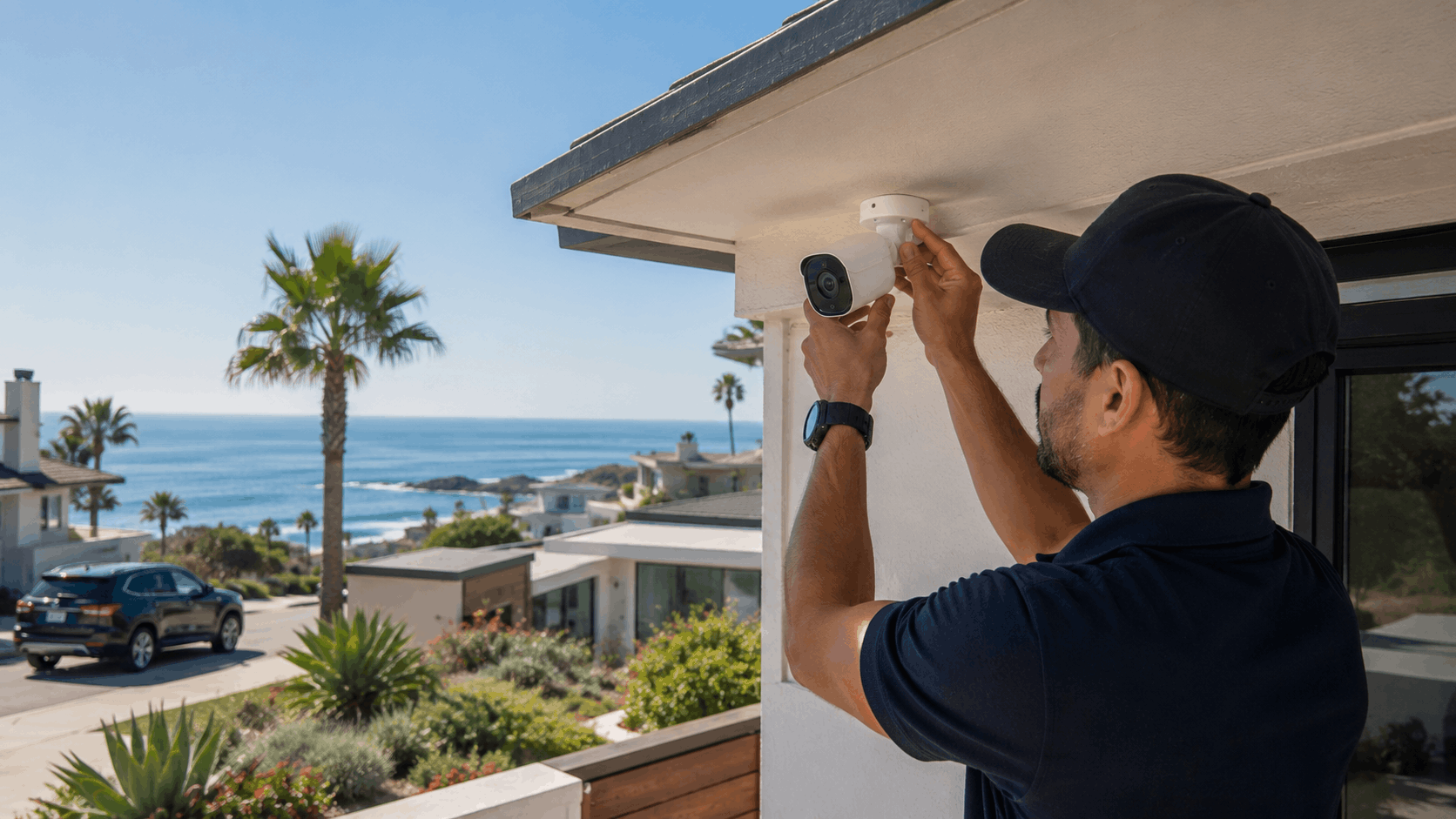
Bird Rock sits right where the land meets the Pacific, and that location changes everything about security equipment. The marine environment creates a constant assault on hardware that dry inland neighborhoods never deal with. Coastal security cameras have to fight salt, moisture, fog, and wind every single day.
Local knowledge matters here because the problems are specific. A camera that runs fine in Tierrasanta for ten years might fail in two near the bluffs. We have replaced enough corroded units along this coast to know exactly what holds up and what does not.
| Condition | Inland San Diego | Bird Rock Coast |
|---|---|---|
| Salt air corrosion | Minimal | Heavy, daily |
| Morning fog | Rare | Common spring and summer |
| Wind and blowing sand | Low | Strong near bluffs |
| Recommended housing rating | IP65 | IP66 or IP67 |
| Average lens cleaning | Every few months | Every 2 to 4 weeks |
How Salt Air Wrecks Standard Security Gear
Salt air corrosion is the number one killer of cameras near the Bird Rock shoreline. Tiny salt particles ride the ocean breeze inland and settle on every surface. They pull moisture out of the air and hold it against metal, which speeds up rust dramatically.
The camera housing takes the first hit. Cheap aluminum or thin steel develops pitting and white corrosion crust within months. Once the housing seal breaks down, moisture seeps inside and reaches the circuit board, which ends the camera's life fast.
Connectors and mounts suffer just as badly. We have pulled apart units near Camino de la Costa where the copper pins had turned green and crumbly. Homes within a block or two of the water see this damage fastest, since the salt concentration in the air is highest there.
This is why we steer Bird Rock owners toward marine-grade materials and sealed connections from the start. Spending a little more upfront on corrosion-resistant gear saves the cost of a full replacement a year later. The ocean does not slow down, so the equipment has to keep up.
Fog, Glare, and Low-Light Issues on the Coast
The marine layer rolls in many mornings from late spring through summer. That thick gray fog blankets Bird Rock and softens everything cameras try to record. A basic camera turns fog into a useless white haze with no usable detail.
Afternoon sun creates the opposite problem. Light bounces hard off the water and washes out images with glare, especially on west-facing cameras. Faces and license plates disappear into bright blowout right when you need them most.
Low-light cameras with good sensors handle these swings far better. We look for units with wide dynamic range, which balances bright and dark areas in the same frame. Strong infrared and starlight sensors keep footage clear through dim, foggy mornings.
Camera placement also helps fight glare. Angling units away from direct reflection off the ocean and adding small sun shrouds cuts down on washout. The right gear paired with smart aiming makes the difference between footage you can use and footage you cannot.
Wind, Sand, and Mounting Challenges
Coastal wind near the bluffs is no joke. Gusts come off the water with real force and shake any mount that was not anchored properly. A camera that wobbles in the wind records shaky, blurred video that misses the detail you paid for.
Blowing sand adds another layer of wear. Fine grit scours camera lenses and works into moving parts and gaskets over time. A loose seal lets that sand and moisture creep inside the housing where it does real damage.
This is why we use weatherproof mounts built from stainless steel or marine-grade hardware. Sealed gaskets keep wind-driven moisture and grit out of the connection points. Sturdier brackets hold cameras steady even when the coastal wind picks up in the afternoon.
We have learned to over-build mounts on bluff-facing walls in Bird Rock. The extra anchoring costs little and prevents the slow loosening that ruins footage. A solid mount is the foundation that everything else depends on near the ocean.
What Sets Bird Rock Properties Apart From Inland San Diego
A La Jolla property near the water lives in a completely different world than a home in Clairemont or Kearny Mesa. Inland homes deal with heat and dust, but almost no salt. Their cameras can run for years with little attention.
Bird Rock homes need a different playbook. The equipment has to be tougher, the seals tighter, and the maintenance more frequent. What works fine a few miles inland fails quickly here.
Cost reflects that too. Marine-grade housings, stainless mounts, and extra weatherproofing add to a coastal install compared to an inland one. Owners who try to save by using inland-grade gear almost always pay more in the end through early failures.
We service both kinds of neighborhoods, so the contrast is clear to our team every week. The same brand and model can have wildly different lifespans depending on where it hangs. Knowing that difference is what local coastal experience brings to the table. You can explore our full video surveillance camera services to see how we match gear to each setting.
Choosing the Right Camera System for a Coastal Property
Picking cameras for a coastal property comes down to matching the right gear to both the environment and the home. The wrong choice fails fast near the ocean. The right one records clearly for years with reasonable upkeep.
We walk every Bird Rock owner through the same set of decisions. Security camera types, weatherproof ratings, wiring, resolution, and placement all factor in. Getting these right from the start avoids expensive do-overs.
Marine-Grade and Weatherproof Housing Ratings
The IP rating tells you how sealed a camera is against dust and water. The two digits matter. The first covers solids like dust, and the second covers moisture, with higher numbers meaning better protection.
For a coastal property in Bird Rock, we recommend an IP66 rating at minimum. IP66 rated housings resist powerful water jets and heavy dust, which matches the wind-driven spray near the shore. IP67 goes further and survives brief submersion, a good choice for the most exposed spots.
The rating alone is not enough near salt, though. Marine-grade housing uses anti-corrosion coatings and materials like 316 stainless steel or treated polycarbonate. These hold up far longer than the standard aluminum found on budget cameras.
We also check the gaskets and cable glands, since those are common weak points. A camera can carry a great IP rating and still fail if the seals are cheap. Matching the right materials to the salt environment is what keeps water out for the long haul.
Wired vs Wireless Cameras Near the Ocean
Wireless cameras sound convenient, but the coast complicates them. Sea air, thick stucco walls, and the older construction in many Bird Rock cottages all interfere with wireless signals. Dropouts mean gaps in your footage, and gaps defeat the purpose.
We usually recommend wired PoE cameras for oceanfront homes. PoE cameras carry both power and data over a single Ethernet cable, which keeps the connection steady. There is no signal to drop and no battery to die in the middle of the night.
Wired systems also avoid the battery corrosion problem. Wireless units near the water can suffer when moisture reaches the battery compartment. A clean cable run inside the wall stays protected from the salt air outside.
Wireless security still has a place for renters or quick add-ons where running cable is not possible. For a permanent install on a coastal home, though, wired wins on reliability almost every time. Our home security camera installation team plans cable routes that keep wiring sealed and out of the weather.
Resolution, Field of View, and Night Vision Needs
Resolution decides how much detail you capture. For most Bird Rock homes, 4K cameras at key entry points give you the clarity to read a face or a plate. Lower resolution may work for wide overview shots where fine detail matters less.
Field of view depends on lot size and shape. A narrow oceanfront lot might need only a couple of well-aimed cameras. A larger split-level home wants wider lenses or more units to cover every approach without blind spots.
Night vision performance is where coastal homes really get tested. Standard infrared can reflect off fog and create glare. We favor cameras with strong low-light sensors and adjustable IR that cut through the marine layer instead of bouncing off it.
The goal is footage you can actually use at 3 a.m. in the fog. That takes matching resolution, lens choice, and night vision to the specific property. We tune these settings on site rather than relying on factory defaults that assume clear, dry conditions.
Matching Camera Placement to Bird Rock Lot Layouts
Bird Rock lots come in many shapes, from tight oceanfront parcels to split-levels tucked along the side streets off La Jolla Boulevard. Smart camera placement starts with mapping the entry points and weak spots for each layout. No two homes get the exact same plan.
On narrow oceanfront lots, the front door, driveway, and rear bluff side are the main coverage zones. The sides often sit close to neighbors, so aiming matters to respect their privacy. We position cameras to cover your property without overreaching.
Split-level homes on streets like Forward Street or Linda Way need cameras at each level change. Stairs, side gates, and lower entries create blind spots that a single front camera misses. Layering coverage closes those gaps.
We always plan for the approaches a thief would actually use. Beach access paths, alleys, and shadowed side yards get priority over open frontage. Good placement covers the real risks, not just the obvious ones.
Need Help in San Diego?
Smart Shield Systems serves San Diego and all of San Diego County.
Get Your Free Quote
Tell us about your property and we'll get back to you fast.
Common Security Concerns for La Jolla Coastal Homeowners
The calls we get from La Jolla coastal owners follow clear patterns. Package theft, vacation rental monitoring, exposed rear yards, and vehicle break-ins top the list. Each one ties back to the unique layout and traffic of this coast.
Knowing the local conditions shapes the right fix. A solution that works in a gated inland community may miss the mark on an open Bird Rock street. We tailor coverage to how this neighborhood actually lives.
Package Theft and Porch Pirates Near La Jolla Boulevard
The Bird Rock business corridor along La Jolla Boulevard draws steady foot traffic all day. That activity is great for the neighborhood, but it also gives porch pirates easy cover. A thief can grab a box and blend right back into the crowd within seconds.
Homes on the side streets just off the boulevard see the most package theft. Delivery trucks drop boxes in plain view, and someone walking by spots an easy target. The window between delivery and theft is often just minutes.
A doorbell camera at the front entry is the first line of defense. It records anyone who approaches and sends an alert to your phone the moment motion starts. Many owners pair it with a visible deterrent camera covering the walkway.
We position these so the porch and the approach path both stay in frame. Clear footage of a face gives police something to work with and often deters repeat hits. A loud chime and a recording light alone send most porch pirates looking elsewhere.
Monitoring Second Homes and Vacation Rentals
La Jolla has a high share of second homes and short-term rentals. Many owners live elsewhere and only visit part of the year. That leaves long stretches where no one is watching the property in person.
Remote monitoring solves the distance problem. A connected camera system lets owners check live video and recordings from anywhere through a phone app. Motion alerts flag anything unusual the moment it happens.
For a vacation rental, cameras at exterior entries help owners confirm check-ins and check-outs. They also document any damage or unauthorized gatherings. Placing cameras only in outdoor and common exterior areas keeps everything within privacy rules for guests.
We set up these systems so part-time owners feel connected even from across the country. Pairing cameras with 24/7 alarm monitoring means someone responds even when the owner is asleep or unreachable. That coverage is a relief for anyone managing a property from a distance.
Beach Access Paths and Rear Property Exposure
Public beach access points run between many Bird Rock homes. These paths and bluff trails are great for the public but create real blind spots for owners. Someone can approach the rear of a property without ever touching the front street.
Rear yards and bluff-facing sides need their own coverage. The back of a coastal home is often the least watched and the easiest to reach unseen. A determined intruder heads there, not the busy front.
We map perimeter security to cover side gates, rear patios, and any trail that touches the property line. Cameras with wide coverage and motion zones catch movement along these approaches. Lighting paired with cameras makes the rear far less inviting.
The goal is to remove the easy, unwatched path. When every approach is recorded, the property stops looking like a soft target. Beach access is part of coastal living, and the right camera plan keeps it from becoming a weakness.
Protecting Vehicles and Garages on Narrow Streets
Parking is tight on streets like Forward Street and Linda Way. Many homes have short driveways or rely on street parking, which leaves vehicles exposed overnight. Break-ins and catalytic converter theft are common complaints we hear.
A driveway camera covering the parking area and garage door deters most of this. Thieves prefer dark, unrecorded spots, so a visible camera pushes them to move on. Footage also helps with insurance claims if something does happen.
We aim driveway cameras to catch both the vehicle and anyone approaching it. Pairing the camera with garage door automation adds another layer of control and alerts. You can confirm the garage closed and review who came near it from your phone.
For homes with valuable vehicles, license plate capture adds extra value. It records plates of unfamiliar cars that linger on the street. On these narrow Bird Rock blocks, that detail can make the difference in an investigation.
Professional Installation in Coastal Conditions
Install quality matters more near the ocean than almost anywhere else. A sloppy seal that survives inland will let salt moisture in within months along the Bird Rock coast. Doing it right the first time is what separates a system that lasts from one that fails.
Our team at Smart Shield Systems approaches coastal installs differently. Every cable run, mount, and connection gets extra weatherproofing. Here is what a proper coastal install involves.
Sealing Connections Against Moisture Intrusion
Moisture is the enemy of every coastal camera, and connections are where it sneaks in. We seal each junction with weatherproof boxes and proper cable glands. That keeps salt air and spray away from the wiring inside.
Weatherproof wiring runs matter just as much as the cameras themselves. We route cables through protected paths and use marine-rated connectors at every joint. Exposed splices are an invitation for corrosion in this environment.
Drip loops are a small detail that makes a big difference. By looping the cable below each connection point, water drips off instead of running into the housing. This simple step prevents a surprising number of failures.
We test every sealed connection before calling a job done. A single weak point can let moisture creep through the whole run over time. Thorough moisture sealing is the quiet work that keeps a coastal system alive for years.
Mounting on Stucco, Wood, and Bluff-Facing Walls
Bird Rock homes are a mix of stucco exteriors and older wood-frame construction. Each surface needs the right anchor to hold a camera steady through coastal wind. The wrong anchor pulls loose and leaves a camera dangling.
Stucco anchors have to reach past the thin surface coat into solid backing. We use anchors rated for the load and seal the entry hole to keep moisture out of the wall. A clean, sealed mount point protects both the camera and the home.
Wood-frame walls need anchors set into studs, not just the siding. We locate framing and fasten into it for a mount that holds firm. On older cottages, we check for any rot before drilling.
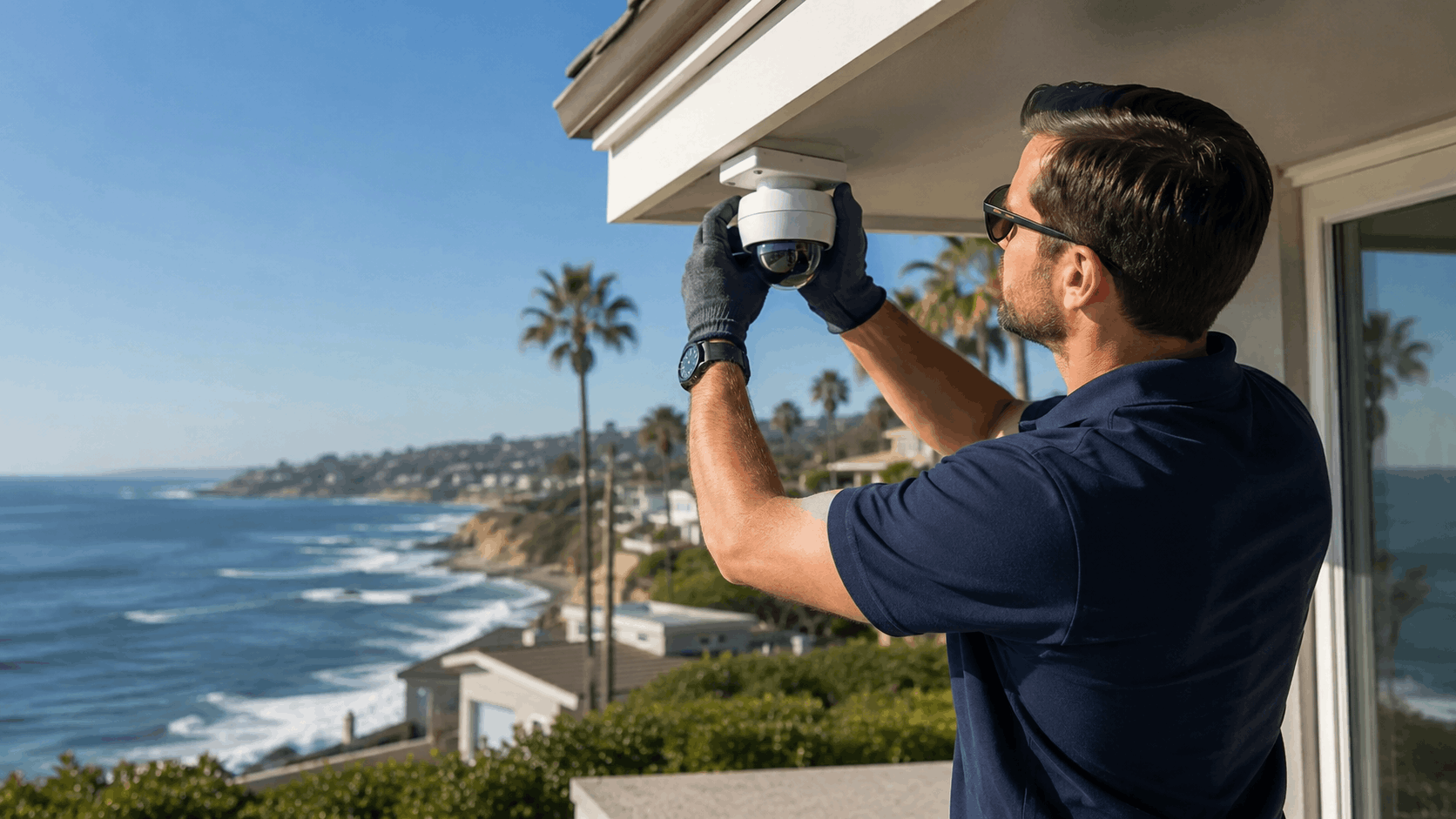
Bluff-facing walls take the worst of the wind and spray. We over-anchor these and use stainless hardware that resists corrosion. Camera mounting on exposed sides demands the sturdiest approach, since these are the spots most likely to loosen over time.
Network Setup and Reliable Storage Options
A camera is only useful if its footage is saved and reachable. We set up reliable networks that keep cameras connected and recording. Coastal internet service can drop during storms, so we plan for those gaps.
NVR storage keeps recordings on a local device right at the property. That means footage keeps saving even if the internet goes down. A network video recorder also handles many high-resolution cameras without choking the connection.
Cloud recording adds an offsite backup that survives even if the local device is stolen or damaged. Many owners use both, with local NVR storage for everyday use and cloud recording for critical clips. That mix covers most failure scenarios.
We size the storage to your camera count and how long you want to keep footage. For owners who want analytics and offsite access, our remote video monitoring and analytics options add smart alerts on top of plain recording.
What a Typical Install Day Looks Like
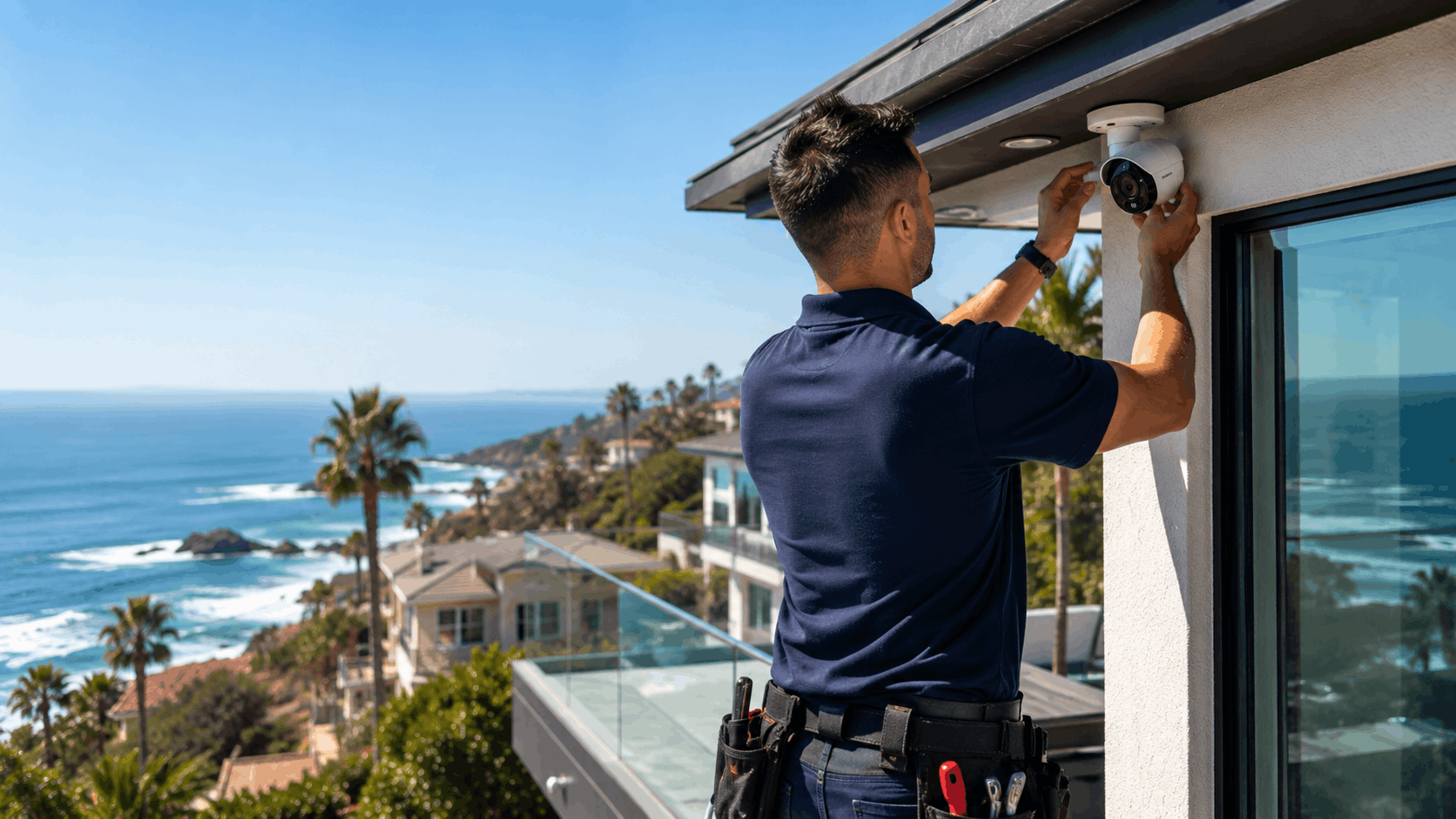
Most homeowners want to know what to expect before the crew arrives. The process starts with a site survey, usually done before install day. We walk the property, note entry points, check wall materials, and map the coverage plan.
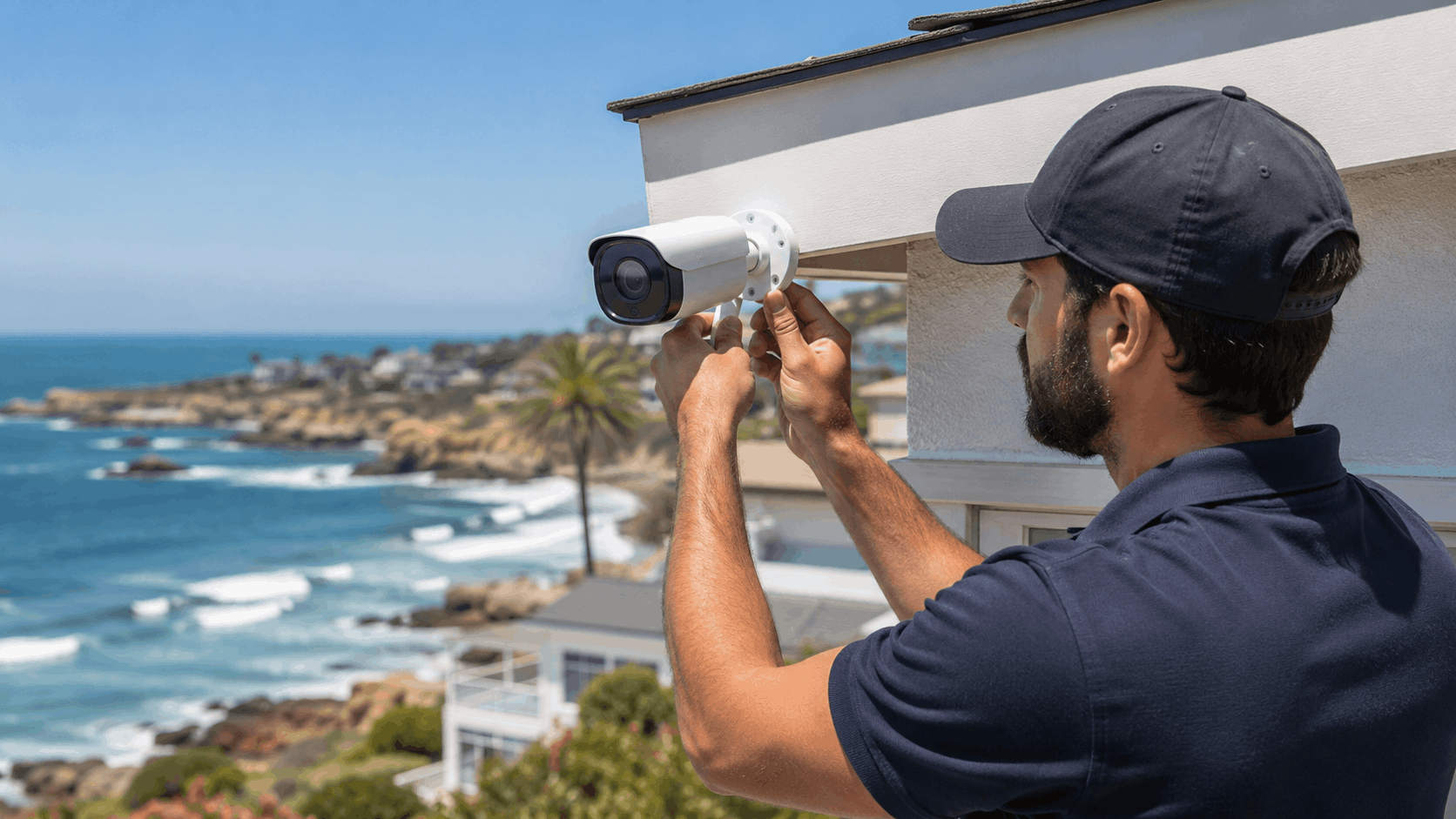
On install day, the crew runs cable first, taking care to route and seal each line. Then they mount cameras at the planned spots and aim each one for the best coverage. This is the bulk of the work and where quality really shows.
Next comes the network and storage setup. We connect cameras to the NVR or cloud, confirm each feed records, and check night vision and motion zones. Nothing leaves our checklist until it works as planned.
The final step is app setup so you can view everything from your phone. We walk you through live view, playback, and alerts before we go. A small system might wrap in a day, while full-property coverage can take two.
Maintaining Camera Systems in a Salt-Air Environment
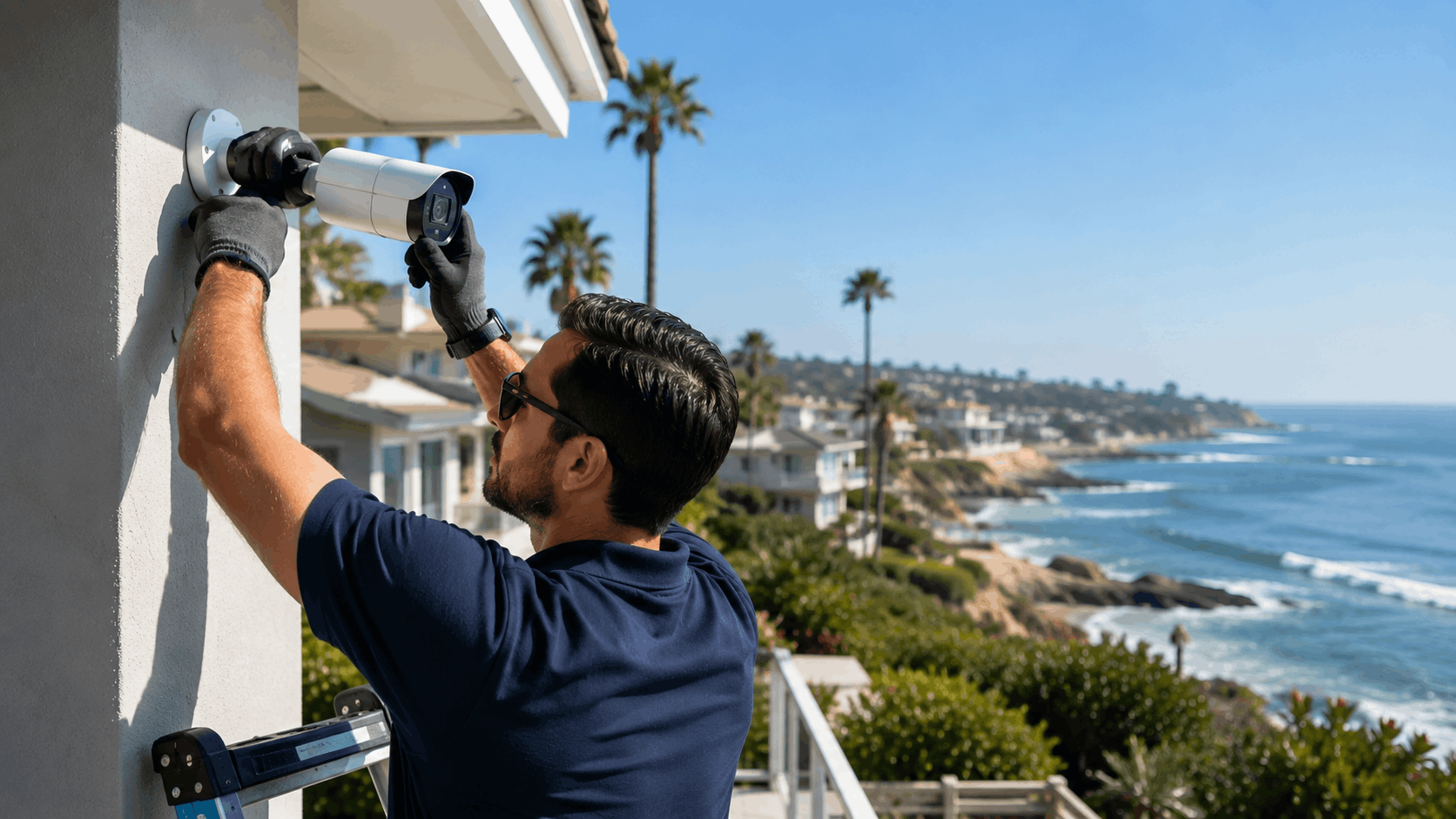
Even the best coastal cameras need upkeep to reach their full lifespan. Salt air works on equipment around the clock, so a little regular attention goes a long way. Owners who skip maintenance see the early failures we warn about.
The good news is that coastal system upkeep is simple once you know the routine. A few minutes every couple of weeks prevents most problems. Here is how to keep a salt air system running strong.
How Often to Clean Lenses and Housings
Salt film builds up on lenses faster than most owners expect near the water. A hazy lens softens every recording and ruins night clarity. In Bird Rock, we suggest checking and cleaning lenses every two to four weeks.
The right materials matter to avoid scratches. A soft microfiber cloth and a gentle lens-safe cleaner are all you need. Avoid paper towels or rough rags, which can scratch coatings and make glare worse.
Housings deserve a wipe-down at the same time. Clearing salt buildup off the housing slows corrosion and keeps seals working. Fresh water on a cloth dissolves the salt without harsh chemicals.
Homes closest to the surf may need cleaning more often than ones a few blocks inland. Watch your footage for haze as your cue. When images start to soften, it is time for a quick lens cleaning.
Spotting Early Corrosion and Connection Failures
Catching corrosion early saves cameras from total failure. White or green crust on mounts and connectors is the classic warning sign. When you spot it, the metal underneath is already breaking down.
Check the mount hardware and any visible connectors during your cleaning routine. Streaks of rust, pitting, or a chalky film all signal trouble. Addressing these early is far cheaper than replacing a dead camera.
Connector failure often shows up as a flickering or dropped feed before the camera quits. If one camera starts cutting in and out, corrosion at the connection is a likely cause. We can reseal or replace the connector before the whole unit fails.
A quick visual check every month catches most of these issues in time. The owners who avoid surprise failures are the ones who look. Spotting corrosion signs early keeps your system whole and your footage uninterrupted.
Firmware Updates and System Health Checks
Cameras are computers, and they need updates like any other device. Firmware updates patch security holes and often improve image processing. Skipping them leaves the system open to bugs and intruders.
We recommend checking for firmware updates a few times a year. Many systems can update automatically, which we set up during install. Keeping software current keeps cameras recording and protected.
System health checks round out good upkeep. Confirm each camera records, the storage is not full, and the network is steady. A drive that quietly filled up months ago means no footage when you need it.
For owners who would rather not handle this themselves, our security system maintenance service handles updates and health checks on a schedule. Regular attention keeps small issues from becoming big ones.
When to Repair vs Replace Coastal Cameras
Coastal cameras do not last as long as inland ones, and that is just reality. A quality marine-grade camera in Bird Rock often runs five to seven years with good upkeep. Budget gear may fail in one or two.
Small problems are usually worth repairing. A corroded connector, a loose mount, or a failed seal can be fixed for far less than a new camera. We handle these repairs often and they buy plenty more life.
Replacement makes sense when failures stack up. If a camera needs repeated fixes or the housing seal is gone, throwing money at it stops paying off. At that point a new unit costs less over time than ongoing repairs.
We help owners weigh the camera lifespan against repair costs honestly. Sometimes a five-year-old camera is worth saving, and sometimes it is not. Knowing when to replace keeps your system reliable without wasting money.
Need Help in San Diego?
Smart Shield Systems serves San Diego and all of San Diego County.
Costs and Planning for a Bird Rock Camera System
Budgeting for a coastal camera system is easier when you know what drives the price. Bird Rock installs cost more than inland ones for clear reasons. Here are realistic ranges so you can plan without guesswork.
Every property is different, so treat these as starting points. The final number depends on camera count, gear quality, and how exposed the home is. We give firm quotes after a site survey.
Typical Price Ranges by System Size
A small system covering a front door, driveway, and one rear point usually runs in the range of $1,500 to $3,500 installed. That covers a few quality marine-grade cameras, an NVR, and professional setup. It suits a modest Bird Rock cottage well.
Mid-size systems with four to six cameras typically land between $3,500 and $7,000. These cover most entries, the rear yard, and the driveway with room to spare. This is the most common range we install on coastal homes.
Full-property coverage on a larger split-level home can run $7,000 to $15,000 or more. That includes many high-resolution cameras, robust storage, and complete perimeter coverage. The marine-grade equipment premium is built into all these numbers.
System cost scales with both the number of cameras and the quality of the gear. Cutting corners on housings to save money usually backfires near the ocean. We help owners find the right balance for their property and budget.
What Coastal Conditions Add to the Budget
Coastal installs cost more than inland ones, and the reasons are concrete. Marine-grade housings and stainless mounts simply cost more than standard gear. That coastal premium is the price of equipment that survives salt air.
Extra sealing adds labor and materials too. Weatherproof junction boxes, marine connectors, and careful cable routing all take time. That work is what keeps moisture out, so it is money well spent.
Tougher mounts on bluff-facing walls add to the total as well. Over-anchoring and corrosion-resistant hardware cost more than basic brackets. On exposed sides, that strength prevents failures down the road.
All told, a coastal install often runs 15 to 30 percent more than the same system inland. The extra spend pays for itself by avoiding early replacement. Weatherproof equipment is not where you want to economize near the water.
Monitoring Plans and Ongoing Costs
Beyond the install, most owners choose some ongoing service. Professional monitoring fees typically run $20 to $60 a month depending on the plan. That covers someone watching for alarms even when you cannot.
Cloud storage subscriptions add a smaller monthly cost, often $5 to $20 per camera or a flat plan. Cloud recording keeps an offsite copy of your footage safe. Many owners find the backup worth the modest fee.
Maintenance plans are another option worth considering on the coast. A scheduled cleaning and health check service keeps salt air from shortening your system's life. These plans often pay for themselves by preventing failures.
We lay out all the subscription costs upfront so there are no surprises. You choose the services that fit your needs and skip the ones you do not want. Pairing cameras with alarm systems and monitoring gives the fullest protection for a coastal home.
Insurance Discounts and Long-Term Value
A documented security system can lower your homeowner insurance. Many carriers offer a discount of 5 to 20 percent for monitored cameras and alarms. Over years, that discount offsets part of the system cost.
Ask your insurer what documentation they need to apply the discount. We provide install records and equipment details to support your claim. A little paperwork can mean real savings every year.
Beyond insurance, a quality system adds property value in La Jolla. Buyers in this market expect modern security on coastal homes. A professionally installed system is a selling point, not just a personal safeguard.
The long-term value goes past dollars. Knowing your second home or rental is watched is worth a lot to busy owners. A solid system protects the property and the way you feel about leaving it.
HOA Rules and Permits for La Jolla Security Cameras
Installing cameras in La Jolla comes with rules worth knowing before you mount anything. California privacy law, HOA guidelines, the coastal overlay, and city permits can all apply. Staying compliant saves headaches later.
We handle these issues on every coastal job, so we know the local processes. Here is what Bird Rock owners need to keep in mind.
Privacy Laws and Camera Aiming Rules
California privacy law shapes where cameras can point. Recording your own property is fine, but aiming into a neighbor's windows or private yard crosses a line. The law protects reasonable expectations of privacy.
Public sidewalks and streets are generally fair to record. Cameras that capture passing foot traffic near La Jolla Boulevard are within bounds. The trouble starts when a lens focuses on a neighbor's private space.
We aim every camera to cover your property and entry points without overreaching. Careful camera aiming keeps you on the right side of privacy laws. It also keeps the peace with neighbors, which matters on these close coastal lots.
Audio recording carries stricter rules than video in California. We set up systems with privacy in mind and advise owners on audio settings. A bit of care upfront avoids legal trouble down the road. You can review more on California privacy guidance through the California Attorney General's privacy resources.
HOA and Coastal Overlay Considerations
Some La Jolla communities have HOA rules on exterior equipment. These can limit where cameras mount and how visible they are. Checking your HOA guidelines before install avoids a forced redo.
The coastal zone overlay adds another layer. Properties within the coastal overlay face extra review on exterior changes that affect the shoreline view. Most camera installs are minor, but it pays to confirm.
HOA approval is usually quick for cameras when you submit a clear plan. We help owners document placement so the request goes smoothly. A tidy, well-aimed install rarely raises objections.
Knowing which rules apply to your specific block saves time. We have worked enough La Jolla properties to know where the coastal overlay and HOA rules come into play. That local knowledge keeps your project moving.
Working With the San Diego Building Process
Most residential camera installs are low-voltage work. The City of San Diego may require a low-voltage permit depending on the scope. Simple camera setups often fall under minor work, while larger systems with new wiring can need a permit.
We know when a permit applies and handle the process when it does. Pulling the right permit keeps your install legal and on record. That record can matter for insurance and resale later.
The city handles security installs as part of its building and electrical process. For details, owners can check the City of San Diego Development Services resources. We stay current on these requirements so you do not have to.
Skipping a required permit can cause problems if the city ever inspects. It is far easier to do it right than to fix it after. We build permitting into our coastal install planning from the start.
Avoiding Common Compliance Mistakes
The most common mistake is aiming a camera into a neighbor's space. It seems harmless but can spark complaints and legal issues. We catch this during planning and adjust before install.
Another frequent error is skipping required signage. Some setups, especially for rentals, benefit from posted camera notices. Camera signage informs visitors and supports your legal standing.
Owners also forget to check HOA or coastal overlay rules until after install. Reversing a mounted camera wastes time and money. A quick check upfront prevents that.
We guide owners around all these compliance mistakes. Our team knows the La Jolla rules and applies them on every job. Getting it right the first time keeps your system legal and your neighbors happy.
Why Local Experience Matters for Coastal Security
Coastal security is not a one-size-fits-all job. A team that knows San Diego's coastal neighborhoods firsthand designs better systems. We have driven these streets and worked these homes for years.
That local experience shows up in every decision, from gear choice to mounting to service response. Here is why working with coastal specialists matters.
Knowledge of Bird Rock Home Styles and Lots
Bird Rock mixes older beach cottages with modern rebuilds. Each style presents different mounting surfaces and layout challenges. Knowing this mix shapes how we design a system for your specific home.
Older cottages often have wood framing and tight lots close to neighbors. Modern rebuilds bring stucco, larger footprints, and split levels. We adjust anchors, camera counts, and aiming to fit whichever you own.
Lot layouts vary block to block in Bird Rock. Some homes sit right on the bluff while others tuck back along the side streets. We read each lot to find the coverage zones that matter most.
This familiarity comes from working the neighborhood, not a manual. We have seen how these homes are built and where they are vulnerable. That hands-on knowledge of Bird Rock homes leads to smarter designs.
Fast Response Across La Jolla and Pacific Beach
Being based in San Diego means we reach La Jolla quickly. When a camera goes down or you have a question, a fast response matters. We are not coming from hours away.
Our service area covers Bird Rock, the rest of La Jolla, and nearby Pacific Beach. We know the routes and the traffic patterns along the coast. That keeps our arrival times short when you need help.
Coastal systems sometimes need quicker attention than inland ones. Salt air can cause issues that benefit from a prompt look. Being close lets us address those before they grow.
Quick service is one of the real advantages of a local team. You are not waiting days for a distant company to send someone. We are right here serving the coast. See our full San Diego service coverage for the areas we reach.
Equipment Chosen for Real Coastal Performance
Years of coastal work taught us which gear holds up. We do not guess from spec sheets. We know from experience which brands survive Bird Rock salt air and which fail fast.
That hands-on history guides our equipment choices. We stock cameras and mounts that have proven themselves near the water. Owners benefit from lessons we learned the hard way on past jobs.
Coastal-tested gear costs a bit more, but it lasts. We would rather install equipment that runs for years than gear that needs replacing next season. Our reputation depends on systems that keep working.
When we recommend a camera for your Bird Rock home, it is proven equipment for this exact setting. That confidence comes from real coastal performance, not marketing claims. You get gear we trust because we have watched it perform.
Ongoing Support After the Install
The install is just the start of the relationship. Coastal systems need maintenance, occasional troubleshooting, and sometimes expansion. A local partner is there for all of it.
When a question comes up or a camera acts strange, we are a call away. Ongoing support means you are not left figuring it out alone. We know your system because we built it.
As needs change, we help systems grow. Adding a camera, upgrading storage, or integrating smart lock installation is straightforward when one team handles it all. Your system can evolve with your home.
Local service after the sale is what owners value most over time. We stay connected long after install day. That lasting support is the heart of working with a local coastal team.
Need Help in San Diego?
Smart Shield Systems serves San Diego and all of San Diego County.
Final Thoughts
Bird Rock's beauty comes with a hard truth for security gear. Salt air, fog, and coastal wind wear down standard cameras fast. The right marine-grade equipment, proper installation, and regular upkeep are what make a system last near the ocean.
Owners who plan for these conditions get years of reliable coverage. Those who buy cheap inland gear pay twice. The difference comes down to matching equipment and install quality to the real coastal environment.
Smart Shield Systems works these coastal streets every week. We know Bird Rock homes, the rules that apply in La Jolla, and the gear that survives the salt. To plan a system built for your coastal property, contact our team for a consultation and site survey.
Frequently Asked Questions
Do coastal cameras really fail faster than regular ones?
Yes, they do. Salt air carries tiny particles that pull moisture against metal and speed up corrosion. A budget camera near the Bird Rock shore can fail in a year or two, while the same unit might run a decade inland. Marine-grade gear with sealed housings and anti-corrosion materials lasts far longer near the ocean, which is why it is worth the extra cost.
How much does a security camera system cost in Bird Rock?
A small coastal system covering a few entry points usually runs $1,500 to $3,500 installed. Mid-size systems with four to six cameras fall between $3,500 and $7,000. Full-property coverage on a larger home can reach $7,000 to $15,000 or more. Coastal installs cost 15 to 30 percent above inland jobs because of marine-grade gear, extra sealing, and sturdier mounts.
What camera rating should coastal homes use?
We recommend an IP66 rating at minimum for ocean-facing properties in Bird Rock. IP66 housings resist strong water jets and heavy dust. For the most exposed spots, IP67 offers even more protection. Beyond the rating, choose cameras with anti-corrosion housings made from 316 stainless steel or treated polycarbonate, since the IP number alone does not account for salt damage over time.
Can cameras see clearly through morning marine fog?
Good cameras can, but cheap ones struggle. The marine layer turns weak footage into a white haze. Cameras with wide dynamic range, strong low-light sensors, and adjustable infrared cut through fog far better. Smart placement that avoids glare off the water also helps. We tune these settings on site so your footage stays usable during foggy coastal mornings and at night.
How often should coastal cameras be cleaned?
In Bird Rock, plan to check and clean lenses and housings every two to four weeks. Salt film builds up quickly and softens your footage. Use a soft microfiber cloth and a lens-safe cleaner to avoid scratches. Homes closest to the surf may need cleaning more often. Watch your footage for haze, which is your cue that a cleaning is due.
Do I need a permit to install cameras in La Jolla?
Many simple residential camera installs fall under minor low-voltage work and need no permit. Larger systems with new wiring may require a low-voltage permit from the City of San Diego. Some La Jolla HOA communities and the coastal overlay also have placement rules. We check which apply to your property and handle any required permits or approvals during planning.
Can I monitor my La Jolla vacation rental remotely?
Yes. A connected camera system lets you view live video and recordings from a phone app anywhere in the world. Motion alerts notify you the moment something happens. For rentals, exterior cameras help confirm check-ins and document any issues. Pairing cameras with professional monitoring means someone responds even when you are unreachable, which gives part-time owners real reassurance from a distance.
Wired or wireless cameras for an oceanfront home?
Wired PoE cameras usually perform better near the coast. Sea air, thick stucco walls, and older Bird Rock construction interfere with wireless signals, causing dropouts and footage gaps. PoE carries power and data over one cable for a steady connection with no battery to corrode. Wireless works for renters or quick add-ons, but for a permanent oceanfront install, wired wins on reliability.
How long does a typical install take?
A small system often wraps in a single day. Full-property coverage on a larger home can take two days. The process starts with a site survey before install day, then cable runs, camera mounting, network and storage setup, and final app configuration. We do not finish until every feed records and you know how to use the system from your phone.
Will a camera system lower my home insurance?
Often, yes. Many carriers offer a discount of 5 to 20 percent for documented, monitored security systems. The exact savings depend on your insurer and plan. We provide install records and equipment details to support your claim. Over several years, that discount offsets part of the system cost, and a professional system also adds value to La Jolla coastal homes.
Frequently Asked Questions
- Do coastal cameras really fail faster than regular ones?
- Yes, they do. Salt air carries tiny particles that pull moisture against metal and speed up corrosion. A budget camera near the Bird Rock shore can fail in a year or two, while the same unit might run a decade inland. Marine-grade gear with sealed housings and anti-corrosion materials lasts far longer near the ocean, which is why it is worth the extra cost.
- How much does a security camera system cost in Bird Rock?
- A small coastal system covering a few entry points usually runs $1,500 to $3,500 installed. Mid-size systems with four to six cameras fall between $3,500 and $7,000. Full-property coverage on a larger home can reach $7,000 to $15,000 or more. Coastal installs cost 15 to 30 percent above inland jobs because of marine-grade gear, extra sealing, and sturdier mounts.
- What camera rating should coastal homes use?
- We recommend an IP66 rating at minimum for ocean-facing properties in Bird Rock. IP66 housings resist strong water jets and heavy dust. For the most exposed spots, IP67 offers even more protection. Beyond the rating, choose cameras with anti-corrosion housings made from 316 stainless steel or treated polycarbonate, since the IP number alone does not account for salt damage over time.
- Can cameras see clearly through morning marine fog?
- Good cameras can, but cheap ones struggle. The marine layer turns weak footage into a white haze. Cameras with wide dynamic range, strong low-light sensors, and adjustable infrared cut through fog far better. Smart placement that avoids glare off the water also helps. We tune these settings on site so your footage stays usable during foggy coastal mornings and at night.
- How often should coastal cameras be cleaned?
- In Bird Rock, plan to check and clean lenses and housings every two to four weeks. Salt film builds up quickly and softens your footage. Use a soft microfiber cloth and a lens-safe cleaner to avoid scratches. Homes closest to the surf may need cleaning more often. Watch your footage for haze, which is your cue that a cleaning is due.
- Do I need a permit to install cameras in La Jolla?
- Many simple residential camera installs fall under minor low-voltage work and need no permit. Larger systems with new wiring may require a low-voltage permit from the City of San Diego. Some La Jolla HOA communities and the coastal overlay also have placement rules. We check which apply to your property and handle any required permits or approvals during planning.
- Can I monitor my La Jolla vacation rental remotely?
- Yes. A connected camera system lets you view live video and recordings from a phone app anywhere in the world. Motion alerts notify you the moment something happens. For rentals, exterior cameras help confirm check-ins and document any issues. Pairing cameras with professional monitoring means someone responds even when you are unreachable, which gives part-time owners real reassurance from a distance.
- Wired or wireless cameras for an oceanfront home?
- Wired PoE cameras usually perform better near the coast. Sea air, thick stucco walls, and older Bird Rock construction interfere with wireless signals, causing dropouts and footage gaps. PoE carries power and data over one cable for a steady connection with no battery to corrode. Wireless works for renters or quick add-ons, but for a permanent oceanfront install, wired wins on reliability.
- How long does a typical install take?
- A small system often wraps in a single day. Full-property coverage on a larger home can take two days. The process starts with a site survey before install day, then cable runs, camera mounting, network and storage setup, and final app configuration. We do not finish until every feed records and you know how to use the system from your phone.
- Will a camera system lower my home insurance?
- Often, yes. Many carriers offer a discount of 5 to 20 percent for documented, monitored security systems. The exact savings depend on your insurer and plan. We provide install records and equipment details to support your claim. Over several years, that discount offsets part of the system cost, and a professional system also adds value to La Jolla coastal homes.
S
Smart Shield Systems Team Team
Licensed security systems professionals serving San Diego and San Diego County.
Licensed in California · License #7623
Why trust Smart Shield Systems?
Founded in 2016, Smart Shield Systems is a licensed and insured security systems serving San Diego and San Diego County. All content is reviewed by our licensed technicians.

Need Help in San Diego?
Smart Shield Systems serves San Diego and all of San Diego County.
Related Articles
Tips & Advice
La Jolla Home Security: Estate-Grade Systems for Muirlands and La Jolla Farms
Estate-grade home security for La Jolla's Muirlands and La Jolla Farms: camera placement on coastal lots, gated access, monitoring, and wildfire readiness.
Cost Guides
Wired vs Wireless Security Cameras: Which is Right for Your Property?
Wired and wireless security cameras each have pros and cons. Compare reliability, power, and installation for your San Diego home or business.
Tips & Advice
Best Security Practices for San Diego's Coastal Communities
Coastal San Diego homes face salt air, humidity, and unique risks. Use these security practices for alarms, cameras, and locks in La Jolla, Point Loma, and other beach communities.