Safety & Prevention
Alarm Response Time Data: SDPD vs Private Security in Different San Diego Neighborhoods
Key Takeaways
- SDPD alarm response ranges from 6 to 12 minutes Downtown but 15 to 30+ minutes in outer areas like Scripps Ranch and Rancho Bernardo.
- Private patrols route the nearest car to your address, so they often beat police by 8 to 15 minutes in outer and hillside neighborhoods.
- In dense central zones the response gap is small, so extra spending on private patrol buys less advantage there.
- Video and audio verification cut false alarms and raise police priority, speeding up every response you get.
- San Diego requires an alarm permit, and repeated false alarms can lead to fines or loss of police response.
- The strongest setups layer monitored alarms, verified cameras, and private patrol matched to your specific neighborhood.
- Beach-season traffic on Mission Boulevard slows police response in coastal areas like Pacific Beach and La Jolla.
- Ask providers for verified alarm response times in your exact ZIP code rather than relying on citywide averages.
In This Article
It's 2 a.m. in Scripps Ranch, and a homeowner near Semillon Boulevard wakes to the sound of a glass-break sensor screaming through the house. The alarm panel lights up, the monitoring center gets the signal, and now the clock starts ticking. How long until someone actually pulls into the driveway?
That question sits at the center of every home security decision in San Diego. The answer changes depending on your ZIP code, the time of day, and whether you rely on police alone or add a private patrol to the mix. A family in the Gaslamp Quarter and a family off Pomerado Road live in the same city, but they wait very different amounts of time for help.
How Alarm Response Actually Works in San Diego
When people picture an alarm going off, they imagine a squad car flying around the corner seconds later. The reality has more steps, and each step adds time. Knowing that path helps you understand what you are paying for.
Here is the basic route an alarm signal travels before anyone shows up:
- A sensor trips - a door contact, motion detector, or glass-break unit sends a signal to the alarm panel.
- The panel transmits that signal to a central monitoring station, usually in under a minute.
- An operator reviews the alarm and tries to verify it is real.
- The operator either calls SDPD dispatch, sends a private patrol, or both.
- Whoever is dispatched drives to the address and arrives on scene.
The difference between police dispatch and private patrol response matters a lot. Police follow a priority system that can push alarm calls down the list. Private patrols work a smaller area and can often roll faster, but they cannot make arrests the way officers can.
The Monitoring Center Handoff
Every monitored alarm starts at a central monitoring station. When your sensor trips, the panel dials out and delivers the signal to an operator who is watching a screen full of incoming alerts. This handoff usually takes a few seconds if your system uses a cellular or internet connection.
Before anyone gets dispatched, the operator runs through alarm verification. They may call the home first, then a second contact on the account, to rule out an accidental trip. Many San Diego homeowners set off their own alarms coming home late or letting the dog out, so this step filters out a huge share of false signals.
That verification window costs time, though. A standard two-call process can eat 30 to 90 seconds before an operator ever picks up the phone to police. Systems with video or audio verification skip a lot of that guesswork because the operator can see or hear what is happening in real time.
Our team builds most setups with 24/7 alarm monitoring that shaves down this handoff. Faster verification means the request for help goes out sooner, which is where the whole response clock really begins.
How SDPD Prioritizes Alarm Calls
The San Diego Police Department sorts calls by priority code. A robbery in progress, a shooting, or a serious medical emergency jumps to the front. An unverified burglar alarm usually lands in a lower tier, which means officers get to it after higher calls clear.
This SDPD priority system is not personal. On a busy Friday night with limited units, an alarm at a home where nobody answered the verification calls simply waits. During quiet weekday mornings, the same alarm might get a quick response because officers are available.
False alarms make this worse citywide. San Diego's false alarm ordinance exists because roughly 9 out of 10 alarm activations turn out to be false, according to national industry data from groups like the The Monitoring Association. When police keep responding to false trips, they start treating alarm calls with less urgency.
That is the honest tradeoff homeowners face. Police response is included with your tax dollars, but it comes with a priority ranking you do not control and a false alarm history that can slow you down.
How Private Patrols Get Deployed
Private security firms work differently. Instead of a citywide priority queue, they route the nearest patrol car to your address. Proximity is everything, so a firm with cars already circling your neighborhood can arrive in a handful of minutes.
There are two main models. A roving security patrol drives a loop through an area covering many clients, so a car might be ten blocks away when your alarm hits. A dedicated response unit sits closer to a specific community or gets sent straight to your home the moment an alarm verifies.
Because these patrols already know the streets, they waste less time hunting for an address. A driver who works Point Loma every night knows the dead-end streets off Rosecrans and the tricky turns near the cliffs, so they are not fumbling with GPS.
The tradeoff is scope. A private patrol officer can check the property, confirm a break-in, deter a burglar with their presence, and call police with a verified report. They cannot replace the full authority of SDPD, which is why the two work best as a pair.
Why Both Can Work Together
Plenty of San Diego homeowners use layered security, with private response as the first boot on the ground and police as the follow-up. This dual response covers the weakness in each system. Private gets there fast, police bring arrest authority.
Here is how the coordination plays out in practice. The monitoring center verifies the alarm, dispatches the nearest patrol, and calls SDPD at the same time. The patrol officer often arrives first, walks the property, and updates dispatch on what they see.
If the patrol officer finds a broken window or an open door, that becomes a verified crime report. Police treat a verified in-progress report as a higher priority than a raw alarm, so the police response speeds up too.
This teamwork is why we design many systems around both layers. A monitored alarm, verified video, and a patrol partner together give a home far better odds than any single piece alone.
SDPD Response Times by Neighborhood
Published city data and years of local experience both show the same thing: SDPD response time swings hard depending on where you live. San Diego is a big, spread-out city, and a department covering everything from Downtown high-rises to canyon-edge homes cannot arrive everywhere at the same speed.
The gap between central areas and outer communities is the story here. Police response data consistently shows shorter waits near dense divisions and longer waits at the edges. The table below gives realistic ranges our team sees across San Diego neighborhoods for non-emergency alarm calls.
| Neighborhood Area | Typical SDPD Alarm Response | Main Factor |
|---|---|---|
| Downtown / Gaslamp | 6 - 12 minutes | High officer density |
| Pacific Beach / La Jolla | 9 - 18 minutes | Traffic and crowds |
| North Park / Hillcrest | 8 - 15 minutes | Central coverage |
| Scripps Ranch / Rancho Bernardo | 15 - 30+ minutes | Distance from stations |
| San Pasqual Valley edge | 20 - 40+ minutes | Rural spread |
Downtown, Gaslamp, and Central Divisions
Response times near Downtown San Diego and the Gaslamp Quarter tend to run short. The Central Division covers a compact, dense area with a lot of officers on patrol at any hour, so a unit is rarely far away.
On a typical night, an officer might already be a few blocks from a Gaslamp condo when the call comes in. Foot patrols, bike units, and heavy weekend staffing mean coverage stays thick around Fifth Avenue and the ballpark district.
That density is why Downtown residents often see arrivals in the single digits of minutes. The station proximity and constant officer presence give this part of the city the fastest realistic police response.
Even here, though, big events change the math. A Padres game, a convention at the San Diego Convention Center, or a Saturday night crowd can tie up units and stretch response longer than the calm-hour average suggests.
North Coastal Areas Like La Jolla and Pacific Beach
La Jolla, Pacific Beach, and Mission Beach sit in a different pattern. These areas have decent coverage, but geography and crowds work against fast arrival. A Pacific Beach response can slow to a crawl in July.
Mission Boulevard is the choke point. On a summer weekend, beach traffic backs up for blocks, and a patrol car trying to reach a home near the boardwalk crawls through the same gridlock as everyone else.
La Jolla adds its own wrinkles. The winding roads up Mount Soledad and the maze of streets near the Cove slow any vehicle, even one with lights on. Response here is fine in the off-season and noticeably slower during peak crowds.
Homeowners in these coastal pockets often benefit from a private patrol layer. A firm that already works the beach area at night can weave through the neighborhood faster than a unit responding from a farther division. Our home security camera installation also helps by giving verified proof that speeds up whoever responds.
Outer and Rural-Edge Neighborhoods
The longest waits show up in outer neighborhoods like Rancho Bernardo, Scripps Ranch, and the San Pasqual Valley edge. Stations sit farther apart out here, and each unit covers a wider stretch of ground.
A home off Pomerado Road or up in the hills above Scripps Ranch can wait 15 to 30 minutes or more for a non-emergency alarm. There simply are not as many officers cruising these quieter residential streets at any given moment.
The terrain does not help. Long private drives, canyon roads, and spread-out lots mean even a dispatched officer needs extra minutes to find and reach the exact address. Rural-edge areas near San Pasqual can push past 40 minutes on a busy night.
This is exactly where private response earns its cost. When police are 25 minutes out, a patrol car already working Rancho Bernardo can be the difference between catching a burglar and filing a report on an empty house.
What the Citywide Averages Leave Out
You will sometimes see a citywide response time average quoted for San Diego. Treat that number carefully. An average blends the fast Downtown calls with the slow canyon calls, hiding the swings that actually affect your street.
Time of day changes everything. A 3 a.m. alarm in a quiet neighborhood might get a fast response because units are free, while the same alarm at 6 p.m. on a Friday competes with rush hour and higher call volume.
Staffing plays a big part too. On nights when the department runs short-handed, low-priority alarm calls sit longer everywhere. The published average cannot capture the specific Tuesday when three units are tied up on a major incident nearby.
For practical planning, our team tells homeowners to expect a range, not a single number. Central residents can reasonably count on under 12 minutes most of the time. Outer-neighborhood residents should plan around 15 to 30 minutes and build their security around that reality.
Need Help in San Diego?
Smart Shield Systems serves San Diego and all of San Diego County.
Get Your Free Quote
Tell us about your property and we'll get back to you fast.
Private Security Response Times Across the City
Private security response follows its own logic. Because these firms send the nearest car instead of working a citywide queue, their patrol response time often beats police in specific zones. The whole model rewards being close.
Several factors drive San Diego security response speed: how many patrol cars a firm runs in your area, how many clients they cover, and how good their dispatch technology is. In the right neighborhood, private response lands in 5 to 12 minutes routinely.
HOA and Gated Communities
The fastest private response happens inside HOA and gated communities. In places like Carmel Valley and 4S Ranch, patrols often already work the neighborhood under a community contract, so a car is close by most hours.
Contracted routes shorten arrival a lot. When a firm patrols a gated community every night, the driver is frequently just minutes from any home inside the gates when an alarm hits. Response inside these communities can drop to under 5 minutes.
The gate itself adds a small wrinkle. A patrol officer with existing access codes clears the entrance instantly, while an outside police unit may wait for a gate to open. This is another reason contracted private patrol shines in these areas.
Carmel Valley families near Del Mar Heights Road and 4S Ranch residents off Camino del Sur see some of the best private response numbers in the county. The density of clients and the fixed patrol route work together to keep a car nearby.
Older Neighborhoods and Urban Cores
Older neighborhoods like North Park, Hillcrest, and Golden Hill present a different challenge. The homes sit close together, which is good, but street layout and parking slow the actual approach to a door.
North Park security response depends heavily on parking luck. On a packed evening near University Avenue, a patrol officer may circle for a spot before reaching the home on foot. The distance is short, but the last hundred feet takes time.
Hillcrest adds one-way streets and busy corridors around the medical district. A patrol car that knows the grid still moves faster than an outside unit, but the dense urban core keeps response in the moderate range rather than the very fast range.
Golden Hill and the older blocks near Balboa Park have narrow streets and alleys that reward local knowledge. A patrol driver who works these neighborhoods nightly knows which alleys connect and which dead-end, and that saves real minutes on a call.
Coastal and Hillside Terrain
Point Loma and Mount Helix show how terrain slows everyone. Winding roads, steep grades, and homes tucked along cliff streets add time to both police and private response. There is no straight-line route up a hillside.
In Point Loma, the streets off Catalina Boulevard and near the Cabrillo area twist and climb. A responding unit cannot cut across, so the drive follows the road no matter how close the home looks on a map.
Mount Helix and other hillside pockets are similar. The switchback roads mean a car may drive a mile to reach a home that sits a few hundred yards away as the crow flies. This hillside response penalty hits raw police units hardest.
Local patrol knowledge is the counterweight. A private driver who works Point Loma every night knows the fastest sequence of turns, where to park on a narrow street, and which homes have hard-to-see addresses. That experience trims minutes that GPS alone cannot.
What Affects Private Patrol Speed
Three things mostly decide private patrol speed. First is patrol density, meaning how many cars a firm keeps circulating in your area at once. More cars nearby equals shorter waits.
Second is the number of active clients per zone. A firm with many clients in one neighborhood can justify keeping a car there constantly, which benefits everyone on that patrol route. Thin coverage means longer stretches between cars.
Third is dispatch technology. Modern systems show operators exactly where each patrol car sits and route the closest one automatically. Firms still using manual radio dispatch lose time deciding who goes.
When we plan a response layer for a client, we weigh all three. A home in a dense client zone with strong dispatch tech gets fast, reliable response. A home in a thin zone may need a dedicated arrangement to hit the same numbers.
Side-by-Side: Where the Response Gap Is Biggest
Putting the two systems next to each other reveals the real story. A response time comparison of SDPD vs private shows the neighborhood gap is huge in some areas and tiny in others. That difference tells you where private response adds the most value.
The table below stacks realistic ranges for the same neighborhoods, so you can see where paying for private patrol changes your actual wait.
| Neighborhood | SDPD Range | Private Range | Gap |
|---|---|---|---|
| Scripps Ranch | 15 - 30 min | 7 - 12 min | Large |
| Rancho Bernardo | 15 - 30 min | 8 - 14 min | Large |
| Point Loma hillside | 12 - 22 min | 8 - 15 min | Moderate |
| Downtown / Gaslamp | 6 - 12 min | 6 - 11 min | Small |
| North Park | 8 - 15 min | 7 - 13 min | Small |
Neighborhoods Where Private Wins by Minutes
Outer and hillside neighborhoods are where private patrols consistently deliver faster response. In Scripps Ranch, Rancho Bernardo, and the canyon-edge areas, a private car working the zone can arrive 8 to 15 minutes before police on a busy night.
Those minutes are the whole ballgame during a break-in. A burglar working a house in an outer neighborhood counts on the long police wait. A patrol car that shows up in 8 minutes disrupts that plan entirely.
The pattern holds across the eastern and northern edges of the city too. Homes far from a division station gain the most from a nearby patrol, because the police baseline they are compared against is already slow.
For these homeowners, private response is not a luxury add-on. It is the layer that actually matches the risk their location creates, which is why we recommend it most strongly out here.
Areas Where the Gap Is Small
In central zones, the story flips. Downtown, the Gaslamp, and parts of North Park see SDPD arrival close to private times, so the extra spending buys less of an advantage.
When police already show up in 8 to 12 minutes, a private patrol that arrives in 7 to 11 minutes is only marginally faster. The close response times mean the money goes further on other layers like cameras and verified monitoring.
That does not make private response useless in the core. It still adds a physical presence and a verified report. But the pure speed argument weakens where police coverage is already dense.
We tell central residents to weigh the gap honestly. A Downtown condo owner may get more value from a strong residential alarm system with video verification than from paying for a patrol that barely beats the police clock.
Time of Day and Season Effects
The gap is not fixed. Time of day shifts it in both directions. Late nights often help police in quiet areas because units are free, while they help private patrols in busy areas where police get tied up on other calls.
Weekends change the picture citywide. Higher call volume ties up SDPD units on Friday and Saturday nights, widening the gap in favor of private response almost everywhere.
Seasonal traffic matters most near the coast. Beach-season crowds jam Mission Boulevard and the roads into La Jolla, slowing police units caught in the same gridlock. A local patrol that stays inside the neighborhood dodges some of that mess.
The lesson is to think about when your risk is highest. If your neighborhood empties out on summer weekends while beach traffic clogs the main roads, that is exactly when a private layer pays off most.
Reading the Numbers Without Getting Fooled
Be careful comparing raw averages. A police average that includes verified emergencies looks different from one built on unverified alarms. Comparing the wrong buckets gives a false picture.
Verified response is the number that matters. A verified alarm, confirmed by video or a patrol officer on scene, gets faster police priority than a plain sensor trip. When you compare, make sure you are comparing verified-to-verified.
False alarm penalties also skew the data. Homes with a history of false trips may see slower or suspended police response, dragging down averages in ways that have nothing to do with your specific setup.
Our advice on data interpretation is simple. Ask about actual on-scene arrival times for verified alarms in your specific ZIP code, not a blended citywide figure. That is the only comparison that reflects what you will really experience.
Why False Alarms Change Everything
False alarms sit at the heart of this whole topic. San Diego's false alarm ordinance shapes how willing police are to respond quickly, and that pushes many homeowners toward verified or private response. The costs and consequences are real.
When a home cries wolf too often, the city responds with fines and eventually with reduced police response. Verification is the tool that breaks this cycle, and it is why so many modern setups lead with cameras.
San Diego's Alarm Permit and Fine Structure
San Diego requires an alarm permit for monitored security systems. Homeowners register their system with the city and pay a modest annual fee. Skipping the permit can mean police decline to respond at all, or higher penalties when an alarm trips.
The false alarm fine structure escalates. Your first false alarm may bring a warning, but repeat offenses stack up charges that climb with each one. A home with many false trips in a year can face meaningful fines.
Repeat offenders face the harshest outcome. After too many false alarms, the city can place a home on a no-response list, meaning police will not automatically come when the alarm sounds. That leaves the homeowner with no police layer at all.
You can find the current permit and fine details through the San Diego Police Department. Our team helps clients register properly and set up systems that keep false trips near zero.
How Verification Cuts False Dispatches
Verification is the fix for the false alarm problem. Video verification lets a monitoring operator look at live or recorded footage the instant an alarm trips and confirm whether a real intruder is present.
Audio verification works similarly. Two-way audio or listen-in features let an operator hear breaking glass, footsteps, or voices, giving them proof of a genuine event before they call police. This alarm confirmation cuts false dispatches sharply.
The speed payoff is the reason this matters. A verified alarm jumps up the SDPD priority list because it is no longer a guess. Police treat a confirmed break-in far more urgently than an unverified sensor trip.
We build most modern systems around this idea, pairing sensors with remote video monitoring and analytics. When the operator can see the threat, everyone downstream moves faster.
Where Private Response Fills the Gap
Private response covers the alarms police deprioritize. When an unverified alarm would sit low in the police queue, a private patrol can roll immediately and check the scene without waiting for a priority slot.
The patrol officer becomes the verification. They arrive, walk the property, and confirm whether there is an actual break-in. If they find one, they request police with a verified report that gets a faster response.
This scene confirmation is powerful in slow-response neighborhoods. A patrol that reaches a Scripps Ranch home in 8 minutes and finds a broken door turns a low-priority alarm into an in-progress crime report that police treat seriously.
For homes in outer areas or with any false alarm history, this private layer is the safety net. It keeps a real response flowing even when the police system alone would leave you waiting.
Need Help in San Diego?
Smart Shield Systems serves San Diego and all of San Diego County.
Choosing the Right Setup for Your Neighborhood
The right home security plan depends on where you live and how fast help realistically arrives. There is no single answer for the whole city. A smart neighborhood security setup matches your response layer to your actual risk and wait time.
Here is how our team thinks through it with San Diego homeowners:
- Assess your realistic police wait based on your neighborhood, not a citywide average.
- Decide whether that wait leaves an unacceptable gap during a real break-in.
- Add verified monitoring so any response you get moves faster.
- Layer private patrol only where the response gap justifies the cost.
- Budget for the pieces that actually change your outcome, not extras that do not.
Match Your Response Layer to Your Location
Location assessment comes first. A home in Scripps Ranch, where police may be 25 minutes out, benefits enormously from a private patrol backup. A Downtown condo with 8-minute police response may not need one at all.
Start by finding your realistic response range. Ask neighbors what they have seen, check any local reporting, and ask providers for arrival data in your specific area. That gives you a real baseline instead of a guess.
Then weigh the gap. If private response would beat police by 10 or 15 minutes in your area, the response layer earns its cost. If it only saves a minute or two, put your money elsewhere.
We walk every client through this exact math. A homeowner in San Diego deserves a plan built around their block, not a generic package that ignores where they live.
Combining Monitoring, Cameras, and Patrol
The strongest setups combine three layers. A monitored alarm catches the intrusion, verified video confirms it, and a private patrol responds fast while police follow up. Each layer covers the weakness of the others.
Our team builds this layered protection for San Diego homes every week. We start with sensors on doors, windows, and key interior spots, then add cameras positioned to verify any alarm the moment it trips.
The monitoring center ties it together. With alarm systems monitoring and video verification working together, operators can confirm a real event in seconds and dispatch the right response.
For outer neighborhoods, we add the patrol partnership on top. This combination gives a home the fastest realistic response its location allows, whether that home sits in a canyon or on a busy urban block.
Questions to Ask a Security Provider
Before signing any contract, ask pointed questions. The answers separate a provider who knows your neighborhood from one selling a one-size box. Get specifics, not slogans.
Here are the questions we tell homeowners to ask about response times and patrol coverage. Ask what the average verified alarm response is in your ZIP code. Ask how many patrol cars work your area and how many clients they cover.
Then dig into verification and coordination. Ask whether the system uses video or audio verification, how the monitoring center handles a confirmed event, and how they coordinate with SDPD. Ask what happens during peak beach-season traffic or a busy weekend night.
Finally, ask about the permit and false alarm handling. A provider who helps you register your alarm permit and keeps false trips low is protecting your police response, not just selling equipment.
Budgeting for Faster Response
Cost is where plans get real. Basic monthly monitoring for a home usually runs in the modest range, giving you 24/7 central station coverage and police dispatch when an alarm trips. That is the foundation most homes start with.
Adding video verification raises the monthly cost somewhat but pays off in faster, more reliable response. For many San Diego homes, this is the best dollar-for-dollar upgrade because it speeds up every response you get.
Private patrol response adds the most to the monthly bill, and pricing depends heavily on your area and patrol density. In a dense client zone it costs less per home; in a thin zone it runs higher because the firm covers fewer clients per route.
Our team builds budgets around your actual needs. A central home may spend on monitoring and cameras alone, while an outer-neighborhood home invests in the patrol layer because the response gap makes it worth every dollar.
How Smart Shield Systems Serves San Diego Neighborhoods
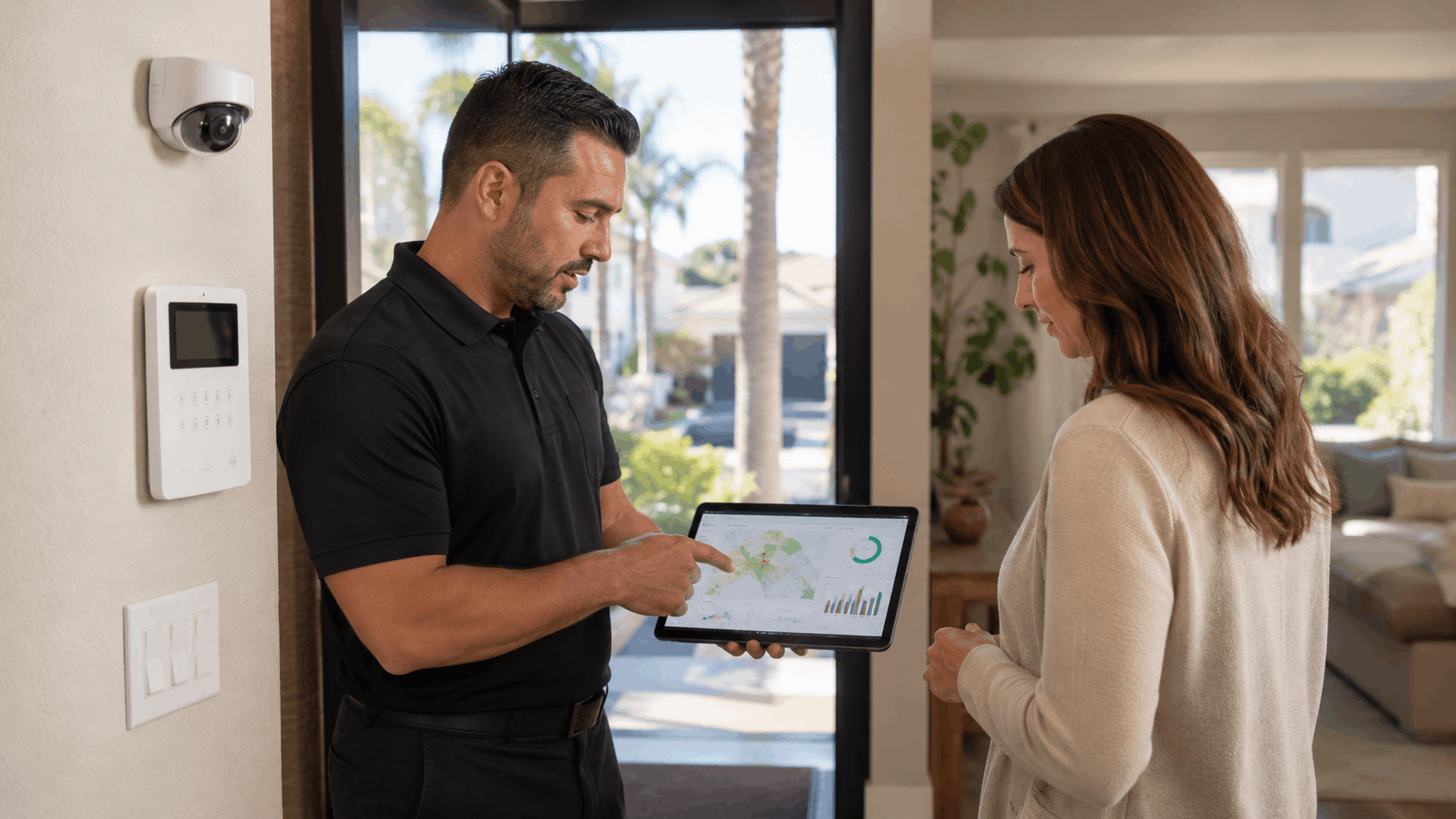
Smart Shield Systems is a local security company that plans response around the real conditions in each San Diego neighborhood. We have worked homes from the coast to the canyons, and we design San Diego home security around what actually happens on your street.
Our team brings neighborhood-level knowledge to every install. We know which areas wait longest for police, which streets slow a patrol car, and how to build a setup that fits the block.
Neighborhood-Specific Security Planning
We design systems differently for coastal, hillside, and inland homes. A Point Loma home on a winding street gets a different plan than a flat inland lot, because the response conditions are not the same.
For coastal homes, we account for beach-season traffic and salt-air-resistant equipment. For hillside properties in areas like Mount Helix or the canyon edges, we focus on verification so a slow-to-arrive response still gets confirmed proof fast.
Inland and outer neighborhoods get the strongest response layer. In places like Tierrasanta and Rancho Bernardo, we build in patrol backup because the police baseline runs long. This custom setup approach matches protection to real local conditions.
Every plan starts with a look at your specific address. We do not hand out identical packages, because a home near the ballpark and a home off Pomerado Road face completely different response realities.
Verified Alarm Monitoring That Speeds Response
Our verified monitoring is built to get faster help to your door. We pair sensors with cameras so operators can confirm a real event, then push a priority response instead of an unverified guess.
Video and audio verification cut false alarms sharply. That protects your alarm permit standing and keeps police treating your calls seriously. Fewer false trips mean faster genuine responses when it counts.
The monitoring center runs around the clock. When an alarm trips at 3 a.m., an operator is watching, verifying, and dispatching within seconds rather than working through a slow call tree first.
We also add layers like intrusion sensor installation and smart cameras that feed the monitoring team clear information. The better the operator can see, the faster help arrives at your address.
Coordinating With SDPD and Private Patrols
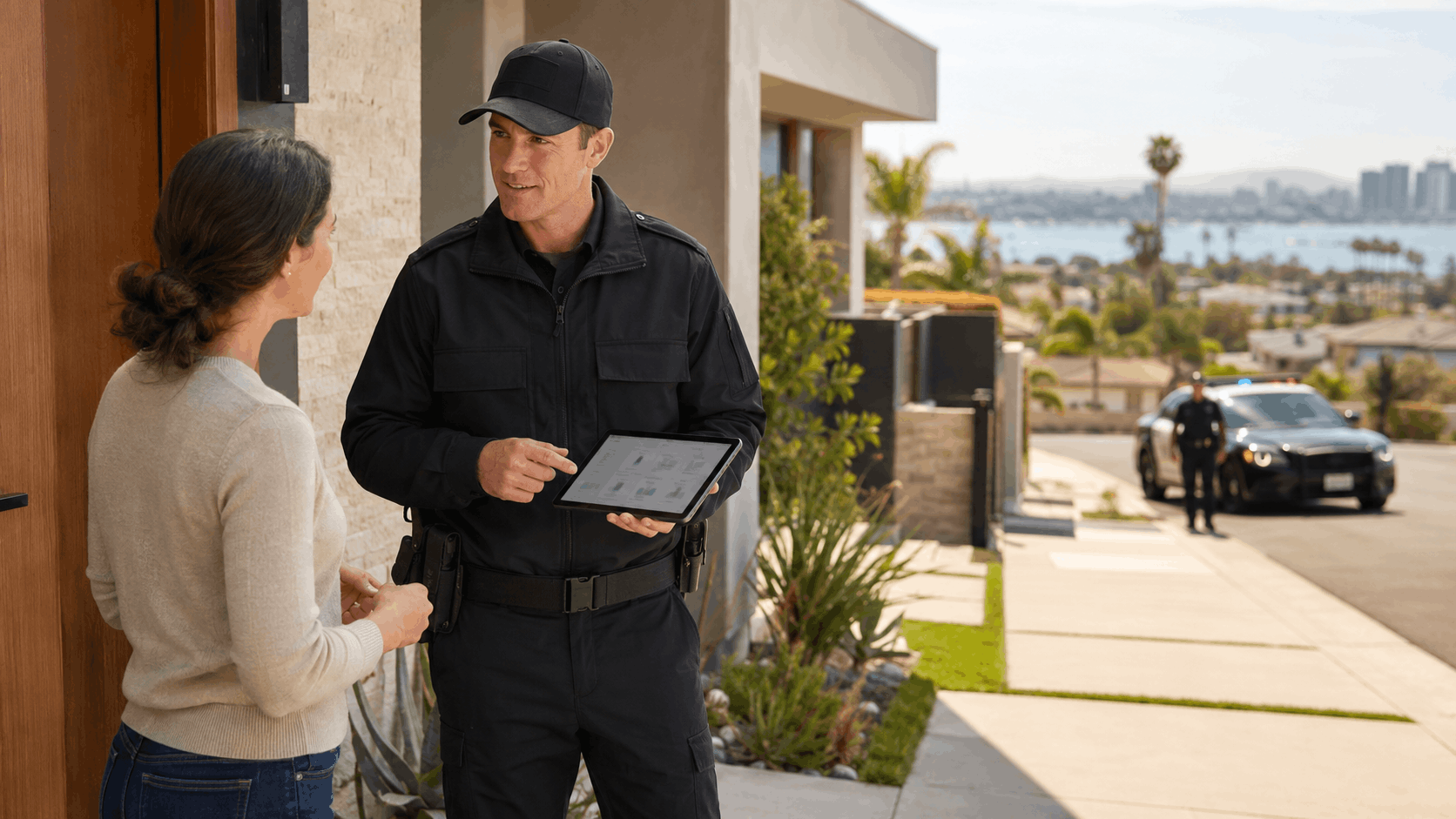
We handle the coordination that ties everything together. Our team follows San Diego police reporting rules, helps clients register their alarm permit, and works with private patrol partners to cover the response gap in slower neighborhoods.
When a verified alarm trips, our monitoring center can dispatch a patrol partner and notify SDPD at the same time. The patrol confirms the scene, then relays a verified report that raises police priority.
This SDPD coordination matters most in outer areas. A patrol partnership fills the long police wait in places like Scripps Ranch, so the home is not sitting exposed for 25 minutes.
We stay involved after install too, with maintenance and support that keep the whole system reliable. A response plan only works if every piece stays in good shape, so we back it up long-term.
Need Help in San Diego?
Smart Shield Systems serves San Diego and all of San Diego County.
Final Thoughts
Alarm response in San Diego is not one number - it is a range that depends entirely on where you live. Downtown residents get fast police arrival, while outer and hillside neighborhoods wait much longer, and that gap is where private response earns its cost.
The smartest setups match the response layer to the location, lead with verified monitoring, and add private patrol where the gap is widest. That approach gives every home the fastest realistic response its neighborhood allows.
If you want to know your real response picture and build a plan around it, our team can help. Contact Smart Shield Systems for a consultation, and we will assess your neighborhood, your risk, and the right mix of monitoring, cameras, and patrol response for your home.
Frequently Asked Questions
How long does SDPD take to respond to a home alarm?
It varies widely by neighborhood, time of day, and priority level. Central areas like Downtown and the Gaslamp often see 6 to 12 minutes, while outer neighborhoods like Scripps Ranch and Rancho Bernardo can wait 15 to 30 minutes or more. Unverified alarms fall lower in the priority queue, so busy nights and higher call volume push these times longer across the whole city.
Is private security really faster than the police?
Often yes in outer areas, but not always in central zones. Private patrols route the nearest car to your address, so in neighborhoods like Scripps Ranch they can arrive 8 to 15 minutes before police. In dense areas like Downtown, where SDPD already responds in under 12 minutes, the private advantage shrinks to a minute or two, so the value depends heavily on your location.
Which San Diego neighborhoods have the slowest police response?
Outer and hillside communities tend to wait longest. Rancho Bernardo, Scripps Ranch, and the San Pasqual Valley edge sit far from stations and cover wide areas, pushing waits past 15 to 30 minutes. Hillside terrain in Point Loma and Mount Helix adds time because winding roads force units to drive the long way around, even to homes that look close on a map.
Do I need an alarm permit in San Diego?
Yes. San Diego requires homeowners to register monitored alarm systems and pay an annual permit fee. If you skip the permit, police may decline to respond to your alarm or charge higher penalties when it trips. Our team helps clients register properly during setup, which protects your police response and keeps you clear of avoidable fines down the road.
What is a verified alarm and why does it matter?
A verified alarm is one confirmed by video, audio, or a patrol officer on scene, proving a real event before anyone is dispatched. It matters because police treat verified alarms as higher priority than plain sensor trips, so response comes faster. Verification also cuts false dispatches sharply, which protects your permit standing and keeps police taking your calls seriously.
How much does private patrol response cost?
Pricing depends on your area and patrol density. In dense client zones like gated communities, private response costs less per home because the firm covers many clients on one route. In thin coverage areas it runs higher. It generally adds the most to a monthly security bill compared to monitoring alone, so it makes the most sense where the response gap is largest.
Will police stop responding to my alarms?
They can, if you rack up too many false alarms. San Diego's ordinance escalates fines with each false trip, and repeat offenders can land on a no-response list where police no longer come automatically. The fix is verification. Video and audio confirmation cut false alarms to near zero, keeping your police response intact and your fines away.
Can I use both police and private security together?
Yes, and layered response is common in San Diego. The monitoring center verifies the alarm, dispatches the nearest private patrol, and notifies SDPD at the same time. The patrol usually arrives first, confirms the scene, and relays a verified report that raises police priority. The two systems cover each other's weaknesses, giving your home the strongest overall protection.
Does traffic near the beach affect response times?
Yes, especially in summer. Beach crowds jam Mission Boulevard and the roads into Pacific Beach, Mission Beach, and La Jolla, slowing police units stuck in the same gridlock. A local private patrol that stays inside the neighborhood can dodge some of that traffic. This is why coastal homes often benefit from a patrol layer during peak beach season.
How do I find out the real response time on my street?
Ask neighbors what they have experienced, check any published local police data for your division, and ask security providers for verified alarm response figures in your specific ZIP code rather than a citywide average. Our team can assess the realistic response range for your exact address and recommend a plan that matches it, so you know what to expect on your block.
Frequently Asked Questions
- How long does SDPD take to respond to a home alarm?
- It varies widely by neighborhood, time of day, and priority level. Central areas like Downtown and the Gaslamp often see 6 to 12 minutes, while outer neighborhoods like Scripps Ranch and Rancho Bernardo can wait 15 to 30 minutes or more. Unverified alarms fall lower in the priority queue, so busy nights and higher call volume push these times longer across the whole city.
- Is private security really faster than the police?
- Often yes in outer areas, but not always in central zones. Private patrols route the nearest car to your address, so in neighborhoods like Scripps Ranch they can arrive 8 to 15 minutes before police. In dense areas like Downtown, where SDPD already responds in under 12 minutes, the private advantage shrinks to a minute or two, so the value depends heavily on your location.
- Which San Diego neighborhoods have the slowest police response?
- Outer and hillside communities tend to wait longest. Rancho Bernardo, Scripps Ranch, and the San Pasqual Valley edge sit far from stations and cover wide areas, pushing waits past 15 to 30 minutes. Hillside terrain in Point Loma and Mount Helix adds time because winding roads force units to drive the long way around, even to homes that look close on a map.
- Do I need an alarm permit in San Diego?
- Yes. San Diego requires homeowners to register monitored alarm systems and pay an annual permit fee. If you skip the permit, police may decline to respond to your alarm or charge higher penalties when it trips. Our team helps clients register properly during setup, which protects your police response and keeps you clear of avoidable fines down the road.
- What is a verified alarm and why does it matter?
- A verified alarm is one confirmed by video, audio, or a patrol officer on scene, proving a real event before anyone is dispatched. It matters because police treat verified alarms as higher priority than plain sensor trips, so response comes faster. Verification also cuts false dispatches sharply, which protects your permit standing and keeps police taking your calls seriously.
- How much does private patrol response cost?
- Pricing depends on your area and patrol density. In dense client zones like gated communities, private response costs less per home because the firm covers many clients on one route. In thin coverage areas it runs higher. It generally adds the most to a monthly security bill compared to monitoring alone, so it makes the most sense where the response gap is largest.
- Will police stop responding to my alarms?
- They can, if you rack up too many false alarms. San Diego's ordinance escalates fines with each false trip, and repeat offenders can land on a no-response list where police no longer come automatically. The fix is verification. Video and audio confirmation cut false alarms to near zero, keeping your police response intact and your fines away.
- Can I use both police and private security together?
- Yes, and layered response is common in San Diego. The monitoring center verifies the alarm, dispatches the nearest private patrol, and notifies SDPD at the same time. The patrol usually arrives first, confirms the scene, and relays a verified report that raises police priority. The two systems cover each other's weaknesses, giving your home the strongest overall protection.
- Does traffic near the beach affect response times?
- Yes, especially in summer. Beach crowds jam Mission Boulevard and the roads into Pacific Beach, Mission Beach, and La Jolla, slowing police units stuck in the same gridlock. A local private patrol that stays inside the neighborhood can dodge some of that traffic. This is why coastal homes often benefit from a patrol layer during peak beach season.
- How do I find out the real response time on my street?
- Ask neighbors what they have experienced, check any published local police data for your division, and ask security providers for verified alarm response figures in your specific ZIP code rather than a citywide average. Our team can assess the realistic response range for your exact address and recommend a plan that matches it, so you know what to expect on your block.
S
Smart Shield Systems Team Team
Licensed security systems professionals serving San Diego and San Diego County.
Licensed in California · License #7623
Why trust Smart Shield Systems?
Founded in 2016, Smart Shield Systems is a licensed and insured security systems serving San Diego and San Diego County. All content is reviewed by our licensed technicians.

Need Help in San Diego?
Smart Shield Systems serves San Diego and all of San Diego County.
Related Articles
Safety & Prevention
UL-Listed vs Non-Listed Monitoring: What It Means for SDPD Response
Learn how UL-Listed monitoring affects SDPD alarm dispatch in San Diego - covering verification standards, false alarm fines, permit requirements, and local neighborhood considerations.
Safety & Prevention
How Carjacking Trends in San Diego Are Changing Home Security Priorities
Rising carjacking trends in San Diego are pushing homeowners to rethink driveway and garage security. Here's what the data shows and what actually helps.

Safety & Prevention
Best No-Drill Security Cameras for San Diego Apartments and Renters
Discover the best no-drill security cameras perfect for San Diego apartment renters. Learn about wireless, magnetic mount, and battery-powered options that protect your rental without lease violations.