Cost Guides
Home Security System Cost La Jolla: Estate vs Standard Home Pricing
Key Takeaways
- Standard La Jolla homes typically cost $400 to $4,000 upfront, while estates can reach $15,000 to $60,000 or more.
- Total cost splits into three buckets: equipment (40-50%), install labor (25-35%), and ongoing monthly monitoring.
- Property size, number of entry points, home age, and coastal salt air all push La Jolla pricing up or down.
- Cameras, automation, and perimeter coverage add the most to a bill, so budget-minded buyers can start smaller and expand.
- Monthly monitoring runs $20 to $60 for standard homes and $80 to $250 or more for premium estate plans.
- A monitored system can lower homeowner insurance premiums by roughly 5 to 20 percent.
- An on-site assessment gives an accurate quote, while phone-only low-ball quotes with hidden fees are a red flag.
- Local knowledge of neighborhoods like Bird Rock, The Village, and Mount Soledad means better pricing and weather-rated gear.
In This Article
Two homeowners call our team in the same week. One owns a bluff-top estate off La Jolla Farms Road, with a gated drive and views straight out over the Pacific. The other has a cozy bungalow in Bird Rock, a few blocks from the tide pools. Both ask the same question: "What does a security system cost?" Their quotes come back thousands of dollars apart, and both are surprised.
That gap confuses a lot of people. Why would two homes in the same zip code get such different numbers? The answer comes down to size, layout, coastal conditions, and the features each owner actually needs. A system that fits a 1,400 square foot cottage looks nothing like one guarding a 9,000 square foot property with three floors and a pool house.
What Drives Home Security System Cost in La Jolla
Before we split estate and standard pricing, it helps to know what any La Jolla homeowner pays for. The same core factors show up on every quote, whether the home sits on a tight Village lot or a wide coastal parcel. Once you understand these, the price differences make a lot more sense.
Here are the main cost factors that shape La Jolla security pricing:
- Equipment - cameras, sensors, control panels, and locks
- Installation labor - how long the job takes and how tricky the access is
- Monitoring - the monthly fee for someone watching your alarms
- Property size - more square footage means more devices
- Home age and wiring - older homes may need extra work
- Coastal conditions - salt air and moisture demand weather-rated gear
Equipment vs Installation vs Monitoring Fees
Most people focus only on the sticker price of the gear, but a full system splits into three buckets. Roughly speaking, equipment eats up about 40 to 50 percent of the upfront cost. That covers your cameras, door and window sensors, motion detectors, and the main control panel that ties everything together.
Installation labor usually runs another 25 to 35 percent of the total. This is the part that swings the most based on your home. A clean, newer home with easy attic access installs fast, while a hillside home with plaster walls near Mount Soledad takes far longer and costs more in labor.
The third bucket is monthly monitoring fees, which are ongoing rather than upfront. Basic monitoring might run $20 to $30 a month, while richer plans with video verification climb higher. Over a few years, monitoring can quietly become the largest line item, so it pays to think about the long game. Our 24/7 alarm monitoring options cover several tiers so homeowners only pay for what they use.
Property Size and Layout in La Jolla
Square footage is the first thing our technicians look at, because bigger homes simply need more devices. A 1,500 square foot home might need six to eight sensors, while a sprawling estate can need forty or more. Every added door, window, and hallway is another spot that needs coverage.
Layout matters just as much as raw size. A home near La Jolla Shores with wide sliding glass doors, multiple patios, and beach-facing entry points has far more openings to secure than a compact place. More entry points always push the price up, no matter the neighborhood.
Homes on tighter lots in The Village often cost less to secure because there are fewer exterior approaches. A townhome with one front door and a shared wall is quick work. A detached home with a wraparound yard, a side gate, and a detached garage needs a bigger plan and more hardware.
Wired vs Wireless Systems
Homeowners often ask whether they should go with a wired system or a wireless one. Wireless setups install faster and cost less in labor, since there are no walls to open up. For most standard La Jolla homes, wireless is the practical and affordable choice.
A hardwired system costs more upfront because it takes more labor, but it can be more reliable in large homes. Wired sensors do not rely on batteries and hold up well over decades. Estate owners who want long-term stability often lean this way, especially in new construction where wiring can be run before drywall goes up.
Older homes are where things get interesting. Many Village-area homes built before the 1960s have plaster walls and little room to fish new cable. In those cases, a hybrid of wireless devices with a few hardwired points often gives the best balance of cost and reliability. Our team checks the walls and attic before recommending an approach.
Local Conditions That Affect Pricing
La Jolla sits right on the ocean, and that changes what equipment holds up. Salt air corrosion is a real problem for outdoor cameras and door hardware. Cheap gear rusts and fails within a couple of years, so we spec weather-rated equipment near the coast, which costs a bit more but lasts far longer.
The marine layer adds moisture almost every morning, especially along the coastline from La Jolla Shores up to Bird Rock. Condensation can fog camera lenses and stress electronics that are not sealed for it. Coastal conditions like these are why we never quote the exact same package for an inland home and a beachfront one.
Terrain plays a role too. Bluff-top properties near Mount Soledad often have steep drives, retaining walls, and hillside access that slow down installation. Running cable or mounting cameras on those slopes takes more time and sometimes special equipment, which shows up in the labor cost.
Standard Home Security Pricing in La Jolla
Let us talk real numbers for typical homes. Most single-family homes, condos, and townhomes in La Jolla fall into a predictable range for standard home security. Knowing these figures helps you budget before anyone steps on your property.
These ranges reflect what we see across everyday La Jolla homes, not the estates. Your final number depends on how many devices you want and whether you add cameras or smart locks.
Typical Starter Package Costs
A basic starter package is where most homeowners begin. This usually includes a control panel, a handful of door sensors, one or two motion detectors, and a keypad. For equipment and install together, expect somewhere between $400 and $1,200 depending on how many openings you cover.
That range assumes a wireless system in a home with reasonable access. Door sensors are cheap on their own, so the price mostly reflects how many you need and the labor to place them. A two-bedroom Bird Rock cottage lands near the low end, while a larger single-story home creeps higher.
Starter kits protect the basics: your front door, back door, garage entry, and main living space. It is a solid foundation you can grow from later. Our residential alarm installation team can set up a starter system in a single visit for most standard homes.
Mid-Range Systems for Bird Rock and Windansea Homes
Plenty of homeowners in Bird Rock and Windansea want more than the basics. A mid-range system adds outdoor cameras, video doorbells, glass-break sensors, and often smart locks. This is the sweet spot for people who want to see who is at the door and get clips on their phone.
Adding these features typically pushes the total into the $1,500 to $4,000 range for equipment and install. Cameras are the biggest driver here, since each one adds hardware and a bit of labor. A few outdoor cameras covering the driveway and patios make a big difference in coverage.
Smart locks are popular in these walkable beach neighborhoods where people come and go often. They let you give codes to house cleaners or guests without handing out keys. Our smart lock installation pairs nicely with cameras so you can watch and control your entries from one app.
Monthly Monitoring for Standard Homes
Monthly monitoring is the ongoing cost that keeps your system useful. Plans generally run from about $20 to $60 a month for standard homes. The low end covers basic alarm response, while higher tiers add cellular backup, video storage, and app features.
The big choice is self-monitoring versus professional monitoring. With self-monitoring, you get the alerts yourself and decide whether to call police. It is cheaper, sometimes free, but it only works if you are watching your phone.
Professional monitoring means a trained center watches your alarms around the clock and dispatches help even when you are asleep or traveling. For most families, that response is worth the monthly fee. We walk every homeowner through the tradeoffs so the plan fits how they actually live.
Condo and Townhome Considerations
Condos and townhomes come with their own rules. Many buildings in The Village and along the coast have HOA rules about what you can mount on exterior walls or shared spaces. Before drilling anything outside, we check what the association allows.
Shared walls also change the plan. In a townhome, you mostly need to secure your own doors, windows, and patio rather than a full perimeter. That often makes condo security cheaper than a detached home, since there are fewer exposed sides.
Some Village-area condo buildings already have front-desk staff or gated garages, which changes what you need inside your unit. In those cases we focus on your entry door, sliders, and interior cameras. A quick review of your HOA rules up front saves headaches and avoids fines later.
Need Help in San Diego?
Smart Shield Systems serves San Diego and all of San Diego County.
Get Your Free Quote
Tell us about your property and we'll get back to you fast.
Estate Home Security Pricing in La Jolla
Estates are a different animal. Large, gated, and bluff-top homes cost far more to secure because there is simply more ground to cover. Luxury home security here often means protecting acreage, multiple structures, and long perimeters, not just a few doors.
The table below shows realistic ranges for estate security in La Jolla. These numbers reflect high-value homes with extended coverage and premium gear.
| Estate Component | Typical Cost Range |
|---|---|
| Perimeter and gate security | $4,000 - $12,000 |
| Multi-zone camera system | $6,000 - $25,000+ |
| Smart home and access integration | $5,000 - $20,000+ |
| Premium monitoring (monthly) | $80 - $250+ |
| Full estate system (total upfront) | $15,000 - $60,000+ |
Perimeter and Gate Security for Large Lots
Estates start at the property line, not the front door. Perimeter security covers the whole boundary with gate sensors, driveway alarms, and cameras that catch anyone approaching. Gated homes along the coastline near La Jolla Farms often need this first layer before anything else.
Gate sensors alert you the moment a vehicle or person enters the drive. Pair that with driveway motion alarms and you get warning long before someone reaches the house. On bigger lots, that early notice is worth a lot.
Perimeter cameras spaced around the grounds add another layer of coverage. On large parcels, you may need several just to see the full boundary. Our gate and access control setups tie the entry gate into the same system, so one app manages the whole perimeter.
Multi-Zone Coverage and Camera Systems
Big homes need cameras broken into zones. An estate might have separate zones for the front approach, the pool, the rear yard, the garage court, and interior halls. Multi-zone coverage means each area has its own set of camera systems feeding a central recorder.
The number of cameras is the biggest cost driver on estate jobs. Where a standard home uses three or four cameras, an estate might run fifteen to thirty. Add high-resolution models and a recorder with weeks of storage, and the price climbs fast.
Higher-end recording gear also matters for large properties. Estate owners often want long retention and sharp footage they can zoom into. Our remote video monitoring with analytics can flag unusual activity across many zones so no one has to stare at screens all day.
Integration With Smart Home and Automation
Estate owners usually want their security tied into the rest of the home. Smart home integration links cameras, alarms, lighting, climate, and access control into one system. Lights can trigger when a gate sensor fires, or the whole house can arm with one command at night.
Access control is a big piece for larger homes with staff, guests, and service crews. You can grant timed codes to a pool cleaner or landscaper and revoke them instantly. This adds equipment and programming labor, but it gives estate owners real command over who comes and goes.
Tying all these systems together takes skilled setup, which shows up in the labor cost. It is not a plug-and-play job. Our smart home security integration team maps out how each piece talks to the others so the whole property works as one system.
Advanced Monitoring and Response Options
Estates often step up to premium monitoring. This can include video verification, where a monitoring agent looks at live footage to confirm a real threat before calling police. Verified alarms get faster response and cut down on false-alarm fines.
Some high-value homes add on-call response services or priority dispatch. These plans cost more each month, often $80 to $250 or higher, but they match the level of protection estate owners expect. The extra cost buys faster, more certain action when an alarm trips.
Video verification is especially useful on big properties where a single motion trigger could be a coyote or a real intruder. Having eyes confirm the event saves everyone time and worry. We help estate clients pick a monitoring tier that fits both their property and their budget.
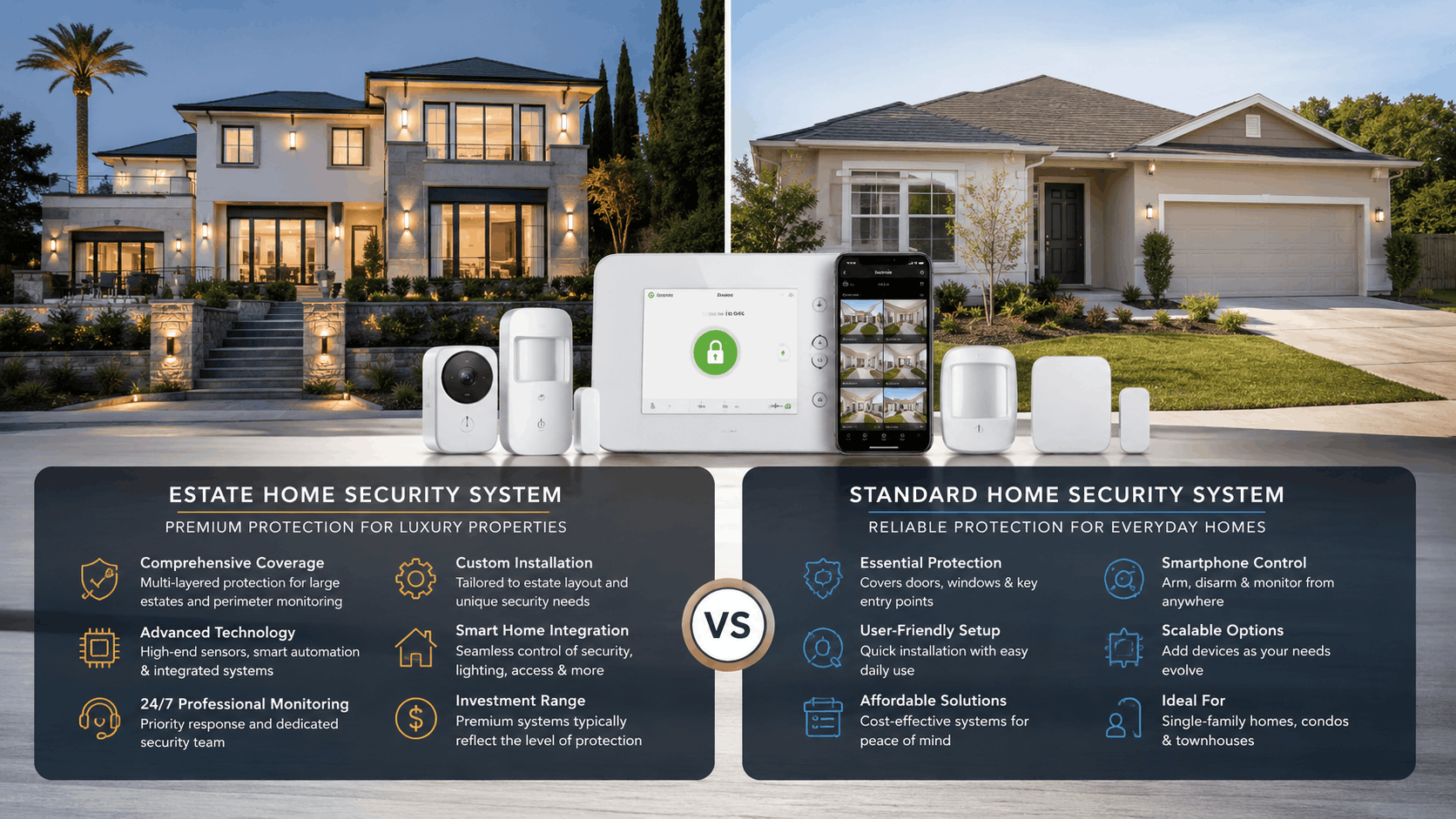
Estate vs Standard Home: Side-by-Side Cost Comparison
Now let us put the two side by side. Seeing estate and standard pricing together makes the gap clear and shows exactly where the money goes. The cost comparison below explains why the same city produces such different quotes.
The short version: estates cost more because they have more of everything. More doors, more cameras, more ground, and more advanced features all stack up.
Upfront Equipment and Install Costs Compared
For a standard home, the full upfront cost of equipment and install labor usually lands between $400 and $4,000. That covers a starter kit up through a solid mid-range system with cameras and smart locks. Most La Jolla families fall somewhere in that band.
Estates start where standard homes end. A full estate system commonly runs $15,000 to $60,000 or more upfront. The jump comes from perimeter coverage, dozens of cameras, and integration work that a standard home never needs.
Install labor alone explains a big chunk of the difference. A standard home might take a day, while an estate can take a week or more with a full crew. More devices, more wiring, and tricky hillside access all add hours.
Long-Term Monitoring and Maintenance Costs
Upfront cost is only half the story. Standard homes pay roughly $20 to $60 a month for monitoring, which adds up to a few hundred dollars a year. Estates on premium plans can pay $80 to $250 or more monthly, so the long-term cost gap keeps growing after install.
Maintenance is another factor that hits estates harder. With more cameras and outdoor gear exposed to salt air, there are more parts that need cleaning, testing, and occasional replacement. A property with thirty cameras simply needs more service calls than one with four.
Over five years, an estate can spend far more on monitoring and upkeep than a standard home spends total. That is why we build maintenance into the conversation early. Our system maintenance service keeps coastal gear working so small issues do not turn into failures.
Which Features Add the Most to the Bill
If you want to control cost, know which features raise the price fastest. Cameras top the list. Each camera adds hardware, mounting labor, and often more storage, so camera add-ons drive the bill up quicker than almost anything else.
Automation and integration come next. Tying security into lighting, climate, and access control takes programming time and extra devices. It is a great feature, but it is not cheap, so decide how much you really need.
Perimeter coverage on large lots is the third big driver. Gate sensors, driveway alarms, and boundary cameras only apply to bigger properties, but they add up quickly. Sensors and a basic panel are the cheapest parts, so a homeowner on a budget can start there and expand toward cameras later.
How to Get an Accurate Quote for a La Jolla Home
Guessing at cost only gets you so far. The way to get a real number is a proper on-site assessment from a company that knows the area. A good local team looks at your specific home before quoting a security system, not a generic template.
Here is what the process should look like and how to avoid getting burned by a bad quote.
What a Proper On-Site Assessment Covers
A real on-site assessment starts with a walkthrough of every entry point. Our technicians count doors, windows, sliders, and gates, then note which ones are most exposed. This is how we size the system to your actual home.
We also check sightlines for cameras, looking at where a lens can see the most with the fewest units. Good camera placement covers more ground and lowers the number of cameras you need. That saves money without cutting coverage.
Wiring and Wi-Fi coverage get checked too. In older La Jolla homes we look at what walls can accept cable, and everywhere we test whether the Wi-Fi reaches the far corners. A dead zone on the back patio changes the plan, so we find those spots before install day.
Questions to Ask Before You Sign
Before signing anything, ask about the contract terms. Some companies lock you into long agreements with steep cancellation fees. Know the length, the monthly cost, and what happens if you move or want out.
Ask who owns the equipment. In some deals, the gear is leased, so you never actually own it and lose access if you cancel. We prefer arrangements where homeowners understand exactly what they own from day one.
Also ask what the monthly fee covers and whether it can rise. Get the answers in writing so there are no surprises later. A trustworthy company answers all of this without dodging.
Red Flags in Low-Ball Quotes
Be careful with quotes that seem too cheap. A common warning sign is a price given without any site visit. Nobody can accurately quote a La Jolla home over the phone, so a low number with no walkthrough is a red flag.
Watch for hidden fees buried in the fine print. Some low upfront deals make it back with high monthly charges, activation fees, or long contracts. The cheap sticker price can end up costing far more over three years.
Free equipment offers often come with the longest contracts and the highest cancellation penalties. There is nothing wrong with a deal, but read the whole agreement. If a salesperson rushes you or will not put terms in writing, walk away.
How Smart Shield Systems Prices La Jolla Jobs
Our pricing starts with your specific home and neighborhood. We do not hand out one-size numbers, because a Village townhome and a Mount Soledad estate need different systems. A technician visits, walks the property, and builds a plan around what is really there.
We factor in coastal conditions, home age, wiring, and the features you actually want. That local knowledge means the quote reflects real costs, not a national average. You can reach our team through our contact page to set up a walkthrough.
Then we give you clear options at different price points, so you choose what fits your budget. There is no pressure to buy the biggest package. As a San Diego based company, we price honestly and stand behind the work.
Need Help in San Diego?
Smart Shield Systems serves San Diego and all of San Diego County.
Ways to Save on Home Security Without Cutting Safety
You can spend less and still stay well protected. A few smart moves lower the total cost of security without leaving weak spots. Here are the ones we recommend most to La Jolla homeowners.
The goal is affordable security that still covers the openings that matter. These tips help you get there.
Bundling Cameras, Sensors, and Monitoring
Buying pieces one at a time usually costs more. When you bundle cameras, sensors, and monitoring together, you often get a better total price and one install visit instead of several. Fewer trips means less labor on your bill.
A common bundle might include a control panel, four door sensors, two motion detectors, two outdoor cameras, and a monitoring plan. Purchased together, that package costs less than buying each part separately over time. It also works better because everything is designed to run as one system.
Bundling also simplifies support down the road. When all your gear comes from one setup, service calls are cleaner and faster. Ask about package pricing when you get your quote, since it often beats piecing a system together.
Insurance Discounts for La Jolla Homeowners
Many homeowners forget that a monitored system can cut their insurance bill. Most carriers offer a discount on homeowner premiums when you install professional monitoring. Savings commonly run from 5 to 20 percent depending on the insurer and system.
To claim it, ask your insurance company what they need. Usually they want a certificate showing you have monitored alarm service. We can provide that paperwork so you can pass it along.
Over several years, that discount can offset a good chunk of your monitoring cost. The Insurance Information Institute notes that security systems are among the upgrades that can lower premiums. It is worth a quick call to your agent.
Prioritizing High-Risk Entry Points First
You do not have to protect everything on day one. Start with the highest-risk entry points and expand later. This phased install approach spreads out cost while covering your biggest weak spots first.
In coastal homes, the common weak spots are sliding glass doors facing the beach, unlit side gates, and detached garages. Ground-floor windows out of street view are another. Securing those first gives you strong protection for less money.
Once the vulnerable spots are covered, you can add cameras and sensors over time. A system built to grow lets you spread the investment across months or years. We design starter systems with expansion in mind so nothing has to be ripped out later.
Why Local Knowledge Matters for La Jolla Security Pricing
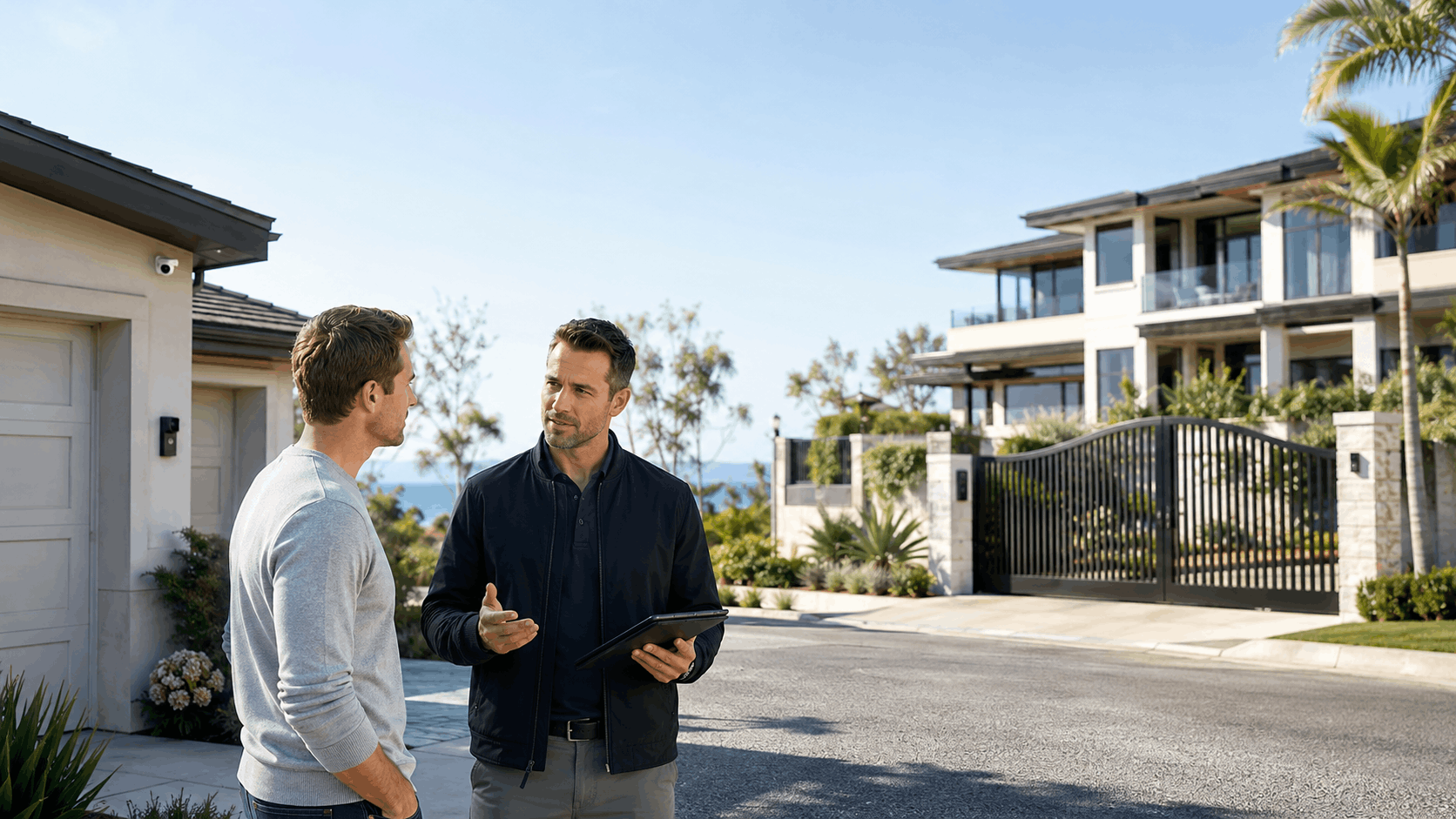
A company that knows La Jolla neighborhoods gives you a more accurate quote and a cleaner install. Local knowledge means fewer surprises and gear that survives the coast. Here is why working with a nearby team pays off.
Every neighborhood here has its quirks, and pricing should reflect them. An out-of-town crew often misses that.
Neighborhood-Specific Install Challenges
Different parts of La Jolla present different install challenges. Hillside access near Mount Soledad means steep drives and slopes that slow down mounting cameras and running cable. That terrain adds labor time, which we account for up front instead of surprising you later.
Village-area homes bring older wiring and plaster walls. Fishing new cable through those walls is slow and sometimes not possible, so we plan around it. Knowing this ahead of time keeps the quote honest and the install smooth.
Homes near La Jolla Shores often have wide glass openings and beach-facing patios that need extra sensors and cameras. Each neighborhood shapes the plan differently. Because we have worked across all of them, we price for the real conditions on your street.
Coastal Climate and Equipment Choices
The coastal climate here is hard on electronics. Salt air and marine layer moisture near La Jolla Shores corrode cheap gear fast. That is why we use weather-rated equipment outdoors, which costs a little more but lasts far longer.
Sealed camera housings and corrosion-resistant hardware hold up against the daily fog and salt. Skimping here means replacing gear in a year or two, which costs more in the end. We would rather install the right equipment once.
The federal Ready.gov guidance stresses matching security gear to your home's conditions, and near the ocean that means weatherproofing. We factor climate into every coastal quote so your system keeps working through years of marine layer mornings.
Response Times and Local Support
When something goes wrong, response time matters. A San Diego based team reaches your home faster than an out-of-town provider routing calls through a distant office. Local support means quicker service calls and real people who know the area.
If a camera fails or a sensor acts up, we can get a technician out without a long wait. That fast turnaround keeps your system reliable and your home covered. Distant national companies often leave you waiting days.
Our coverage spans La Jolla and the wider San Diego region, so help is close by. You can learn more about our team and approach on our About page. Being local is a real advantage when you need service fast.
Need Help in San Diego?
Smart Shield Systems serves San Diego and all of San Diego County.
Final Thoughts
Home security system cost in La Jolla comes down to your specific home. A standard house runs roughly $400 to $4,000 upfront, while an estate can reach $15,000 to $60,000 or more. Monitoring, size, coastal conditions, and features drive the difference.
The smartest move is a real on-site assessment, not a phone guess. Start with your highest-risk entry points, bundle where you can, and ask your insurer about a discount. Build a system that grows with your needs.
Our team knows every La Jolla neighborhood, from Bird Rock to Mount Soledad, and we price honestly for the conditions on your street. Call Smart Shield Systems or reach out through our contact page to schedule a walkthrough and get an accurate quote for your home.
Frequently Asked Questions
How much does a home security system cost in La Jolla?
Standard single-family homes, condos, and townhomes usually run $400 to $4,000 upfront for equipment and install, depending on size and features. Estates with perimeter coverage, many cameras, and automation often reach $15,000 to $60,000 or more. On top of that, monthly monitoring adds roughly $20 to $60 for standard homes and $80 to $250 or higher for premium estate plans.
Why do estate homes cost more to secure than standard homes?
Estates simply have more to protect. Larger lots mean long perimeters with gate sensors and driveway alarms, and more doors and windows mean more sensors. They also need many more cameras, often fifteen to thirty across multiple zones, plus integration with lighting and access control. All that extra hardware and labor pushes estate pricing far above a standard home.
What is the average monthly monitoring fee in La Jolla?
Most standard homes pay between $20 and $60 a month for monitoring. Basic plans cover alarm response, while higher tiers add cellular backup, video storage, and app features. Estates on premium plans with video verification and priority dispatch commonly pay $80 to $250 or more per month. The right tier depends on how much coverage and response you want.
Are wireless systems cheaper than wired systems?
Wireless systems usually cost less upfront because they take far less install labor, with no walls to open. Hardwired systems cost more but can be more reliable in large homes and do not depend on batteries. For older La Jolla homes with plaster walls, wireless or a hybrid setup often makes the most sense, since fishing new cable is slow and sometimes not possible.
Do I need professional monitoring or can I self-monitor?
You can self-monitor, getting alerts on your phone and deciding when to call for help. It is cheaper, sometimes free, but only works if you are watching. Professional monitoring means a trained center watches your alarms around the clock and dispatches help even while you sleep or travel. For most families, that response is worth the monthly fee for real protection.
Will a security system lower my home insurance in San Diego?
Often, yes. Many insurers offer a discount of roughly 5 to 20 percent on homeowner premiums when you have a monitored system. To claim it, ask your carrier what they need, usually a certificate showing professional monitoring service. We can provide that paperwork. Over several years, the discount can offset a good part of your monitoring cost.
How long does installation take for a La Jolla home?
A standard home install usually finishes in a single day, sometimes just a few hours for a starter package. Larger homes with cameras and smart locks may take a full day or two. Estates with perimeter coverage, dozens of cameras, and integration can take a week or more with a full crew, especially on hillside lots near Mount Soledad.
Does coastal salt air damage security equipment?
Yes. Salt air and marine layer moisture near the coast corrode cheap outdoor gear within a year or two. Cameras, mounts, and door hardware are all at risk. That is why we install weather-rated equipment with sealed housings and corrosion-resistant materials for homes near La Jolla Shores and Bird Rock. It costs a little more upfront but lasts far longer.
Can I add cameras and features later to save money now?
Absolutely. A phased install lets you start with your highest-risk entry points and expand over time. We design starter systems with room to grow, so you can add cameras, sensors, and smart locks later without ripping anything out. This spreads the cost across months or years while still protecting your most vulnerable doors and windows first.
How do I get an accurate quote for my La Jolla property?
Schedule an on-site assessment. Our technician walks your property, counts entry points, checks camera sightlines, and tests wiring and Wi-Fi coverage. We factor in coastal conditions, home age, and the features you want, then give you clear options at different price points. Reach Smart Shield Systems through our contact page to set up a walkthrough and get a real quote.
Frequently Asked Questions
- How much does a home security system cost in La Jolla?
- Standard single-family homes, condos, and townhomes usually run $400 to $4,000 upfront for equipment and install, depending on size and features. Estates with perimeter coverage, many cameras, and automation often reach $15,000 to $60,000 or more. On top of that, monthly monitoring adds roughly $20 to $60 for standard homes and $80 to $250 or higher for premium estate plans.
- Why do estate homes cost more to secure than standard homes?
- Estates simply have more to protect. Larger lots mean long perimeters with gate sensors and driveway alarms, and more doors and windows mean more sensors. They also need many more cameras, often fifteen to thirty across multiple zones, plus integration with lighting and access control. All that extra hardware and labor pushes estate pricing far above a standard home.
- What is the average monthly monitoring fee in La Jolla?
- Most standard homes pay between $20 and $60 a month for monitoring. Basic plans cover alarm response, while higher tiers add cellular backup, video storage, and app features. Estates on premium plans with video verification and priority dispatch commonly pay $80 to $250 or more per month. The right tier depends on how much coverage and response you want.
- Are wireless systems cheaper than wired systems?
- Wireless systems usually cost less upfront because they take far less install labor, with no walls to open. Hardwired systems cost more but can be more reliable in large homes and do not depend on batteries. For older La Jolla homes with plaster walls, wireless or a hybrid setup often makes the most sense, since fishing new cable is slow and sometimes not possible.
- Do I need professional monitoring or can I self-monitor?
- You can self-monitor, getting alerts on your phone and deciding when to call for help. It is cheaper, sometimes free, but only works if you are watching. Professional monitoring means a trained center watches your alarms around the clock and dispatches help even while you sleep or travel. For most families, that response is worth the monthly fee for real protection.
- Will a security system lower my home insurance in San Diego?
- Often, yes. Many insurers offer a discount of roughly 5 to 20 percent on homeowner premiums when you have a monitored system. To claim it, ask your carrier what they need, usually a certificate showing professional monitoring service. We can provide that paperwork. Over several years, the discount can offset a good part of your monitoring cost.
- How long does installation take for a La Jolla home?
- A standard home install usually finishes in a single day, sometimes just a few hours for a starter package. Larger homes with cameras and smart locks may take a full day or two. Estates with perimeter coverage, dozens of cameras, and integration can take a week or more with a full crew, especially on hillside lots near Mount Soledad.
- Does coastal salt air damage security equipment?
- Yes. Salt air and marine layer moisture near the coast corrode cheap outdoor gear within a year or two. Cameras, mounts, and door hardware are all at risk. That is why we install weather-rated equipment with sealed housings and corrosion-resistant materials for homes near La Jolla Shores and Bird Rock. It costs a little more upfront but lasts far longer.
- Can I add cameras and features later to save money now?
- Absolutely. A phased install lets you start with your highest-risk entry points and expand over time. We design starter systems with room to grow, so you can add cameras, sensors, and smart locks later without ripping anything out. This spreads the cost across months or years while still protecting your most vulnerable doors and windows first.
- How do I get an accurate quote for my La Jolla property?
- Schedule an on-site assessment. Our technician walks your property, counts entry points, checks camera sightlines, and tests wiring and Wi-Fi coverage. We factor in coastal conditions, home age, and the features you want, then give you clear options at different price points. Reach Smart Shield Systems through our contact page to set up a walkthrough and get a real quote.
S
Smart Shield Systems Team Team
Licensed security systems professionals serving San Diego and San Diego County.
Licensed in California · License #7623
Why trust Smart Shield Systems?
Founded in 2016, Smart Shield Systems is a licensed and insured security systems serving San Diego and San Diego County. All content is reviewed by our licensed technicians.

Need Help in San Diego?
Smart Shield Systems serves San Diego and all of San Diego County.
Related Articles
Tips & Advice
La Jolla Home Security: Estate-Grade Systems for Muirlands and La Jolla Farms
Estate-grade home security for La Jolla's Muirlands and La Jolla Farms: camera placement on coastal lots, gated access, monitoring, and wildfire readiness.
Cost Guides
How Much Does a Home Security System Cost in San Diego? (2026 Guide)
San Diego homeowners often ask what a full security system costs. This 2026 guide breaks down equipment, installation, and monitoring so you can budget for alarms, cameras, and smart locks in San Diego County.

Cost Guides
Security System Installation in Kearny Mesa for Homes and Businesses
Professional security system installation in Kearny Mesa by Smart Shield Systems. Comprehensive home and business security solutions with expert installation, monitoring, and support.