Safety & Prevention
Fairbanks Ranch Security: Gated Community Authorized Service
Key Takeaways
- Authorized service means a company is cleared by the Fairbanks Ranch HOA and registered at the gate house to work inside the community.
- Non-approved contractors get held up at the Del Dios Highway gate, delaying projects for homeowners.
- Large estate lots need coverage for long driveways, wide perimeters, package drops, and detached buildings like casitas and stables.
- A blend of wired PoE and wireless cameras with night vision and NVR storage fits multi-acre properties best.
- Monitored alarms coordinate with community patrol and the gate house for faster, verified response.
- Battery and cellular backup keep systems running through fire-season power shutoffs common in North County.
- Smart locks, keypad-controlled driveway gates, and linked cameras and lighting add convenient layers past the community gate.
- Local, authorized installation plus ongoing service keeps estate systems reliable year-round.
In This Article
Imagine a Fairbanks Ranch homeowner standing at the end of a long driveway off San Dieguito Road, phone in hand, trying to figure out why the security company they hired keeps getting turned away at the main gate. The camera near the casita has been offline for a week. A package went missing near the front entry. And the vendor they called from a big-box chain has no idea how to register at the gate house or what the association even requires.
This is a common story for estate owners inside private gated communities. Working behind the gate is not the same as pulling up to a curbside home in a regular neighborhood. It takes a vetted local team that already knows the rules, the routes, and the privacy expectations that come with a community like this one.
What Authorized Service Means Inside Fairbanks Ranch
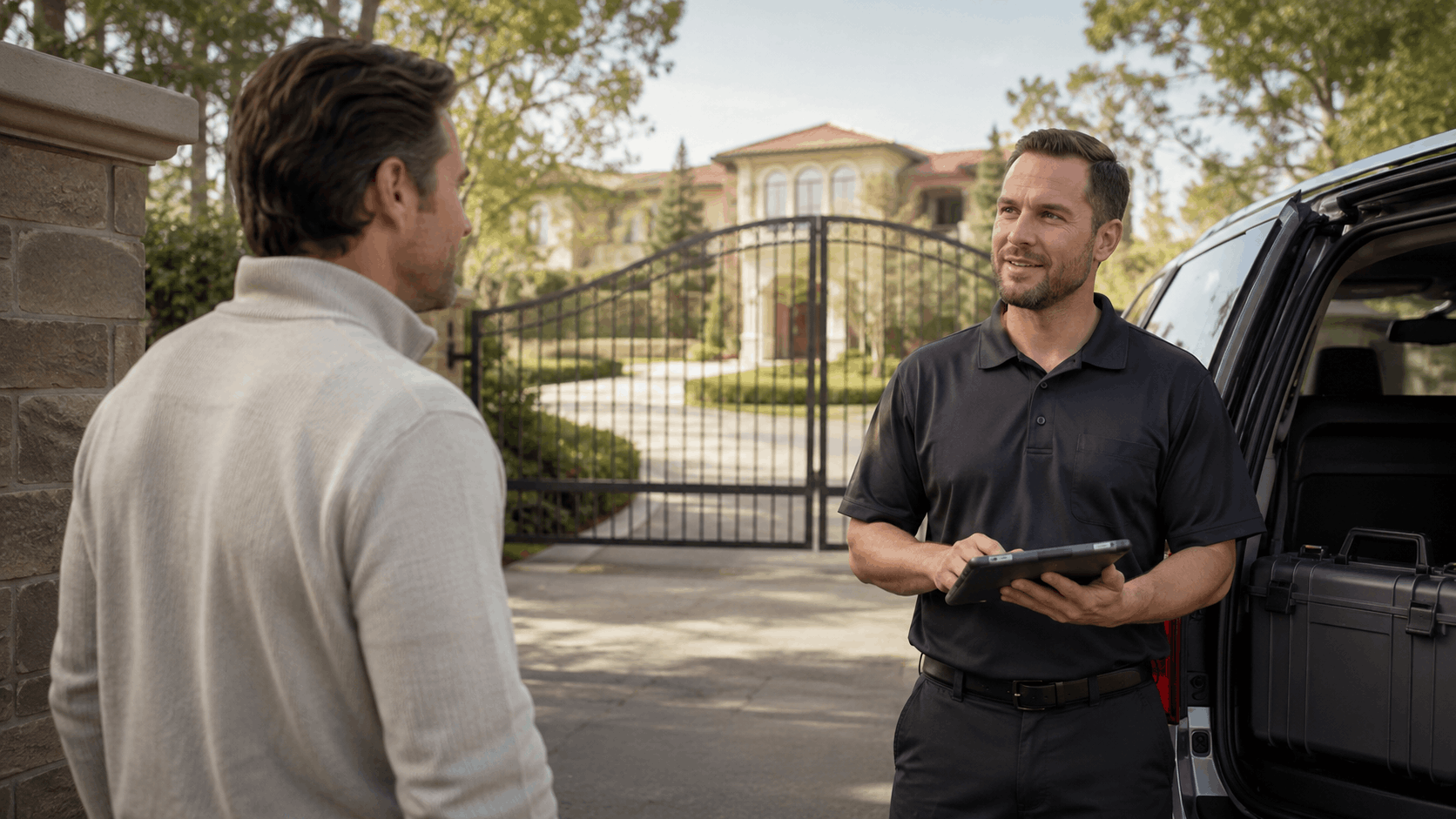
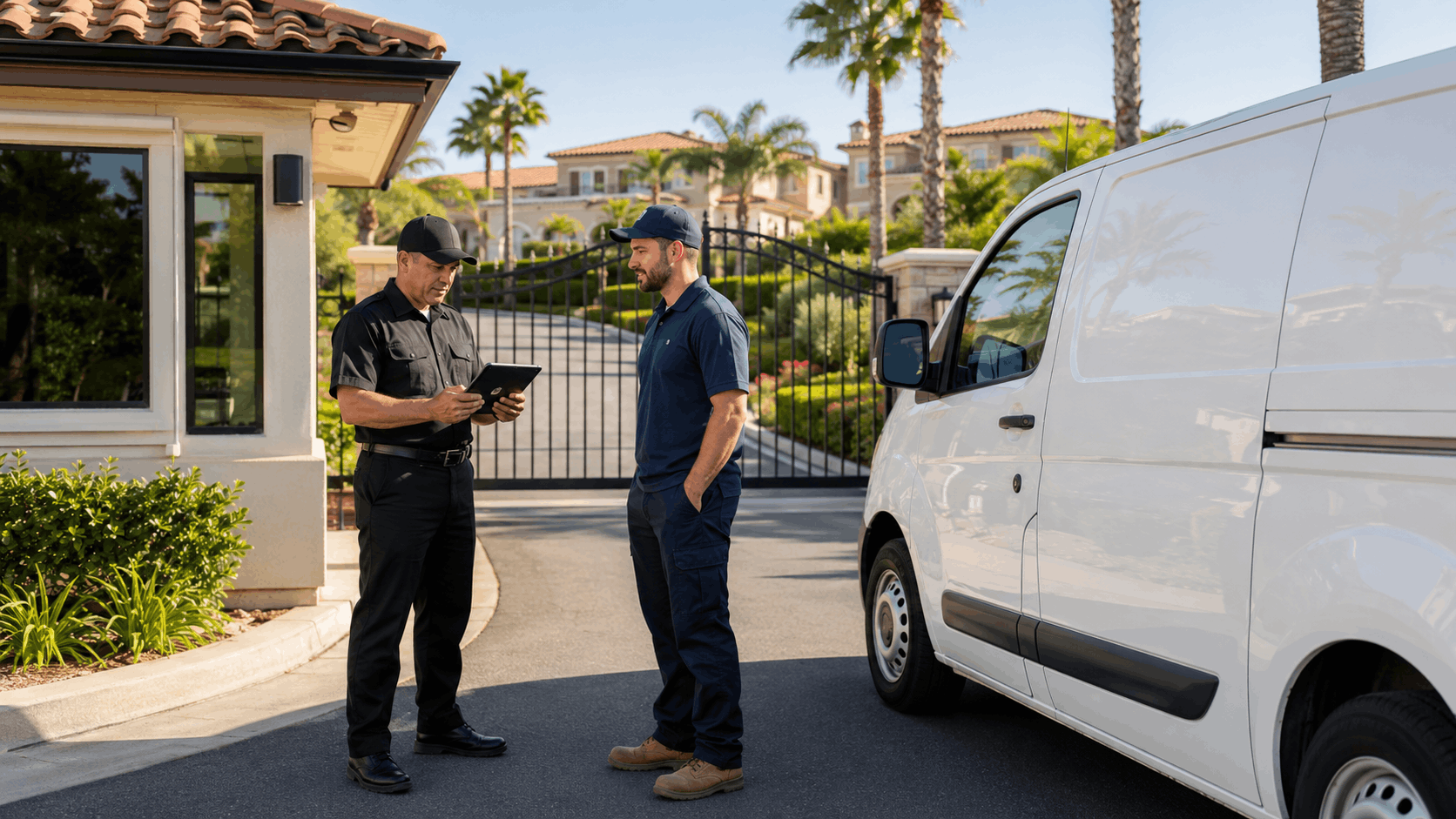
Authorized service means a security company has been cleared to enter and work inside a private gated community. For a place like Fairbanks Ranch, that clearance comes through the association, not just the individual homeowner. A company can have the best cameras in the world and still be useless if it cannot get past the front gate.
HOA approval matters because it protects every resident. The Fairbanks Ranch HOA wants to know who is driving through the neighborhood, what they are doing, and whether they carry the right insurance. Authorized service keeps that trust intact while still letting owners get the work they need.
How Vendor Approval Works With the Association
Vendor approval usually starts with paperwork submitted to the association office. The company provides proof of liability insurance, workers compensation coverage, and a business license. Most associations, including this one, expect those documents on file before any truck rolls through the gate.
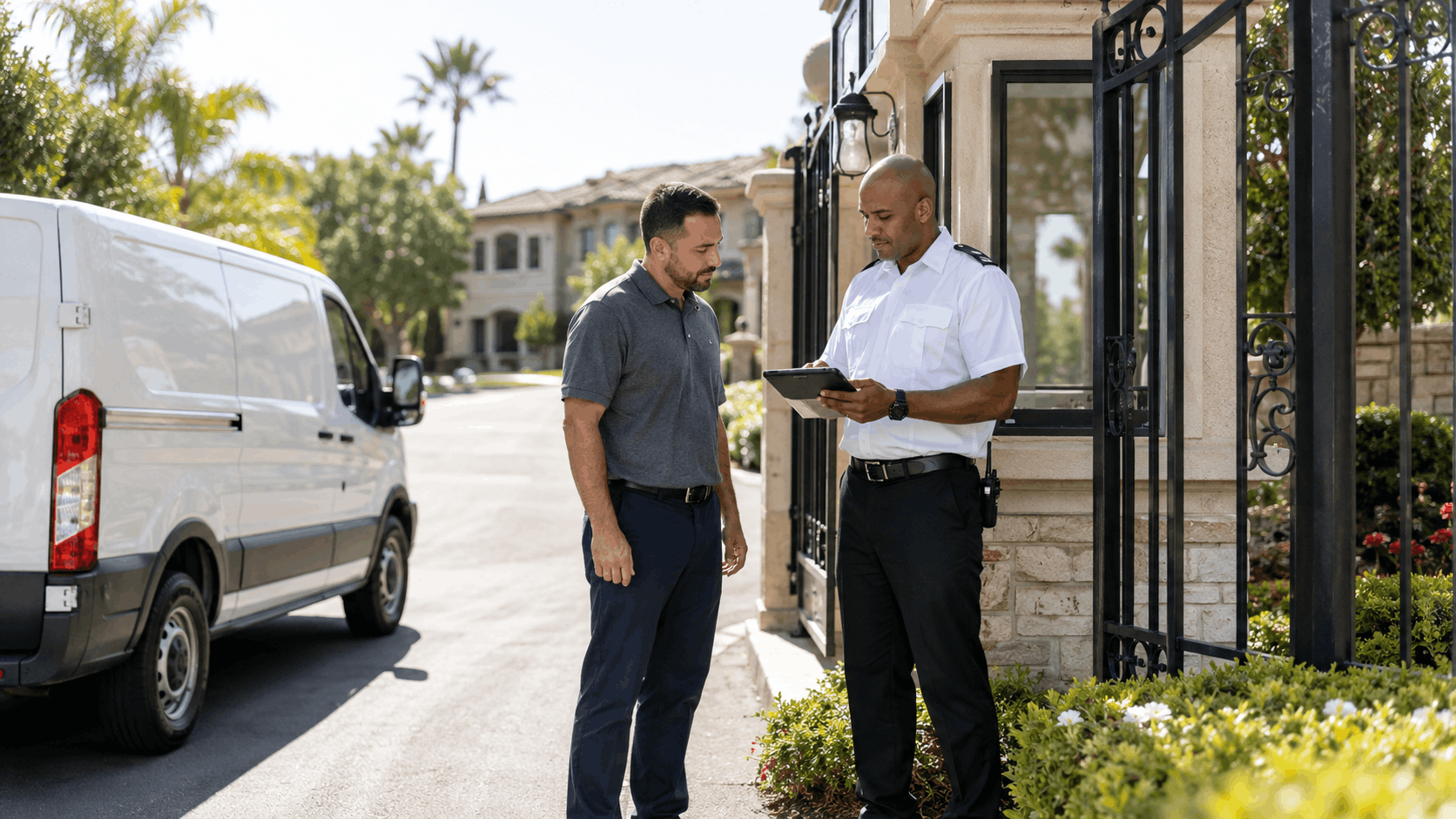
After the office reviews the paperwork, the vendor gets registered with the gate house. That means when our crew arrives, the guard already has the name, the appointment, and the resident who authorized it. Gate house registration cuts down on delays and keeps the entry log accurate.
The HOA rules also cover work hours, noise limits, and where crews can park. Some communities restrict outdoor work to certain days or times to protect the quiet feel of the neighborhood. Knowing those rules ahead of time keeps a project moving instead of stalling on day one.
We handle this registration step for homeowners so they do not have to chase down forms. Because we work across gated communities in San Diego, this process is routine for our team rather than a scramble.
Why Random Contractors Struggle to Get In
The main gate off Del Dios Highway is not a place where an unknown truck can simply drive through. Guards check names against the approved list, and anyone not registered gets held up while the gate house calls the resident to confirm. That verification step exists on purpose.
Random contractors often show up without insurance documents or a vendor file on record. When that happens, the guard cannot let them pass, and the whole appointment falls apart. The homeowner then has to reschedule and wait even longer for the work.
These access delays add up. A crew that gets turned away at Del Dios Highway may need days to sort out paperwork before returning. For a homeowner dealing with an offline camera or a broken gate sensor, that lost time is frustrating and leaves the property exposed.
Gate access is one of the biggest hidden costs of hiring an out-of-area company. A team already familiar with the entry process avoids that headache entirely and gets to work on schedule.
What Our Team Brings to a Private Community
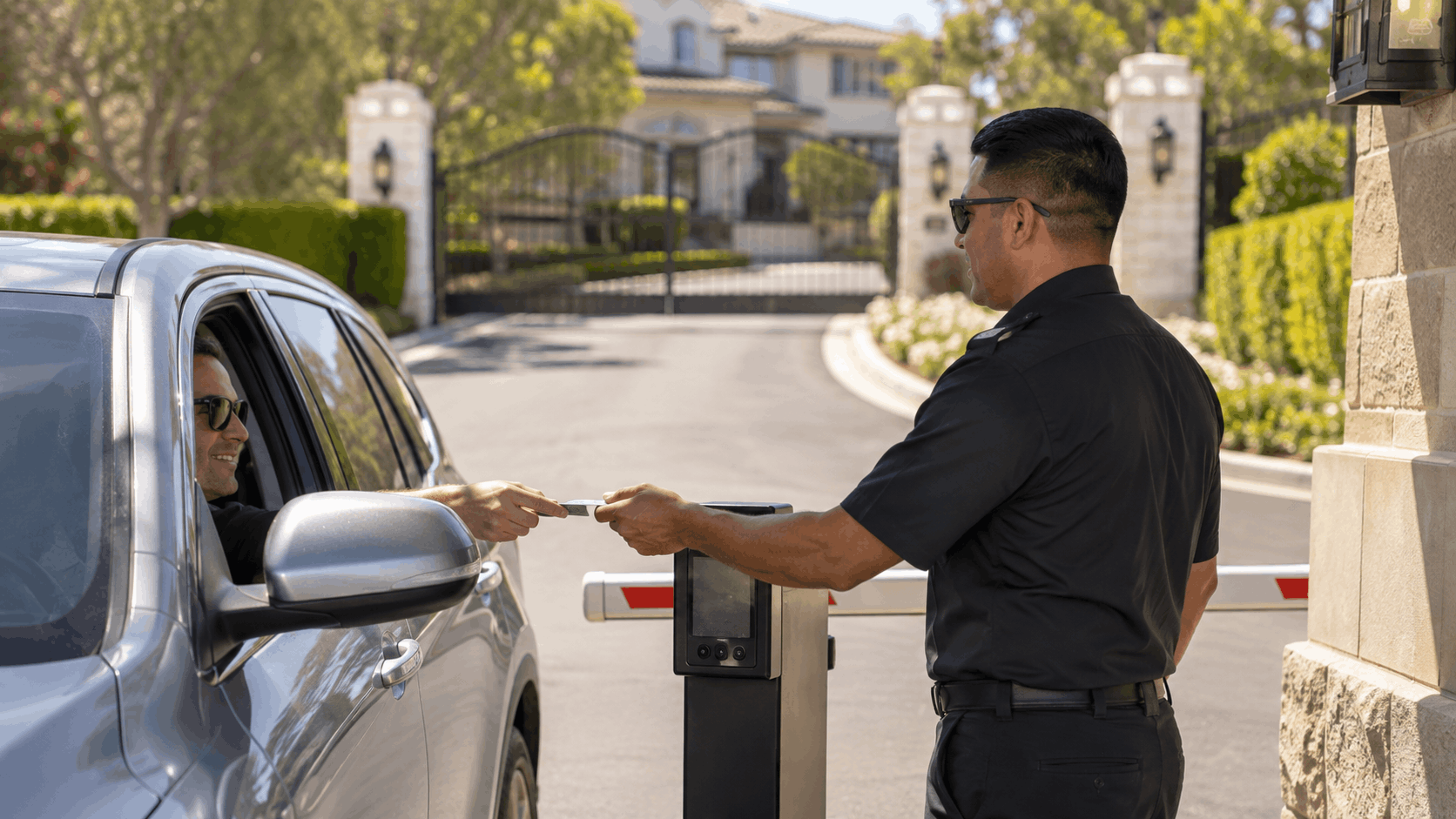
Our San Diego security team treats a private community with the respect it expects. We keep credentials current, show up in marked vehicles, and follow the check-in process at the gate house every visit. Guards recognize our crews, which speeds up entry.
Scheduling inside a private community takes care. We book appointments during approved hours and let the gate house know exactly who is coming and when. That coordination keeps the neighborhood calm and the project on track.
Privacy is a big deal for estate owners. Our technicians do not photograph interiors beyond what a job requires, and we keep system details confidential. Homeowners in a private community deserve a company that guards their information as carefully as it guards their property.
Being local matters here. We drive these roads regularly, so we know the layout, the seasonal conditions, and the way these estates are built. That familiarity shows up in cleaner installs and fewer surprises.
Security Concerns Unique to Fairbanks Ranch Properties
Estate security in Fairbanks Ranch is a different challenge than a standard suburban home. These are large lot properties with long driveways, wide perimeters, and detached buildings spread across several acres. One doorbell camera does not cover a place like this.
The most common concerns we see on these estates include:
- Homes set far back from the road with limited natural sightlines
- Long open perimeters that border trails and open valley land
- Deliveries left unattended at gates or distant entries
- Guest houses, pool houses, and stables that sit away from the main home
Each of these needs its own plan. Below we break down how we approach the ones that come up most often.
Long Driveways and Setback Homes
Many homes along San Dieguito Road sit hundreds of feet back from the street. That distance is great for privacy, but it creates blind spots between the gate and the front door. Someone could linger in that stretch without anyone in the house noticing.
Driveway cameras close that gap. We place units along the drive so the whole approach is covered from the entry gate to the garage. That way, owners see every vehicle and visitor before they reach the home.
Setback homes also slow down response times. If an alarm triggers and no one can see what caused it, verification takes longer. Good camera coverage along the driveway gives owners and monitoring staff a clear view fast.
We map these long approaches during the site visit and pick mounting points that avoid glare and landscaping blockage. Our video surveillance camera setups are built to cover the full length of these drives.
Perimeter and Fence Line Vulnerabilities
Estates that border the San Dieguito River valley and equestrian trails have wide open edges. A fence line that runs along open land is harder to watch than a short suburban backyard. People and animals can approach from directions a standard camera never sees.
Perimeter security uses a mix of cameras and outdoor sensors to catch movement before it reaches the home. Motion sensors placed along the fence line alert owners when something crosses into the property. That early warning buys time.
The trails near these estates bring foot and horse traffic close to private land. Owners want to know the difference between a passing rider and someone stepping off the trail toward the house. Zone setup and camera angles help sort that out.
We design perimeter coverage around the actual shape of each lot. Some properties need beam sensors, others need thermal-aware cameras, and many use a blend. The goal is catching activity at the edge, not just at the front door.
Package Theft and Delivery Access
Package theft is a real problem when deliveries get dropped at a distant gate or a long front entry. A box sitting out of sight for hours is an easy target. On these large lots, drivers often leave items wherever they can reach.
A video doorbell at the main entry gives owners a live view and a recording of every delivery. When paired with a camera at the driveway gate, owners can track a package from the moment it arrives. That record helps with both prevention and any claims later.
Intercom systems let owners speak to drivers and direct them to a safer drop spot. Some homeowners use this to have packages left inside a gated courtyard rather than the open road. That small change cuts theft dramatically.
We often pair doorbell cameras with keyless entry systems so trusted delivery services can place items in a secure area. It turns a vulnerable drop into a controlled one.
Guest House and Detached Structure Coverage
Casitas, pool houses, and stables are common on Fairbanks Ranch estates. These detached structures often sit far from the main home and get overlooked in a basic security plan. An empty guest house can be a soft spot on the property.
Each detached building needs its own coverage. That might mean a camera on the casita entrance, a sensor on the pool house door, or a unit watching the stable area. Estate coverage means the whole property, not just the primary residence.
Tying these buildings back to one system keeps things simple for the owner. Instead of checking three separate apps, everything shows up in a single view. Alerts from the stable land in the same place as alerts from the front gate.
We plan wiring and wireless links so distant structures stay connected reliably. On multi-acre lots, that connection is the difference between real coverage and a camera that drops offline every night.
Need Help in San Diego?
Smart Shield Systems serves San Diego and all of San Diego County.
Get Your Free Quote
Tell us about your property and we'll get back to you fast.
Camera Systems Built for Large Estate Lots
Security cameras for estate lots have to cover far more ground than a typical home system. A surveillance system on a multi-acre property in Fairbanks Ranch needs the right mix of camera types, mounting choices, and recording setups. Getting this right at the start saves money and frustration later.
The main decisions come down to how cameras connect, how they see at night, and where footage is stored. Each choice affects reliability across a big property. We walk owners through these options during planning.
Choosing Between Wired and Wireless Coverage
Wired PoE cameras run a single cable that carries both power and data. On a large estate, PoE cameras give the most stable connection and the best image quality. The tradeoff is more cabling work, which matters on properties where the garage and the stable might be hundreds of feet apart.
Wireless cameras skip the long cable runs and install faster. They work well for spots where trenching a cable is hard, like across a driveway or near mature landscaping. The catch is that signal has to reach the camera, and thick walls or distance can weaken it.
Near the hills around Fairbanks Ranch, wireless signal can struggle over long open stretches. We often use a blend, running wired lines to the main coverage points and adding wireless units where cabling is impractical. Access points along the way keep the wireless side strong.
The right mix depends on the layout. During the assessment we test signal at each proposed camera spot so owners are not surprised by a unit that keeps dropping. That planning step prevents most of the connection problems people complain about.
Night Vision and Low-Light Areas
Interior roads inside the community have little street lighting, and heavy landscaping blocks what light there is. That makes night vision a real requirement, not a nice extra. A camera that looks great by day can be useless after dark without the right features.
Infrared cameras see in near total darkness by using invisible IR light. They work well along driveways and fence lines where adding bright lights would bother neighbors or disrupt the natural setting. Owners get a clear black-and-white image without lighting up the whole yard.
For areas where color detail matters, like a front entry, we add low-light color cameras paired with motion-activated lighting. The light only comes on when something moves, which saves power and avoids constant glare. That combination gives usable footage in the darkest corners.
We survey each spot at dusk when possible to see how shadows fall. Landscaping that looks open in daylight can create dark pockets at night. Placing cameras with those pockets in mind keeps coverage honest around the clock.
Recording, Storage, and Remote Viewing
An NVR, or network video recorder, stores footage from all the cameras in one place. For estate lots with many cameras, storage size matters because more cameras and higher resolution eat up space faster. We size the NVR so owners keep several weeks of footage before it overwrites.
Cloud backup adds a second copy of important clips offsite. If something happens to the on-site recorder, the cloud copy is still there. Many owners keep everyday footage local and push flagged events to the cloud for safekeeping.
Remote viewing lets owners check any camera from a phone app. Whether they are home, at the office, or traveling overseas, they can pull up a live view or scroll back through recordings. Our remote video monitoring setups make that access simple and secure.
We also set up alerts so owners get a notification when a camera detects motion in a defined zone. That way they are not glued to the app but still know when something needs a look. It keeps a large system manageable.
Alarm and Monitoring Options for Gated Homes
An alarm system behind the community gate works a little differently than one on an open street. Gated homes already have one layer of protection at the entrance, but the estate itself still needs its own alarm and monitoring plan. The two layers work together.
Owners have choices about how their alarm gets watched and who responds. The right plan depends on how the property is used and how often it sits empty. We help sort through the options based on the household.
Professional Monitoring vs Self-Monitoring
Professional monitoring means a staffed center watches the alarm around the clock. When a sensor trips, the center calls the homeowner and can dispatch help. For estates that sit empty during travel, that constant watch is worth the monthly fee.
Self-monitoring sends alerts straight to the owner's phone with no monitoring center involved. It costs less each month, but it depends on the owner seeing and acting on the alert. If a phone is on silent overnight, a real event might go unanswered.
Inside a private community, monitored plans have an edge because the center can coordinate with gate staff. Our 24/7 alarm monitoring connects that response chain so nothing gets missed. Owners who travel often lean toward this option.
Some owners choose a hybrid, using professional monitoring for burglary and fire while self-monitoring minor alerts like a garage door left open. We set the system so the right events reach the right people. That balance keeps costs reasonable without losing coverage where it counts.
Coordinating With the Gate House and Patrol
The community patrol and gate staff are an asset most alarm plans overlook. When an alarm trips, the monitoring center can loop in the gate house so patrol can check the property quickly. That local presence often reaches the home before outside responders would.
Alarm verification is faster when cameras back up the sensors. If a monitoring operator can see live footage, they can tell the difference between a real break-in and a false trip. That verified alarm gets priority response and avoids wasted dispatches.
We set up systems so owners can grant the monitoring center limited camera access during an alarm event. Patrol can then be directed to the exact spot on the property. On a multi-acre lot, that specificity saves time.
Coordinating with community patrol also helps during vacations. Owners can note when they are away, and a verified alarm brings a quick on-site check from staff who know the neighborhood. That layered response is one of the real benefits of a gated community.
Reducing False Alarms on Large Properties
Large open properties trigger more false alarms than small ones. Wildlife crossing the yard, wind moving branches, and open land all set off poorly placed sensors. Coyotes and deer are common near the valley, and a motion sensor cannot tell them from a person on its own.
Proper zone setup cuts these false alerts way down. We define sensor zones so the system ignores routine movement in low-risk areas while staying sharp at doors and windows. Pet-immune and size-aware sensors help filter out small animals.
Camera-based motion detection adds another filter. Modern systems can recognize the shape of a person versus an animal or a swaying tree. That smart detection means fewer late-night calls over a rabbit crossing the driveway.
We tune every system after install and adjust zones once owners see how it behaves in real life. A few tweaks in the first weeks usually eliminate most nuisance alerts. Getting this right keeps owners trusting their alarm instead of ignoring it.
Smart Home and Access Control Integration
Modern access control ties directly into a home security setup on these estates. Smart home integration lets cameras, locks, gates, and lights work as one connected system rather than a pile of separate gadgets. For busy estate owners, that unity makes daily life easier.
The pieces that homeowners ask about most include:
- Private driveway gates with keypad entry past the community gate
- Smart locks that manage staff and guests without physical keys
- Cameras, alarms, and lighting linked into one app
- Voice and app control for the whole setup
Here is how each of these works on a large property.
Driveway Gates and Entry Keypads
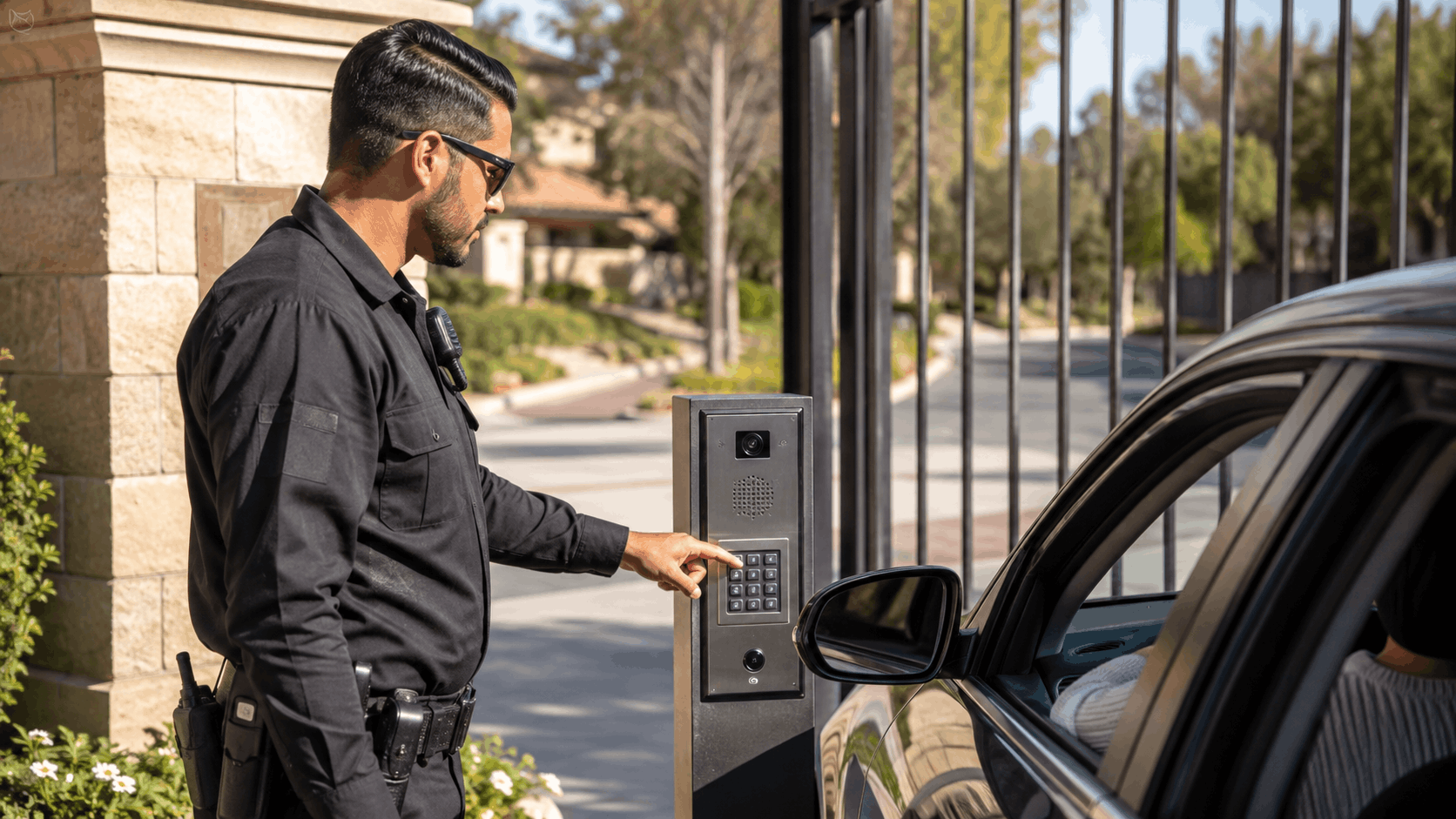
Many estates add a private driveway gate beyond the main community gate. That second gate is a strong extra layer, keeping the home private even from others inside the neighborhood. An entry keypad lets the owner control who gets through.
Keypad codes can be set for family, staff, and regular visitors. Each person gets their own code, so the owner sees who entered and when. If a code needs to be turned off, it takes seconds without changing locks or gates.
We connect driveway gate controls to the same system as the cameras and alarm. When the gate opens, a camera can record the vehicle and the owner gets an alert. Our gate access control work covers exactly this kind of private entry.
For owners who want convenience, we add app control so the gate opens from a phone. A homeowner arriving home can open the driveway gate before they even reach it. That small feature saves time every single day.
Smart Locks and Guest Access
Estate owners deal with a steady flow of housekeepers, landscapers, and guests. Handing out physical keys to everyone is a security risk, since keys get copied or lost. Smart locks solve that by using codes or phone access instead.
Guest access can be set for specific days and times. A landscaper might get a code that only works Tuesday mornings, while a house cleaner gets a different one for their schedule. When someone stops working for the household, their access is removed instantly.
Our smart lock installation ties these locks into the wider system. Owners see a log of every entry and get alerts when a door unlocks. That record brings real accountability to who comes and goes.
Temporary codes are handy for short-term guests staying in the casita. The owner sets a code for the visit and it expires when they leave. No key exchange, no worry about a copy floating around afterward.
Linking Cameras, Alarms, and Lighting
The real value of a smart setup comes when the parts talk to each other. When a camera detects motion at the gate at night, it can trigger smart lighting to come on and start a recording. That coordinated response deters trouble before it starts.
System integration means one action can set off several helpful responses. Arming the alarm at bedtime can lock the doors, close the garage, and dim the lights all at once. Owners control the whole property from a single app.
Smart lighting on timers and sensors also makes an empty estate look occupied. Lights that turn on and off in a natural pattern discourage anyone watching the property. Paired with cameras, they form a strong nighttime deterrent.
We build these connections during install so owners do not have to figure out the wiring between brands. Our smart home security integration brings cameras, alarms, and lighting under one roof. The result feels simple even on a complex property.
Need Help in San Diego?
Smart Shield Systems serves San Diego and all of San Diego County.
Climate and Seasonal Factors in North County
The North County climate around Fairbanks Ranch shapes what outdoor equipment holds up over time. Coastal moisture, wildfire season, and dry summer dust all affect security gear. Planning for these conditions means fewer failures and less seasonal maintenance down the road.
Equipment that works fine in a mild inland spot may struggle near the coast-influenced valley. We pick gear rated for the actual conditions these estates face. That choice pays off in years of reliable service.
Coastal Fog and Humidity Effects
The marine layer drifts inland from the coast most mornings, carrying moisture that settles on outdoor cameras. That humidity can fog a lens or work its way into a poorly sealed housing. A camera that fogs up at dawn misses the exact hours owners care about.
We use outdoor cameras rated for weather sealing, usually IP66 or higher. That rating keeps moisture out of the electronics and the lens chamber. Proper sealing is the difference between a camera that lasts years and one that clouds over in a season.
Mounting placement helps too. Positioning a camera under an eave or slight overhang shields it from the heaviest morning dew. Small choices during install reduce fog problems without any extra gear.
For spots that stay damp, we add units with built-in heaters or defog features. These keep the lens clear even when the marine layer is thick. Owners near the valley edge see the biggest benefit from this.
Wildfire Season and Power Concerns
Fire season brings the risk of planned power shutoffs, when the utility cuts power to reduce fire danger. During these events a security system without backup goes dark. That is exactly when owners want their cameras and alarm working.
Battery backup keeps the core system running through a power outage. We size backup so the alarm panel, key cameras, and internet gear stay on for hours. For longer outages, some owners add a generator that keeps the whole property powered.
Cellular backup matters here too. If the internet drops during a shutoff, a cellular link keeps the alarm connected to monitoring. That way the system still reports events even when the house has no power or broadband.
We test backup systems during install and on service visits so owners are not caught off guard. Knowing the system runs through a shutoff removes one worry during an already tense fire season. Homes across Escondido and the surrounding inland valleys deal with these same conditions.
Dust and Landscaping Interference
Dry summers coat everything in fine dust, and cameras are no exception. A dusty lens softens the image and can hide details when it matters. Regular cleaning keeps footage sharp through the dry months.
Heavy landscaping is beautiful on these estates but it moves. Branches grow into camera views and shrubs can block sensors over a season. What had a clear line of sight in spring may be half covered by late summer.
We plan camera and sensor placement with growth in mind, leaving room for plants to fill in without blocking coverage. During service visits we check for new obstructions and trim sightlines where needed. Sensor maintenance keeps false alerts down as the landscape changes.
Owners can help by noting when a camera view looks blocked or hazy. A quick call gets us out to clean or reposition before a gap becomes a problem. Small upkeep protects the whole investment.
Working With Smart Shield Systems in Fairbanks Ranch
Homeowners hiring our team for a project inside the community can expect a clear process from start to finish. As a local installer serving all of San Diego, we know how to work inside gated estates the right way. Here is what the experience looks like.
Our work with Fairbanks Ranch homeowners follows a simple path:
- An on-site assessment to map the property and coverage gaps
- Scheduling that respects gate access and HOA guidelines
- A clean install by credentialed technicians
- Ongoing support and service after the system is live
Each step is built around making the project smooth for the homeowner.
The On-Site Assessment Process
Every project starts with a site assessment. We walk the entire property, from the entry gate down the driveway to the detached buildings. Seeing the layout in person is the only way to plan real coverage on a multi-acre lot.
During the visit we map coverage gaps and note where blind spots hide. Long driveways, fence lines, and dark corners all get flagged. We also check signal strength and power access at each proposed camera spot.
From there we build a coverage plan that matches the property and the owner's priorities. Some owners care most about the perimeter, others about the front entry and packages. The plan reflects what matters to that household.
We review the plan with the owner before any work begins. That way there are no surprises about camera counts, placement, or cost. Owners get a clear picture of what the finished system will do.
Scheduling Around Community Access Rules
Scheduling inside a gated community takes coordination the average install does not. We register the crew at the gate house and confirm the appointment so entry off Del Dios Highway goes smoothly. That prep keeps day one on track.
We follow the HOA guidelines on work hours and noise. If the association limits outdoor work to certain days, we build the schedule around it. Respecting those rules keeps the neighborhood calm and the project welcome.
For larger estates, work may span several days. We plan those visits so the crew arrives and leaves within approved windows each day. Owners always know who is coming and when.
Clear communication ties it together. The homeowner, the gate house, and our team stay on the same page from the first visit to the final walkthrough. That coordination is where local experience really shows.
Ongoing Support and Service Calls
A security system is not a one-and-done purchase. Cameras need occasional cleaning, software needs updates, and settings sometimes need adjusting as a household changes. We stay available for all of it.
Service calls handle the day-to-day needs, from a foggy lens to a sensor that needs retuning. Because we are local, we can get out to the property without long delays. Our maintenance service keeps systems running the way they did on day one.
We also schedule periodic system checks for owners who want them. These visits confirm every camera records, every sensor reports, and backups are ready for the next power event. Catching a small issue early prevents a gap in coverage.
Owners can reach our team when something comes up rather than waiting on a distant call center. That ongoing support is a big reason estate owners stick with a local company. We are here for the long run, not just the install.
Need Help in San Diego?
Smart Shield Systems serves San Diego and all of San Diego County.
Final Thoughts
Protecting an estate inside Fairbanks Ranch takes more than good equipment. It takes a company authorized to work behind the gate, familiar with the layout, and ready to plan around long driveways, wide perimeters, and North County weather. Those details separate a system that works from one that leaves gaps.
Our team handles the gate house registration, the coverage planning, and the ongoing service so owners do not have to manage any of it. From driveway cameras to smart locks to monitored alarms, everything works together on one connected setup.
If a home inside the community needs cameras, alarms, or access control, Smart Shield Systems is ready to help. Contact our team to schedule an on-site assessment and get a coverage plan built for the property. Call today to talk through the options with a local expert who knows these estates.
Frequently Asked Questions
What does authorized service mean for a gated community?
Authorized service means the security company has been cleared by the association to enter and work inside the community. The company files insurance and license documents with the HOA and registers with the gate house. Once approved, its crews can pass the main gate for scheduled jobs. This clearance protects residents while letting owners get the work they need without long access delays.
How much does a security system cost for a Fairbanks Ranch home?
Cost depends on property size and system type. A basic camera and alarm setup might start in the low thousands, while a full estate system covering long driveways, perimeters, and detached buildings can run considerably more. Large lots cost more because they need more cameras, sensors, and cabling. We give a firm quote after the on-site assessment so owners know the price before any work begins.
Do I need HOA approval before installing cameras?
HOA approval is often needed for exterior work that changes the look of a property, like mounting cameras on the outside of the home or adding a driveway gate. Interior work usually does not require it. We help owners handle the approval step and provide the documents the association asks for. Sorting this out early keeps the project on schedule and avoids conflicts later.
Can cameras cover my whole driveway and gate?
Yes. With the right equipment and placement, cameras can cover a long driveway from the private gate all the way to the garage. We space units along the drive to remove blind spots and pair them with the entry gate view. Night vision and motion alerts make sure the coverage works after dark too. During the assessment we map the whole approach so nothing gets missed.
Will my system work during a power outage?
Yes, with battery backup in place. We size backup so the alarm panel, key cameras, and internet gear keep running through a power outage. Cellular backup keeps the alarm connected to monitoring if the internet drops. This matters during fire season shutoffs, when the utility cuts power to reduce risk. For longer outages, some owners add a generator to keep the whole property powered.
How does monitoring work with the community gate house?
When a monitored alarm trips, the monitoring center can loop in the gate house so community patrol checks the property quickly. Because patrol is already on-site, they often reach the home fast. If cameras back up the alarm, operators verify the event before dispatching outside responders. This coordination between monitoring, gate staff, and patrol is one of the real advantages of living behind the gate.
Can I check my cameras while traveling?
Yes. Remote viewing through a phone app lets owners see live camera feeds and past recordings from anywhere with an internet connection. Whether at home, at the office, or overseas, they can pull up any camera in seconds. The system needs a stable internet connection at the property, and we set up alerts so owners get notified of activity even when they are not watching the app.
How long does an installation take on a large estate?
Timing depends on property size and the number of cameras. A modest setup may take a single day, while a full estate system with cameras along driveways, perimeters, and detached buildings can take several days. Cabling on multi-acre lots adds time. We plan the schedule around approved gate access hours and let owners know the expected timeline before we start.
Do you service homes in nearby communities too?
Yes. Beyond Fairbanks Ranch, we serve surrounding North County San Diego areas including Rancho Santa Fe and Del Mar, along with communities across Poway and the inland valleys. Our team works in gated estates and standard neighborhoods alike. Wherever the property sits, we bring the same local knowledge and authorized-service approach to the job.
What maintenance do security systems need over time?
Security systems need routine care to keep working well. That includes cleaning dusty or foggy camera lenses, testing sensors and alarms, and applying software updates. We also check battery backups so they are ready for the next power event, and we trim landscaping that grows into camera views. Regular service visits catch small issues before they turn into coverage gaps on the property.
Frequently Asked Questions
- What does authorized service mean for a gated community?
- Authorized service means the security company has been cleared by the association to enter and work inside the community. The company files insurance and license documents with the HOA and registers with the gate house. Once approved, its crews can pass the main gate for scheduled jobs. This clearance protects residents while letting owners get the work they need without long access delays.
- How much does a security system cost for a Fairbanks Ranch home?
- Cost depends on property size and system type. A basic camera and alarm setup might start in the low thousands, while a full estate system covering long driveways, perimeters, and detached buildings can run considerably more. Large lots cost more because they need more cameras, sensors, and cabling. We give a firm quote after the on-site assessment so owners know the price before any work begins.
- Do I need HOA approval before installing cameras?
- HOA approval is often needed for exterior work that changes the look of a property, like mounting cameras on the outside of the home or adding a driveway gate. Interior work usually does not require it. We help owners handle the approval step and provide the documents the association asks for. Sorting this out early keeps the project on schedule and avoids conflicts later.
- Can cameras cover my whole driveway and gate?
- Yes. With the right equipment and placement, cameras can cover a long driveway from the private gate all the way to the garage. We space units along the drive to remove blind spots and pair them with the entry gate view. Night vision and motion alerts make sure the coverage works after dark too. During the assessment we map the whole approach so nothing gets missed.
- Will my system work during a power outage?
- Yes, with battery backup in place. We size backup so the alarm panel, key cameras, and internet gear keep running through a power outage. Cellular backup keeps the alarm connected to monitoring if the internet drops. This matters during fire season shutoffs, when the utility cuts power to reduce risk. For longer outages, some owners add a generator to keep the whole property powered.
- How does monitoring work with the community gate house?
- When a monitored alarm trips, the monitoring center can loop in the gate house so community patrol checks the property quickly. Because patrol is already on-site, they often reach the home fast. If cameras back up the alarm, operators verify the event before dispatching outside responders. This coordination between monitoring, gate staff, and patrol is one of the real advantages of living behind the gate.
- Can I check my cameras while traveling?
- Yes. Remote viewing through a phone app lets owners see live camera feeds and past recordings from anywhere with an internet connection. Whether at home, at the office, or overseas, they can pull up any camera in seconds. The system needs a stable internet connection at the property, and we set up alerts so owners get notified of activity even when they are not watching the app.
- How long does an installation take on a large estate?
- Timing depends on property size and the number of cameras. A modest setup may take a single day, while a full estate system with cameras along driveways, perimeters, and detached buildings can take several days. Cabling on multi-acre lots adds time. We plan the schedule around approved gate access hours and let owners know the expected timeline before we start.
- Do you service homes in nearby communities too?
- Yes. Beyond Fairbanks Ranch, we serve surrounding North County San Diego areas including Rancho Santa Fe and Del Mar, along with communities across Poway and the inland valleys. Our team works in gated estates and standard neighborhoods alike. Wherever the property sits, we bring the same local knowledge and authorized-service approach to the job.
- What maintenance do security systems need over time?
- Security systems need routine care to keep working well. That includes cleaning dusty or foggy camera lenses, testing sensors and alarms, and applying software updates. We also check battery backups so they are ready for the next power event, and we trim landscaping that grows into camera views. Regular service visits catch small issues before they turn into coverage gaps on the property.
S
Smart Shield Systems Team Team
Licensed security systems professionals serving San Diego and San Diego County.
Licensed in California · License #7623
Why trust Smart Shield Systems?
Founded in 2016, Smart Shield Systems is a licensed and insured security systems serving San Diego and San Diego County. All content is reviewed by our licensed technicians.

Need Help in San Diego?
Smart Shield Systems serves San Diego and all of San Diego County.
Related Articles
Safety & Prevention
Rancho Santa Fe Covenant Security: Estate Property and Private Community Specialist
A local expert guide to Rancho Santa Fe Covenant security, covering estate perimeter protection, gate systems, cameras, access control, and RSF Association rules.
Tips & Advice
The Bridges Rancho Santa Fe Security: Custom Estate System Service
A guide to custom estate security at The Bridges Rancho Santa Fe, covering system design, monitoring, local conditions, costs, and choosing the right local partner.
Safety & Prevention
Hidden Valley La Jolla Security: Gated Compound and Estate Service
A local guide to gated compound and estate security for Hidden Valley La Jolla homes, covering access control, cameras, monitoring, and coastal-ready installation.