Safety & Prevention
Hidden Valley La Jolla Security: Gated Compound and Estate Service
Key Takeaways
- Hidden Valley estates need layered perimeter coverage because long driveways and canyon edges create blind spots standard alarm kits cannot handle.
- Gated entry combines automated gates, vehicle sensors, keypad and mobile access, video intercoms, and scheduled windows for service crews.
- Estate camera coverage should span the full property line, with license plate recognition at the gate and strong night vision for dark canyon lots.
- 24/7 monitoring with video verification confirms real threats, coordinates with SDPD Northern Division and private patrols, and avoids false alarm fees.
- Smart locks, automated lighting, and a single control app let owners manage the whole compound and signal an occupied home while traveling.
- Coastal salt air, marine layer fog, and outages call for corrosion-resistant hardware, fog-rated cameras, and battery or generator backup.
- Full gated compound systems commonly run $8,000 to $35,000 or more in equipment, with monitoring around $40 to $100 per month.
- Smart Shield Systems offers local La Jolla experience, discreet design that respects architecture and HOA rules, and confidential service.
In This Article
A Hidden Valley homeowner called us last spring after a three-week trip to Europe. She came home to find her front gate sitting half-open, the motor humming, with no idea how long it had been like that. Nobody had broken in, but the not-knowing rattled her more than any alarm ever could.
That story plays out more than people think along the quiet, winding roads above La Jolla. Large estates with long driveways and private entries look secure from the street, but a single failed gate sensor or a blind spot near a canyon edge can leave the whole property exposed for days. The owners rarely find out until something goes wrong.
Why Hidden Valley Estates Need a Different Security Approach?
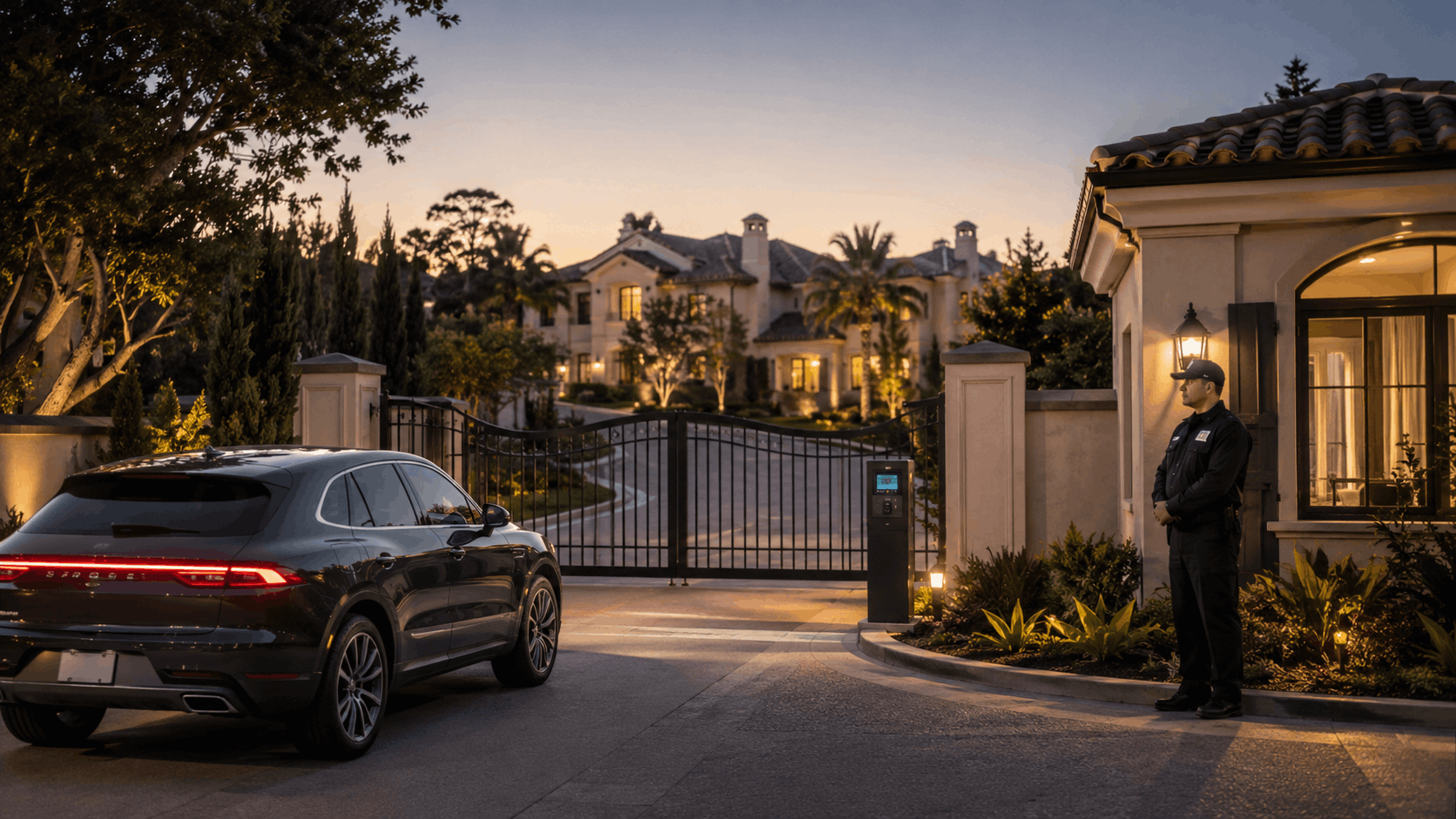
Most off-the-shelf alarm kits are built for a 2,000 square foot tract home with a front door, a back door, and a couple of windows. Hidden Valley La Jolla does not work that way. The lots are bigger, the terrain is steeper, and the entry points multiply fast.
Estate security here has to account for distance, elevation, and privacy all at once. A doorbell camera and two window sensors will not cut it on a multi-acre compound. The needs that set these properties apart include:
- Wide perimeters that standard sensors cannot reach
- Multiple structures like guest houses and pool houses
- Canyon-side approaches with no street visibility
- Long driveways that delay any response
- Owners who travel often and leave the home empty
Each of those factors changes how a system has to be built. We design around the property, not around a box of parts.
Large Lots and Long Driveways Off Hidden Valley Road
Properties near Hidden Valley Road often sit on an acre or more, with driveways that run a few hundred feet from the gate to the front door. That distance is a gift to anyone who wants to move around unseen. By the time a person reaches the house, they have already crossed a lot of unmonitored ground.
The wide perimeter is the real challenge. A fence line that wraps a large lot can run a thousand feet or more, and a single camera at the entry sees almost none of it. Blind spots form behind landscaping, along side yards, and near service gates that owners forget exist.
We handle this with layered perimeter coverage. That means cameras and sensors placed at intervals along the property line, not just at the front. Motion-triggered zones near the driveway alert the owner the moment a vehicle or person enters, long before they reach the main house.
The goal is to compress that long, vulnerable approach into a series of detection points. If someone crosses the gate, the system already knows. If they step off the driveway toward a dark corner of the lot, it knows that too.
Canyon Edges and Mount Soledad Sightlines
The canyon backdrops near Mount Soledad are part of why people love these homes. They are also a security problem. Slopes and ravines give intruders natural cover and a quiet way onto the property that never touches the front gate.
Canyon access points are easy to overlook because owners rarely walk them. The back edge of the lot might drop into brush that nobody patrols. A determined person can climb a slope, stay below the sightline, and approach the house from the one direction the cameras ignore.
We map these terrain features during the site walk. Cameras get aimed down toward canyon edges and slope lines, and motion sensors cover the gaps where a fence meets uneven ground. Infrared detection works well here because the brush stays dark even on bright days.
The view toward Mount Soledad should stay beautiful, not become a liability. With the right placement, owners keep their sightlines and still get an alert the moment something moves where it should not.
Privacy Expectations of High-Value Homes
Estate owners in Hidden Valley do not want their homes to look like a bank. They want discreet security that protects the property without announcing it to every car that drives by. Bulky cameras and floodlights on poles defeat the whole aesthetic.
High-value homes call for equipment that disappears into the architecture. We use low-profile cameras color-matched to trim, sensors tucked under eaves, and gate hardware that reads as part of the design rather than a bolt-on afterthought.
There is a practical side to this too. Visible, obvious gear tells anyone watching exactly where the coverage is and where it is not. Discreet placement keeps that information private and removes the easy workarounds.
The best system is the one nobody notices until they need to pull up footage. That balance between protection and a clean look is something we plan for from the first visit, not something we bolt on at the end.
Gated Entry and Access Control for Compounds
The gate is the first line of defense and the part owners interact with every single day. A controlled entry system does more than open and close. It decides who gets in, logs who came through, and keeps the gate from becoming the weak point.
Good access control for a compound layers several pieces together. Each one handles a different way people approach the property, from owners to delivery drivers to the weekly gardening crew.
Automated Gates and Vehicle Sensors
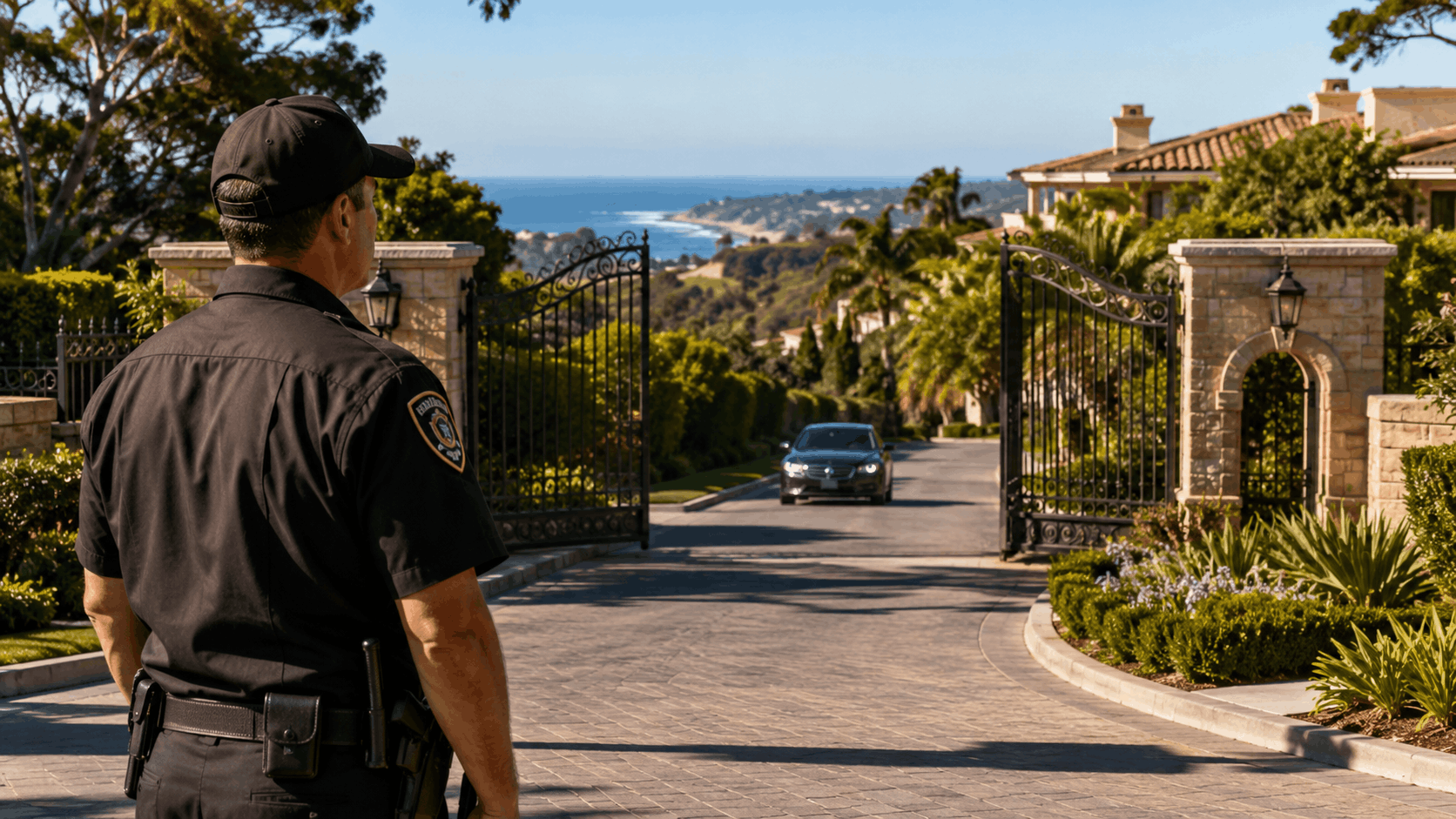
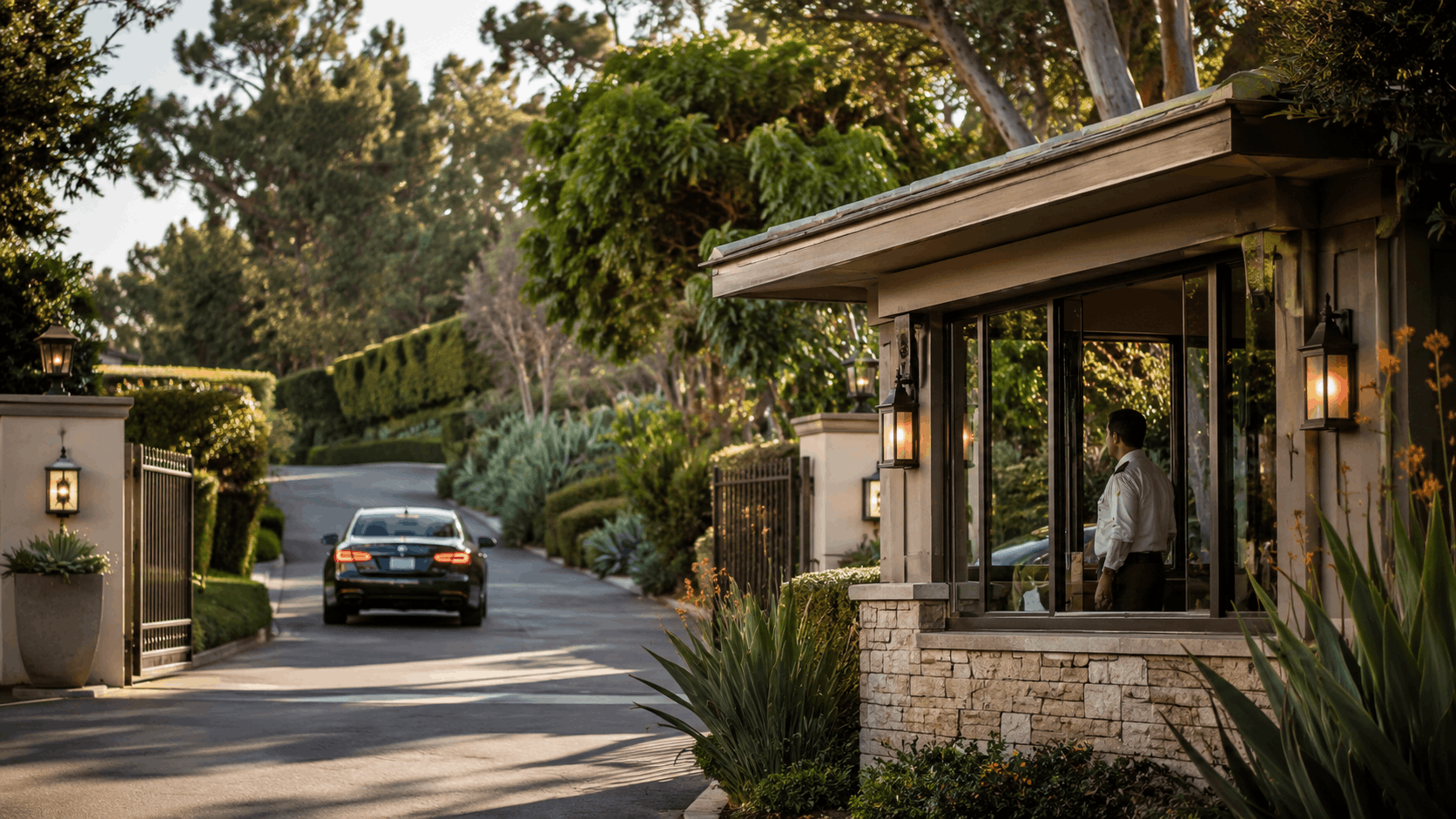
A motorized gate is the baseline for any gated entry on these lots. We install swing and slide models depending on the driveway shape, with motors sized for the gate weight so they hold up through years of daily cycles. The wrong motor burns out fast on a heavy custom gate.
Vehicle detection loops sit under the pavement and sense a car waiting to exit. That lets the gate open automatically on the way out without the driver fumbling for a remote. The loop also stops the gate from closing on a vehicle still passing through.
Anti-tailgating features matter on long driveways where a second car can slip in behind the first. We set timing and sensor zones so the gate closes promptly after one authorized vehicle, not after every car in line. Our gate and access control work covers both the hardware and the logic that runs it.
A reliable automated gate also needs to fail safely. During a power outage it should default to a state the owner chose ahead of time, with a manual release that does not require a service call to operate.
Keypad, Fob, and Mobile App Entry
Owners want options for getting in, and each method fits a different situation. A keypad entry near the gate works for family members and trusted staff who memorize a code. A fob lives in the car for daily in-and-out without rolling down a window.
Mobile access is where the system earns its keep for busy owners. From a phone, they can open the gate for a visitor while standing in the kitchen or sitting at an office in The Village. The same app shows a log of every entry so there is a record of who came and went.
The real advantage is granting and revoking access without changing locks or codes for everyone. When a housekeeper or gardener starts or stops working at the property, the owner adjusts one profile. Our keyless entry systems make those changes instant.
We usually set up a mix. Codes for regulars, a fob for the owners, and mobile control as the master that overrides all of it from anywhere.
Video Intercoms and Visitor Verification
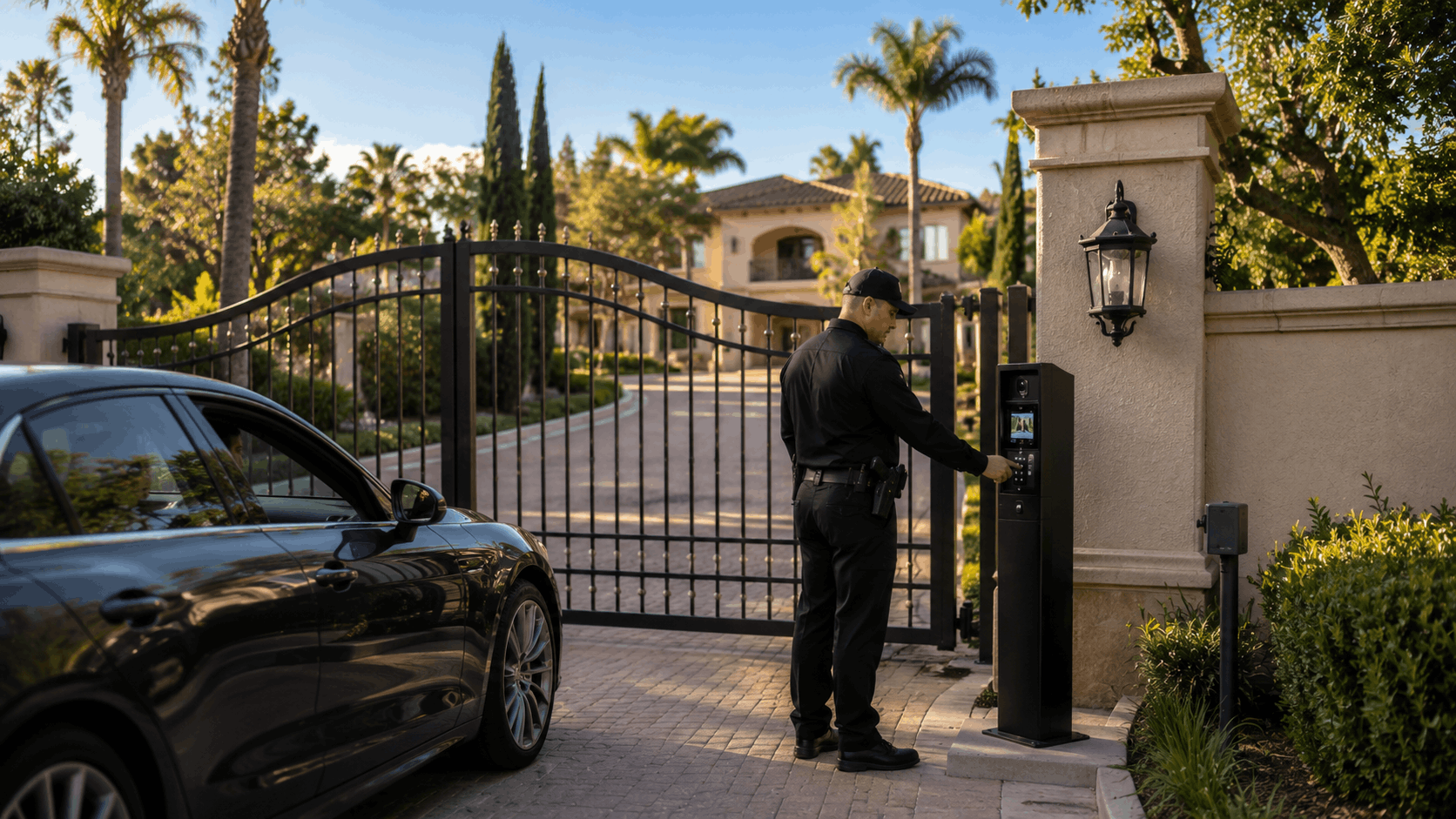
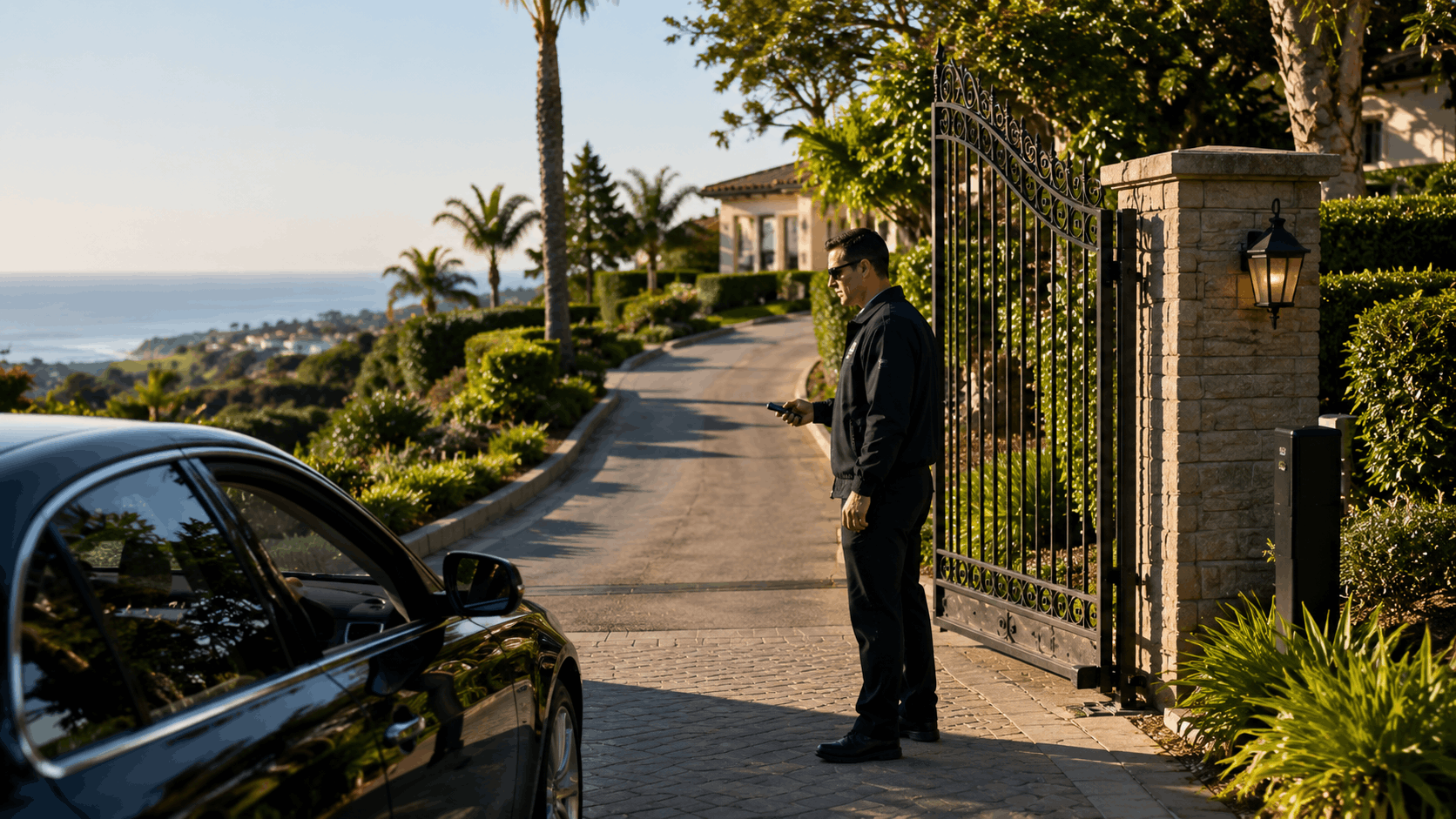
A video intercom at the gate turns a blind buzz-in into a real decision. Owners see the person, the vehicle, and what is in their hands before anything opens. That single step stops a lot of problems before they start.
Visitor verification works even when the owners are away. The intercom rings their phone, they see live video, and they speak to the visitor through the app as if standing right there. A delivery driver has no idea the homeowner is three time zones away.
For estates with frequent guests and service visits, this becomes the daily front line. The owner can confirm a face matches the name, decline an unexpected caller, or let a known visitor through with a tap.
We pair the intercom with the entry camera so every interaction is recorded. If a stranger lingers at the gate, the footage is there and the owner already got the alert.
Service and Delivery Scheduling
Recurring crews are a fact of life on a large estate. Landscapers, pool service, and housekeepers all need to get in on a schedule. Handing out permanent codes to everyone is how access gets messy and exposure grows.
Scheduled entry windows solve this cleanly. A gardener's code works only on Thursday mornings between eight and noon, for example. Outside that window it does nothing, which means a leaked code is useless on any other day.
Delivery access can follow the same logic. The owner sets a temporary code or a one-time mobile grant for a specific delivery, then it expires. Our guest and temporary access codes handle exactly these situations.
The point is to limit how long the gate stays open and to whom. Every scheduled window is logged, so the owner always knows which crew came through and when, without leaving the property open by default.
Need Help in San Diego?
Smart Shield Systems serves San Diego and all of San Diego County.
Get Your Free Quote
Tell us about your property and we'll get back to you fast.
Camera Systems Built for Estate-Size Properties
On a compound, camera coverage cannot stop at the front door. A handful of cameras around the entry leaves most of the property dark. Estate cameras need a plan that treats the whole lot as the protected area, not just the house.
We design video surveillance in zones: the perimeter, the entry, the structures, and the interior spaces owners want covered. Each zone has its own camera type chosen for its job. Our video surveillance work starts with that zone map.
Perimeter and Property Line Cameras
Perimeter cameras watch the edges of the lot where intrusions actually begin. On a multi-acre estate, that means coverage along the full fence line, not just the gated section facing the road. The back and side boundaries are usually where the gaps hide.
Property line coverage gets tricky where a lot borders a canyon or a neighboring estate. There is no fence to mount on in some spots, so we use pole mounts or building-edge placements aimed outward along the boundary. The cameras catch anyone approaching from the brush or the slope.
We favor cameras with wide fields of view for these runs, paired with motion zones so the system flags movement instead of recording empty hours of nothing. That keeps footage useful and storage manageable.
Overlapping coverage matters here. Each camera should see a slice of what the next one sees, so there is no single blind gap an intruder can slip through between two views.
License Plate Recognition at the Gate
A gate camera that reads plates turns every approaching vehicle into a logged record. License plate recognition captures the plate, timestamps it, and stores it whether the car is invited or not. That log is gold when something happens and the owner needs to retrace the day.
The value shows up over time. A car that circles the property twice in a week stands out in the log even if nothing happened yet. Owners and monitoring staff can flag plates they do not recognize.
We position these cameras to read plates at the angle and distance vehicles actually approach, which takes some planning on a curved driveway. Our license plate recognition cameras are tuned for the entry conditions on these lots.
Paired with the access log, plate reading gives a complete picture. The system knows which code opened the gate and which vehicle came through at the same moment.
Night Vision and Low-Light Performance
Canyon-side lots get dark. There is little ambient light off the slopes, and the homes themselves are often set back from any street lighting. A camera that looks great at noon can be useless at two in the morning, which is exactly when it matters.
We spec cameras with strong infrared for true darkness and color night vision for areas with a little spill light. Color at night helps identify clothing and vehicles in ways grayscale infrared cannot. The right choice depends on the spot.
Low-light cameras also need to handle the contrast of a motion light kicking on. A cheap sensor blows out the image when a floodlight triggers. Better cameras adjust fast and keep the detail.
For the darkest perimeter runs, we sometimes add subtle dedicated infrared illuminators that the human eye cannot see but the camera can. The footage stays clear without lighting up the whole canyon.
Local Storage and Cloud Backup
Footage only helps if it is still there when the owner needs it. We set up local storage on site, usually a recorder sized to hold weeks of video across all the cameras. That gives owners a long window to review past events.
Cloud backup adds a layer of protection against the recorder itself being stolen or damaged. Critical clips and event footage sync off site, so a burglar who grabs the recorder does not erase the evidence. The two work together.
Retention length is a choice we set with the owner. Some want thirty days, some want longer, and the storage gets sized to match. Higher camera counts and higher resolution eat storage faster, so the plan accounts for both.
Remote review through the app means owners can pull up any camera or scroll back through footage from anywhere. Remote video monitoring with analytics can even flag specific events so owners are not scrubbing through hours of recording.
Professional Monitoring and Fast Response
Cameras and gates record and control, but they do not call for help. That is what 24/7 monitoring does. When a sensor trips at three in the morning, a monitoring center sees it and acts, whether the owners are home, asleep, or overseas.
On an estate with a long driveway, response time and verification matter more than on a small lot. The right monitoring setup confirms a real threat fast and gets the correct response moving. Our 24/7 alarm monitoring handles that around the clock.
How Alarm Signals Reach a Monitoring Center
The path starts with a sensor. A door contact, a motion detector, or a glass break sensor trips and sends a signal through the alarm panel. The panel transmits that alarm signal to the monitoring center over cellular and internet paths so a cut phone line cannot silence it.
At the monitoring center, trained operators see the alarm with the zone that triggered it. They know whether it was the back gate, a window, or an interior motion sensor. That detail shapes how they respond.
The operator follows a verification process before any dispatch. They may call the owner, check video, and confirm the alarm is real rather than a pet or a slammed door. Our alarm systems and monitoring tie every sensor into this chain.
The whole sequence takes seconds to begin. By the time most people would still be reaching for a phone, the monitoring center is already working the event.
Coordinating With San Diego Police and Patrol Services
When an alarm is verified, the monitoring center contacts the right responders. For Hidden Valley and the surrounding La Jolla area, that means coordinating with SDPD Northern Division, which covers this part of the city. The operator passes the address, the alarm type, and any video confirmation.
Many estate owners in La Jolla also use a private patrol service. The monitoring center can be set up to alert that patrol alongside or ahead of police, since a patrol unit already in the area often reaches the gate faster.
That coordination is set up in advance, not improvised during an event. We build the contact order and the responder list into the account when the system goes in, and we update it whenever the owner's preferences change.
The long driveways here make this coordination matter. A patrol response that arrives at the gate quickly can verify and contain a situation while police are en route.
Video Verification to Reduce False Alarms
False alarms are expensive and they wear out everyone's patience. Many jurisdictions charge fees for repeated false dispatches, and a property known for false alarms gets a slower response over time. Video verification fixes most of this.
When an alarm trips, operators pull the camera covering that zone and look. If they see an actual person where there should not be one, they dispatch with confidence and tell responders a crime is in progress. If they see a raccoon or a branch in the wind, they stand down.
That confirmation step protects owners from false alarm fees and protects the response system from crying wolf. A verified alarm also moves up the priority list with police.
For estates with motion zones across a wide lot, verification is what keeps the system from becoming a nuisance. The cameras and sensors work as a team so every real event gets attention and the false ones get filtered out.
Smart Home Integration for Estate Owners
Security on a compound works best when it talks to the rest of the home. Locks, lighting, gates, and alarms acting as one system give the owner real control instead of a pile of separate apps. That integration is where a modern estate setup pulls ahead.
We connect these pieces so they respond together. Arming the system at night can lock every door, drop the gate, and set the lighting in one action. Our smart home automation work ties the whole property into one logic.
Smart Locks on Main and Secondary Entrances
A Hidden Valley estate rarely has just one door. There is the main house, often a guest house, and outbuildings like a pool house or detached garage. Each one is an entrance that needs control, and physical keys for all of them get lost and copied.
Smart locks put every door under one system. The owner can lock or unlock any entrance from the app, check whether a door is open, and grant a guest access to only the guest house without touching the main residence.
The guest house is a common case. Visitors get a code that works on that structure during their stay and expires when they leave. Our smart lock installation covers the main house and every secondary building on the lot.
Locks also report their status to the monitoring system. If a door is left unlocked overnight, the owner gets a nudge instead of finding out the hard way.
Automated Lighting and Away Modes
An empty estate is an obvious target, and a dark one even more so. Automated lighting makes a vacant home look lived in. Lights come on and go off on varied schedules that mimic real activity rather than a rigid pattern anyone could read.
Motion lighting handles the perimeter and the driveway. When a sensor catches movement at night, the area lights up, which both helps the cameras and tells an intruder they have been seen. Sudden light is a strong deterrent.
Away mode ties it together for travel. With one setting, the home shifts into a pattern that looks occupied: interior lights cycling, exterior lights on at dusk, and the gate and locks secured. The owner sets it from the airport and forgets about it.
We tune these schedules to the property and the season, since sunset in La Jolla shifts a lot between summer and winter. The lighting follows real dusk instead of a fixed clock.
One App for the Whole Compound
Juggling separate apps for the gate, the cameras, the alarm, and the locks is how owners stop using their system. A single app dashboard fixes that. From one screen, the owner controls the gate, views any camera, arms the alarm, and checks every lock.
Remote management means the property is in reach from anywhere. An owner traveling can open the gate for a house sitter, confirm the alarm is set, and watch a delivery happen, all from a phone in another country. The distance stops mattering.
The single dashboard also makes the system easier to actually use day to day. There is no hunting for the right app or remembering four logins. Our voice and app control setup brings it all under one roof.
For households with multiple family members, each person can have their own access and view, with the owner setting what everyone can control. That keeps the system shared without losing oversight.
Need Help in San Diego?
Smart Shield Systems serves San Diego and all of San Diego County.
Climate and Terrain Challenges in La Jolla
Security gear in La Jolla faces conditions that inland equipment never sees. The coastal climate and canyon terrain near Hidden Valley wear on hardware in specific ways. Planning for them at install time saves owners from early failures and fuzzy footage.
We have learned what holds up here and what does not. The right materials and placement make the difference between a system that lasts a decade and one that corrodes in two years.
Salt Air and Coastal Corrosion
Ocean air near La Jolla carries salt, and salt eats metal. Exterior camera housings, gate hardware, and mounting brackets all face slow corrosion that inland homes never deal with. Cheap gear rusts at the screws and seams within a couple of seasons.
We choose corrosion-resistant materials for everything exposed: marine-grade stainless fasteners, sealed housings rated for harsh environments, and powder-coated finishes that resist salt. The upfront cost is higher and the lifespan is far longer.
Placement helps too. Where we can, we tuck coastal hardware under eaves and overhangs that block the direct salt spray while keeping the camera's view clear. A little shelter goes a long way against salt air corrosion.
We also build maintenance for this into the service plan. Periodic checks catch early corrosion at connection points before it turns into a failure, especially on the ocean-facing side of a property.
Marine Layer Fog and Camera Clarity
Anyone who lives near the coast knows the marine layer. Morning fog rolls in off the water and can sit thick over the canyons until midday. Fog scatters infrared light, which is exactly what turns a clear night camera into a wall of glowing haze.
We plan camera clarity around this. Cameras with smart infrared adjust their output to cut the glare fog creates, and color night vision often reads better than infrared in damp conditions. The choice depends on each camera's spot and how much fog it tends to catch.
Placement again matters. A camera aimed straight into a low canyon collects more fog haze than one positioned with a tighter, shorter field of view. We adjust angles and distances to keep usable footage even on the grayest mornings.
No camera sees through heavy fog perfectly, so we layer detection. When the fog is at its worst, motion sensors and the access log fill the gaps the cameras struggle with.
Power Reliability and Backup Systems
A gate that dies in a power outage is a gate stuck open or stuck shut, and either one is a problem. Cameras that go dark take the whole watch offline. Backup power keeps the system alive when the grid drops, which happens here during storms and high-wind shutoffs.
We install battery backup on the alarm panel, the cameras, and the gate motor so they ride through short outages without a blink. The batteries are sized to cover hours, not minutes, since outages in the area can run long.
For larger compounds, owners often have a standby generator for the house, and we tie the security system into that circuit. When the generator picks up the load, the gates, cameras, and monitoring stay fully live.
We test the backup during maintenance visits, because a battery that has quietly died does no good when the power actually fails. Knowing the system holds through an outage is part of why owners trust it when they travel.
What Estate Security Costs and How Installation Works
Owners always want a straight answer on cost, and the honest answer is that it depends on the property. A gated compound is not a fixed package. That said, there are real ranges and a clear process, and we walk owners through both before any work begins.
The security cost breaks into equipment, installation labor, and ongoing monitoring. The installation process starts with an assessment and ends with a system tuned to the lot. Here is what to expect.
On-Site Property Assessment
Every estate job starts with a site walk-through. We walk the entire property with the owner, from the gate down the driveway to the canyon edge and around every structure. We map entry points, blind spots, and the spots that need coverage.
This is where the real plan takes shape. We note where the fence line runs, where the dark corners are, where vehicles approach, and which buildings need their own locks and cameras. A property assessment on a multi-acre lot can take a couple of hours done right.
We also listen to how the owners live. How often they travel, who comes and goes, where guests stay, and what worries them most. That shapes the design as much as the terrain does.
The walk-through ends with a clear proposal mapped to the actual property. No guessing from a floor plan, no generic package dropped on a unique estate.
Equipment and Monthly Monitoring Pricing
For a full gated compound, equipment and installation commonly land somewhere between $8,000 and $35,000 or more, depending on the lot size, camera count, and gate complexity. A property with a long fence line, license plate cameras, and multiple structures sits at the higher end.
Individual pieces give a sense of the range. A motorized gate setup runs a few thousand dollars with the motor, loops, and controls. High-quality estate cameras run several hundred to over a thousand each installed, and counts on a large lot can climb past a dozen.
Monitoring pricing for professional 24/7 service typically runs from about $40 to $100 or more per month, depending on video verification, the number of zones, and added features. That ongoing fee covers the monitoring center watching the property around the clock.
We give owners a clear breakdown so they see equipment cost, labor, and monthly monitoring separately. No surprises buried in a single lump number.
Installation Timeline and Minimal Disruption
A full compound install usually takes a few days to a couple of weeks, depending on the camera count, gate work, and how much cabling the property needs. A simpler setup goes faster; a large estate with trenching for the gate and perimeter takes longer.
We schedule the work to limit disruption to the household. Crews stage by zone so the property is never fully torn up, and we coordinate around the owner's travel and any events on the calendar.
Protecting the landscaping is part of the job on these properties. Where we run cable underground, we trench carefully and restore the ground, working around mature plantings rather than through them. The grounds should look untouched when we leave.
The installation timeline gets set during the assessment so owners know what to expect. We hold to it and keep them updated as each zone comes online.
Ongoing Maintenance and System Checks
A security system is not a set-and-forget purchase, especially in a coastal environment. Maintenance keeps it working when it counts. We schedule regular service visits to inspect hardware, clean camera lenses, and test the backup power.
System checks catch the small problems early. A camera fogged with salt film, a gate motor starting to strain, a battery losing its charge, these all show up during a visit before they cause a failure. Our security system maintenance service keeps the whole setup healthy.
Remote diagnostics handle a lot between visits. We can check that cameras are online, sensors are reporting, and the panel is communicating, all without rolling a truck. Many issues get flagged and fixed before the owner ever notices.
For owners who travel often, this ongoing attention is part of the value. They leave knowing the system was checked recently and is being watched, not hoping it still works.
Need Help in San Diego?
Smart Shield Systems serves San Diego and all of San Diego County.
Why Hidden Valley Owners Choose Smart Shield Systems
Estate owners have plenty of national companies to call. What they get from us is a local team that knows these neighborhoods, designs around the home rather than a catalog, and keeps their business private. That combination is why Hidden Valley owners stay with us.
We treat each estate as the unique property it is. As a La Jolla security company rooted in San Diego, we bring real ground knowledge to every job.
Local San Diego Team With La Jolla Experience
Our team works across San Diego every day, and La Jolla is a regular stop. We know the difference between an estate above Hidden Valley Road and a home down near the coast in Bird Rock, and we know how The Village's tighter lots differ from the canyon compounds.
That local knowledge shapes the work. We know which streets get the heaviest marine layer, where the canyon access points tend to be, and how the area's private patrols operate. A team flown in from out of state learns none of that.
We have driven these roads and worked on homes throughout the La Jolla neighborhoods. When an owner describes a problem, we usually already understand the conditions behind it.
Being local also means we are close when something needs attention. A service call does not wait on a distant dispatch; our crews are already in the area.
Discreet Design That Respects Architecture
Estate aesthetics are not an afterthought for our owners, and they are not for us either. We design the system to blend with the home's architecture, matching finishes, hiding cabling, and placing equipment where it protects without dominating the view.
Many La Jolla communities also have HOA rules about exterior changes and visible equipment. We work within those expectations, choosing discreet design that satisfies the board and the owner's eye at the same time.
The result is security that does its job quietly. Visitors see a beautiful home, not a wall of cameras, while the coverage underneath is complete. That balance takes planning, and we build it in from the assessment forward.
Owners who care deeply about how their property looks find that they do not have to choose between protection and design. With the right approach, they get both.
Privacy and Confidential Service
High-value estate owners expect confidential service, and we take that seriously. We do not share client names, addresses, or system details. The fact that a particular family uses our service stays between us and them.
That discretion runs through everything. Our crews work professionally and quietly, our records are kept private, and we never use a client's home as a public showcase without explicit permission. Privacy is part of the product.
For owners who travel, host notable guests, or simply value their seclusion, this matters as much as the hardware. They want a provider who understands why a low profile is the point.
We have built long relationships with Hidden Valley families on exactly this footing. Reach out through our contact page and the conversation stays confidential from the first call.
Final Thoughts
A Hidden Valley estate is not a tract home, and it should not be protected like one. The wide lots, long driveways, canyon edges, and privacy expectations all call for a system built around the property itself. Layered perimeter coverage, controlled gated entry, estate-size cameras, and round-the-clock monitoring work together to close the gaps that a basic kit leaves wide open.
Coastal conditions add their own demands, from salt air to marine layer fog to power outages, and the right materials and backups handle them. Tie it all into one app, design it to blend with the home, and keep it maintained, and an owner can travel for weeks without that sinking feeling of not knowing.
If you own an estate in Hidden Valley or anywhere in La Jolla, our team at Smart Shield Systems can walk your property and build a plan around it. Call us or reach out through our contact page to schedule a confidential on-site assessment. We will show you exactly how to protect your compound without turning it into a fortress.
Frequently Asked Questions
- What does estate security include for a Hidden Valley compound?
- A full estate setup includes gated entry with automated gates and access control, perimeter and property line cameras, license plate reading at the gate, alarm sensors throughout the structures, and 24/7 professional monitoring. It also ties in smart locks, automated lighting, and one app to control everything. The system is designed around the specific lot, covering long driveways, canyon edges, and any guest houses or outbuildings.
- How much does gated compound security cost in La Jolla?
- For a gated compound, equipment and installation commonly run between $8,000 and $35,000 or more, depending on lot size, camera count, and gate complexity. Professional 24/7 monitoring typically costs about $40 to $100 or more per month based on video verification and the number of zones. We provide a clear breakdown of equipment, labor, and monthly fees after walking the property, so the price matches your actual needs.
- Can I control my gate and cameras from my phone?
- Yes. We set up a single app that controls the gate, smart locks, cameras, and alarm from anywhere. You can open the gate for a visitor, watch live camera feeds, arm or disarm the alarm, and check whether any door is locked, all from your phone. Owners traveling overseas use it to manage deliveries and house sitters as if they were standing at the property.
- How long does installation take on a large estate?
- A full compound install usually takes a few days to a couple of weeks. The timeline depends on the number of cameras, the gate work involved, and how much underground cabling the property needs. A simpler setup finishes faster, while a large lot with perimeter trenching and license plate cameras takes longer. We set the timeline during the assessment and schedule the work to limit disruption to your household.
- Do the cameras work in La Jolla fog and at night?
- Yes. We spec cameras with strong infrared and color night vision for dark canyon-side lots that get little ambient light. For the marine layer fog that rolls in mornings, we use cameras with smart infrared that cut glare and adjust angles to reduce haze. No camera sees through heavy fog perfectly, so we layer motion sensors and the access log to cover those conditions.
- How do I give access to housekeepers and gardeners?
- You grant scheduled access tied to specific days and times. A gardener's code might work only Thursday mornings, for example, and do nothing outside that window. You can issue codes, fobs, or revocable mobile access for each person, and remove anyone instantly when they stop working at the property. Every entry is logged, so you always know which crew came through and when.
- What happens when the alarm goes off while I am away?
- The alarm signal reaches the monitoring center within seconds, showing operators which zone triggered. They verify the event, often by checking video and calling you, before dispatching. Once confirmed, they coordinate with SDPD Northern Division and any private patrol you use, passing the address and video confirmation. Video verification confirms real threats fast and avoids false dispatch fees from accidental trips.
- Will the system keep working during a power outage?
- Yes. We install battery backup on the alarm panel, cameras, and gate motor so they ride through outages without going dark. The batteries are sized to cover hours, since outages in the area can run long during storms and wind shutoffs. For larger compounds with a standby generator, we tie the security system into that circuit so everything stays fully live.
- Does the equipment hold up against coastal salt air?
- We use corrosion-resistant materials for all exposed hardware, including marine-grade stainless fasteners, sealed weatherproof housings, and powder-coated finishes that resist salt. Where possible, we tuck cameras and gate hardware under eaves to block direct salt spray while keeping clear views. Regular maintenance visits catch early corrosion at connection points before it becomes a failure, which matters most on the ocean-facing side of a property.
- Can the system blend in with my home's design?
- Absolutely. We use low-profile cameras matched to your trim, hide cabling, and place equipment where it protects without dominating the view. We also work within La Jolla HOA rules about visible exterior equipment. The goal is security that does its job quietly while visitors see a beautiful home, not a wall of cameras. Discreet design is built into the plan from the first site walk.
S
Smart Shield Systems Team Team
Licensed security systems professionals serving San Diego and San Diego County.
Licensed in California · License #7623
Why trust Smart Shield Systems?
Founded in 2016, Smart Shield Systems is a licensed and insured security systems serving San Diego and San Diego County. All content is reviewed by our licensed technicians.

Need Help in San Diego?
Smart Shield Systems serves San Diego and all of San Diego County.
Related Articles
Tips & Advice
La Jolla Home Security: Estate-Grade Systems for Muirlands and La Jolla Farms
Estate-grade home security for La Jolla's Muirlands and La Jolla Farms: camera placement on coastal lots, gated access, monitoring, and wildfire readiness.
Safety & Prevention
La Jolla Shores Home Security: Beach Block and Tourist Foot Traffic Considerations
How beach-block location and tourist foot traffic change home security in La Jolla Shores, from salt-air corrosion and camera placement to smart locks and vacation home protection.
Tips & Advice
Bird Rock La Jolla Security: Coastal Property Camera Specialists
A local guide to coastal security cameras for Bird Rock and La Jolla homes, covering salt air challenges, gear selection, install, upkeep, costs, and local rules.