Safety & Prevention
Rancho Santa Fe Covenant Security: Estate Property and Private Community Specialist
Key Takeaways
- Covenant estates need perimeter-first protection because homes sit far back from roads with long driveways and blind spots standard systems miss.
- Smart gates with video intercoms, license plate capture, and driveway radar sensors flag visitors well before they reach the house.
- Large lots require 10 to 35 or more cameras across main homes, guest houses, barns, and pool houses, with strong night vision for dark rural roads.
- Access control and smart locks let owners manage staff, vendors, and family with zoned entry and scheduled codes.
- Installations must respect RSF Association and art jury rules, using discreet equipment and camera angles that protect neighbor privacy.
- Local challenges like wildfire season, wildlife false alarms, and long travel months shape how a Covenant estate system is designed.
- Professional 24/7 monitoring with video verification speeds law enforcement response and cuts down on false dispatches.
- A local San Diego team that knows Rancho Santa Fe roads and rules installs faster, stays compliant, and provides ongoing maintenance and upgrades.
In This Article
A homeowner off Del Dios Highway called our team last spring with a familiar frustration. Her front gate sat nearly 600 feet from the house, her driveway curved through mature oaks, and the security kit she bought online could not reach past the living room. By the time a delivery driver reached her front door, she had no idle warning that anyone had turned off the road at all.
This is the reality of protecting an estate inside the Rancho Santa Fe Covenant. The lots are large, the homes sit far back, and standard suburban systems were never built for acreage, detached barns, or gated entries a quarter mile from the porch. What works in a tract home in Carmel Valley does not translate to a multi-acre parcel along Via de la Valle.
What Makes Rancho Santa Fe Covenant Security Different
Covenant security is a different animal from protecting a standard home. An estate property inside Rancho Santa Fe sits on open land, often with several structures, long sightlines, and a gated entry set far from the residence. The threats, the layout, and the rules all shift.
Most national providers show up with a template. That template assumes a small yard, a single door, and a camera pointed at a porch. On a five-acre Covenant lot, that plan leaves gaps everywhere. Below is a quick comparison of how estate needs differ from a typical suburban setup.
| Factor | Standard Suburban Home | Rancho Santa Fe Estate |
|---|---|---|
| Lot size | 0.1 to 0.3 acres | 2 to 10+ acres |
| Distance to entry | 20 to 40 feet | 200 to 800+ feet |
| Structures | House plus garage | Main home, guest house, barn, pool house |
| Camera count | 3 to 6 | 12 to 30+ |
| HOA review | Minimal | RSF Association and art jury |
Large Lots and Long Driveways Create Coverage Gaps
Estates off roads like Del Dios Highway and Via de la Valle often stretch across several acres, and the house rarely sits near the street. That distance is where indoor-focused systems fall apart. A camera on the front door tells you nothing about a vehicle idling at the gate 500 feet away.
Acreage coverage means thinking about the whole property line, not just the doors and windows. We map out the driveway, the tree lines, the fence perimeter, and any secondary access points before we ever place a single sensor. On winding parcels, a person can approach from three or four directions that a standard install would miss entirely.
Perimeter security fills those gaps with layered detection. Motion sensors, driveway alerts, and wide-angle cameras cover the ground between the road and the home. The goal is simple: know someone is on the property long before they reach the front steps, not after.
We have walked hundreds of these lots, and the pattern repeats. The blind spots are almost always along the driveway curve, the back fence near open space, and the side gates people forget about. Good design starts by finding those first.
Privacy Rules and Covenant Design Standards
The Rancho Santa Fe Association keeps tight control over how properties look from the road and from neighboring lots. That matters for security, because where you can mount a camera, a pole, or a sensor is not entirely up to the homeowner. The RSF Association design guidelines shape those choices.
Visible exterior equipment often triggers a review. A tall camera pole or a bright floodlight that a national installer would bolt up without a second thought can put an owner sideways with the Association. We plan around those guidelines from the start so nothing has to come down later.
The design standards favor equipment that blends into the rural setting. That means low-profile housings, cameras tucked under eaves, and sensors hidden in landscaping rather than commercial-grade hardware mounted in plain view. The look has to match the Covenant, not a strip mall.
Knowing these rules ahead of time saves owners weeks of delay. When we design a system for a Covenant home, compliance is baked in from the first site walk, not treated as an afterthought once the gear is already up.
High-Value Assets Draw Different Threats
Covenant estates hold more than the usual home contents. Art collections, classic and exotic vehicles, wine cellars, and equestrian property change the risk profile completely. High-value assets attract targeted attention, not just random opportunists.
A wine room worth six figures needs its own protection zone, separate from the front door alarm. The same goes for a detached garage full of collector cars or a barn housing horses and expensive tack. Each of these is a distinct target with its own vulnerabilities.
Estate risk also includes people who have legitimate access. Staff, contractors, and event vendors move through the property regularly, and that traffic has to be tracked without treating everyone like a suspect. Access records and camera coverage give owners a clear picture without friction.
We build protection around what actually matters on each property. For one client near Rambla de las Flores, that meant hardening the wine cellar and the equestrian barn far more than the main entry. The threat model drives the design.
Why Off-the-Shelf Systems Fall Short Here
DIY kits and national providers are built for scale, not for acreage. They assume short wire runs, close-range wireless signals, and a single cluster of structures. On a Covenant estate, those assumptions break within the first 100 feet.
The DIY security limits show up fast. Battery cameras die trying to cover a long driveway. Wireless sensors lose signal across open ground. A hub in the main house cannot talk to a barn 400 feet away without proper infrastructure. Owners end up with a system full of holes.
A custom system solves problems the box kit never anticipated. That means hardwired backbones where needed, mesh networks tuned for distance, and gate hardware that integrates with the whole property. Our video surveillance camera systems are engineered for the distances these estates demand.
National companies also rarely know the local rules or roads. A team that has never driven Via de la Valle will not anticipate the Association review or the coverage challenges of a hillside lot. Local design experience is what separates a working estate system from an expensive collection of gaps.
Perimeter and Gate Protection for Estate Properties
On a Covenant estate, security starts at the edge of the property, not the front door. Because homes sit so far back, the gate and the driveway are the first and best places to catch a problem. Perimeter protection buys owners the one thing they cannot get later - time.
Gate security, fencing sensors, and driveway monitoring form the outer ring of defense. When those layers work together, an owner knows about a visitor while they are still a quarter mile out. That head start changes everything about how an incident plays out.
Smart Gate Entry and Video Intercoms
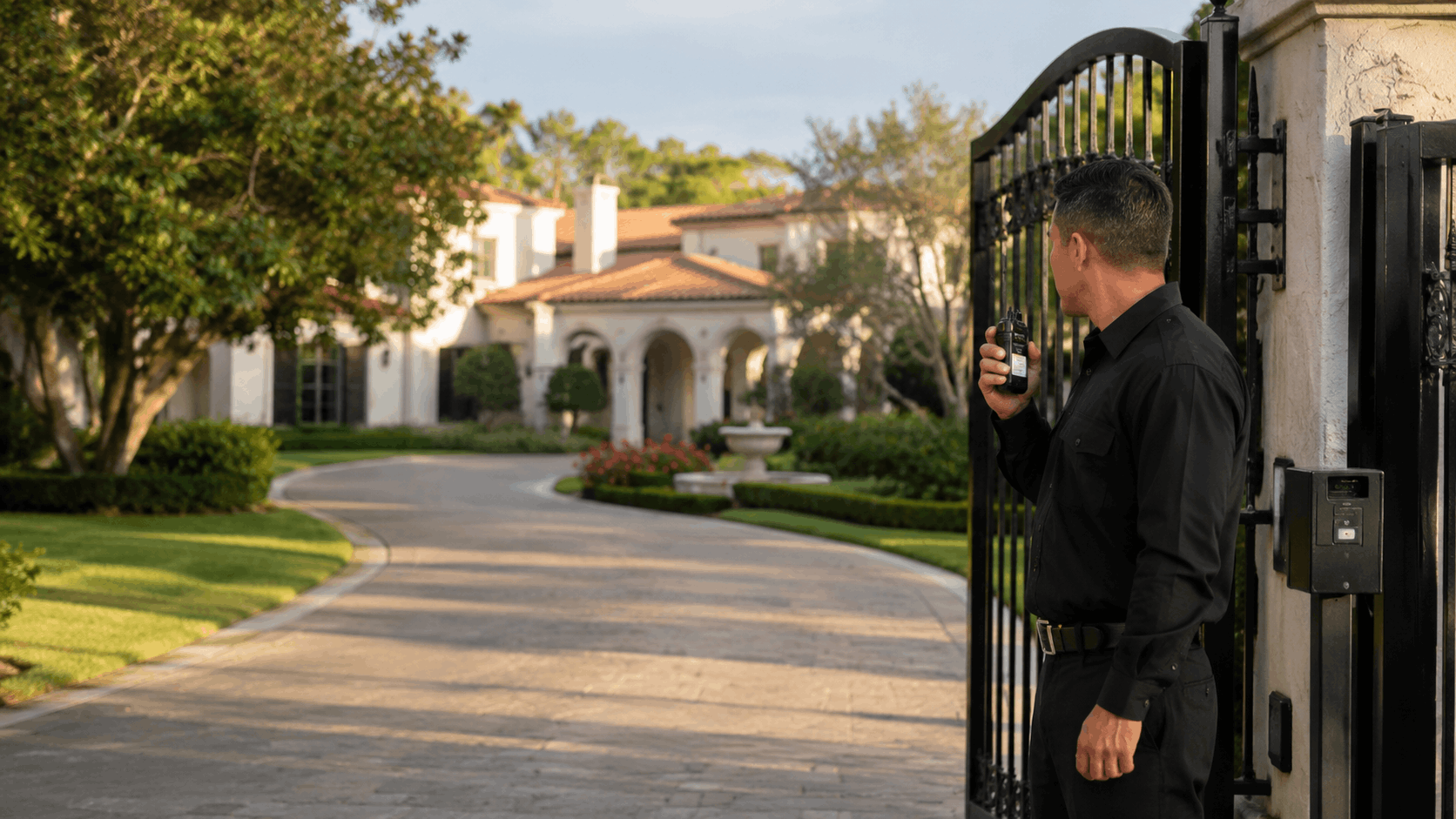
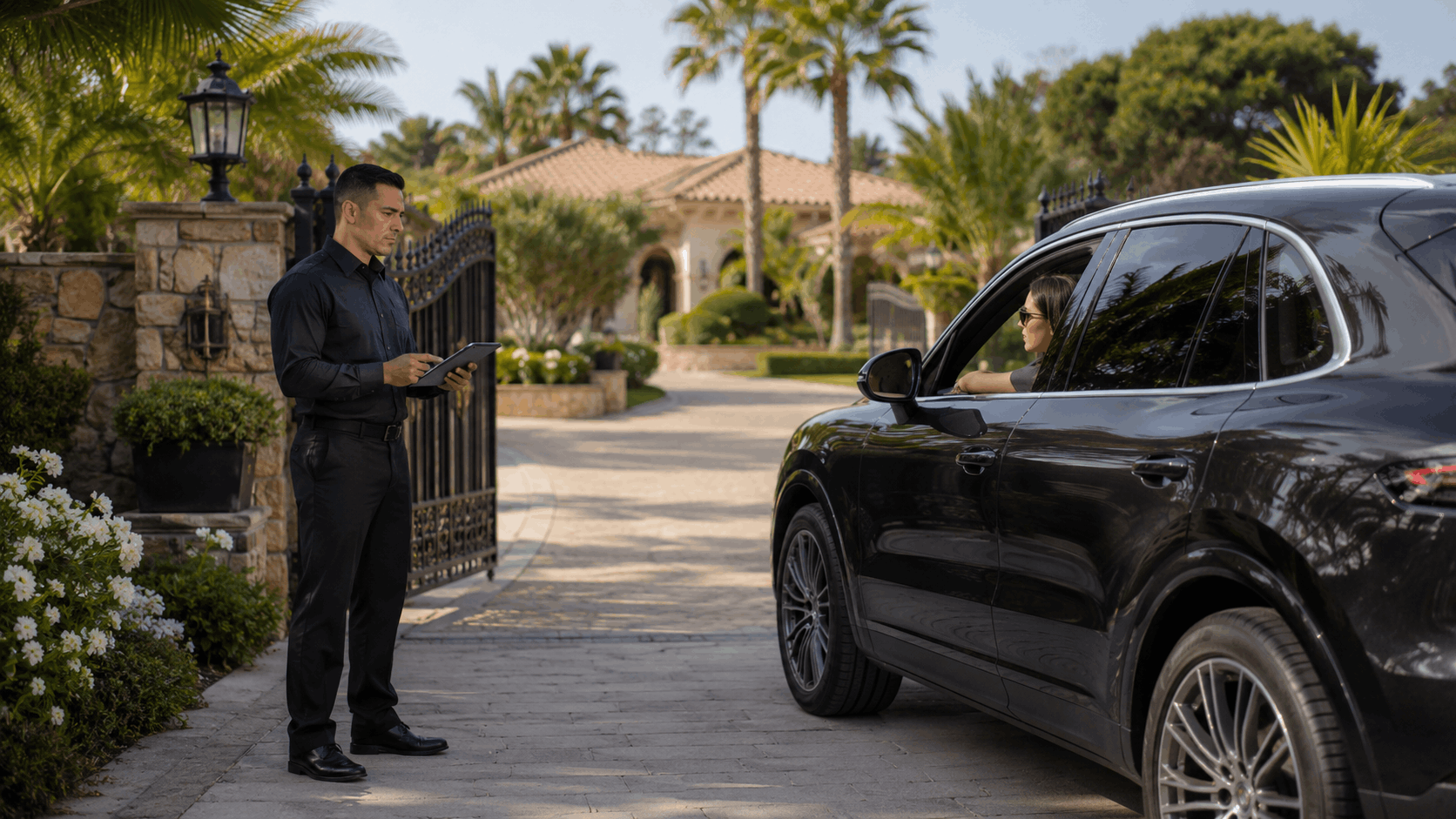
The gate is the front line of an estate driveway. An automated smart gate with a two-way video intercom lets owners see and speak with anyone requesting entry, whether they are home or across the country. No one gets buzzed in blind.
License plate capture adds a record of every vehicle that approaches. Our license plate recognition cameras log plates at the entry point, which matters when the same unfamiliar truck keeps circling the neighborhood. That data becomes useful for owners and law enforcement alike.
Remote access handles the steady flow of guests and staff. Owners can open the gate from a phone, issue temporary codes for a delivery, or grant standing access to a housekeeper. Our gate access control setups tie all of that into one manageable system.
A video intercom also cuts down on the guesswork. Instead of walking or driving to the gate, an owner sees exactly who is there and decides in seconds. For a home set 600 feet off the road, that convenience is also a real security gain.
Driveway Alerts and Vehicle Detection
Winding roads like Rambla de las Flores feed into long private driveways, and a vehicle turning in should trigger a notice right away. Driveway sensors and radar-based vehicle detection flag that movement well before the car reaches the house.
Radar sensors read approaching vehicles even in fog, rain, or darkness, conditions common in the Covenant's low-lying stretches. Unlike simple motion beams, they distinguish a car from a gust of wind or a passing deer, which cuts down on nuisance alerts.
The alert lands on the owner's phone within seconds. That warning window lets someone check a camera, confirm whether the visitor is expected, and respond calmly instead of being surprised at the door. On a big lot, those extra seconds are worth a lot.
We place these sensors at the choke points of the driveway, usually where the entry narrows or curves. That positioning captures every vehicle without flooding the owner with alerts for movement that does not matter.
Fence Line and Landscape-Integrated Sensors
A Covenant estate's boundary is often long and lined with mature landscaping. Fence line sensors and hidden cameras cover that perimeter without turning the property into something that looks like a compound. Landscape integration keeps the equipment out of sight.
On horse property, boundary coverage matters even more. Barns, paddocks, and back gates near open space create access points that a house-focused system ignores. Sensors along those lines catch movement where the property meets undeveloped canyon land.
We tuck cameras into eaves, under trellises, and within existing plantings so they cover the fence line while staying nearly invisible. That approach respects both the Association's aesthetic rules and the owner's preference for discretion.
The result is a quiet ring of detection around the whole parcel. An owner near Via de la Valle told us the biggest change was psychological - knowing the edges were watched, not just the doors, let the family actually relax on their own land.
Need Help in San Diego?
Smart Shield Systems serves San Diego and all of San Diego County.
Get Your Free Quote
Tell us about your property and we'll get back to you fast.
Estate Camera Systems and Video Monitoring
Camera coverage on an estate is a different scale than a typical home. Estate cameras have to reach across multiple buildings, handle pitch-black rural nights, and feed into monitoring that someone actually watches. Video surveillance ties the whole property together.
The right layout balances resolution, night performance, and remote access. Below is a general guide to how camera needs scale with property size on Covenant lots.
| Property Size | Structures | Typical Camera Count | Coverage Focus |
|---|---|---|---|
| 2 to 3 acres | Home plus garage | 10 to 14 | Gate, driveway, entries |
| 4 to 6 acres | Home, guest house, pool | 15 to 22 | Add outbuildings, perimeter |
| 7+ acres | Multiple structures, barn | 24 to 35+ | Full perimeter, equestrian, staff areas |
High-Resolution Cameras Across Multiple Buildings
A Covenant lot rarely has just one building to protect. Main homes, guest houses, garages, barns, and pool houses each need coverage, and multi-building cameras have to connect back to a single system the owner can actually manage.
Guest house security is a common blind spot. These structures often sit apart from the main home, sometimes with their own entry, and they get overlooked when a national installer focuses on the primary residence. We treat each structure as its own zone with dedicated cameras.
High-resolution cameras matter because detail is what makes footage useful. A 4K camera can capture a face at the gate or a plate in the driveway, while a low-grade camera gives you a blurry shape and nothing to act on. Our home security camera installation uses cameras built for that clarity across distance.
Wiring several buildings together on acreage takes planning most kits skip. We run the infrastructure so the barn 400 feet out records to the same system as the front door, giving the owner one view of the entire property instead of a patchwork of apps.
Night Vision for Dark Rural Roads
Much of the Covenant has no street lighting by design, which keeps the rural feel but leaves the property dark after sunset. Night vision cameras with strong infrared performance are what make coverage useful once the sun is down.
Low-light coverage separates good estate cameras from cheap ones. A camera that produces a grainy, useless image at night defeats the whole purpose on a property where most concerning activity happens in the dark. We spec cameras rated for the actual conditions on Covenant roads.
Infrared illuminators extend that reach across long driveways and open ground. Some setups use color night vision to capture clothing and vehicle details that plain infrared would render in gray. On a dark lot near Del Dios Highway, that difference can identify a person or leave you guessing.
We test night performance on site, not just on paper. Every property has different ambient light, tree cover, and reflection, so we confirm the cameras deliver a clear image where it counts before we call the job done.
24/7 Professional Monitoring and Video Verification
Cameras only help if someone responds when they matter. Professional monitoring means trained operators watch for alarms around the clock and act the moment something is confirmed. Our 24/7 alarm monitoring covers that gap.
Video verification is the piece that speeds up response. When an alarm trips, an operator can look at live footage and confirm whether there is an actual person on the property or just a raccoon. That verified alarm gets priority from local law enforcement.
False alarms are a real problem on open acreage, and they can slow police response over time. By pairing monitoring with video confirmation, we cut the noise and make sure real events get treated as real. Our remote video monitoring and analytics support that verification.
For estate owners who travel, this monitoring is the safety net. Whether the family is home, asleep, or overseas, someone is watching and ready to dispatch help. That coverage is hard to replicate with a self-monitored kit.
Mobile Access and Remote Property Checks
Covenant owners travel often, and many keep second homes elsewhere. A mobile app that shows every camera and gate event lets them check the property from anywhere. Remote access turns a phone into a full command center.
From the app, an owner can pull up live video, review recorded clips, and see who came through the gate that afternoon. Our app and voice control setup makes that access simple across devices.
Remote property checks catch things owners would otherwise miss. A gate left open, a delivery at the wrong door, or a landscaper who showed up on the wrong day all become visible in seconds. The owner stays connected without being tied to the property.
Push notifications keep the important events front and center. Instead of scrolling through hours of footage, the owner gets a nudge when the driveway sensor fires or the gate opens, then decides whether to look closer. That balance keeps the system useful, not overwhelming.
Access Control and Smart Home Integration
Controlling who enters an estate and its structures is a daily job on a Covenant property. Access control decides who gets in where, and smart home integration ties that into cameras, lighting, and alarms. Estate automation makes a large property manageable.
The goal is granular control without constant hassle. Family, staff, and vendors all need different levels of access, and a connected system handles that without the owner rekeying locks or worrying about lost keys.
Managing Staff, Housekeepers, and Landscapers
Covenant estates see a steady stream of service providers every week. Housekeepers, landscapers, pool techs, and trainers all need to get in on schedule. Staff access through coded entry replaces the pile of spare keys that always ends up floating around.
Scheduled access limits each provider to their actual window. A landscaper's code might work Tuesday mornings and nowhere else, so there is no open-ended access to the property. Our temporary access code system makes those windows easy to set.
Vendor codes also create a record. When a code is used, the system logs it, so an owner knows exactly who entered and when. That accountability matters on a property where dozens of people rotate through in a month.
If a provider leaves or a schedule changes, a code gets revoked in seconds. No locksmith, no rekeying, no wondering who still has a key. For a busy Covenant household, that control saves real time and worry.
Smart Locks and Zoned Entry
Not every person who enters the main house should reach the wine room or the home office. Smart locks with zoned access let owners set separate permissions for each area. The housekeeper gets the kitchen, not the cellar.
Zoned entry works across the whole estate. The main house, guest house, offices, and outbuildings can each have their own access rules. Our smart lock installation sets those zones up so each door respects its own list.
High-value rooms get tighter control. A wine cellar or a room holding art might allow only the owners and a short list of trusted people, with every entry logged. That layered approach protects the assets that matter most without locking down the entire home.
Because the locks are smart, access adjusts on the fly. Hosting an event? Open the guest zones for the evening and close them after. The owner sets it from a phone and never touches a physical key.
Connecting Lighting, Cameras, and Alarms
The real strength of an estate system shows when the pieces work together. Home automation links lighting, cameras, and alarms so a single trigger sets off a coordinated response. An integrated alarm does more than make noise.
When a perimeter sensor trips at night, the system can flood the area with light and start recording at the same time. That combination often stops a problem before it develops, because an intruder loses the cover of darkness instantly. Our smart home security integration makes those links possible.
Automation also handles the everyday. Lights that come on as a car enters the driveway, cameras that follow motion, and alarms that arm on a schedule all reduce the manual work of running a big property. The system does the routine so the owner does not have to.
Integration means fewer separate apps and logins too. Instead of juggling one app for locks, another for cameras, and a third for lights, an owner controls the whole estate from one place. That simplicity is what makes a large system livable day to day.
Need Help in San Diego?
Smart Shield Systems serves San Diego and all of San Diego County.
Working Within Rancho Santa Fe Association Rules
Any security install inside the Covenant has to respect the rules that keep the community looking the way it does. The RSF Association and its art jury review exterior changes, and neighbor privacy expectations run high. Covenant compliance is part of the design, not a hurdle at the end.
Getting this right protects the owner from delays, fines, and the hassle of tearing out non-compliant gear. Our team plans every estate install with these HOA rules in mind from the first visit.
Understanding Art Jury and Approval Steps
The Rancho Santa Fe art jury reviews exterior changes that affect how a property looks. Visible cameras, poles, floodlights, and gate equipment can all fall under that review. Knowing which items need exterior approvals saves owners from starting over.
The review process takes time, so planning matters. We identify anything that might trigger art jury review early and prepare the placement and hardware choices to fit the guidelines. That front-loading keeps projects moving instead of stalling mid-install.
Some equipment never needs review because it stays hidden or tucks under existing structures. Sorting the visible from the invisible up front lets us handle approvals only where truly required. That keeps the paperwork minimal and the timeline predictable.
Owners can review the Association's own standards on the Rancho Santa Fe Association website. Between those guidelines and our local experience, we map out a compliant plan before any equipment goes up.
Discreet Equipment That Respects the Setting
Covenant homes were built around a rural, understated look, and security gear should not fight that. Discreet security means low-profile hardware that blends into the setting instead of announcing itself. The equipment disappears into the architecture.
Hidden equipment comes in many forms. Cameras painted or housed to match the eaves, sensors set inside landscaping, and slim gate hardware all do the job without the commercial-grade bulk owners want to avoid. The protection stays strong while the appearance stays clean.
This approach also serves security. Equipment that blends in is harder for an intruder to spot and defeat than obvious cameras mounted in plain sight. Discretion and effectiveness pull in the same direction here.
We choose hardware with the setting in mind from the start. On estates near Via de la Valle, that has meant selecting finishes and mounts that satisfy both the owner's taste and the Association's standards, with no visual compromise.
Respecting Neighbor Privacy and Camera Angles
Covenant lots share roads and bridle trails, and neighbors value their privacy as much as anyone. Camera angles have to point at the owner's property, not across the fence into someone else's yard. Getting this right avoids disputes before they start.
We aim and mask cameras so they capture the estate's own grounds, driveways, and entries. Modern cameras let us block out portions of the frame that would otherwise catch a neighbor's property or a shared trail. That privacy masking keeps everyone comfortable.
Neighbor privacy is not just courtesy, it can prevent real conflict. A camera that appears to watch the road or an adjacent lot can spark complaints and even Association involvement. Careful placement heads that off entirely.
On shared driveways, which show up on some Covenant parcels, we are especially careful. The camera covers the owner's approach and entry while staying off the neighbor's portion. Good design keeps the property secure and the relationships friendly.
Seasonal and Local Challenges Around the Covenant
Estate security in this part of San Diego County has to account for the environment. Wildfire season, local wildlife, and long travel months each create their own issues. A system built for the Covenant plans for all three.
These are not abstract concerns. Every year our team helps owners deal with red flag conditions, false alarms from animals, and homes sitting empty for weeks. Designing for these realities is what makes a system hold up here.
Wildfire Season and Emergency Awareness
Inland San Diego County faces real wildfire risk, and the Covenant's canyons and open space make awareness matter. Cameras and sensors let owners monitor their property during red flag conditions and evacuations, even from far away.
Wildfire monitoring through remote cameras means an owner who has evacuated can still see whether the home is standing and whether the fire is approaching. That view is invaluable when official updates are slow and the family is anxious for information.
Evacuation readiness also ties into automation. A system can confirm doors are locked, gates are set, and cameras are recording as the family leaves in a hurry. Owners can check that status from the road instead of turning back.
Owners can track current conditions through Ready San Diego and pair that awareness with their camera feeds. Combining official alerts with a live view of the property gives owners the fullest picture during a fast-moving event.
Wildlife and False Alarm Management
Open acreage in the Covenant is home to coyotes, deer, rabbits, and more. Those animals cross the property at all hours, and a poorly tuned motion system will fire an alert every time one wanders past. False alarms wear owners down fast.
Wildlife detection tuning is what keeps the system usable. Modern cameras and sensors can distinguish a person or vehicle from an animal, so the owner only hears about events that matter. That filtering makes a real difference on open land.
We adjust sensitivity, set detection zones, and use analytics that ignore small animal movement. On a property where deer pass nightly, that tuning turns a system from an annoyance into a tool the owner actually trusts.
Video verification backs this up. When something does trip an alert, footage confirms whether it is a coyote or a person before anyone panics or dispatches. That combination keeps false alarms low and confidence high.
Protecting Empty Homes During Travel Months
Many Covenant estates sit empty for stretches during summer and the holidays while owners travel. A vacant home is a tempting target, and vacant home monitoring keeps eyes on the property when no one is there.
Travel security combines cameras, sensors, and professional monitoring into a system that runs itself. The owner gets alerts and can check in, while operators watch for real events around the clock. The empty house is never truly unwatched.
Automation adds a lived-in look. Lights on schedules and varied timing make the property appear occupied, which deters anyone scouting for an easy target. Small touches like that discourage trouble before it starts.
For owners with a second home elsewhere, we set up the system so a quick phone check confirms everything is fine. Whether the family is in the mountains or overseas, the Covenant estate stays covered the whole time they are gone.
Need Help in San Diego?
Smart Shield Systems serves San Diego and all of San Diego County.
Choosing a Local Estate Security Specialist in San Diego
Picking the right estate security company comes down to experience, response, and local knowledge. A team that knows Rancho Santa Fe installs faster and designs smarter than a national outfit reading a map. For San Diego security on a Covenant scale, local matters.
Smart Shield Systems works these properties every week, and that hands-on experience shapes how we approach every estate project. Here is what to look for and how our process runs.
Why Local Knowledge of the Covenant Matters
A team based in San Diego that knows RSF roads and rules brings advantages a national provider cannot match. Local expertise means understanding the coverage challenges of a hillside lot off Del Dios Highway before ever setting foot on it.
Knowing the Association and art jury process also speeds things up. We plan compliant installs from the start instead of running into surprises that stall a national crew for weeks. That familiarity keeps projects on schedule.
We also know the surrounding communities and how estate needs compare across the region. Owners in nearby areas like Carmel Valley and Rancho Bernardo face related challenges, and that broader experience informs our Covenant work.
Local response time is the other piece. When a system needs service or an alarm needs attention, a San Diego based team reaches the property faster than a provider dispatching from out of the area. Proximity is a real advantage on estate work.
Questions to Ask Before Hiring
Before choosing a security provider, owners should ask direct questions. The answers reveal whether a company understands estate work or just wants to sell a package. A few hiring questions separate the specialists from the rest.
- Do you have experience with multi-acre Covenant or estate properties?
- How do you handle RSF Association and art jury approvals?
- Is monitoring done by a professional, in-house or partnered central station?
- What warranties cover the equipment and the installation labor?
- How do you cover long driveways and detached structures?
- What is your response time for service calls in Rancho Santa Fe?
- Can the system scale as we add structures or coverage later?
The answers should be specific, not vague reassurances. A specialist will talk about actual acreage, real wiring approaches, and named local rules. A provider that dodges those details is not built for estate work.
Owners should also ask to see comparable projects. A company that has secured properties like theirs can describe the challenges and solutions in detail. That track record is worth more than any brochure.
How Smart Shield Systems Approaches Estate Projects
Our process starts with a walk of the entire property. We map the perimeter, the driveway, every structure, and the access points before we recommend anything. Custom design begins with understanding the land, not with a product list.
From there we build a plan matched to the property and the owner's priorities. A wine collection, an equestrian barn, or a guest house each shape the design, and we account for Association rules throughout. Nothing is copied from a template.
Installation is handled by our own team, with attention to discreet placement and clean work. We coordinate any needed approvals and keep the owner informed at each stage. The goal is a system that protects fully and looks like it belongs.
Ongoing support continues after the install. We remain the point of contact for questions, adjustments, and service, so owners have a local team that already knows their property. That relationship is part of what we offer on every estate project.
Ongoing Maintenance and System Upgrades
A security system is not a one-time purchase, especially on a property that changes over time. Regular maintenance keeps cameras clear, sensors calibrated, and software current. Our security system maintenance service keeps everything running.
Estates evolve. A new outbuilding, a remodeled guest house, or added landscaping can create fresh coverage needs. We add cameras and sensors as the property grows so protection never falls behind the changes.
System upgrades also keep the technology current. Camera resolution, analytics, and access features improve over time, and we help owners adopt what makes a real difference without replacing everything. Our alarm system upgrades and takeovers can even bring an older system up to date.
Routine checks catch small problems before they become failures. A camera going soft or a sensor drifting out of tune gets handled during maintenance, not discovered during an incident. That upkeep is what keeps an estate system dependable year after year.
Final Thoughts
Protecting a Rancho Santa Fe Covenant estate takes more than a box of cameras from a big-box store. The acreage, the long driveways, the multiple structures, and the Association rules all demand a system built for this exact setting. Perimeter first, then cameras, access control, and monitoring tie it together.
Our team lives and works in San Diego County, and we know these roads, these rules, and the specific challenges Covenant owners face. That local experience is what turns a security plan into one that actually holds up on estate land.
If you own property inside the Covenant and want a system designed for how you actually live, reach out to Smart Shield Systems for a consultation. Contact our team to schedule an on-site assessment and let us map out protection built for your property.
Frequently Asked Questions
- What is estate security for a Covenant property?
- Estate security is a system built for large, multi-acre properties with several structures and long distances between the gate and the home. Unlike a standard home system focused on doors and windows, it covers the perimeter, the driveway, and every building. In Rancho Santa Fe, it also respects Association rules and blends into the rural setting while protecting high-value assets like wine, art, and equestrian property.
- How much does a Rancho Santa Fe estate security system cost?
- Cost depends on acreage, the number of structures, and how many cameras and sensors the property needs. A smaller two to three acre estate might start in the mid four figures, while larger properties with many buildings, gate automation, and full perimeter coverage can reach well into five figures. We provide a detailed quote after walking the property, since every Covenant lot is different.
- Do I need approval from the RSF Association to install security equipment?
- Visible exterior equipment such as camera poles, floodlights, and some gate hardware can require RSF Association or art jury review. Hidden or low-profile gear that tucks under eaves or into landscaping often does not. We identify which parts of a design need approval early and plan placement to fit the guidelines, so owners avoid delays and non-compliant installs.
- How many cameras does a typical estate property need?
- A two to three acre estate usually needs 10 to 14 cameras, while four to six acre properties with a guest house and pool often need 15 to 22. Larger seven-plus acre lots with barns and multiple structures can require 24 to 35 or more. The exact count depends on the number of buildings, the perimeter length, and the coverage priorities.
- Can the system cover a long driveway and front gate?
- Yes. We use driveway sensors and radar-based vehicle detection to flag vehicles turning off roads like Rambla de las Flores well before they reach the home. The gate gets a smart entry system with a two-way video intercom and license plate capture. Long-range cameras and proper wiring extend coverage across the full distance from the road to the house.
- How do you reduce false alarms from wildlife?
- Open acreage in the Covenant sees coyotes, deer, and other animals that trip poorly tuned systems. We reduce false alarms by adjusting sensor sensitivity, setting detection zones, and using analytics that tell a person or vehicle apart from an animal. Video verification confirms every alert, so a coyote crossing the yard does not trigger a response meant for an intruder.
- Can I monitor my property while traveling?
- Yes. A mobile app gives owners live views of every camera, recorded clips, and gate activity from anywhere. Push notifications alert you when the driveway sensor fires or the gate opens. Combined with 24/7 professional monitoring, this lets owners who travel often or keep a second home stay connected and confident the property is watched while they are away.
- How long does installation take on a large estate?
- Timelines depend on property size and complexity. A smaller estate might be completed in a few days, while a large multi-structure property with gate automation, full perimeter coverage, and access control can take one to two weeks. Any needed Association approvals add time on the front end, which is why we plan those early to keep the project moving.
- Does professional monitoring work with San Diego law enforcement?
- Yes. Monitored alarms are handled by a central station that dispatches to local authorities when an event is confirmed. Video verification is what speeds this up, because a verified alarm with visual proof of a person on the property gets priority response. That confirmation also cuts down on false dispatches, which keeps response reliable over time.
- How do I get a security assessment for my Covenant home?
- Reach out to Smart Shield Systems to schedule an on-site consultation. Our team walks the property, maps the perimeter and structures, discusses your priorities, and accounts for Association rules before recommending anything. You can call us or use our contact page to set up a visit, and we will design a custom plan built for your specific Rancho Santa Fe estate.
S
Smart Shield Systems Team Team
Licensed security systems professionals serving San Diego and San Diego County.
Licensed in California · License #7623
Why trust Smart Shield Systems?
Founded in 2016, Smart Shield Systems is a licensed and insured security systems serving San Diego and San Diego County. All content is reviewed by our licensed technicians.

Need Help in San Diego?
Smart Shield Systems serves San Diego and all of San Diego County.
Related Articles
Tips & Advice
Bird Rock La Jolla Security: Coastal Property Camera Specialists
A local guide to coastal security cameras for Bird Rock and La Jolla homes, covering salt air challenges, gear selection, install, upkeep, costs, and local rules.
Tips & Advice
Del Mar Home Security: Bluff and Oceanfront Property Specialists
Del Mar coastal homes face salt air corrosion, bluff blind spots, and beach-side risks. Learn the equipment, placement, permits, and pricing that keep oceanfront property secure.
Safety & Prevention
Hidden Valley La Jolla Security: Gated Compound and Estate Service
A local guide to gated compound and estate security for Hidden Valley La Jolla homes, covering access control, cameras, monitoring, and coastal-ready installation.