Cost Guides
Security System Cost Del Mar: Oceanfront Property Pricing Breakdown
Key Takeaways
- Oceanfront Del Mar security systems cost more than inland homes due to salt-air corrosion, larger lots, and big glass walls needing extra sensors.
- Marine-grade equipment costs 20 to 40 percent more upfront but lasts six to ten years versus two to three for standard gear.
- A small condo runs $800 to $1,800, a family home $3,000 to $6,500, and a bluffside estate $10,000 to $25,000 or more.
- Professional monitoring runs $30 to $60 monthly, with cellular backup and cloud storage adding roughly $5 to $25.
- Bundling services, claiming insurance discounts, and choosing scalable systems all lower total cost without cutting protection.
- Local rules from the City of Del Mar building department and HOA communities can affect install choices and require permits.
- Smart Shield Systems quotes every Del Mar install with an on-site assessment, coastal-grade gear, and transparent itemized pricing.
In This Article
A homeowner on Ocean Front Street watches the fog roll in each morning and wonders if the salt spray is already eating away at anything electronic on the outside of the house. Down the road on Camino Del Mar, a family with a two-story home has the same question after a neighbor's package went missing off the porch. Both want the same answer: what does a security system really cost when you live this close to the water?
The honest answer is that coastal homes in Del Mar do not price out like inland San Diego houses. Salt air, larger lots along the bluffs, and big walls of glass all push the numbers around. So do local building rules and the choice between wired and wireless gear.
What Drives Security System Costs on Del Mar's Coast?
Living a block from the sand changes the math on a security system. The security system cost for an oceanfront property in Del Mar usually runs higher than an inland home of the same square footage, and there are clear reasons why.
Part of it is the property itself. Part of it is the salt in the air. And part of it is the rules that come with building anything visible along this stretch of coast.
Property Size and Layout Along the Bluffs
Homes near the Del Mar bluffs tend to sit on larger lots than the tight condos closer to the village. Bigger lots mean more ground to watch, more entry points to cover, and more distance between the front gate and the back deck. Every extra corner of the property adds sensors and cameras to the plan.
Multi-level homes off Stratford Court add another layer of complexity. A three-story house needs camera coverage on each floor's access points, plus stair landings and any rooftop deck. That is not one camera per house, it is often six to ten before the coverage feels complete.
Property size drives the count more than any other single factor. When we map a home, we count doors, ground-floor windows, and every line of sight a person could use to approach the house. A sprawling bluff-top lot simply needs more hardware than a small unit near the train tracks.
We also plan for blind spots the layout creates. Landscaping, retaining walls, and multi-level decks all block sightlines, which sometimes means an extra camera to cover what one unit cannot see. Our video surveillance camera planning starts with that coverage map before any prices get quoted.
Salt Air and Corrosion-Resistant Hardware
Salt air corrosion is the hidden cost that catches coastal homeowners by surprise. Standard outdoor cameras and sensors are built for average suburbs, not for a home that gets misted with ocean spray every day. Within a year or two, the cheaper gear starts to pit, seals fail, and moisture creeps into the housing.
Marine-grade equipment costs more upfront, but it holds up. These cameras use sealed housings, coated circuit boards, and hardware rated for high humidity and salt exposure. The price difference per camera might be 20 to 40 percent, and that gap pays for itself when the unit lasts eight years instead of two.
Coastal durability applies to more than cameras. Door contacts, exterior keypads, and cabling all need corrosion resistance near the water. We have replaced plenty of failed systems in Del Mar where the original installer used inland-grade parts and the salt won.
Choosing the right gear from day one keeps the long-term cost lower even though the first invoice is higher. A homeowner who saves a few hundred dollars on cheap cameras often spends more replacing them within three years. Near the ocean, the equipment choice matters as much as the install itself.
Local Building and HOA Requirements
The City of Del Mar building department has design rules that can affect how and where equipment gets mounted. Homes in the coastal overlay zone sometimes face limits on visible exterior fixtures, wiring runs, and anything that changes the look of the structure. These rules can add planning time and, in some cases, permit fees to an install.
Gated communities add their own layer. Del Mar Beach Colony and similar HOA neighborhoods often have rules about camera placement, exterior colors, and shared-area coverage. An installer who does not know these rules can end up redoing work, which costs the homeowner more.
Install permits are not required for every job, but larger systems that involve electrical work or fixed exterior mounting may need one. We handle the permit check as part of the quote so there are no surprises mid-install. Knowing which HOA rules apply before the crew arrives keeps the timeline tight.
Our familiarity with local requirements is part of why coastal quotes take a short site visit. It is faster to confirm the rules once than to fight a rejected install later. That planning time is built into fair coastal pricing.
Wired vs Wireless System Pricing
The choice between a wired system and wireless security changes the install cost more than most people expect. Older homes near 15th Street often have plaster walls, limited attic access, and no existing low-voltage wiring. Running new cable through those homes takes labor, and labor is the biggest variable in any install.
Wireless security cuts that labor down. Battery sensors and Wi-Fi cameras mount fast and avoid tearing into walls. For a newer build with strong Wi-Fi, a wireless setup can save hundreds on installation cost while still covering the whole home.
Wired systems win on reliability and long life. They do not rely on batteries, they resist interference, and they suit large estates where signal range becomes an issue. The tradeoff is a higher install price because the crew spends more hours pulling cable.
Many Del Mar homes end up with a hybrid. Wired cameras at the main entries, wireless sensors on the upper floors, and one hub tying it together. That mix balances the installation cost against reliability, and our alarm systems and monitoring team recommends the split based on each home's construction.
Equipment Pricing Breakdown for Oceanfront Homes
Once the plan is set, the security equipment cost comes down to the parts on the list. Here is what each component runs for oceanfront homes, so a reader can start building a budget before any quote arrives. Prices reflect coastal-grade gear, not the cheapest big-box options.
| Component | Typical Price Range (per unit) | Notes for Coastal Homes |
|---|---|---|
| Weatherproof outdoor camera | $150 - $400 | Marine-grade housing adds cost |
| Door / window sensor | $25 - $60 | Sold in packs, corrosion-resistant preferred |
| Glass-break sensor | $40 - $90 | Needed for large glass walls |
| Control panel / smart hub | $200 - $600 | One per home, ties system together |
| Smart lock | $180 - $400 | Keypad and app entry |
| Gate / access controller | $300 - $1,200 | Varies by gate type |
Outdoor Cameras Built for Coastal Weather
Outdoor cameras are the workhorses of a coastal system, and they take the most abuse. Along Ocean Front Street, cameras face fog, salt mist, and direct spray on windy days. A weatherproof camera cost runs from about $150 for a solid mid-range unit up to $400 for a high-resolution marine-grade model.
The housing rating matters more than the megapixel count near the water. Look for cameras rated IP66 or better with sealed connectors and coated internals. The cheaper the housing, the sooner the coastal fog works its way inside.
Coastal fog also affects image quality, not just hardware life. Cameras with infrared and good low-light performance handle the gray marine layer that blankets Del Mar many mornings. Paired with motion-activated lighting, they keep clear footage even when visibility drops.
Most oceanfront homes need four to ten outdoor cameras depending on size and layout. That places the camera line of a budget somewhere between $600 and $4,000 for hardware alone. Our home security camera installation team sizes that count during the site visit.
Door, Window, and Glass-Break Sensors
Door sensors and window sensors are the quiet backbone of any alarm system. Each contact runs about $25 to $60, and they usually come in packs. A typical two-story Del Mar home might use eight to fifteen of them once every entry point is covered.
Oceanfront homes have a wrinkle: big glass. Those floor-to-ceiling ocean views are beautiful, but a wall of glass is a large surface with few frames for standard contacts. That is where glass-break sensors earn their place.
Glass-break sensors listen for the specific frequency of shattering glass and cover a wide area, so one unit can watch a whole great room. At $40 to $90 each, they add sensor cost but close a gap that door contacts alone leave open. Homes with wide sliders and picture windows almost always need them.
Adding up sensors for a full home usually lands between $300 and $700 in hardware. It is not the flashiest part of the system, but skipping coverage here leaves obvious weak points. Our intrusion sensor installation service plans the mix of contact and glass-break units per room.
Control Panels and Smart Hubs
The control panel is the brain of the system. It talks to every sensor and camera, sounds the alarm, and connects to the monitoring center. A quality panel runs $200 to $600 depending on features and screen size.
Modern app-based smart hubs let a homeowner arm, disarm, and check the house from a phone anywhere. That matters in Del Mar, where many owners split time between the coast and another home. Being able to check the beach house from across the country is worth the system cost for seasonal residents.
Panels also handle integrations. A good hub ties together cameras, locks, lights, and even garage doors into one app. That reduces the number of apps a homeowner juggles and makes daily use simple.
Most homes need only one panel, so this is a fixed line rather than a per-room cost. Pairing it with voice and app control setup turns the panel into the center of the whole smart home. We match the panel to the size and complexity of each install.
Access Control and Smart Locks
Smart locks are one of the most popular upgrades for Del Mar homes. They replace keys with keypad codes or phone entry, which suits owners who rent the place out or leave it empty part of the year. A quality smart lock runs $180 to $400 installed.
Access control goes a step further for larger properties. Keypad entry at a driveway gate, controlled front doors, and temporary codes for cleaners or guests all fall under this category. Gate controllers range widely, from $300 for a simple keypad to over $1,200 for a full swing-gate system.
Seasonal residents love the code feature. They can hand a contractor a code that works only during business hours and expires when the job is done. No lost keys, no rekeying, and a log of who came and went.
Our access control and smart lock options scale from a single door to a whole estate. For gated homes and shared entries, our gate and elevator access control covers the more complex setups common in bluff-top communities.
Need Help in San Diego?
Smart Shield Systems serves San Diego and all of San Diego County.
Get Your Free Quote
Tell us about your property and we'll get back to you fast.
Monthly Monitoring and Service Fees
Hardware is only half the budget. Monitoring cost and monthly fees keep a system watched and working, and coastal homes have a few extra recurring items. Here is the full picture beyond the install invoice.
Professional Monitoring vs Self-Monitoring
Professional monitoring means a staffed center watches the system around the clock. When an alarm trips, a real person verifies it and dispatches police or fire. That service runs about $30 to $60 per month for a home.
Self-monitoring skips the center. The system sends alerts straight to the homeowner's phone, and they decide whether to call for help. It costs less, often $5 to $15 per month or nothing beyond the app, but response depends entirely on the owner seeing the alert.
For a beach house that sits empty during the week, professional monitoring makes sense. A phone alert does no good if the owner is asleep or out of cell range. Faster verified response is the reason most oceanfront owners choose the staffed option.
Our 24/7 alarm monitoring gives that verified response with trained operators. For owners who travel often, the monthly cost buys real coverage rather than a notification they might miss.
Cellular Backup and Cloud Video Storage
Cellular backup keeps the system online when the internet or power drops. Coastal storms and the occasional grid issue can knock out home Wi-Fi, and a burglar who cuts the cable line should not also cut the alarm. Cellular backup usually adds $5 to $15 per month.
Cloud storage holds camera footage offsite so it survives even if the equipment is stolen or damaged. Video retention plans range from a few days to a month or more, priced around $5 to $20 per month depending on how many cameras and how long the footage is kept.
For oceanfront homes, both features earn their small monthly cost. The salt-air environment already stresses hardware, so having footage safe in the cloud and a signal path that does not rely on one wire adds real resilience.
We size cloud storage to the number of cameras and how far back an owner wants to review. A ten-camera bluff estate needs more retention than a two-camera condo. Our remote video monitoring and analytics plans cover both storage and smart alerts.
Maintenance Plans for Salt-Air Wear
A maintenance plan is one of the smartest recurring costs a coastal homeowner can carry. Salt-air wear works on hardware constantly, loosening seals and dulling lenses over time. Regular service visits catch small problems before they become failed cameras.
These plans usually cover cleaning camera housings, testing sensors and batteries, checking cable connections, and updating firmware. Annual plans run roughly $150 to $400 depending on system size. That is a fraction of what a full camera replacement costs.
Near the water, we recommend at least one or two service visits per year. A camera lens fogged with salt film shows blurry footage, and a corroded contact can fail silently. A tech catching those issues keeps the whole system dependable.
Our security system maintenance service is built for exactly this kind of coastal wear. Spending a little each year protects the larger investment in the equipment.
Contract Terms and Cancellation Fees
Contract terms vary a lot across the industry, and reading them carefully saves headaches. Some companies lock homeowners into three-year monitoring agreements with steep early cancellation fees. Others offer month-to-month with no long commitment.
We favor flexible terms because coastal owners' plans change. A family that sells the beach house or shifts to full-time residence should not be trapped in a contract. Month-to-month options cost a little more monthly but avoid a large cancellation charge later.
Read the fine print on any monitoring agreement before signing. Look for auto-renewal clauses, price increases after year one, and what happens if you move. Those details matter as much as the monthly number.
When we quote monitoring, we spell out the term and any fees clearly. A homeowner should always know exactly how long they are committed and what leaving would cost. Transparency on contracts is part of fair pricing.
Neighborhood-Specific Security Challenges in Del Mar
Del Mar neighborhoods each carry their own security challenges, and those challenges shape equipment choices and cost. Coastal properties near the sand face different risks than hillside homes to the east. Knowing the local pattern helps a homeowner spend on the right protection.
Beachfront Homes Near Ocean Front Street
Beachfront homes near Ocean Front Street sit right where the public and private worlds meet. Heavy foot traffic passes just steps from front doors, and beach access points create easy approach paths. That mix means these homes need more cameras and better lighting than a tucked-away inland lot.
The public beach draws crowds all summer, which raises the odds of opportunistic theft off decks and patios. Cameras covering every beach-facing entry, plus the street side, give full coverage. Motion-activated lighting deters anyone testing a gate after dark.
Salt spray hits these homes hardest, so marine-grade gear is a must here more than anywhere. Cheap cameras facing the surf fail fast. We plan camera and lighting placement to cover the busy access points without turning the deck into a floodlit stage.
For homes this exposed, layered coverage matters. Cameras, good lighting, and monitored alarms together handle the high-traffic reality of beachfront living. The extra hardware is a direct response to the location, not an upsell.
Hillside Properties Off Crest Road and Stratford Court
Hillside homes off Crest Road and Stratford Court face a different set of issues. Long driveways, mature tree cover, and spread-out layouts create network range problems and blind spots. A single hub in the house often cannot reach a camera at the end of a long drive.
Tree cover blocks sightlines and can interfere with wireless signals. Wired runs or signal repeaters solve the range issue but add to the install cost. We survey the property to find where the network needs a boost before quoting.
Long driveways also mean a visitor is on the property for a while before reaching the door. A driveway camera or gate controller gives early warning that someone is coming up the hill. That head start is worth the extra hardware for hillside owners.
These homes benefit from a mix of wired backbone and strategically placed wireless units. Getting the network right is the difference between reliable coverage and cameras that keep dropping offline. Our team maps signal strength across the whole lot during the assessment.
Seasonal and Vacation Homes
Del Mar has many vacation homes that sit empty for stretches, especially near the Del Mar Fairgrounds and racetrack. These properties need strong remote monitoring because no one is around to notice a problem. An empty house is a target, so the system does the watching.
Remote features matter most here. App-based arming, live camera views, and instant alerts let an owner in another city keep tabs on the beach house. Smart locks with temporary codes handle cleaners and maintenance crews without handing out keys.
Professional monitoring is close to a requirement for these homes. With no one on-site, a verified alarm response is the only fast reaction to a break-in. Cellular backup keeps the system online even if the power flickers during a winter storm.
Seasonal residents get real value from a system that reports in daily. Knowing the house is secure from afar removes a major worry of owning a second home on the coast. We set these systems up so the owner can check everything from one app.
Crowd Events at the Fairgrounds and Racetrack
The Del Mar Fairgrounds and racetrack bring huge crowds during fair season and the summer race meet. Traffic clogs the streets, parking spills into neighborhoods, and foot traffic near homes jumps. That seasonal surge is a real security factor for nearby properties.
More visitors mean more strangers passing by, more parked cars, and more chances for opportunistic theft. Homes within walking distance of the fairgrounds see the biggest spike. Upgraded camera coverage helps homeowners keep an eye on their property during these busy weeks.
License plate recognition can help homes on streets used as overflow parking. Knowing which vehicles come and go adds a layer of awareness during event season. Extra outdoor cameras cover the sudden foot traffic these events create.
We often recommend event-season checks for homes near the venues. Making sure cameras and lighting are working before the fair opens keeps coverage solid when it matters most. The seasonal crowd is predictable, so planning for it is straightforward.
Sample Cost Scenarios for Del Mar Properties
Real numbers make budgeting easier. Below are three cost scenarios for common Del Mar property types, plus a guide to reading any security quote. These ranges cover coastal-grade equipment and professional installation.
| Property Type | Equipment + Install | Monthly Monitoring | What's Included |
|---|---|---|---|
| Small coastal condo | $800 - $1,800 | $25 - $40 | 1 camera, few sensors, hub |
| Two-story family home | $3,000 - $6,500 | $40 - $60 | 4-6 cameras, full sensors, smart lock |
| Bluffside estate | $10,000 - $25,000+ | $60 - $120 | 8-12 cameras, access control, pro monitoring |
Basic Package for a Small Coastal Condo
A small condo near 15th Street does not need a sprawling system. An entry-level cost of $800 to $1,800 covers a control panel, a handful of door and window sensors, and one good outdoor camera at the entry. That protects the main access points for a modest unit.
Condos have an advantage: shared building security and fewer ground-floor entries reduce the hardware count. A second-floor unit may only need door contacts and a single camera. That keeps the basic package affordable.
Monthly monitoring for a condo runs about $25 to $40. Add cloud storage if the owner wants footage saved. Even at the entry level, choosing coastal-grade gear keeps the camera working past the first foggy winter.
This tier suits full-time residents and renters who want core protection without extras. Our residential alarm system installation can start small and grow later if needs change.
Mid-Range Setup for a Family Home
A two-story family home off Camino Del Mar lands in the mid-range system tier. Equipment and install run about $3,000 to $6,500 for four to six cameras, full door and window sensor coverage, glass-break units for the big windows, and a smart lock at the front door.
This camera package covers front, back, both sides, and the driveway. Sensors on every ground-floor opening and glass-break detection for the ocean-view windows close the common gaps. A smart hub ties it all into one app for the family.
Monthly monitoring at this level is $40 to $60 with professional response. Many families add cellular backup and cloud storage for another $10 to $25. That covers a two-story home thoroughly without reaching estate-level spending.
The mid-range setup is the most common Del Mar install we do. It balances real coverage against a sensible budget for a family that lives there year-round. Our smart home security integration ties the cameras, alarm, and locks together neatly.
Premium System for a Bluffside Estate
A large oceanfront estate needs premium system coverage, and the cost reflects that. Estate security typically runs $10,000 to $25,000 or more for eight to twelve cameras, full access control at gates and doors, glass-break coverage throughout, and integrated smart home features.
These homes have long perimeters, multiple entries, and often a gated driveway. Access control with keypad entry, license plate cameras at the gate, and controlled interior doors all add to the high-end cost. Marine-grade hardware across the board is a given this close to the surf.
Professional monitoring for an estate runs $60 to $120 per month, often with premium video retention and priority service. A maintenance plan is a smart add given the salt exposure on so much hardware. Everything runs through one central hub and app.
This tier is about layered, whole-property protection with no weak points. Our access control systems handle the gate and multi-door needs that bluff-top estates commonly have. Each estate quote is custom to the layout.
How to Read a Security Quote
Any security quote should break into three clear parts: equipment, install labor, and recurring fees. Equipment is the one-time hardware cost. Install labor is the crew's time to mount, wire, and configure. Recurring fees are the monthly monitoring and storage charges.
Watch for quotes that blur these lines. A single lump sum makes it hard to know what you are actually paying for. A clear pricing breakdown lets you compare offers and spot padding.
Ask whether the equipment is coastal-grade, whether the labor includes permits and cleanup, and what the monitoring contract term is. Those three questions expose most hidden costs. A fair quote answers all of them without hesitation.
We itemize every quote so a homeowner sees each line. That way there is no guessing about what the hardware costs versus the labor versus the monthly service. Transparency on the quote is how a homeowner budgets with confidence.
Need Help in San Diego?
Smart Shield Systems serves San Diego and all of San Diego County.
Ways to Lower Your Security System Cost
Protecting a coastal home does not mean spending the maximum. There are practical ways to lower security cost and save money without cutting real protection. These security tips come from years of quoting Del Mar homes.
Bundling Cameras, Alarms, and Monitoring
Buying cameras, alarms, and monitoring as a service bundle almost always costs less than piecing them together. When one company handles the whole system, the package pricing reflects the combined install and the ongoing relationship. Piecemeal buying loses that discount.
A bundle also means one app, one bill, and one team to call. That simplicity has value beyond the cost savings. Everything is designed to work together instead of a patchwork of brands that barely talk to each other.
We often bundle the alarm, cameras, and monitoring into one quote at a better combined rate. The homeowner gets coordinated coverage and a single point of contact. That is easier and cheaper than three separate vendors.
For growing systems, a bundle also makes future additions simpler. New cameras join the same hub and the same monitoring plan without starting over. Bundling sets a foundation that scales cleanly.
Homeowners Insurance Discounts
A monitored system can lower homeowners insurance premiums, which offsets part of the monthly fee. Many carriers offer discounts of 5 to 20 percent for homes with professional monitoring, alarms, and sometimes cameras. Over a year, that can cover a chunk of the monitoring cost.
Coastal homes already carry higher insurance costs, so any premium savings matters. Ask your carrier what documentation they need. Usually a certificate of monitoring from the security provider does the job.
The Insurance Information Institute notes that monitored alarm and fire systems are among the upgrades insurers reward. Fire and carbon monoxide detection can qualify too. Bundling those into the system stacks the potential discounts.
We provide the monitoring certificate homeowners need to claim the discount. It is a simple step that turns an ongoing cost into a partial rebate. Documenting the system properly is the trick to getting the credit.
Scalable Systems You Can Expand Later
Starting with a scalable system spreads the cost over time. A homeowner can install the core panel and a few cameras now, then add sensors or cameras later as budget allows. An expandable setup avoids one large upfront bill.
This phased install works well for condos and family homes that expect to grow their coverage. The hub is chosen from the start to support more devices. Adding a camera next year is a small job, not a system overhaul.
We design systems with room to grow so a homeowner is never boxed in. Buy the priority coverage first, expand the rest on your schedule. That flexibility keeps the initial cost manageable.
Scalable systems also adapt to life changes. A new deck, a home office, or a rental arrangement can all be covered by adding to the existing hub. The alarm system upgrades and takeovers path also lets us build on gear you already own.
Avoiding Common Overspending Mistakes
The biggest overspending mistake on the coast is buying cheap gear that fails fast in salt air. A bargain camera that dies in eighteen months costs more than the marine-grade unit that lasts years. Coastal equipment choice is where smart buying pays off.
Another mistake is over-buying cameras for spots that do not need them. More cameras are not always better coverage. A well-placed handful beats a dozen units pointed at low-risk angles, and it saves money on both hardware and storage.
Some homeowners also lock into long contracts with steep fees to get a small hardware discount. Read the terms before chasing that upfront saving. A flexible plan can be worth more than a one-time price cut.
Smart buying means matching gear to the coastal environment and the actual risk of the property. We steer homeowners away from spending that does not add protection. The goal is coverage that lasts, not the biggest invoice.
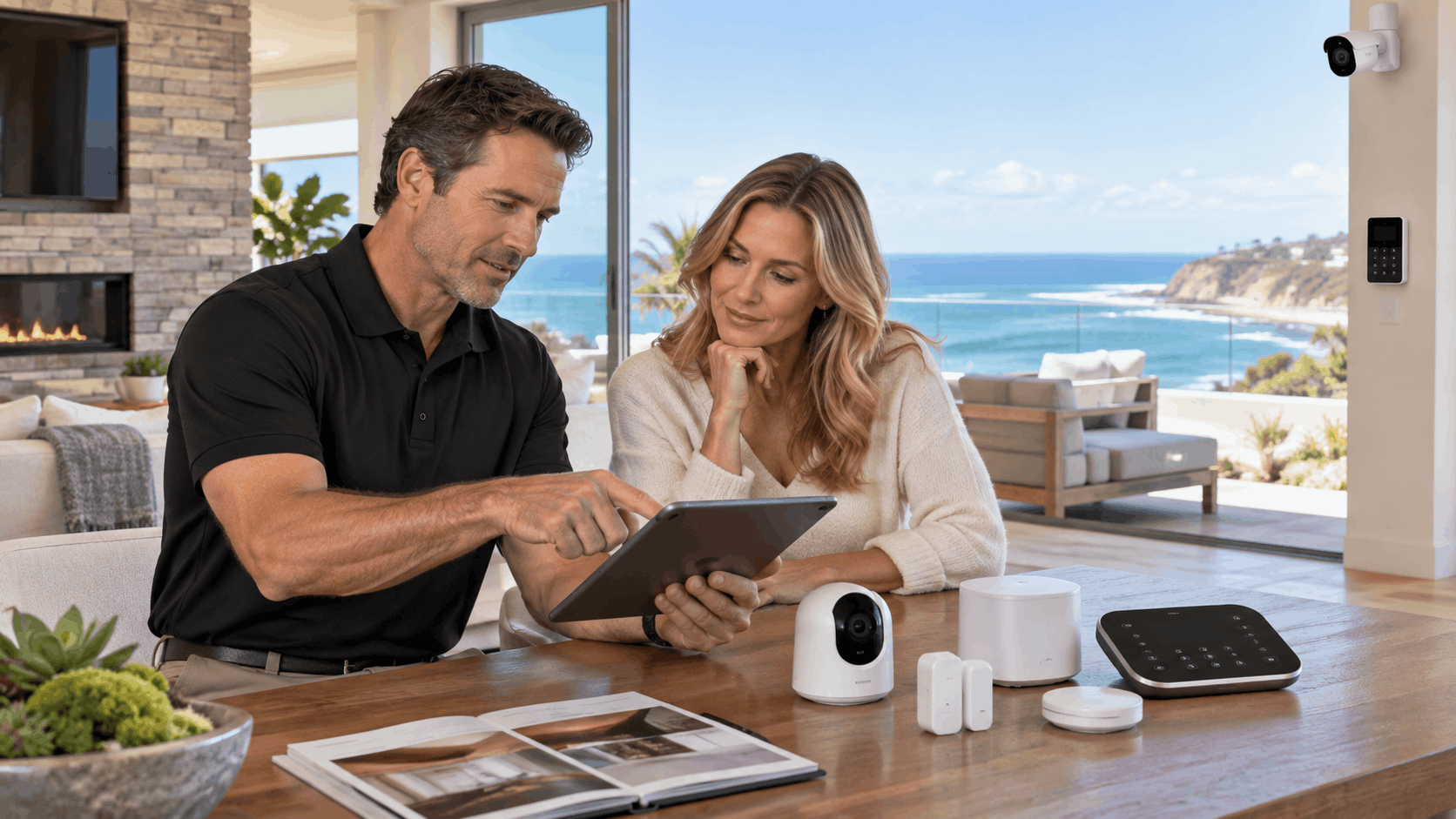
How Smart Shield Systems Prices Del Mar Installs
Smart Shield Systems prices every Del Mar install around the specific home, not a generic template. Coastal security pricing depends on the layout, the salt exposure, and the owner's goals. Here is how our process works and what sets our quotes apart.
On-Site Assessment and Custom Quotes
Every quote starts with an on-site assessment. A tech visits the property, walks the perimeter, and maps where coverage is needed. That coverage map drives the camera and sensor count, so the quote reflects the real home rather than a guess.
The visit also catches the details that change price. Long driveways, big glass walls, HOA rules, and construction type all show up on-site. Confirming them in person avoids surprises once the crew starts work.
From that assessment we build a custom quote itemized by hardware, labor, and monitoring. The homeowner sees exactly what each part costs. There is no lump-sum guessing.
This step is why coastal quotes are more accurate than a phone estimate. Seeing the bluff, the glass, and the driveway in person makes the numbers real. Book an assessment through our contact page to start.
Coastal-Grade Equipment Recommendations
We recommend corrosion-resistant, coastal equipment because we have seen what the ocean does to cheaper gear. Sealed housings, coated boards, and marine-rated hardware last far longer near the water. That long-lasting gear keeps the total cost lower over the years.
Our recommendations match the exposure of each spot on the property. A camera facing the surf needs more protection than one under a covered porch. We spec the right rating for each location instead of using the same part everywhere.
Choosing durable gear upfront means fewer service calls and replacements. That is better for the homeowner's budget and better for reliable coverage. It is the approach any coastal home deserves.
Learn more about our full range of services to see how the equipment fits together. Every recommendation ties back to lasting protection near the water.
Local Service Response Across San Diego
Being a San Diego-based team means we reach Del Mar homes quickly for service. When a camera goes down or a sensor acts up, a local crew can respond fast. That local service matters most when something fails during event season or a storm.
Distance changes response time. A company based hours away cannot match a team already working across San Diego County every day. We know the coastal routes and the neighborhoods, so getting to a Del Mar service call is routine.
Fast response also means faster installs and quicker adjustments. If coverage needs tweaking after the first week, we are close enough to come back. That local presence is part of the value.
We serve the whole county, from the coast to the inland communities. Our familiarity with San Diego neighborhoods, including nearby Carmel Valley smart home installs, keeps our coastal knowledge sharp.
Transparent Pricing With No Surprise Fees
Transparent pricing is a core part of how we quote. Every quote lists equipment, labor, and monthly fees as separate lines. A homeowner knows exactly what they pay before signing anything, with no hidden fees added later.
We do not bury costs in fine print or spring add-on charges mid-install. If a quote says a number, that is the number. Any change gets discussed and approved first.
This upfront approach builds trust, especially for larger coastal systems where the totals are significant. A homeowner should never wonder where a charge came from. Clear line items answer that up front.
Honest pricing is how we earn repeat customers along the coast. When the quote matches the invoice, homeowners recommend us to neighbors. That reputation is worth more than any padded fee.
Need Help in San Diego?
Smart Shield Systems serves San Diego and all of San Diego County.
Final Thoughts
Securing an oceanfront home in Del Mar costs more than an inland house, but the reasons are clear and the spending is controllable. Salt air, larger lots, big glass walls, and local rules all shape the price. Choosing coastal-grade gear and the right coverage keeps the system working for years.
A small condo can be protected for well under $2,000, while a bluffside estate runs into five figures. Between those extremes, most family homes land in a sensible mid-range. Monthly monitoring, cloud storage, and a maintenance plan round out the true budget.
Whatever the property type, the smartest move is a system built for the coast from day one. Our team maps every install to the specific home and quotes it transparently. Reach out to Smart Shield Systems for an on-site assessment and a custom quote for your Del Mar property.
Frequently Asked Questions
How much does a security system cost in Del Mar?
A small coastal condo runs $800 to $1,800 for equipment and install, a two-story family home lands around $3,000 to $6,500, and a bluffside estate can reach $10,000 to $25,000 or more. Coastal-grade gear and larger lots raise the total versus inland homes. Monthly monitoring adds $25 to $120 depending on the tier and features chosen.
Why do oceanfront homes cost more to secure?
Oceanfront homes need marine-grade equipment that resists salt air corrosion, which costs more than standard gear. They also tend to sit on larger lots with more entry points and feature big glass walls that require extra glass-break sensors. More cameras, more sensors, and durable hardware all push the total above what a comparable inland home would pay.
What is the monthly monitoring fee for Del Mar homes?
Professional monitoring with a staffed center runs about $30 to $60 per month for most homes, and up to $120 for large estates with premium features. Self-monitoring through a phone app costs less, often $5 to $15 monthly or nothing beyond the app. Cellular backup and cloud video storage add roughly $5 to $25 more depending on camera count and retention.
Do coastal cameras need special weatherproofing?
Yes. Standard cameras fail fast near the ocean because salt spray and fog work into the housing and corrode the internals. Marine-grade cameras use sealed housings, coated circuit boards, and connectors rated for high humidity and salt exposure. They cost 20 to 40 percent more upfront but last several years longer, which lowers the real cost over time along the Del Mar coast.
Can I install a security system myself to save money?
DIY systems save on labor and suit simple condo setups with a few wireless sensors and one camera. The tradeoff on coastal properties is coverage planning, proper marine-grade gear, and reliable network setup across larger lots. A professional install maps blind spots, handles wiring in older homes, and confirms HOA and permit rules, which matters more on complex bluff-top and hillside homes.
Will a security system lower my homeowners insurance?
Often, yes. Many carriers offer discounts of 5 to 20 percent for homes with professional monitoring, and fire and carbon monoxide detection can add more. On coastal homes with higher base premiums, that savings offsets part of the monthly monitoring fee. Ask your insurer what they need, and we provide the monitoring certificate that documents the system for the discount.
How long do coastal security systems last?
Marine-grade equipment near the ocean typically lasts six to ten years, while cheaper inland-grade gear may fail within two to three years due to salt exposure. Regular maintenance extends that life by cleaning housings, testing sensors, checking connections, and updating firmware. One or two service visits per year keeps a coastal system dependable and prevents blurry footage from salt film on lenses.
Do I need a permit for a security install in Del Mar?
Some installs do, especially larger systems involving electrical work or fixed exterior mounting in the coastal overlay zone. The City of Del Mar building department and gated communities like Del Mar Beach Colony may have design and placement rules. We check permit and HOA requirements during the site assessment so the install stays compliant and no rework is needed later.
How fast can a monitoring service respond?
Professional monitoring centers typically verify an alarm and begin dispatch within seconds to a minute of the signal. Cellular backup keeps that response working even when home internet or power drops during a coastal storm. Verified response with a staffed center is far faster than self-monitoring, where reaction depends entirely on the homeowner seeing and acting on a phone alert.
Can a system be added to over time?
Yes. A scalable system starts with a core panel and priority cameras, then expands with more cameras and sensors later as budget allows. Choosing a hub that supports future devices from the start makes each addition a small job rather than a full overhaul. This phased approach spreads the cost and adapts as a home's coverage needs change.
Frequently Asked Questions
- How much does a security system cost in Del Mar?
- A small coastal condo runs $800 to $1,800 for equipment and install, a two-story family home lands around $3,000 to $6,500, and a bluffside estate can reach $10,000 to $25,000 or more. Coastal-grade gear and larger lots raise the total versus inland homes. Monthly monitoring adds $25 to $120 depending on the tier and features chosen.
- Why do oceanfront homes cost more to secure?
- Oceanfront homes need marine-grade equipment that resists salt air corrosion, which costs more than standard gear. They also tend to sit on larger lots with more entry points and feature big glass walls that require extra glass-break sensors. More cameras, more sensors, and durable hardware all push the total above what a comparable inland home would pay.
- What is the monthly monitoring fee for Del Mar homes?
- Professional monitoring with a staffed center runs about $30 to $60 per month for most homes, and up to $120 for large estates with premium features. Self-monitoring through a phone app costs less, often $5 to $15 monthly or nothing beyond the app. Cellular backup and cloud video storage add roughly $5 to $25 more depending on camera count and retention.
- Do coastal cameras need special weatherproofing?
- Yes. Standard cameras fail fast near the ocean because salt spray and fog work into the housing and corrode the internals. Marine-grade cameras use sealed housings, coated circuit boards, and connectors rated for high humidity and salt exposure. They cost 20 to 40 percent more upfront but last several years longer, which lowers the real cost over time along the Del Mar coast.
- Can I install a security system myself to save money?
- DIY systems save on labor and suit simple condo setups with a few wireless sensors and one camera. The tradeoff on coastal properties is coverage planning, proper marine-grade gear, and reliable network setup across larger lots. A professional install maps blind spots, handles wiring in older homes, and confirms HOA and permit rules, which matters more on complex bluff-top and hillside homes.
- Will a security system lower my homeowners insurance?
- Often, yes. Many carriers offer discounts of 5 to 20 percent for homes with professional monitoring, and fire and carbon monoxide detection can add more. On coastal homes with higher base premiums, that savings offsets part of the monthly monitoring fee. Ask your insurer what they need, and we provide the monitoring certificate that documents the system for the discount.
- How long do coastal security systems last?
- Marine-grade equipment near the ocean typically lasts six to ten years, while cheaper inland-grade gear may fail within two to three years due to salt exposure. Regular maintenance extends that life by cleaning housings, testing sensors, checking connections, and updating firmware. One or two service visits per year keeps a coastal system dependable and prevents blurry footage from salt film on lenses.
- Do I need a permit for a security install in Del Mar?
- Some installs do, especially larger systems involving electrical work or fixed exterior mounting in the coastal overlay zone. The City of Del Mar building department and gated communities like Del Mar Beach Colony may have design and placement rules. We check permit and HOA requirements during the site assessment so the install stays compliant and no rework is needed later.
- How fast can a monitoring service respond?
- Professional monitoring centers typically verify an alarm and begin dispatch within seconds to a minute of the signal. Cellular backup keeps that response working even when home internet or power drops during a coastal storm. Verified response with a staffed center is far faster than self-monitoring, where reaction depends entirely on the homeowner seeing and acting on a phone alert.
- Can a system be added to over time?
- Yes. A scalable system starts with a core panel and priority cameras, then expands with more cameras and sensors later as budget allows. Choosing a hub that supports future devices from the start makes each addition a small job rather than a full overhaul. This phased approach spreads the cost and adapts as a home's coverage needs change.
S
Smart Shield Systems Team Team
Licensed security systems professionals serving San Diego and San Diego County.
Licensed in California · License #7623
Why trust Smart Shield Systems?
Founded in 2016, Smart Shield Systems is a licensed and insured security systems serving San Diego and San Diego County. All content is reviewed by our licensed technicians.

Need Help in San Diego?
Smart Shield Systems serves San Diego and all of San Diego County.
Related Articles
Cost Guides
Commercial Security System Costs: What San Diego Business Owners Should Budget
Commercial security costs in San Diego depend on building size, camera count, and access control. This guide helps business owners budget for design, installation, and monitoring.
Cost Guides
Home Security System Cost La Jolla: Estate vs Standard Home Pricing
See real home security system cost ranges in La Jolla, from standard homes to bluff-top estates, plus what drives pricing and how to get an accurate quote.
Cost Guides
How Much Does a Home Security System Cost in San Diego? (2026 Guide)
San Diego homeowners often ask what a full security system costs. This 2026 guide breaks down equipment, installation, and monitoring so you can budget for alarms, cameras, and smart locks in San Diego County.