Tips & Advice
Carmel Valley Security: Family Home Master-Planned Community Service
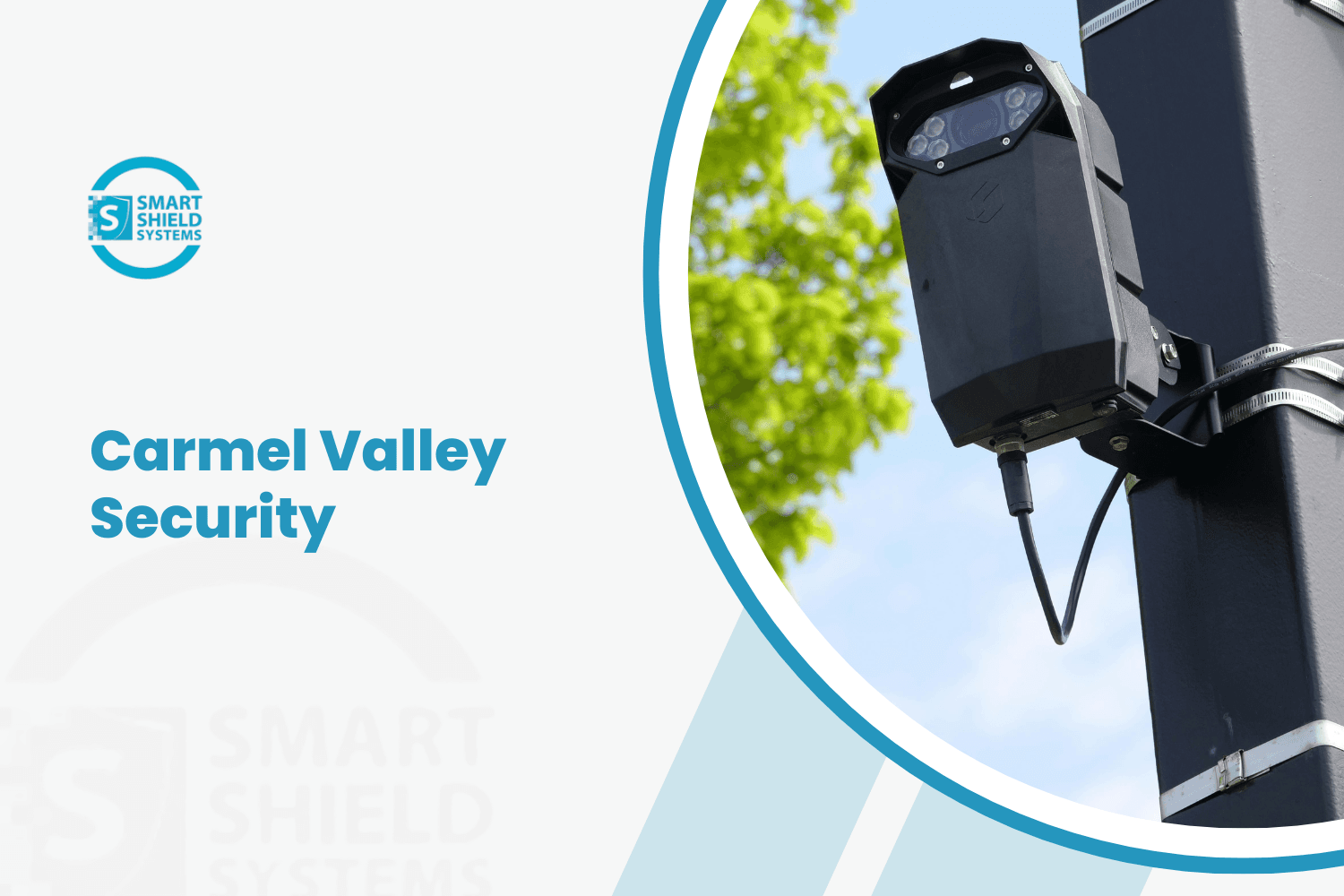
Key Takeaways
- Close lots, shared alleys, and narrow side yards in communities like Pacific Highlands Ranch and Torrey Hills create entry points families often overlook.
- Many Carmel Valley HOAs set rules on exterior cameras, wiring, and signage, so confirm your own association's current guidelines before mounting anything.
- Builder-grade locks, attached-garage access doors, and ground-floor windows facing greenbelts are the most common gaps in local family homes.
- Salt-laden marine air from the coast near Torrey Pines corrodes exposed outdoor gear, so weather-rated housings and sealed connections are needed here.
- Canyon-facing rear boundaries and the morning marine layer call for motion lighting plus infrared or low-light cameras to cover dark, foggy blind spots.
- Unique codes, remote app access, and temporary guest codes let kids, commuters, and service visits fit the system into daily family life.
- Cost is driven by equipment count, home size, installation type, and optional monthly monitoring, which should be confirmed directly with the provider.
- Smart Shield Systems starts every Carmel Valley job with an on-site walkthrough, matches equipment to the home and HOA, and trains the whole family to use it.
In This Article
Drive through Pacific Highlands Ranch on a weekday afternoon and you will see the rhythm of a planned community in motion. Kids pedal home from school, delivery trucks pause along the curb, and dog walkers move from door to door. The homes sit close together, with matching facades and shared alleys that make the streets feel safe and tidy.
That same tight layout also creates security questions families do not always think about. Narrow side yards, shared rear access, ground-floor windows facing greenbelts, and front steps that look identical to the one next door all change how a home needs protecting. What works for a home on a wide lot does not always fit here.
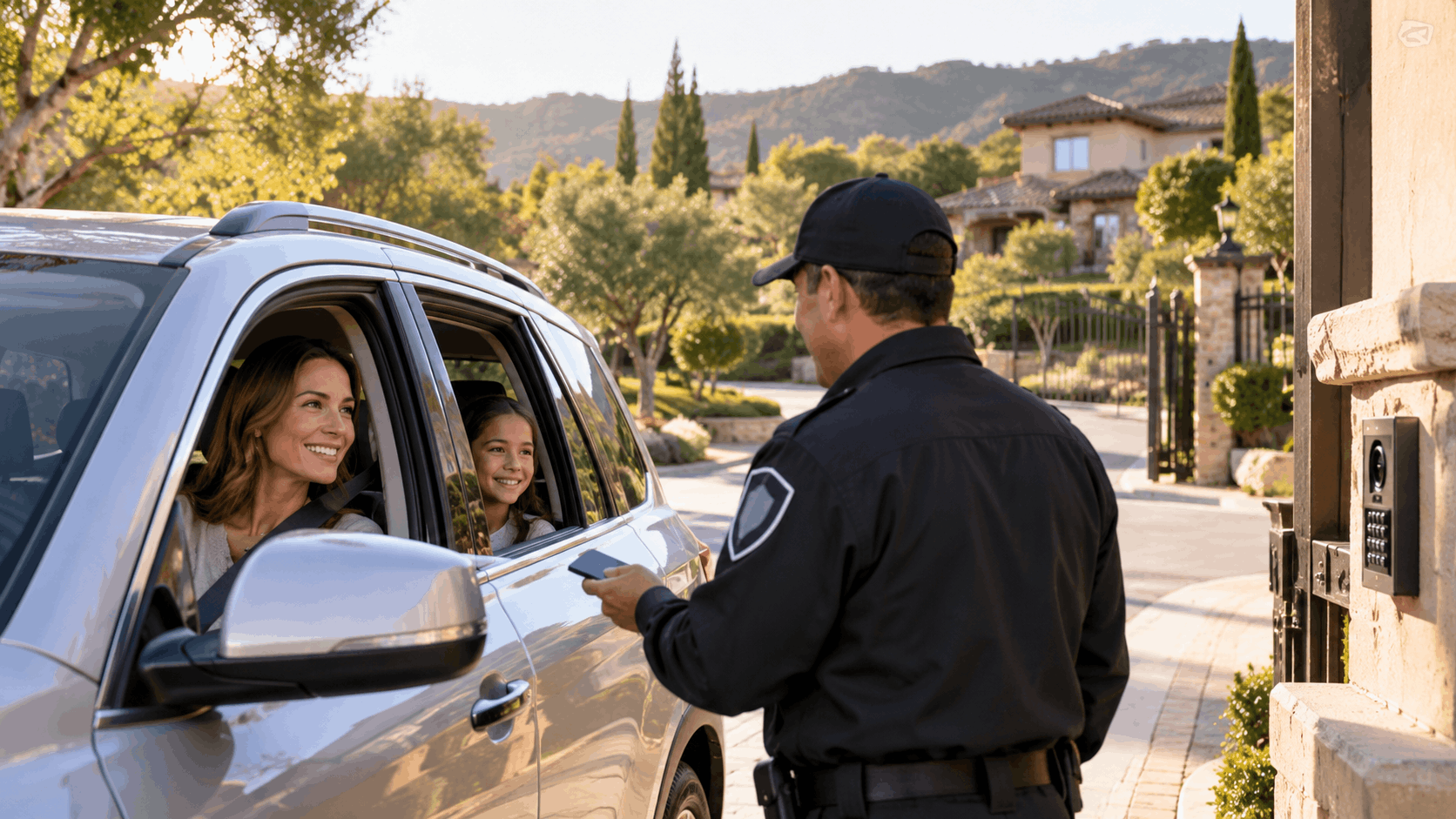
What Makes Security Different in a Master-Planned Community?
A master-planned community is built to a shared design. The streets, lot sizes, setbacks, and even the look of each home follow one plan. That design shapes how families in Carmel Valley neighborhoods think about home security, because the usual advice written for a single detached house on a large lot does not map onto homes built shoulder to shoulder.
In places like Pacific Highlands Ranch, Torrey Hills, and Del Mar Mesa, the close spacing means one home's weak point can affect the row. Shared walls, common alleys, and connected rear access change the entry picture. A system here has to account for how the whole block is laid out, not just the four walls of one house.
These communities also come with homeowners associations, patrols, and sometimes gates. Each of those adds a layer, but none of them replaces a system on the home itself. Below we break down the three parts of community design that matter most for protecting a family home.
Close Lots and Shared Access Points
Homes in Pacific Highlands Ranch and Torrey Hills often sit within a few feet of the house next door. The side yards are narrow, sometimes just wide enough for a trash bin and a gas meter. Families rarely think of these slivers as entry points, but a side gate that stays unlocked gives quiet access to a back door out of view from the street.
Rear alleys are common in these developments. They were designed to pull garages and utility access off the main street, which keeps the front curb clean. The trade-off is a shared back lane where foot traffic blends in and a stranger behind a row of homes does not stand out.
Shared access points also mean a fence line is only as strong as the gate on it. A tall side fence feels secure until you notice the latch can be reached over the top. We look closely at these overlooked spots because they are the places a family walks past every day without a second glance.
The fix usually starts with securing the gates and adding sensors or a camera that covers the side yard and alley approach. A motion-triggered light on a narrow side path removes the cover that darkness provides. These are small changes that close the gaps the builder's layout left open.
HOA Rules That Affect Cameras and Signage
Many Carmel Valley communities have an active homeowners association, and those associations often set guidelines on exterior equipment. Rules can cover where cameras may be mounted, whether visible wiring is allowed on the facade, and how yard signs or window decals look. The point is to keep the shared streetscape uniform.
Before mounting anything outside, families should confirm the current rules with their own association. Guidelines change, and each community in the area runs its own set. What one neighborhood allows on a front eave, another may ask you to move or conceal.
Exterior cameras are usually workable within these rules when the placement and wiring are handled with care. Running cable through the attic or soffit instead of across the stucco keeps the finish clean and tends to satisfy association concerns. Low-profile fixtures that match the trim color draw less attention than bulky white housings.
Signage can also fall under association review. Some communities limit the size or placement of security signs and window stickers. We plan the whole exterior package with these constraints in mind so a family does not install equipment and then get asked to take it down.
Community Patrols and What They Cover
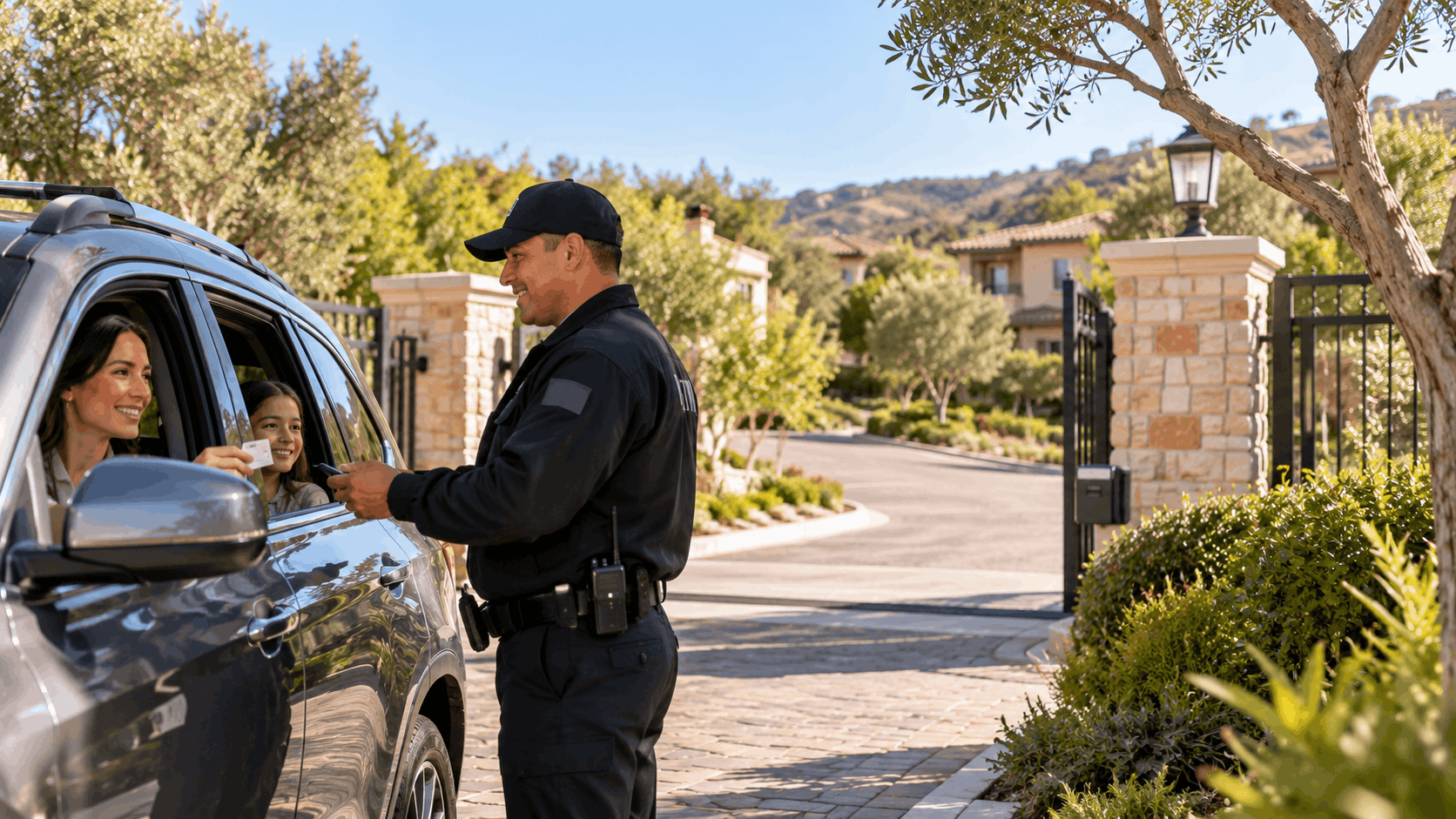
Some planned communities in the area use roving patrols or gated entries. A patrol car moving through the streets and a controlled entry point both add real deterrence, and they help the whole neighborhood feel watched.
The limit is simple. A patrol cannot sit at every door at once. A roving vehicle passes a given street on a loop, which leaves long stretches where a specific home has no eyes on it. A gate slows casual traffic but does not stop someone on foot cutting through a trail or greenbelt.
That gap is why a home system still matters even behind a gate or patrol. The system watches your doors and windows around the clock, not on a loop. It alerts you the moment a sensor trips, which no shared patrol can do for one address.
We think of the patrol as the outer ring and the home system as the inner ring. The two work together. A residential alarm system covers the exact doors and windows a patrol will never reach, and it does so every minute of the day.
Common Security Gaps in Carmel Valley Family Homes
Across these neighborhoods we see the same weak spots over and over. Most of them trace back to how the homes were built and how busy families actually use them. None of these gaps mean a home is poorly built. They are just the places where everyday convenience and original builder hardware leave an opening.
Carmel Valley grew fast during several waves of development, and homes from those phases often share the same hardware and floor plans. That means the same gaps repeat down a street. Knowing the common ones helps a family close them before they become a problem.
Here are the four we find most often in local family homes, with what causes each and the practical fix.
Builder-Grade Locks and Standard Doors
Homes built during the area's rapid growth usually came with basic door hardware. The locks met code and looked fine, but builder-grade deadbolts and strike plates held with short screws are easy to force. Years later, many families have never upgraded them.
The front door gets the most attention, but it is often the least of the problem. A deadbolt is only as strong as the frame it seats into. A strike plate fastened with half-inch screws can be kicked loose even when the lock itself is solid, because the wood around it splits.
Patio and sliding doors are a bigger weak point in these homes. Many patio sliders rely on a simple latch that lifts out of its track with a little effort. Adding a secondary lock, a bar in the track, and a sensor turns that easy target into a protected entry.
Upgrading hardware is one of the lowest-cost improvements a family can make. Longer screws into the framing, a reinforced strike plate, and a quality deadbolt change how much force a door can take. Pairing that with an entry sensor means a forced door also sets off an alert.
Garage and Interior Access Doors
Attached garages in planned communities connect straight into the home, usually through a door into the kitchen or a hallway. That interior door is a second front door, and many families leave it unlocked because it feels inside. If someone gets into the garage, that door is often all that stands between them and the house.
The overhead garage door is the first target. An older opener without rolling-code technology can be defeated, and a door left open while kids play out front is an open invitation. The emergency release cord can also be tripped from outside on some doors if the top panel has a gap.
The side service door on a garage is another soft spot. It often has the weakest lock on the property and sits out of view along a side yard. Families forget it because they rarely use it, which is exactly why it gets overlooked.
We treat the garage as a full entry point, not an afterthought. A sensor on the overhead door, a lock on the interior access door, and garage door automation that lets you confirm it is closed from your phone all close this gap. The interior door deserves the same deadbolt you would put on the front.
Ground-Floor Windows Facing Common Areas
Many homes near Del Mar Mesa back onto parks, trails, or shared greenbelts. The view is a big part of why families buy there. The same open edge means ground-floor windows are visible and reachable from a public path.
A window that faces a trail gives someone time to watch the home and a quiet approach after dark. Bedroom and office windows on the ground floor are the usual concern because they are often left cracked for air or hidden behind shrubs.
Window sensors are the direct answer. A sensor trips the moment the window is opened past a set point, and glass-break sensors add a layer for windows that someone might smash rather than slide. Both tie into the alarm so a breach triggers a response instead of a silent entry.
Landscaping plays a part too. Tall shrubs under a window give cover, so trimming them back removes a hiding spot. Pairing a trimmed sightline with a sensor and a camera covering the greenbelt edge turns a vulnerable window into one that is hard to approach unseen.
Package Theft at the Front Step
Clustered homes with uniform entries make package theft simple along streets in Pacific Highlands Ranch. The front steps all look alike, parking is easy, and a thief can grab a box from several porches on one pass. Delivery volume in these neighborhoods is high, which keeps the targets steady.
A doorbell camera is the first line. It records anyone who approaches the door and sends a motion alert to your phone the moment someone steps onto the porch. Seeing a delivery arrive in real time lets a parent at work ask a neighbor to grab it or redirect the courier.
Motion alerts matter as much as the footage. A recorded theft after the fact is useful for a report, but an alert while it happens gives you a chance to act. A two-way speaker lets you talk to someone on the porch from anywhere.
We often pair a doorbell camera with a wider porch camera so you see both the face at the door and the approach from the driveway. Clear footage of a license plate or a face makes a real difference if you need to file a report.
Need Help in San Diego?
Smart Shield Systems serves San Diego and all of San Diego County.
Get Your Free Quote
Tell us about your property and we'll get back to you fast.
Security System Options for Family Homes
There is no single right system for every family. The pieces come apart into a few building blocks, and once you know what each one does, choosing what fits your home and budget gets easier. Below we walk through the main parts in plain language.
Most family systems combine a few of these elements. Entry sensors form the base, cameras add eyes, smart locks handle access, and monitoring decides who responds when something happens. You can start small and add pieces over time.
Here is what each block does and where it earns its place in a family home.
Door and Window Sensors
Entry sensors are two small pieces that sit on a door or window and its frame. When the two separate, the system knows the opening has been breached. They are the backbone of any alarm because they catch the most common entry method, which is simply opening a door or window.
Placement matters more than quantity. Every exterior door needs one, including the garage interior door and the side service door. On windows, the ground-floor openings facing side yards and greenbelts are the priority, since upper floors are harder to reach.
For busy parents, sensors do more than trip an alarm. Set to chime or send a quiet alert, they tell you when the back door opens while you are upstairs or when a window gets left ajar. That everyday awareness is often the feature families use most.
Modern sensors run on long-life batteries and report low power before they die. We place them where kids and pets will not knock them loose, and we tie them into the app so every opening shows up in a log you can check later. Explore how intrusion sensors fit a family layout.
Indoor and Outdoor Cameras
Cameras give you the picture that a sensor cannot. Outdoor cameras cover the approaches, driveways, side yards, and the canyon-facing rear boundary. Indoor cameras watch common areas and entry hallways so you can check in while away.
Placement is where good coverage is won or lost. We aim cameras to cover the paths someone must cross to reach a door, not just the door itself. A driveway camera that catches a vehicle and a side-yard camera that catches the walk to the back gate tell a fuller story than one camera on the porch.
Footage review on a phone is the feature families lean on daily. You can pull up any camera live, scroll back to a motion event, and save a clip. That turns the system from a passive recorder into something you actually use to answer the question of what just happened outside.
For homes along the canyons and greenbelts, outdoor coverage carries extra weight. A video surveillance setup that covers the dark rear boundary removes the biggest blind spot in these neighborhoods. We match camera count to the home so you are not paying for angles you do not need.
Smart Locks and Keypad Entry
Smart locks replace the hidden key under the mat with a code you can manage. For families with kids, that means no more lost keys and no more spare hidden where anyone might find it. Each person can have their own code.
The daily payoff is control. A dog walker gets a code that works only during their window. A cleaner gets one for the right day. When a code is no longer needed, you delete it from your phone in seconds instead of changing a lock.
Keypad entry also solves the problem of a child arriving home without a key. They punch in their code, the door unlocks, and you get an alert that they made it. No key to lose, no key to copy.
We install smart locks that work with the rest of the system so arming and unlocking tie together. Pairing a lock with guest temporary access codes covers the steady stream of deliveries and service visits these homes see without ever handing out a physical key.
Professional Monitoring Versus Self-Monitoring
A monitored system sends alarm signals to a central station staffed around the clock. When a sensor trips, operators verify the event and can dispatch police or fire. That matters most when no one is home or awake to see the alert.
A self-monitored setup sends alerts only to the homeowner. You get the notification on your phone and decide what to do. It costs less because there is no monthly station fee, but it depends entirely on you seeing the alert and acting.
The right choice depends on how a family lives. A household where parents commute and travel often leans toward professional monitoring, since someone is always watching even when the family cannot look at a phone. A home with someone usually present may be comfortable self-monitoring.
Many families blend the two, using around-the-clock monitoring for the alarm while self-checking cameras for day-to-day awareness. We walk through both options so a family picks what matches their routine, not what sells the most add-ons.
Local Challenges That Shape System Design in Carmel Valley
Carmel Valley sits close enough to the coast that the ocean shapes the weather, and it is cut through with canyons and open space. Both of those conditions, plus the daily rhythm of the community, affect what equipment lasts and what coverage a home needs. A system designed for a dry inland valley will not hold up the same way here.
The three conditions below come up on nearly every walkthrough in this part of San Diego. Each one changes a specific choice in how a system gets built. Ignoring them leads to equipment that corrodes early or cameras that go blind at the worst times.
Here is how the coast, the canyons, and the marine layer each shape the design.
Coastal Air and Outdoor Equipment
The marine air that drifts in from the coast near Torrey Pines carries salt. That salt settles on exposed metal and works into wiring over time. Cables and mounts within reach of that air corrode from the surface in, so fittings that would last for years inland fray and pit far sooner here.
This is why outdoor equipment near the coast needs weather-rated housings and sealed connections. A camera in a basic plastic shell with an open cable splice will fail early as moisture and salt creep into the connection. The corrosion often starts hidden inside the housing before anything looks wrong outside.
We specify gear built for this exposure and seal every outdoor connection. Stainless or coated mounts resist the pitting that eats cheaper metal brackets. Gaskets and proper cable glands keep the salt air out of the splice, which is where most early failures begin.
The payoff is equipment that holds up instead of needing replacement in a couple of seasons. Spending a little more on weather-rated housings up front saves the cost and hassle of swapping corroded cameras down the line. It is the single biggest durability factor for outdoor gear in these neighborhoods.
Canyon and Trail Edges Behind Homes
Homes bordering the canyons and open space near Carmel Valley Road and Del Mar Mesa have long, dark rear boundaries. The open space that makes these lots desirable also gives an approach with no streetlights and plenty of cover. After sunset, that back edge is the least-watched part of the property.
Motion lighting is the first tool for these boundaries. A light that snaps on when something crosses the yard removes the cover darkness provides and signals that the home is watched. For a wide canyon edge, a few well-placed fixtures beat one bright floodlight that leaves shadows at the sides.
Cameras cover the blind spots that lighting alone cannot. A camera aimed along the rear fence line catches movement at the boundary and records it, so you know whether that motion was a coyote or a person. Pairing the camera with the motion light gives you both the trigger and the record.
We map the rear boundary carefully on these lots because it is where the real exposure sits. Smart home and security coverage built for Carmel Valley homes accounts for the canyon edge first, since that is the approach a street-facing system would miss entirely.
Marine Layer and Night Visibility
The morning marine layer rolls in off the coast and sits over these neighborhoods as a low gray fog. Combined with the dim light of early evening, it cuts how far and how clearly a camera can see. A camera that looks sharp on a clear afternoon can turn to a soft blur in the morning haze.
Low light is the real test for outdoor cameras here. Standard cameras lose detail fast as light drops, which matters because the hours that need coverage most, late evening and early morning, are also the dimmest. A grainy image of a figure is far less useful than a clear one.
Infrared and low-light cameras handle these conditions far better. Infrared illuminators let a camera see in near-total darkness, and good low-light sensors pull usable detail from dim scenes. For homes facing dark canyons, this is the difference between footage you can act on and footage you cannot.
We choose camera sensors with the local light in mind, favoring models that hold detail through fog and low light. Proper placement helps too, keeping cameras out of direct porch glare that washes out the image. The goal is a picture you can rely on at the exact hours trouble tends to come.
Need Help in San Diego?
Smart Shield Systems serves San Diego and all of San Diego County.
How Security Systems Connect With Family Routines
A security system only helps if the family actually uses it. The best setup fits around real life, with kids coming home from school, parents managing things from work, and a steady flow of guests and deliveries. If arming the system is a chore, people stop doing it.
The aim is a setup simple enough that everyone in the house uses it without thinking. Home automation and remote access make that possible by folding security into the daily routine instead of adding a step to it. Below are the three moments where that fit matters most.
Kids Arriving Home From School
Families near the Del Mar Union and San Dieguito school districts often have kids who get home before a parent does. Arrival alerts solve the worry of not knowing whether they made it. When a child enters their unique code, the system disarms and sends you a notification.
Unique codes do double duty. They let each child in on their own, and they tell you who opened the door and when. If two kids come home at different times, you see both arrivals as separate events in the app.
That small confirmation changes a parent's afternoon. Instead of calling to check in, you get a quiet alert that the door opened and the right code was used. It is reassurance without a phone call that interrupts homework.
We set up child codes that are easy to remember but not obvious, and we teach kids the simple steps to disarm and rearm. The system becomes part of their routine, like dropping a backpack, rather than something they avoid.
Managing the System From a Phone
Parents along the I-5 and SR-56 corridors spend real time commuting. Remote access through a mobile app lets you arm, disarm, and check cameras from anywhere, which fits a schedule built around a drive to work and back.
Forgot to arm the system on the way out? Two taps from the freeway and it is set. Want to confirm the back door is locked? The app shows you. That control removes the trip back home to double-check something.
The app also pulls everything into one place. Cameras, locks, sensors, and alarm status all live on one screen. For a parent juggling work and a household, that single view beats remembering a handful of separate apps and codes.
We configure the app so the controls a family uses daily are front and center. Pairing it with voice and app control means you can check status with a spoken command at home and full control from the phone when away.
Guests, Deliveries, and Service Visits
These homes see a steady stream of visitors. Dog walkers, cleaners, and deliveries all need access at times when no one is home. Handing out physical keys for each one creates copies you cannot track and locks you eventually have to change.
Temporary codes solve this cleanly. A service visitor gets a code that works only during their scheduled window, then expires. You never hand over a key, and you never wonder who still has one. Deleting a code takes seconds if a schedule changes.
Camera alerts pair naturally with this. When a delivery arrives or a dog walker enters, you get a notification and can watch the visit if you want. That record settles any question about whether someone came and went as expected.
We set up access so each regular visitor has their own code and the system logs every entry. This turns a busy home's constant flow of visitors from a security headache into something you manage from your phone in a few taps.
What Home Security Costs for Carmel Valley Families
Price is the first question most families ask, and the honest answer is that it depends on the home. There is no single figure because a system is built from parts, and the number of parts changes with the house. What we can do is lay out the factors that move the cost up or down so a family can plan.
Three things drive the total: the equipment the home needs, how the install is done, and whether you add monthly monitoring. Below we break each one down so you know where your money goes and where you have room to choose.
Equipment and Home Size
The biggest driver is simply how much the home needs. Every exterior door and ground-floor window that gets a sensor adds to the count. A larger family home with more openings naturally needs more sensors than a smaller one.
Cameras work the same way. A home that needs front, driveway, side-yard, and rear-boundary coverage carries more camera cost than one that needs only a doorbell and a back camera. The canyon-facing homes in the area often need extra outdoor cameras, which raises the equipment total.
Smart locks, keypads, and a control panel add their own line items. A family that wants locks on the front and garage doors pays more than one that keeps standard deadbolts with sensors. None of these are required, so the equipment list is where families have the most control over cost.
We size the equipment to the actual home rather than selling a fixed package. Counting the real doors, windows, and coverage points gives an honest total instead of a padded one. That count is the foundation of any accurate estimate.
Installation and Wiring Factors
How the system is installed changes the labor cost. Wireless systems go in faster because there is no cable to run through walls, which keeps install time and cost down. Wired systems take more labor but can be more reliable for permanent cameras and high-traffic doors.
The home's layout matters too. A finished attic with no access panel is harder to route cable through than an open one. Stucco exteriors, common across these neighborhoods, call for careful drilling and sealing to keep the finish intact and the connections weatherproof, which adds time to an outdoor install.
Two-story homes and long runs to a rear canyon boundary add labor as well. Reaching a camera at the far back of the lot means more cable and more care. These are the details that make one home's install straightforward and another's more involved.
We assess all of this during the walkthrough so the install quote reflects the real work. A home with easy attic access and a wireless setup installs quickly, while a wired system in a finished, stucco two-story takes longer. Knowing which you have avoids surprises.
Ongoing Monitoring Costs
Monitoring is a monthly fee, separate from the one-time equipment and install cost. For that fee, a central station watches your alarm around the clock and can dispatch help when a sensor trips. It is the ongoing part of the budget.
What you get for the fee is a response you do not have to make yourself. When an alarm triggers at 2 a.m. or while you are traveling, operators verify it and call for police or fire. Self-monitoring skips this fee but puts that job entirely on you.
Some families add camera storage or cellular backup to the monitoring plan, which affects the monthly amount. Others keep it to basic alarm monitoring. The plan can scale to what the household wants.
Monitoring pricing changes and varies by plan, so we recommend confirming current rates with us directly before you commit. We lay out the plan options plainly so a family picks the level of service that matches how they live, not the most expensive tier by default.
Need Help in San Diego?
Smart Shield Systems serves San Diego and all of San Diego County.
How Smart Shield Systems Handles Carmel Valley Installations
Our team works out of San Diego and knows these neighborhoods street by street. When a family in Carmel Valley calls, the process follows a few clear steps from the first visit to the finished setup. The aim is a system that fits the home, respects the HOA, and that every family member can use.
We do not arrive with a fixed package to sell. Each home is different, and the walkthrough drives everything that follows. Here is what a family can expect.
The On-Site Walkthrough
Everything starts with a walkthrough of the home. We review every exterior door, the garage and its interior access, the ground-floor windows, and the side yards and gates. On canyon-facing lots, we spend extra time on the rear boundary because that is where the real exposure sits.
We also look at the things specific to these communities. The side-yard access points, the shared alley approach, and the greenbelt edges all get checked. We note where the marine air hits hardest and where low light will challenge a camera.
HOA constraints come into the walkthrough too. We note where exterior equipment can go within the community's guidelines and how wiring can stay concealed. Families should confirm their own association's current rules, and we plan around what those rules allow.
The walkthrough ends with a clear picture of the home's gaps and the options to close them. Nothing gets recommended until we have seen the actual house, because the layout and the lot decide what a home really needs.
Matching the System to the Home and HOA
With the walkthrough done, we match equipment to the family's routine and the community's rules. A household with commuting parents and kids arriving after school gets a different setup than one with someone usually home. The system is built around how the family actually lives.
Equipment selection balances coverage against the HOA's exterior guidelines. We pick fixtures and mounting that satisfy the association while covering the gaps we found. Low-profile cameras, concealed wiring, and signage that fits the rules keep the home compliant and secure at once.
Weather-rated gear goes on every outdoor point because of the coastal air, and low-light cameras cover the spots that fog and dim evenings affect. These choices come straight from the local conditions rather than a one-size list.
We walk the family through the proposed design before anything is ordered. You see what each piece does and why it is there, with room to adjust the scope to fit the budget. Explore the full range of home security services we can draw from for a given home.
Setup and Teaching the Family to Use It
Installation is where the plan becomes real hardware on the home. We mount sensors, run or place cameras, set up locks, and configure the panel and app. Outdoor connections get sealed against the salt air, and camera angles get checked against the real sightlines.
The job does not end when the last device is mounted. We finish with a walkthrough of the working system so the family knows how to use it. Every member learns to arm, disarm, and check the cameras in the app.
We set up the child codes, the guest codes, and the daily controls together with the family. Kids practice disarming with their own code, and parents run through the remote access on their phones. The goal is a system everyone is comfortable using from day one.
We also show you how to check battery levels, respond to an alert, and manage codes going forward. A system only protects a home if the people in it know how to work it, so this teaching step is part of every install.
Ready to Secure Your Carmel Valley Home?
Every system we build starts with an on-site walkthrough of your home, so the design fits your actual doors, windows, canyon boundary, and HOA rules rather than a generic package. Reach out through our contact page to set up that walkthrough. We will review your home, lay out the options, and show you what each piece does before any work begins.
Frequently Asked Questions
- Do HOA rules in Carmel Valley limit where I can put cameras?
- Often yes. Many Carmel Valley communities have homeowners associations with guidelines on exterior equipment, including where cameras may be mounted and whether visible wiring is allowed on the facade. The rules vary by community and change over time, so confirm the current guidelines with your own association before mounting anything. We plan placement and concealed wiring to work within those rules so your equipment stays compliant.
- What areas of a family home need cameras most?
- The front door and driveway come first, since that is where deliveries, visitors, and most foot traffic appear. Side yards matter because the narrow spacing in these neighborhoods creates hidden approaches to back doors. For homes bordering the canyons or greenbelts near Del Mar Mesa, the rear boundary is a priority because it is the darkest, least-watched edge of the property and the approach a street-facing system misses.
- Does the coastal air really damage outdoor security equipment?
- It does. The marine air drifting in from the coast near Torrey Pines carries salt that settles on exposed metal and works into wiring and connections. Equipment corrodes from the surface in, so basic housings and open cable splices fail far sooner here than inland. Weather-rated housings, sealed connections, and coated mounts resist that corrosion and last much longer in these conditions.
- Should I choose a wired or wireless system?
- Both work for family homes. Wireless systems install faster with no cable to run through walls, which keeps labor lower and suits homes with finished attics or tricky access. Wired setups take more labor but can be more reliable for permanent cameras and high-use doors. The home's layout, whether you own or rent, and your coverage needs all factor in. We help you weigh the trade-offs during the walkthrough.
- What is the difference between monitored and self-monitored systems?
- A monitored system sends alarm signals to a central station staffed around the clock. Operators verify the event and can dispatch police or fire even when you are asleep or away. A self-monitored setup sends alerts only to your phone, so you decide what to do each time. Self-monitoring skips the monthly fee but depends entirely on you seeing and acting on the alert.
- Can my kids use the system without me?
- Yes. Each child gets a unique code that disarms the system and sends you an arrival alert, so you know when they get home from school. The app controls are simple enough for kids to arm and disarm on their own. We teach every family member the steps during setup so children can use the system safely as part of their daily routine.
- How do smart locks help with deliveries and dog walkers?
- Smart locks replace hidden keys with codes you control from your phone. A dog walker or cleaner gets a temporary code that works only during their scheduled window and then expires. You never hand out a physical key or wonder who still has one. Paired with camera alerts, you can also see each visit happen and confirm the person came and went as expected.
- How long does a typical home installation take?
- It depends on the home's size and the type of system. A smaller home with a wireless setup and easy attic access goes in quickly, often within a day. A larger two-story with a wired system, stucco exterior, and long runs to a rear canyon boundary takes longer because of the added cable and sealing work. We give a realistic timeframe after the walkthrough once we have seen the actual house.
- Will a system still help if my community has patrols or a gate?
- Yes. A patrol moves on a loop and cannot sit at every door at once, and a gate slows vehicles but does not stop someone on foot cutting through a trail or greenbelt. A home system watches your specific doors and windows every minute and alerts you the instant a sensor trips. The patrol is the outer ring; your system is the direct coverage on the home itself.
- What affects the overall cost of a security system?
- Four things mainly. The equipment count, driven by how many doors, windows, and cameras the home needs. The home size, since larger homes have more openings to cover. The installation type, with wired setups and difficult access adding labor. And ongoing monitoring, a monthly fee for around-the-clock central-station response. Monitoring pricing varies by plan, so confirm current rates with us directly before you decide.
S
Smart Shield Systems Team Team
Licensed security systems professionals serving San Diego and San Diego County.
Licensed in California · License #7623
Why trust Smart Shield Systems?
Founded in 2016, Smart Shield Systems is a licensed and insured security systems serving San Diego and San Diego County. All content is reviewed by our licensed technicians.

Need Help in San Diego?
Smart Shield Systems serves San Diego and all of San Diego County.
Related Articles
Tips & Advice
Point Loma Home Security: Hilltop View Property and Coastal Specialist
A local guide to Point Loma home security for hilltop and coastal properties, covering salt air, camera placement for view homes, alarms, and choosing a local specialist.
Tips & Advice
Voice Control and Home Security: Setting Up Alexa and Google Home
Control your alarm, locks, and cameras with Alexa or Google Home. This guide walks through setup and routines for San Diego County homeowners.
Tips & Advice
Coronado Home Security: Island Property and Military Family Service
A local guide to Coronado home security covering island property challenges, salt air corrosion, remote monitoring for deployed military families, camera setups, and honest pricing.