Tips & Advice
Leucadia Security Systems: Coastal Surf-Town Property Service
Key Takeaways
- Salt air and ocean humidity corrode standard security gear fast, so coastal homes need IP66 weather-rated cameras with corrosion-resistant housings.
- Heavy foot traffic near Beacon's Beach, Stone Steps, and Grandview makes driveway and porch cameras important for filtering strangers from real threats.
- Surfboards, wetsuits, and e-bikes in open carports are common theft targets that benefit from visible cameras, motion sensors, and connected lighting.
- Video doorbells, smart locks, and mobile alerts fit the on-the-go surf lifestyle, letting owners monitor deliveries and control access from the water.
- Vacation rentals and second homes need temporary guest access codes, remote monitoring, and water leak sensors to stay safe while unattended.
- Coastal systems for Leucadia homes typically run $1,200 to $8,000+ depending on size, with monthly monitoring around $20 to $60.
- Regular cleaning and yearly professional inspection fight salt buildup and extend equipment life in the marine climate.
- HOA rules and Encinitas coastal setback guidelines affect exterior camera placement, and monitored systems can lower insurance premiums.
In This Article
You paddle in from a dawn session at Beacon's Beach, board under your arm and salt still dripping from your hair. You round the corner to your porch and something feels off. The package you were waiting for is gone, or worse, the spare wetsuit you left drying on the side yard has walked off. It happens more often than most Leucadia homeowners want to admit.
Living along the Highway 101 corridor comes with a rhythm all its own. The foot traffic, the tourists, the salt air, and the open carports create security needs that a standard inland setup was never built to handle. A system that works fine in a gated Escondido cul-de-sac often fails within a couple of years this close to the ocean.
At Smart Shield Systems, we are a San Diego based team that has walked these streets and worked on homes from Neptune Avenue to the cottages west of Vulcan. This guide covers what actually holds up in a coastal surf town, how to protect your gear, and what it costs to do it right. We will keep it practical, the way we would explain it to a neighbor over the fence.
Why Leucadia Homes Face Different Security Challenges?
Leucadia security is its own animal. The surf-town culture that makes this place special also brings challenges you will not find in a landlocked neighborhood. People walk everywhere, gear sits out in the open, and the ocean quietly chews on your equipment year round.
Coastal home protection here means planning for salt, crowds, and a steady stream of strangers passing by. The homes are older, the lots are varied, and the marine layer never really leaves. Here is a closer look at what sets this area apart.
Salt Air and Corrosion on Outdoor Equipment
The first thing we tell homeowners west of the tracks is that salt air corrosion is real, and it is relentless. Ocean humidity and salt spray settle on every outdoor surface, and cameras, wiring, and sensors near the coast wear down far faster than the same gear installed in Escondido or El Cajon. A camera housing that lasts eight years inland might show pitting and rust within two or three years a block from Neptune Avenue.
What happens is the salt draws moisture, and that moisture creeps into connectors, screw terminals, and camera seals. Once corrosion starts, image quality drops, sensors misfire, and mounting hardware weakens. We have pulled down cameras near Grandview that looked fine from the ground but were crumbling at the bracket.
Coastal camera durability is not about buying the most expensive unit. It is about matching the right materials and coatings to the environment. Stainless steel hardware, sealed housings, and corrosion-resistant mounts make the difference between a system that lasts a decade and one that fails before its warranty ends.
This is why we plan every coastal install with the marine climate in mind from the start. Placement, materials, and sealing all get adjusted for how close a home sits to the water. It saves homeowners from replacing gear every couple of years.
Foot Traffic Along Highway 101 and Beach Access Points
Walkability is one of the best parts of living here, but it also means a constant flow of people past your front door. Beacon's Beach, Stone Steps, and Grandview all draw steady pedestrian traffic, and Highway 101 foot traffic never really stops during daylight hours. Beach access security has to account for the fact that dozens of strangers walk by your property every single day.
That constant flow makes it hard to tell a curious tourist from someone scoping out your porch. A driveway camera in a quieter inland neighborhood might record a handful of events a day. Near the beach access points, that same camera might log hundreds, which is why smart filtering and good placement matter so much.
We focus coverage on the choke points, meaning the porch, the walkway, and the driveway edge closest to the sidewalk. Good video surveillance cameras with clear angles on those spots give you a record that actually helps if something goes missing.
The goal is not to catch everyone who walks by. It is to have a clear, time-stamped view of anyone who steps off the public path and onto your property. That distinction is what makes beach access security work in a place this busy.
Surf Gear, Bikes, and Package Theft
Surfboard theft is one of the most common calls we get from this part of the coast. Boards, wetsuits, and e-bikes get left in carports and side yards because that is just how surf-town life works. You come in wet, you rinse off, and the gear sits out to dry where anyone walking by can see it.
An e-bike can run several thousand dollars, and a good board is not cheap either. When these items sit in an open carport visible from the sidewalk, they become easy targets. We have seen thieves grab a board off a rack in seconds while a homeowner was inside making coffee.
Package theft in Leucadia follows the same pattern. With so many people walking by, a box on the porch is a temptation, especially during the busy delivery months. A visible camera and a video doorbell change the math for anyone thinking about a quick grab.
We usually recommend a mix of visible deterrence and motion-triggered lighting for open storage areas. Pairing that with home security camera installation aimed at the carport gives owners both a warning system and a record. It is the most effective way to protect gear that has to live outside.
Seasonal Crowds and Summer Visitor Surges
Summer changes everything in Leucadia. Seasonal crowds pour in for the beaches, the 101 strip, and local events, and suddenly your quiet street is full of unfamiliar faces. Summer security has to shift to match that reality.
When the visitor count triples, so does the number of people walking past your carport and porch. Most are just here to enjoy the beach, but the higher volume makes it easier for opportunistic theft to blend in. A wetsuit that hangs safely all winter becomes a target in July.
The events near the 101 corridor bring parking pressure too, with cars and people lingering on residential streets that are usually calm. This is when driveway cameras and motion lighting earn their keep. They keep an eye on the areas where strangers now pass all day.
We often help homeowners tighten up their coverage right before the summer surge. A quick review of camera angles, sensor placement, and lighting before Memorial Day sets you up for the busiest months without any scramble later.
Security Systems That Hold Up Near the Coast
Coastal security systems have to survive a climate that punishes ordinary gear. The difference between a system that lasts and one that quits early comes down to the hardware, the materials, and how it all gets installed.
Weatherproof cameras are the starting point, but the whole setup has to work together. Below we break down the parts that matter most for homes near the water and why each one earns its place.
Weather-Rated Cameras and Housings
The single biggest factor in coastal camera life is the IP rating. IP66 cameras are sealed against dust and strong water jets, which is the minimum we recommend anywhere near the ocean. That rating tells you the housing can shrug off salt spray, marine fog, and the occasional storm without letting moisture reach the electronics.
Weatherproof housing matters just as much as the camera inside it. Corrosion-resistant materials like marine-grade aluminum or coated stainless steel hold up where cheaper metals rust out. We have replaced plenty of budget cameras near the water that failed at the mounting bracket long before the lens gave out.
Placement extends equipment life too. Tucking a camera under an eave or overhang shields it from direct spray and sun while still covering the areas that matter. A few inches of protection can add years to how long a unit lasts this close to the coast.
We choose gear and mounting locations based on how exposed each spot is. A camera facing the ocean gets different treatment than one under a covered porch. That attention to detail is what keeps a coastal system running long after a generic install would have failed.
Wireless Versus Wired Setups for Older Beach Cottages
West of Vulcan Avenue, you find a lot of older bungalows and beach cottages, and their construction shapes what kind of system fits. Wireless security is often the better choice for these homes because running new cable through old walls and crawl spaces can be messy and expensive.
Wireless cameras and sensors install faster and leave the original structure alone, which owners of historic cottages appreciate. The tradeoff is battery maintenance and the need for a strong signal, which the marine environment can sometimes interfere with. We test signal strength on site before committing to a layout.
Wired systems still have a place, especially for homes being remodeled or newer builds with accessible walls. A wired setup gives steady power and a reliable connection without worrying about batteries. For a cottage getting a full renovation, running cable while the walls are open is the smart move.
In practice, many Leucadia homes end up with a hybrid approach. Wired cameras at key points where power is easy, and wireless units for the spots that are hard to reach. We walk each property and recommend the mix that balances reliability with what the structure can handle.
Battery Backup and Power Outage Protection
Coastal storms and SDG&E power interruptions are part of life here, and a security system that dies with the power is not much of a system. Battery backup keeps your cameras, sensors, and monitoring running when the grid goes down. That matters most during the exact storms that make outages likely.
When a winter storm rolls through and knocks out power along the coast, that is often when a home is most vulnerable. An unmonitored, dark house with no working cameras is an easy target. Backup power closes that gap and keeps the system online.
Most modern setups include a battery that carries the core system for several hours. For homes that lose power often, we can add larger backup capacity or tie in with a home battery. Owners of second homes especially value knowing the system stays alive while they are away.
Power outage security also means the system reconnects and reports its status once power returns. You get an alert if something went offline, so there are no silent gaps. We set every install to notify owners of outages and restorations automatically.
Motion Sensors That Ignore Wildlife and Wind
False alarms drive people crazy, and the coast throws plenty of triggers at motion sensors. Ocean breezes move plants, salt haze drifts through the air, and local critters like rabbits and the occasional coyote wander through yards at night. Good motion sensors have to tell the difference between a real threat and the wind.
Modern sensors use pet-immune and heat-signature technology to filter out small animals and moving vegetation. Proper placement helps too, since aiming a sensor away from swaying plants and reflective surfaces cuts down on nuisance trips. False alarm reduction starts with mounting the sensor at the right height and angle.
We tune sensitivity to match each yard. A property near open space east of the tracks with more wildlife needs different settings than a tight lot near the 101. Getting this right means you actually trust your alerts instead of ignoring them.
Pairing sensors with camera verification also cuts false alarms dramatically. When motion triggers a camera clip, you can glance at your phone and see whether it is a person or just a rabbit. That combination keeps intrusion sensor installation useful rather than annoying.
Need Help in San Diego?
Smart Shield Systems serves San Diego and all of San Diego County.
Get Your Free Quote
Tell us about your property and we'll get back to you fast.
Smart Home and Video Doorbell Options for Surf-Town Living
Smart home security fits the Leucadia lifestyle better than any old-school system. When your mornings start in the water and your schedule bends around the tides, you need tools you can check and control from your phone.
A video doorbell and a few connected devices give you eyes and control no matter where you are. Here is how the modern features line up with life in a surf town.
Watching Deliveries While You're in the Water
A video doorbell is one of the best upgrades for anyone who spends mornings surfing. You can check on packages right from your phone between waves, or glance at your porch while you towel off in the parking lot at Swami's. Package monitoring becomes simple instead of stressful.
Porch cameras add another layer by covering the wider area around your door. If a delivery gets dropped at the side gate instead of the front step, you still catch it. The footage also gives you proof if a package goes missing.
Real-time alerts mean you know the moment a delivery arrives. That lets you call a neighbor to grab it or head home if you are close. During the busy holiday delivery season, that quick response prevents a lot of porch theft.
We set up doorbell and porch camera systems so the notifications are useful, not overwhelming. Smart filtering separates a delivery from a passing tourist, so your phone only buzzes when it matters. That balance keeps the feature something you actually rely on.
Smart Locks for Households With Wet Hands and No Keys
Keys and surf life do not mix. They get lost in the sand, soaked in a wetsuit pocket, or left in the ignition. Smart locks solve this with keypad and app-based entry that never leaves you locked out with wet hands.
Keyless entry means you punch in a code or tap your phone to get inside. No fumbling for a key while you are dripping and cold. For families where everyone comes and goes at different times, each person can have their own code.
The app control adds real flexibility. You can lock up from the water if you forgot, or unlock the door for a friend picking up a board. Our smart lock installation pairs the hardware with the rest of your system so entry events show up alongside your camera activity.
For coastal homes, we choose lock finishes that resist salt corrosion just like the cameras. A cheap lock exposed to sea air can stiffen and fail within a season. The right hardware keeps working smoothly year after year.
Mobile Alerts and Remote Monitoring
Mobile alerts turn your phone into a command center for your home. Whether you are out at Swami's or traveling across the country, you get real-time notifications when something happens. Remote monitoring means you are never in the dark about your property.
The value shows up in how fast you can respond. A motion alert while you are away lets you pull up the camera, check the situation, and call for help if needed. That speed often makes the difference between a minor event and a real loss.
For frequent travelers and second-home owners, this remote access is the whole point. You can check on the house from anywhere and know it is secure. Pairing alerts with 24/7 alarm monitoring means a team is watching even when you cannot look at your phone.
We help homeowners set alert rules that fit their routine. Quiet hours, specific zones, and person-only triggers keep the notifications meaningful. The result is a system that keeps you informed without burying you in pings.
Integrating Cameras With Lighting and Garage Doors
Connected devices working together deter theft far better than any single gadget. Smart lighting that snaps on when a camera detects motion sends a strong signal to anyone eyeing your carport. A dark corner suddenly lit up makes a thief think twice.
Garage door integration matters a lot in a town full of bikes and boards. You can check whether the garage is closed from your phone and shut it remotely if you left it open. For open carports, motion-triggered lighting tied to cameras protects the gear stored there.
Linking these systems creates a layered response. Motion triggers a light, the light triggers a recording, and you get an alert, all in the same moment. This kind of smart home security integration makes the whole property harder to target.
We tie lighting, garage controls, and cameras into one app so you manage everything from a single screen. No juggling three different apps for three devices. That simplicity is what makes homeowners actually use the features they paid for.
Protecting Vacation Rentals and Second Homes
A large share of Leucadia properties serve as short-term rentals or seasonal homes. Vacation rental security carries its own set of needs, from guest access to keeping an eye on an empty house.
Second home protection means the system has to work when you are not there for weeks or months at a time. These are the pieces that keep rentals and part-time homes safe.
Managing Access for Guests and Cleaners
Handing out physical keys to guests and cleaners is a hassle and a risk. Temporary access codes solve it by giving each visitor a code that works only during their stay. Guest access codes expire automatically, so you never worry about an old key floating around.
Every entry gets logged, which means you can see exactly who came and went and when. If a cleaner arrives late or a guest checks in early, you have a record. Rental access control turns a guessing game into a clear timeline.
You can create and cancel codes from your phone between bookings. No meeting guests at the door or hiding a key under a mat. Our guest temporary access codes setup makes turnover between renters smooth and secure.
For owners managing multiple units, this control saves real time. Codes tied to booking dates, logs you can review, and no lost keys to chase down. It is the difference between managing a rental remotely and needing to be there for every changeover.
Monitoring an Empty Home Off-Season
Second homes near Neptune Avenue often sit empty during the off-season, and that is when problems can grow unnoticed. Empty home monitoring lets owners check in remotely and catch issues before they turn into disasters. A quick look at the cameras from another state brings real reassurance.
An unattended house faces risks beyond break-ins. A window left open, a slow leak, or a door that did not latch can all cause damage over weeks. Second home security systems watch for these things and alert you right away.
Remote checks also let you verify that everything is as it should be after a storm. You can confirm the power came back, the cameras are online, and nothing shifted. That kind of oversight is hard to get any other way when you live hours away.
We configure off-season monitoring to send status reports and alerts on a schedule that suits absent owners. Some want daily snapshots, others just want to know if something goes wrong. Either way, the home is never truly unwatched.
Balancing Guest Privacy With Property Safety
Cameras in a short-term rental require care. Rental privacy rules and common sense both say cameras belong outdoors and in shared entry areas, never inside living spaces or bedrooms. Getting this wrong can violate guest trust and local rules alike.
The right approach covers the exterior, meaning the driveway, front door, and yard, while leaving interiors camera-free. Guests should always be told about any exterior cameras, which most booking platforms require anyway. Transparency keeps you compliant and keeps reviews positive.
Camera placement rules also come into play under Encinitas guidelines and platform policies. We help owners position cameras so they protect the property without crossing into private space. That balance keeps both the home and the guests protected.
Our team knows the line between security and overreach for rentals. We design coverage that a reasonable guest would expect and accept. The result protects your investment while respecting the people staying there.
Water Leak and Environmental Sensors
Water leak sensors are one of the smartest additions for an unattended coastal property. A pipe failure or slow drip in an empty house can cause thousands in damage before anyone notices. A small sensor near the water heater, under sinks, and by the washer catches it early.
Environmental monitoring goes beyond leaks. Humidity sensors help in a marine climate where dampness can lead to mold and rot inside a closed-up home. Temperature sensors warn if something like the HVAC fails during a heat spell.
For a second home that sits empty, these sensors are the early warning you cannot get otherwise. An alert about rising humidity or a detected leak lets you act before a small issue becomes a major repair. That protection often pays for itself with a single caught problem.
We build environmental sensors into the same system as the cameras and alarms. One app shows you security and property health together. For coastal rentals and second homes, that combined view is what keeps small surprises from becoming big bills.
Professional Installation Across Leucadia Neighborhoods
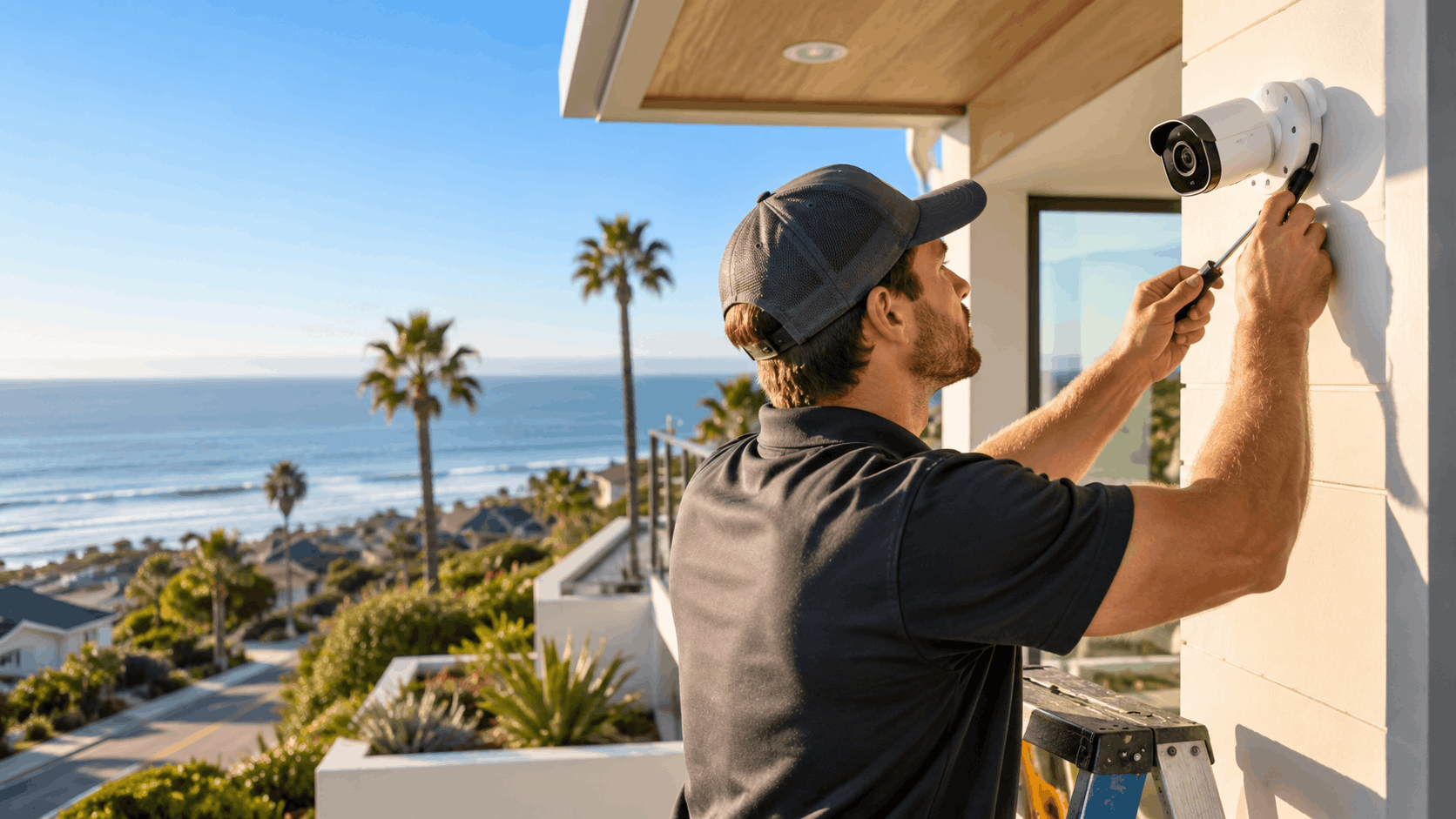
Security installation in Leucadia takes local knowledge of the streets, home types, and access quirks. We have worked on homes across this area and know the difference between a cottage west of Vulcan and a hillside lot east of the tracks.
Local installers who understand these details save you headaches and get the coverage right the first time. Here is how we handle the range of properties across the community.
Working With Older Cottages West of Vulcan Avenue
The older beach cottages closer to the ocean have their own quirks. Older home wiring often means limited circuits, knob-and-tube remnants, and walls that are tough to fish cable through. Cottage installation calls for a lighter touch and creative routing.
We often lean on wireless gear here to avoid tearing into original walls. When we do run wire, we plan the path carefully around the structure of these older homes. The goal is full coverage without damaging the character that makes these cottages special.
These homes also tend to sit closest to the salt air, so material choices matter even more. Corrosion-resistant hardware and sealed housings go on every exterior point. We treat these installs as coastal-first from the ground up.
Years of working on cottages near the water have taught us where the weak spots hide. Damp crawl spaces, aging service panels, and tight attics all get factored into the plan. That experience means a clean install that respects the home.
Hillside Homes and Larger Lots East of the Tracks
East of the coastal rail line, the lots get bigger and the terrain rises. Hillside home security and large lot coverage require more planning to cover longer driveways, wider yards, and multiple approach points. One camera at the door does not cut it on a property like this.
We map out coverage to hit the driveway, entry points, and any outbuildings or detached garages. Larger properties often need cameras with wider range or additional units to close the gaps. Signal planning matters too across a big lot with distance between structures.
These homes may also have more landscaping and open space, which affects motion sensor placement. We aim sensors to catch real approaches while ignoring the wind-blown plants that come with a larger yard. Getting that balance right keeps false alarms low.
For sprawling properties, we sometimes bring in additional lighting and gate controls. A gate access control setup adds a first layer of protection at the property line. The result is coverage that fits the scale of the home.
HOA and Coastal Setback Considerations
Some Leucadia properties fall under HOA rules that limit where exterior equipment can go. HOA rules may restrict camera visibility, mounting locations, or the look of hardware on the front of a home. We work within those guidelines so your system stays compliant.
Coastal setback rules add another layer near the water. Encinitas coastal development guidelines shape what you can mount and where on properties close to the bluff. Ignoring these rules can lead to fines or forced removal.
You can review the California Coastal Commission guidance at the California Coastal Commission and check city rules through the City of Encinitas. Knowing these rules ahead of time avoids costly do-overs. We factor them into every coastal design.
Our team stays current on local placement rules so homeowners do not have to sort through the fine print. We suggest mounting spots and equipment styles that satisfy both the HOA and coastal guidelines. That keeps your install clean and problem-free.
Scheduling Around Tourist Season and Local Events
Summer brings crowds and traffic that make installation scheduling tricky along the 101. Parking tightens, streets fill, and access to a property can get complicated during peak season. We plan around all of it.
Local events near the corridor, from art walks to summer beach gatherings, affect when we can get trucks and gear to a home. We coordinate timing so an install does not collide with a street festival or road closure. A little planning keeps the job smooth.
Many owners prefer to have their systems ready before the summer surge begins. Booking an install in spring means you are covered when the crowds arrive. We help homeowners get ahead of the season rather than scrambling in July.
Because we work this area year round, we know the local calendar. That knowledge lets us schedule efficiently and avoid the worst of the traffic and event congestion. You get a clean install without the seasonal hassle.
Need Help in San Diego?
Smart Shield Systems serves San Diego and all of San Diego County.
Monitoring and Alarm Response in a Coastal Community
Alarm monitoring ties your whole system together and connects it to real response. How security response works in the Encinitas and Leucadia area depends on your monitoring choice and how alarms reach responders.
Understanding the options helps you pick what fits your life and your property. Here is how monitoring and response play out along the coast.
Professional Monitoring Versus Self-Monitoring
The first choice is between professional monitoring and self-monitoring. With professional monitoring, a staffed center watches your system around the clock and dispatches help when an alarm trips. Self-monitoring puts that job on you, with alerts coming straight to your phone.
For busy homeowners and frequent travelers, professional monitoring makes sense. You cannot always check your phone, especially when you are in the water or on a plane. A monitoring team fills that gap and responds even when you cannot.
Self-monitoring costs less and suits people who want full control and are usually reachable. It works fine for a primary home where someone is often around. The tradeoff is that no one else is watching if you miss an alert.
We help homeowners weigh the two based on their routine and property type. Second homes and rentals almost always benefit from professional coverage. A hands-on owner at a primary residence might do well with self-monitoring plus good alerts.
How Response Works With Local Sheriff Coverage
The Encinitas coastal area is served by sheriff coverage, and alarm response time depends on how the signal reaches them. When a monitored alarm trips, the center verifies it and contacts law enforcement to dispatch. Clear, verified alarms move faster than vague ones.
Typical response times vary with the situation, the location, and current call volume. A verified break-in gets higher priority than an unconfirmed sensor trip. Homes closer to the 101 corridor generally see reasonable timelines, though summer traffic can affect them.
Working with law enforcement effectively means giving them good information. A monitoring center that can confirm an actual threat helps responders prioritize your call. That verification is where a professionally monitored system earns its value.
We set up monitoring so the response chain is clear and fast. Accurate address details, contact lists, and verification steps all get dialed in during install. The smoother that chain, the quicker help arrives when it counts.
Reducing False Alarms and Permit Issues
The Encinitas area requires an alarm permit for monitored systems, and repeat false alarms can bring fees. Registering your system keeps you compliant and avoids penalties. We walk homeowners through the permit process during setup.
False alarm fees add up when a system trips repeatedly for no real reason. Coastal triggers like wind and wildlife make this a real risk if sensors are not tuned well. Cutting false alarms protects both your wallet and your standing with responders.
Good sensor placement, proper settings, and video verification all keep false alarms low. When a system rarely cries wolf, responders take its alarms seriously. That reliability is worth the effort of setting things up right.
We help you register with the city and configure the system to minimize false trips. Fewer nuisance alarms mean fewer fees and faster response to the real thing. It is a simple part of the setup that saves money over time.
Video Verification for Faster Priority
Video verification is one of the biggest upgrades to response speed. When an alarm comes with a camera clip showing an actual person, responders can prioritize it over a sensor-only alert. That footage confirms a real event instead of a maybe.
Sensor-only alarms carry uncertainty, since they could be a false trip. A camera-verified alarm removes that doubt and often bumps your call up the priority list. Priority response can shave meaningful time off how fast help arrives.
The monitoring center can view the clip, confirm the threat, and relay solid details to responders. That combination of monitoring and cameras is far stronger than either alone. It is why we pair alarm systems monitoring with camera coverage on coastal homes.
We build video verification into monitored systems so your alarms carry weight. When something trips, there is visual proof backing the call. That proof is what turns an alarm into a fast, prioritized response.
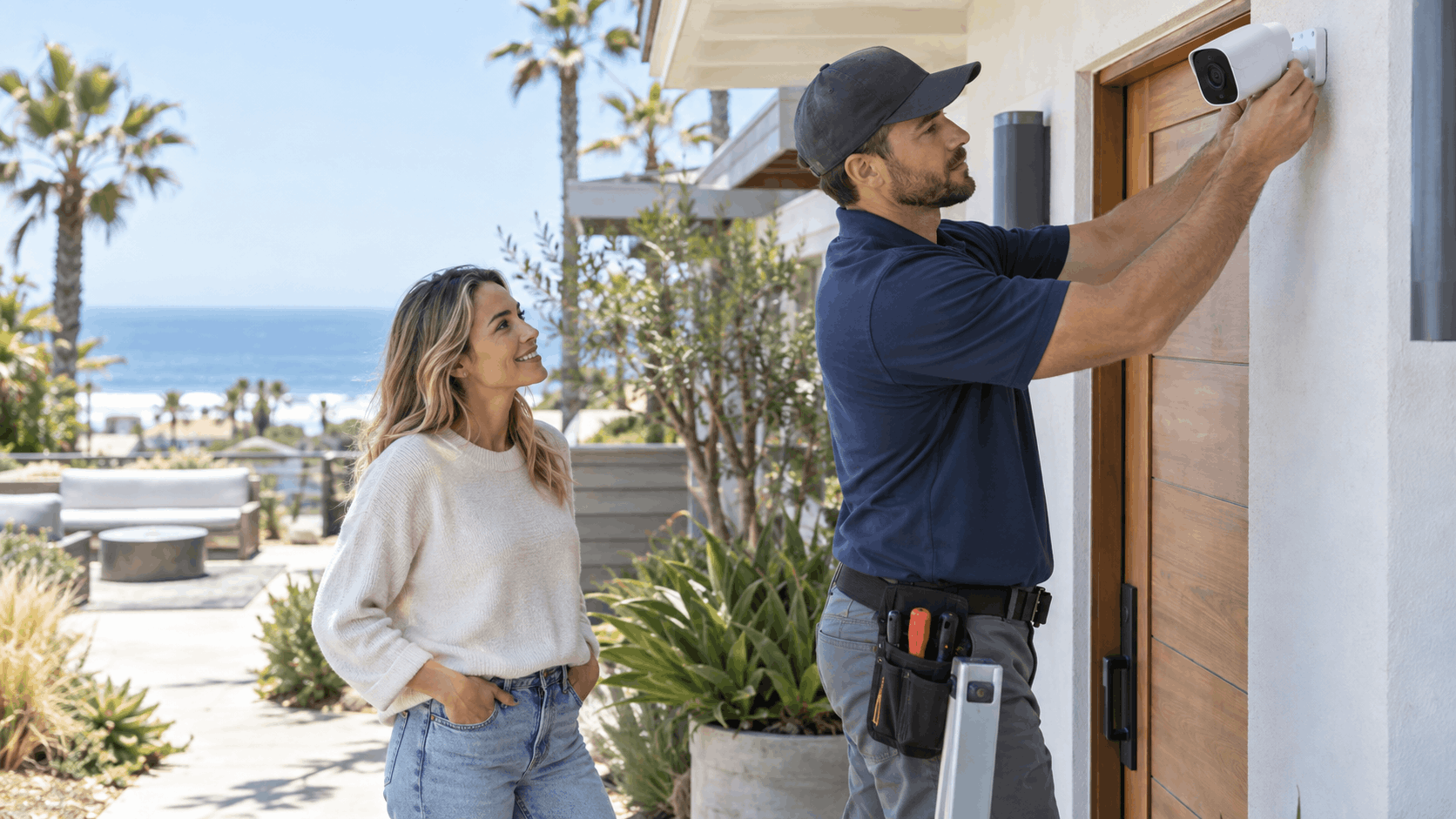
Costs, Maintenance, and Long-Term Value
Real numbers help you plan a system that lasts in a coastal setting. Security system cost depends on home size, equipment, and monitoring, and maintenance keeps it all running near the salt air.
Here is a clear breakdown of pricing, ongoing fees, upkeep, and the value a good system brings over time.
Typical Price Ranges for Leucadia Homes
System pricing varies with home size and the number of cameras and sensors. A small beach cottage might need a compact setup, while a larger hillside home east of the tracks calls for more coverage. Installation cost reflects that difference in scope.
The table below gives general ranges to help you budget. These cover equipment and professional installation for common home sizes in the area. Final pricing depends on your specific layout and choices.
| Home Type | Equipment + Install Range | Typical Camera Count |
|---|---|---|
| Small beach cottage | $1,200 - $2,500 | 2 - 4 |
| Mid-size home | $2,500 - $4,500 | 4 - 7 |
| Large hillside / multi-structure lot | $4,500 - $8,000+ | 7 - 12+ |
| Vacation rental package | $2,000 - $4,000 | 3 - 6 |
Coastal-grade hardware costs a bit more upfront than budget gear. That extra investment pays off by lasting years longer near the salt air. We give clear quotes so you know exactly what you are getting.
Ongoing Monitoring and Subscription Fees
Monitoring fees are a monthly cost that varies by service level. Basic self-monitoring plans can be low or included, while professional monitoring adds a monthly charge. Subscription cost usually runs from around $20 to $60 a month depending on features.
Lower tiers cover basic alarm monitoring and app access. Higher tiers add video verification, cloud storage for footage, and faster response handling. You pick the level that matches how hands-off you want to be.
For rentals and second homes, the higher tiers with full professional monitoring usually make the most sense. The cost is small next to the value of a protected, unattended property. We explain what each tier includes so there are no surprises.
Cloud video storage is worth considering if you want recorded footage kept off-site. It protects your clips even if a camera is stolen or damaged. We help you decide how much storage fits your needs and budget.
Coastal Maintenance Schedules to Extend Equipment Life
Equipment maintenance is what keeps a coastal system alive for the long haul. Salt buildup cleaning on outdoor cameras and sensors should happen a few times a year near the water. A gentle wipe of housings and lenses clears the salt film that builds up.
We recommend a professional inspection at least once a year for coastal homes. During that visit, we check seals, connections, mounts, and battery health for early signs of corrosion. Catching a failing seal before moisture gets in saves an expensive replacement.
Homeowners can handle light cleaning between visits with a soft cloth and fresh water. Avoid harsh chemicals that can damage coatings. A quick rinse of exposed gear after a big storm helps knock off accumulated salt.
A security system maintenance service plan takes the guesswork out of upkeep. We schedule the visits and handle the coastal-specific care. That routine attention is what stretches equipment life from a few years to a decade or more.
Insurance Discounts and Home Value Benefits
A monitored security system can lower your home insurance premiums. Many insurers offer an insurance discount for professionally monitored alarms and cameras. Those savings offset part of the monitoring cost over time.
Check with your insurer about the exact discount, since it varies by company and policy. You can also review general guidance from the Insurance Information Institute on how security features affect coverage. A little research can turn into real annual savings.
Beyond insurance, a quality system adds to home value in the coastal market. Buyers in Leucadia appreciate a home that is already set up with security and smart features. It is a selling point in a competitive area.
We provide documentation of your system that you can share with insurers or buyers. That paperwork makes claiming discounts and highlighting the upgrade simple. The long-term value goes well beyond the day-to-day protection.
Need Help in San Diego?
Smart Shield Systems serves San Diego and all of San Diego County.
Final Thoughts
Leucadia security is a different job than protecting an inland home, and it deserves a coastal-first approach. From salt air corrosion to package theft to summer crowds, the challenges here are specific, and so are the solutions. The right weatherproof gear, smart features, and monitoring keep your home and your gear safe.
Our team knows these streets, from the cottages west of Vulcan to the hillside lots east of the tracks. We build systems that hold up to the marine climate and fit the way surf-town life actually works. That local knowledge is what makes the difference.
If you are ready to protect your home, rental, or second property along the coast, we would be glad to help. Reach out to Smart Shield Systems through our contact page or call to set up a consultation. We will walk your property and design coverage that lasts.
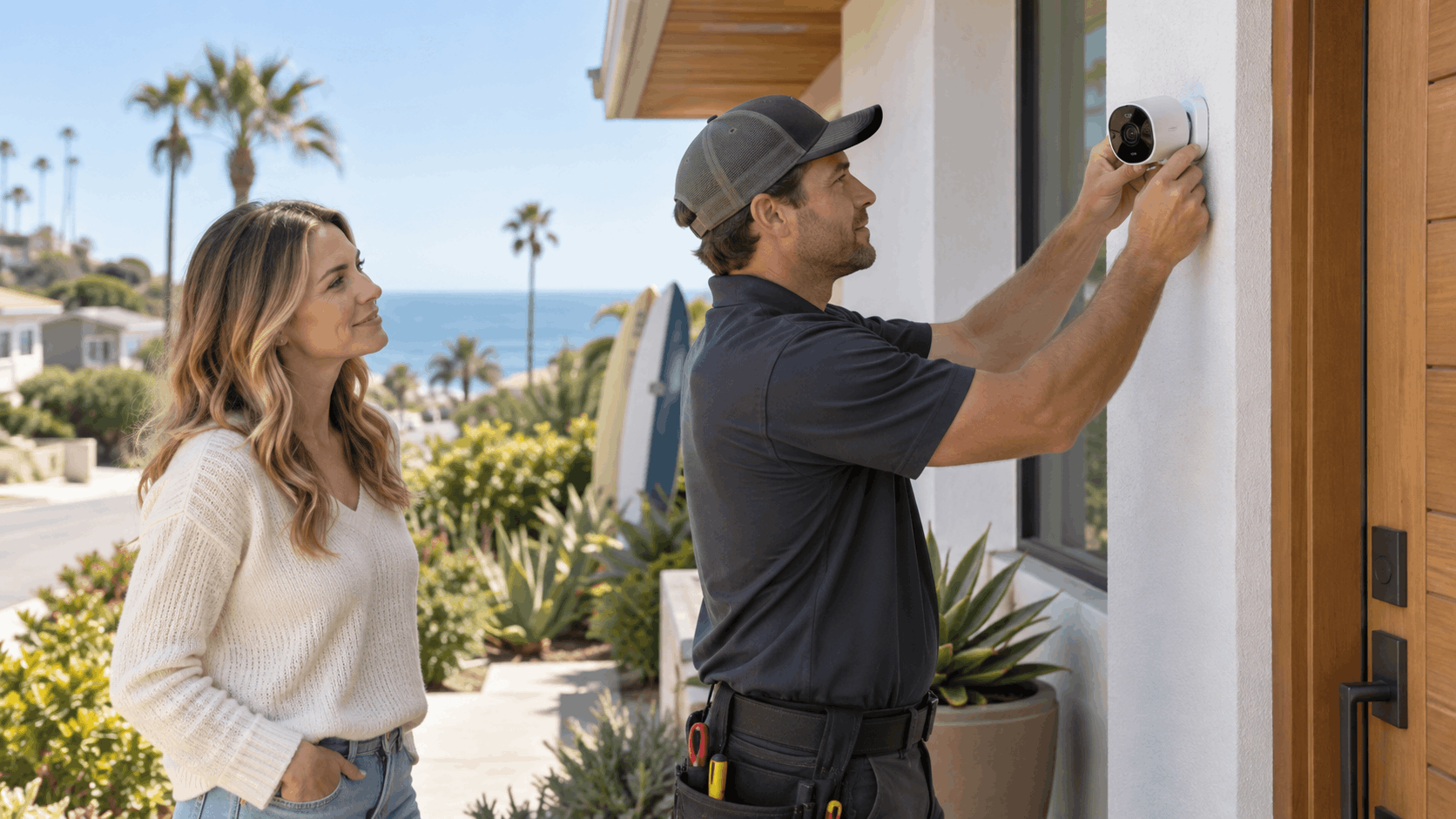
Frequently Asked Questions
Do coastal cameras really wear out faster in Leucadia?
Yes. Salt air draws moisture into connectors, seals, and mounting hardware, which speeds up corrosion far beyond what inland gear faces. A camera that lasts eight years in Escondido might fail in two or three near Neptune Avenue. Weather-rated IP66 cameras with corrosion-resistant housings and sealed connections resist this wear. Proper placement under eaves and regular cleaning extend life even more, which is why coastal-grade hardware is worth the upfront cost.
How much does a security system cost for a beach cottage?
A small beach cottage typically runs $1,200 to $2,500 for equipment and professional installation with two to four cameras. Mid-size homes fall around $2,500 to $4,500, while larger hillside or multi-structure lots can reach $4,500 to $8,000 or more. Coastal-grade hardware costs a bit more but lasts far longer near the salt air. We provide clear quotes based on your specific layout, so you know exactly what your setup will cost.
Can a system protect surfboards and e-bikes in a carport?
Absolutely. Open carports are common targets for surfboard and e-bike theft, so we cover them with visible cameras, motion sensors, and motion-triggered lighting. When someone approaches, lights snap on and cameras start recording, which deters most opportunistic thieves. Linking these devices to your phone gives instant alerts too. This layered setup protects gear that has to live outside without forcing you to lock everything away every time.
Is wireless or wired better for older Leucadia homes?
For older cottages west of Vulcan Avenue, wireless often wins because running new cable through original walls is messy and costly. Wireless installs faster and leaves the structure alone, though it needs battery upkeep and a strong signal. Wired systems suit remodels and newer builds with accessible walls, offering steady power and reliable connections. Many homes end up with a hybrid mix. We test each property before recommending the right balance.
Can I monitor my vacation rental remotely?
Yes. Mobile access lets you view cameras, receive alerts, and manage guest codes from anywhere. Temporary access codes give each guest or cleaner entry only during their stay and log every entry. Exterior cameras cover the driveway and doors while respecting guest privacy indoors. Environmental sensors watch for leaks and humidity in an empty unit. Paired with professional monitoring, you can manage the whole property remotely between bookings with confidence.
Do I need an alarm permit in the Encinitas area?
The Encinitas area requires an alarm permit for monitored systems, and registering keeps you compliant and avoids penalties. Repeat false alarms can trigger fees, so proper sensor placement and video verification matter for keeping trips down. We walk homeowners through the registration process during setup and configure the system to minimize nuisance alarms. Staying registered and reducing false trips keeps both your costs low and responder trust high.
How fast is alarm response near Highway 101?
Response time depends on the situation, location, and current call volume with sheriff coverage in the Encinitas coastal area. A verified break-in gets higher priority than an unconfirmed sensor trip, and homes near the 101 corridor generally see reasonable timelines. Summer traffic can affect them. Video verification speeds things up by confirming a real threat, which often bumps your call up the priority list compared to sensor-only alerts.
Will HOA or coastal rules limit where cameras go?
They can. Some Leucadia HOAs restrict camera visibility, mounting spots, or hardware appearance on a home's front. Encinitas coastal development guidelines also shape what you can mount near the bluff. Ignoring these rules risks fines or forced removal. We stay current on local placement rules and suggest mounting locations and equipment styles that satisfy both HOA and coastal guidelines, so your install stays compliant and problem-free from day one.
How often should coastal security equipment be serviced?
Near the water, outdoor cameras and sensors benefit from cleaning a few times a year to clear salt film off housings and lenses. We recommend a professional inspection at least once a year to check seals, connections, mounts, and battery health for corrosion. A quick fresh-water rinse after big storms helps too. This routine care stretches equipment life from a few years to a decade or more in the marine climate.
Does a security system lower home insurance costs?
Often, yes. Many insurers offer a discount for professionally monitored alarm and camera systems, which offsets part of your monitoring cost. The exact savings vary by company and policy, so check with your insurer directly. We provide documentation of your system to make claiming discounts simple. Beyond insurance, a quality system adds appeal for buyers in the coastal market, giving you both immediate savings and long-term value.
Frequently Asked Questions
- Do coastal cameras really wear out faster in Leucadia?
- Yes. Salt air draws moisture into connectors, seals, and mounting hardware, which speeds up corrosion far beyond what inland gear faces. A camera that lasts eight years in Escondido might fail in two or three near Neptune Avenue. Weather-rated IP66 cameras with corrosion-resistant housings and sealed connections resist this wear. Proper placement under eaves and regular cleaning extend life even more, which is why coastal-grade hardware is worth the upfront cost.
- How much does a security system cost for a beach cottage?
- A small beach cottage typically runs $1,200 to $2,500 for equipment and professional installation with two to four cameras. Mid-size homes fall around $2,500 to $4,500, while larger hillside or multi-structure lots can reach $4,500 to $8,000 or more. Coastal-grade hardware costs a bit more but lasts far longer near the salt air. We provide clear quotes based on your specific layout, so you know exactly what your setup will cost.
- Can a system protect surfboards and e-bikes in a carport?
- Absolutely. Open carports are common targets for surfboard and e-bike theft, so we cover them with visible cameras, motion sensors, and motion-triggered lighting. When someone approaches, lights snap on and cameras start recording, which deters most opportunistic thieves. Linking these devices to your phone gives instant alerts too. This layered setup protects gear that has to live outside without forcing you to lock everything away every time.
- Is wireless or wired better for older Leucadia homes?
- For older cottages west of Vulcan Avenue, wireless often wins because running new cable through original walls is messy and costly. Wireless installs faster and leaves the structure alone, though it needs battery upkeep and a strong signal. Wired systems suit remodels and newer builds with accessible walls, offering steady power and reliable connections. Many homes end up with a hybrid mix. We test each property before recommending the right balance.
- Can I monitor my vacation rental remotely?
- Yes. Mobile access lets you view cameras, receive alerts, and manage guest codes from anywhere. Temporary access codes give each guest or cleaner entry only during their stay and log every entry. Exterior cameras cover the driveway and doors while respecting guest privacy indoors. Environmental sensors watch for leaks and humidity in an empty unit. Paired with professional monitoring, you can manage the whole property remotely between bookings with confidence.
- Do I need an alarm permit in the Encinitas area?
- The Encinitas area requires an alarm permit for monitored systems, and registering keeps you compliant and avoids penalties. Repeat false alarms can trigger fees, so proper sensor placement and video verification matter for keeping trips down. We walk homeowners through the registration process during setup and configure the system to minimize nuisance alarms. Staying registered and reducing false trips keeps both your costs low and responder trust high.
- How fast is alarm response near Highway 101?
- Response time depends on the situation, location, and current call volume with sheriff coverage in the Encinitas coastal area. A verified break-in gets higher priority than an unconfirmed sensor trip, and homes near the 101 corridor generally see reasonable timelines. Summer traffic can affect them. Video verification speeds things up by confirming a real threat, which often bumps your call up the priority list compared to sensor-only alerts.
- Will HOA or coastal rules limit where cameras go?
- They can. Some Leucadia HOAs restrict camera visibility, mounting spots, or hardware appearance on a home's front. Encinitas coastal development guidelines also shape what you can mount near the bluff. Ignoring these rules risks fines or forced removal. We stay current on local placement rules and suggest mounting locations and equipment styles that satisfy both HOA and coastal guidelines, so your install stays compliant and problem-free from day one.
- How often should coastal security equipment be serviced?
- Near the water, outdoor cameras and sensors benefit from cleaning a few times a year to clear salt film off housings and lenses. We recommend a professional inspection at least once a year to check seals, connections, mounts, and battery health for corrosion. A quick fresh-water rinse after big storms helps too. This routine care stretches equipment life from a few years to a decade or more in the marine climate.
- Does a security system lower home insurance costs?
- Often, yes. Many insurers offer a discount for professionally monitored alarm and camera systems, which offsets part of your monitoring cost. The exact savings vary by company and policy, so check with your insurer directly. We provide documentation of your system to make claiming discounts simple. Beyond insurance, a quality system adds appeal for buyers in the coastal market, giving you both immediate savings and long-term value.
S
Smart Shield Systems Team Team
Licensed security systems professionals serving San Diego and San Diego County.
Licensed in California · License #7623
Why trust Smart Shield Systems?
Founded in 2016, Smart Shield Systems is a licensed and insured security systems serving San Diego and San Diego County. All content is reviewed by our licensed technicians.

Need Help in San Diego?
Smart Shield Systems serves San Diego and all of San Diego County.
Related Articles
Tips & Advice
Point Loma Home Security: Hilltop View Property and Coastal Specialist
A local guide to Point Loma home security for hilltop and coastal properties, covering salt air, camera placement for view homes, alarms, and choosing a local specialist.

Tips & Advice
Solana Beach Security Systems: Coastal Affluent Property Service
A local guide to Solana Beach security systems for coastal affluent homes, covering salt air wear, discreet installs, smart integration, monitoring, and real cost ranges.
Tips & Advice
Coronado Home Security: Island Property and Military Family Service
A local guide to Coronado home security covering island property challenges, salt air corrosion, remote monitoring for deployed military families, camera setups, and honest pricing.