Tips & Advice
Coronado Home Security: Island Property and Military Family Service
Key Takeaways
- Coronado security must account for historic wiring, waterfront canals, salt air, and a large military population that moves often.
- Wireless systems protect historic Village homes without tearing into original plaster or old wiring.
- Cays waterfront homes need dock, slip, and canal-facing camera coverage that street-facing setups miss.
- Salt air and the marine layer corrode gear fast, so coastal homes need weather-rated cameras and regular maintenance.
- Deployed families benefit from 24/7 monitoring, cloud video access, remote app control, and shared codes for family or property managers.
- Flexible, transferable, renter-friendly systems fit military PCS moves and short duty stations.
- Basic setups start around $400-$900 in equipment with $20-$60 monthly monitoring, plus military discounts and insurance savings.
- Smart Shield Systems offers free island home assessments and local knowledge of the Village, Cays, and Ocean Boulevard.
In This Article
A Navy family living just off Orange Avenue packs the last bag before a six-month deployment. The house sits quiet near the Village, blinds drawn, mail on hold. The spouse staying behind wonders how anyone will keep an eye on the place, and the sailor heading overseas wonders the same thing from the other side of the world.
That worry is common on the island. Coronado mixes historic cottages, waterfront homes in the Cays, and a large military population that moves every couple of years. Each of those things changes what a good security setup looks like.

What Makes Coronado Home Security Different?
Security on the island is not the same job as a tract home in Rancho Bernardo or a condo in Mission Valley. Coronado packs a lot of variety into a small footprint, and that variety shapes every install we do. A one-size plan almost never fits here.
The mix of property types is the biggest reason. On a single block you might find a 1910 Craftsman, a rental full of Navy families, and a beachfront home a few streets over. Good Coronado home security has to account for all three at once.
- Historic homes near the Village with old wiring and plaster walls
- Waterfront island property in the Cays with docks and canal access
- A large military population that deploys and relocates often
- Salt air that corrodes outdoor gear faster than inland areas
- One main bridge that shapes how responders reach the island
Each of these deserves its own plan. The sections below break them down so island homeowners can make a smart choice.
Historic Homes Near Orange Avenue and Their Wiring Limits
Walk the streets off Orange Avenue and you will see Victorians and Craftsman homes that have stood for a hundred years. They are beautiful, and they were never wired for modern electronics. Many still run knob-and-tube or early copper that no one wants to disturb.
Drilling through original plaster and hardwood trim is a hard no for most owners here, and often for the Coronado Historical Association crowd too. A hardwired alarm that needs runs through every wall becomes a demolition project. That is where a wireless security system changes the math.
Wireless sensors, cameras, and control panels talk over encrypted radio and cellular signals instead of wires buried in the walls. We mount door and window sensors with adhesive or a few small screws, so the historic home keeps its plaster and its charm. The panel plugs into a standard outlet and connects to monitoring over cellular, no landline needed.
For an older place near the Village, this means a full alarm and camera setup without an electrician tearing into the structure. Owners keep the woodwork they love and still get modern alerts on their phone. It is the most common approach we take on the island's older streets.
Waterfront Risks in the Coronado Cays
The Coronado Cays are their own world. Homes back onto canals and open water, many with a private dock and a boat tied up out back. That water-facing side creates entry points a standard front-door setup completely misses.
A burglar does not always come from the street here. Someone in a kayak or small boat can reach a rear patio, a dock gate, or a ground-floor slider from the water. Waterfront security has to treat the canal side as a real approach, not an afterthought.
That changes camera placement in a big way. We aim cameras to cover the dock, the boat slip, side yards facing the canals, and any rear doors that open toward the water. Motion sensors on the waterside gates and sliders round out the coverage. For Cays owners exploring access control and smart locks, dock gates and side entries are worth locking down too.
Boat storage adds another wrinkle. A tender, paddleboards, and dock gear sitting out are easy targets, so we often add a dedicated camera on the slip. The goal is simple: no blind spot facing the water.
The Single Bridge Factor and Access Control
Coronado has one main way on and off by car, and that is the Coronado Bridge. There is the Silver Strand to the south, but for most trips the bridge is it. That single point shapes how quickly help arrives and why local monitoring matters so much.
When the bridge backs up during rush hour or a Navy event, response times can stretch. A monitoring center that knows the island can dispatch the right local responders fast instead of fumbling with an unfamiliar address. Speed here comes from knowing the streets, not just the zip code.
Access control also carries extra weight on an island this compact. Smart locks and gate controls let owners manage who comes and goes without handing out physical keys that get lost or copied. For military families in and out constantly, that control is a big deal.
The takeaway is that Coronado rewards a system built around fast local response and tight access management. A generic mainland plan misses both. We build around the bridge reality, not against it.
Security for Military Families Stationed at NAB Coronado
A huge share of the island serves at Naval Air Station North Island or Naval Amphibious Base Coronado. That means deployments, PCS orders, and short stays are just part of life. Military family security here has to bend around those realities instead of fighting them.
We have set up dozens of homes for families connected to NAB Coronado, and the pattern repeats. They need remote eyes on the house, contracts that do not trap them, and gear that moves when orders do. The sections below cover each need in turn.
Monitoring an Empty Home During Deployment
Deployment is the exact moment a home sits emptiest and feels most exposed. A spouse may be away visiting family, or the whole household could be gone for months. Deployment monitoring closes that gap by putting the house on a live watch.
Remote access means a deployed sailor can open an app from a ship or an overseas base and see live camera feeds when the connection allows. Motion alerts, door-open alerts, and alarm events push to a phone, so nothing happens silently. Even with spotty internet abroad, the notifications queue up and arrive when service returns.
We also set alerts to reach a spouse, a parent, or a trusted friend stateside. If a sensor trips at 2 a.m., the right person gets pinged and can decide whether to call it in. Pairing this with 24/7 alarm monitoring means a professional center is watching even when everyone tied to the home is asleep or offline.
The result is a home that is never truly unwatched during a deployment. That is the whole point for families sending someone overseas. They leave knowing the house has both a human and a system keeping tabs.
Flexible Contracts for PCS Moves
Military families rarely control their own timeline. A PCS move can land with a few weeks of notice, and a two-year tour can shorten without warning. Locking into a rigid multi-year contract makes no sense for a household that might be gone before it ends.
We offer short-term and month-to-month options built for that unpredictability. If orders send a family to Norfolk or Japan, they should not be stuck paying for a system on a Coronado home they no longer live in. A flexible contract keeps the service matched to the actual stay.
The equipment itself is another factor. Because most of our island installs are wireless, the sensors, cameras, and panel can come off the walls and travel to the next duty station. Transferable gear means a family invests once and carries that investment to the next home.
For renters near North Island, this flexibility matters even more. No one wants to fund permanent hardware for a place they will leave in eighteen months. We size the plan to the tour, not to a fixed contract length.
Renter-Friendly Systems for Base Housing and Off-Base Rentals
A lot of Coronado families rent, whether in base housing or an off-base place near the Village or the Strand. Landlords do not want holes drilled or walls torn up, and renters do not want to lose a deposit over security wiring. Renter security has to respect both.
Wireless installs solve this cleanly. Sensors mount with adhesive strips or a couple of small screws, cameras sit on shelves or clip to existing surfaces, and the panel plugs into an outlet. A wireless install leaves the property nearly untouched, which keeps landlords and property managers happy.
When the family moves, the whole system comes down in an afternoon and goes with them. There is no rewiring to undo and no repair bill for the landlord. That portability is exactly what a renting military household needs.
We walk each renter through what their lease allows before we install anything. The goal is a setup that protects the home now and packs up clean later. Nobody loses a deposit over it.
Trusted Access for Family and Property Managers
During a deployment, someone usually needs to get into the house - a neighbor watering plants, a property manager checking a leak, or a family member grabbing mail. Handing out a physical key to each one is a headache and a risk. Shared access through smart locks solves it.
With guest and temporary access codes, an owner can create a unique code for each person and set when it works. A cleaner gets a code good only on Fridays. A property manager gets one that expires when the tour ends.
Every entry logs in the app, so a deployed owner overseas sees exactly who came in and when. If a code needs to go away, it disappears with a tap, no lock change required. That level of control beats a spare key hidden under a pot every time.
For families juggling a property manager and a couple of trusted neighbors, this shared access keeps everyone coordinated without confusion. The owner stays in charge from anywhere. That is the kind of control a long deployment demands.
Need Help in San Diego?
Smart Shield Systems serves San Diego and all of San Diego County.
Get Your Free Quote
Tell us about your property and we'll get back to you fast.
How Salt Air and Coastal Weather Affect Security Equipment
Coronado sits right on the ocean, and that air carries salt that inland San Diego never deals with. Salt air corrosion eats at electronics, metal housings, and mounting hardware far faster than the dry conditions in places like El Cajon or Santee. Coastal security equipment has to be chosen with that in mind.
We have pulled failed cameras off beachfront homes that would have lasted years just a few miles inland. The difference is entirely the marine environment. Here is what island owners should know before buying anything for the outside of the house.
Choosing Corrosion-Resistant Outdoor Cameras
Not every outdoor camera survives beach life. A cheap unit with a thin plastic shell or exposed metal screws will pit and fail within a season along Ocean Boulevard. The salt gets into every seam.
A proper weatherproof camera carries an IP66 or higher rating and uses sealed housings that keep moisture out. We look for corrosion-resistant materials like marine-grade coatings and stainless or coated hardware. Those details decide whether a camera lasts one year or six near the water.
The marine layer that rolls in most mornings makes this worse. That damp, salty fog settles on gear daily, so even a covered camera under an eave still takes abuse. Picking hardware built for that constant moisture is the difference between a stable system and a string of replacements.
When we spec cameras for a beachfront home, we lean toward models proven in coastal conditions. It costs a little more upfront and saves far more over time. Island homeowners who cut this corner tend to call us back within a year.
Sensor Placement to Avoid Fog and Humidity False Alarms
Coronado mornings often start under a thick marine layer, and that fog plus high humidity can fool poorly placed sensors. A motion detector aimed into shifting fog or condensation may fire off a false alarm. Nobody wants their phone buzzing at dawn over a bank of mist.
Smart placement cuts most of this out. We angle outdoor motion sensors away from areas where fog pools and avoid pointing them at surfaces that collect condensation. Mounting height and direction make a real difference in how often a humidity sensor gets tricked.
Sensitivity settings also help. Modern sensors can be tuned to ignore small environmental shifts while still catching a person-sized movement. Dialing those settings for a coastal property keeps real threats flagged and nuisance triggers quiet.
For deployed owners, this matters even more. A false alarm at 3 a.m. that pulls a neighbor out of bed for nothing erodes trust in the whole system. We tune island setups so the alerts that come through are worth acting on.
Maintenance Schedules for Beachfront Properties
Coastal gear needs more attention than inland equipment, plain and simple. Salt builds up on lenses, housings, and contacts, and left alone it degrades performance and shortens lifespan. A beachfront property should be on a regular check schedule.
We suggest a professional cleaning and inspection roughly every six months for homes right on the water, and yearly for places a few blocks back. During a visit we wipe salt film off camera lenses, check seals, and test every sensor and contact. Our security system maintenance service handles this on a set schedule so owners do not have to track it.
Between visits, owners can watch for warning signs themselves. Cloudy or spotted camera images, green or white crust on metal parts, and sensors that trip erratically all point to corrosion setting in. Catching those early prevents a full failure.
For a deployed family, a maintenance plan means the system stays reliable the whole time they are gone. There is no one home to notice a foggy lens, so the schedule does that job. It keeps the protection working when it is needed most.
Choosing the Right Camera Setup for Island Properties
Camera needs shift a lot across Coronado. A Village cottage on a busy street has different concerns than a Cays home backing onto a canal or a place tucked along a dark residential lane. Good security cameras start with matching the setup to the property.
Below we break down camera placement by property style and situation. The goal is full coverage without wasted cameras pointed at nothing. Here is how we think through it for island homes.
Doorbell and Front Entry Cameras for the Village
The Village near Orange Avenue stays busy with foot traffic, shoppers, and delivery trucks all day. Homes here sit close together on active streets, which brings both eyes and opportunists. A front entry setup is the first line of defense.
A doorbell camera covers the most common problem in dense areas: package theft. It captures anyone approaching the porch, records the delivery, and pushes a live view to the owner's phone the moment someone steps up. For a home near Village shops, that alone stops a lot of grab-and-go thefts.
We pair the doorbell with a wider entry camera when the porch layout has blind spots. Together they cover the walkway, the door, and any packages left out. The owner sees who is at the door whether they are home, at work, or overseas.
For families who travel or deploy, this front coverage doubles as a check on the whole approach to the house. Any activity at the main entry gets logged. It is the single most useful camera on most Village homes.
Perimeter and Dock Coverage for Cays Homes
Cays homes need coverage the street-facing plan never provides. With canals out back and side yards facing water, the perimeter is the real challenge. A perimeter camera plan here has to wrap around to the waterside.
We place cameras to cover the dock, the boat slip, rear sliders, and the side yards that open toward the canals. Dock security matters because that water approach is the weak point most owners overlook. A camera on the slip catches anyone reaching the property by boat.
Side yards get attention too, since narrow passages between Cays homes make easy hidden approaches. Covering those closes the gaps between the front and the water. The idea is an unbroken ring of coverage.
Because this is a waterfront home, every one of these cameras needs the corrosion-resistant build discussed earlier. The canal side takes the most salt exposure. We spec accordingly so the coverage lasts.
Night Vision and Low-Light Performance Near the Beach
Away from the Village lights, many Coronado streets get genuinely dark at night. Beach-adjacent blocks and quieter residential lanes have little ambient light after sunset. A night vision camera earns its place in those spots.
Cheap cameras produce grainy, useless footage in low light, which defeats the purpose. We choose cameras with strong infrared or low-light sensors that render a clear image even on a dark street near the beach. When it matters most, the footage is actually usable.
Some models add color night vision using a small integrated light, which helps identify clothing or a vehicle. On a dim residential street, that detail can make the difference in an investigation. We match the camera to how dark each specific spot gets.
For homes near the sand where fog also settles at night, we combine good low-light performance with the placement tricks covered earlier. Clear night footage plus fewer fog false alarms is the goal. That combination suits the island's darker corners well.
Local Storage vs Cloud Video for Deployed Owners
Where the video lives matters, especially for owners far from home. Local storage keeps footage on a device at the house, while cloud storage keeps it on secure servers reachable from anywhere. Each has a place.
Local storage costs less over time and keeps footage on-site, but a deployed owner cannot easily pull clips if the device is damaged or offline. If a break-in destroys the recorder, the evidence can go with it. That risk pushes many island families toward the cloud.
Cloud video lets a sailor overseas open an app and review footage from days ago, no matter what happens to the house. The video sits safely off-site and streams on demand. For deployed families, that remote access is usually worth the monthly cost.
We often set up a hybrid: local recording for speed plus cloud backup for the important events. That way footage survives even if the on-site gear is tampered with. Owners get both reliability and reach.
Smart Home Integration for Coronado Homeowners
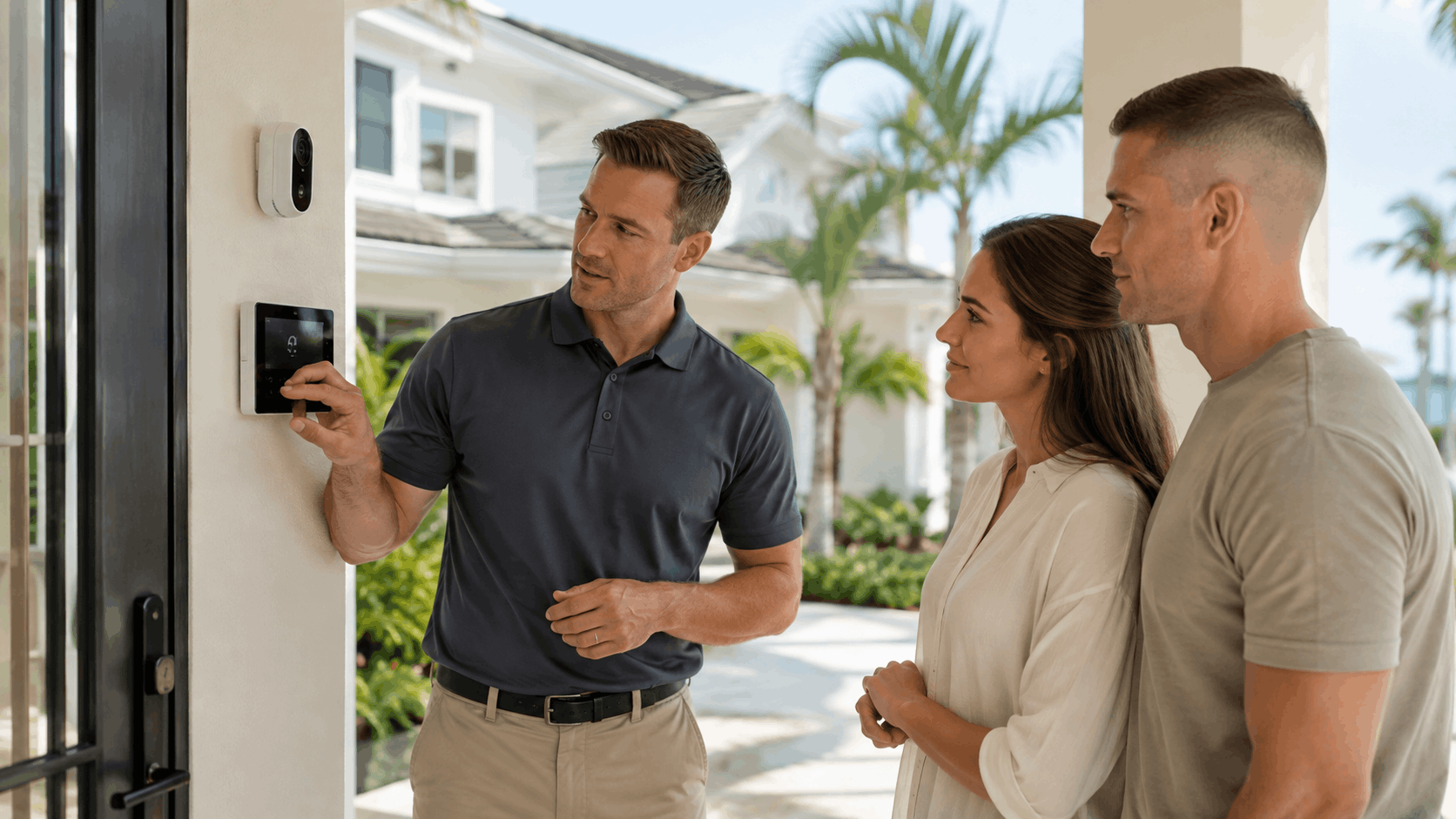
Security works better when it connects to the rest of the home. A smart home ties cameras, locks, lights, and climate together so the house responds on its own. Home automation also makes an empty Coronado home look lived-in, which deters trouble.
For families who travel or deploy, this integration turns a static alarm into an active presence. The house acts occupied even when no one is there. Here is how the pieces fit together.
Smart Locks for Frequent Travelers and Renters
Physical keys are a liability for anyone in and out often. A smart lock with keyless entry removes the hidden spare and the lost-key scramble. For traveling families and renters, that alone is a big upgrade.
Owners create temporary codes for guests, cleaners, or a dog walker and delete them anytime. A visiting relative gets a code for their stay, and it stops working when they leave. Our smart lock installation service sets this up so island homeowners control every door from their phone.
For renters, most smart locks swap onto the existing deadbolt without changing the door, which keeps landlords comfortable. When the family moves, the original hardware goes back on in minutes. It is a clean, reversible upgrade.
Deployed owners get the strongest benefit. They can grant and revoke access from overseas, so the property manager and neighbors get exactly the access they need and nothing more. Full control travels with them.
Automated Lighting to Make Empty Homes Look Occupied
An empty house on a quiet Coronado street can signal an easy target. Automated lighting fights that by making the home look occupied at night. It is one of the simplest burglary deterrents available.
We program lights to switch on and off in believable patterns - a living room lamp in the evening, a bedroom light later, then off. From the street it reads like someone is home and moving around. That routine discourages anyone casing the block.
Owners can also trigger lights manually from the app or tie them to camera events. If a motion alert fires at the side yard, the exterior lights can snap on automatically. Sudden light is a strong signal that someone is watching.
For deployed families, scheduled lighting runs the whole time they are gone with no effort. The house never falls fully dark night after night, which is the pattern burglars look for. It is quiet, steady protection.
One App Control for the Whole System
Managing separate apps for cameras, locks, and the alarm gets old fast. A single security app pulls everything into one place. For an owner far from the island, that unified control is what makes remote management practical.
From one screen an owner arms the alarm, checks a camera, locks a door, and adjusts a light. There is no jumping between logins or guessing which app does what. Our voice and app control setup ties the whole system into one dashboard.
Remote control shines during a deployment or a long trip. A sailor overseas can respond to an alert, grant a neighbor access, and confirm the house is secure in the same minute. Everything lives at their fingertips.
We configure the app during install and walk owners through it before we leave. The goal is that anyone in the household can run the system confidently. Simple control means the system actually gets used.
Need Help in San Diego?
Smart Shield Systems serves San Diego and all of San Diego County.
Professional Monitoring and Emergency Response on the Island
An alarm only helps if someone responds to it. Professional monitoring means a live center watches the system around the clock and calls for help when something trips. On an island with a single bridge, that response coordination carries real weight.
Emergency response on Coronado depends on fast, accurate dispatch. Below we compare monitoring types, explain how alarms reach local responders, and cover protection beyond burglary. This is the backbone of any serious island setup.
24/7 Monitoring vs Self-Monitoring
Self-monitoring means alerts come only to the owner's phone, and the owner decides what to do. It costs less and works fine for someone home and attentive. But it falls apart when the owner is asleep, unreachable, or deployed overseas.
With 24/7 monitoring, a professional center receives every alarm event and acts on it immediately. If a break-in triggers the system at 3 a.m., trained staff verify and dispatch responders without waiting on the owner. That coverage never sleeps.
For deployed families, the choice is clear. A sailor at sea cannot answer a phone alert, and a spouse away visiting family may miss it too. Full monitoring fills that gap so the home is watched no matter who is available.
We usually recommend professional monitoring for any home that sits empty for stretches. The small monthly cost buys a response that self-monitoring simply cannot match. For island military households, it is the standard setup.
Coordination With Coronado Police and Fire
When an alarm trips, the monitoring center contacts local responders on the owner's behalf. For island homes that means reaching the Coronado Police Department and, for fire or smoke, the local fire response. Alarm response works best when the center knows the local system.
The single-bridge access affects timing here. During heavy bridge traffic or a Navy event, getting across takes longer, so accurate first-time dispatch matters even more. A center that pinpoints the address and the type of alarm helps responders move without delay.
Verified alarms also speed things up. Camera footage tied to an event lets the center confirm a real threat before dispatch, which reduces wasted trips and gets priority on genuine emergencies. That verification is a real advantage on a busy island.
We set up each system so alarm signals route cleanly to the right local responders. The point is fast, accurate help even when the bridge is packed. Coronado's geography makes that coordination worth getting right.
Fire, Flood, and Water Sensors for Coastal Homes
Security is more than break-ins, especially on the coast. Fire, flooding, and water damage threaten island homes too, and sensors catch those early. A monitored system can watch for all of it at once.
A flood sensor placed low in a Cays home or near water-facing areas detects rising water before it ruins floors and walls. Given the canal setting, that early warning can save an owner thousands in damage. It matters most when no one is home to notice a leak.
A fire alarm tied into fire and smoke detection systems alerts both the owner and the monitoring center. For an older home near the Village with dated wiring, early smoke detection is a serious safeguard. The center can dispatch fire response even with the house empty.
Adding water and carbon monoxide sensors rounds out the protection. A deployed family gains coverage against the slow disasters, not just the sudden ones. That full picture is what makes a coastal system truly protective.
What Coronado Home Security Costs and How to Plan
Cost is the first question most owners ask, and honest ranges help planning. Security system cost depends on home size, camera count, and monitoring level. Here is straight pricing guidance so island families know what to budget.
These are general ranges, and every home is different. A free assessment gives an exact number, but the figures below set expectations. We break down equipment, monthly fees, and available savings.
Equipment and Installation Cost Ranges
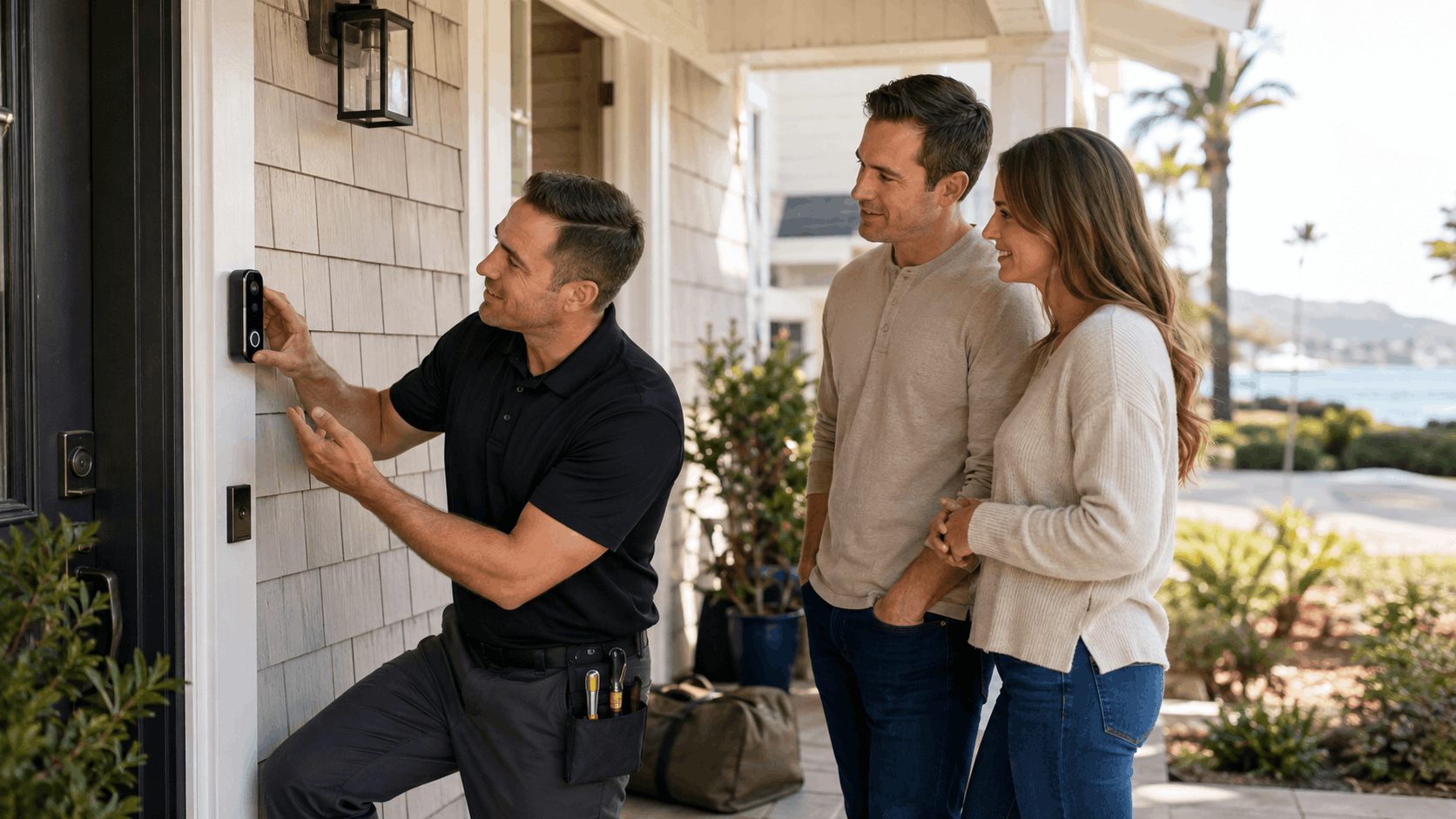
A basic wireless setup - a panel, a few door and window sensors, and a camera or two - often runs from around $400 to $900 in equipment. That covers a small Village cottage or a modest rental well. Installation for a straightforward wireless system is quick and sometimes bundled in.
A fuller setup with multiple cameras, dock and perimeter coverage, smart locks, and environmental sensors climbs into the $1,500 to $3,500 range. A larger Cays waterfront home with wide coverage sits at the higher end. The camera count and coastal-grade hardware drive most of that difference.
Installation cost stays low on wireless jobs since there is little to no wiring. Hardwired or complex integrations add labor, but most island homes go wireless anyway. The equipment price is usually the larger line item.
We size the system to the actual property, not a package. An owner never pays for cameras pointed at nothing. That right-sizing keeps the total fair.
Monthly Monitoring Fees Explained
Monthly cost covers professional monitoring and any cloud video service. A basic monitoring fee typically runs from about $20 to $40 a month for standard 24/7 alarm coverage. That tier watches intrusion alarms and dispatches responders.
Higher tiers add cloud video storage, environmental monitoring for fire and flood, and smart home features. Those plans generally land in the $40 to $60 range depending on camera count and storage length. Deployed families often pick a middle or upper tier for the cloud access.
Self-monitoring plans cost less or nothing monthly, but they drop the professional response. For an empty home, that tradeoff rarely makes sense. Most island owners choose a monitored plan for the coverage.
We lay out each tier plainly so owners pick what fits. There are no surprise line items. The monthly should match the protection the home actually needs.
Military Discounts and Insurance Savings
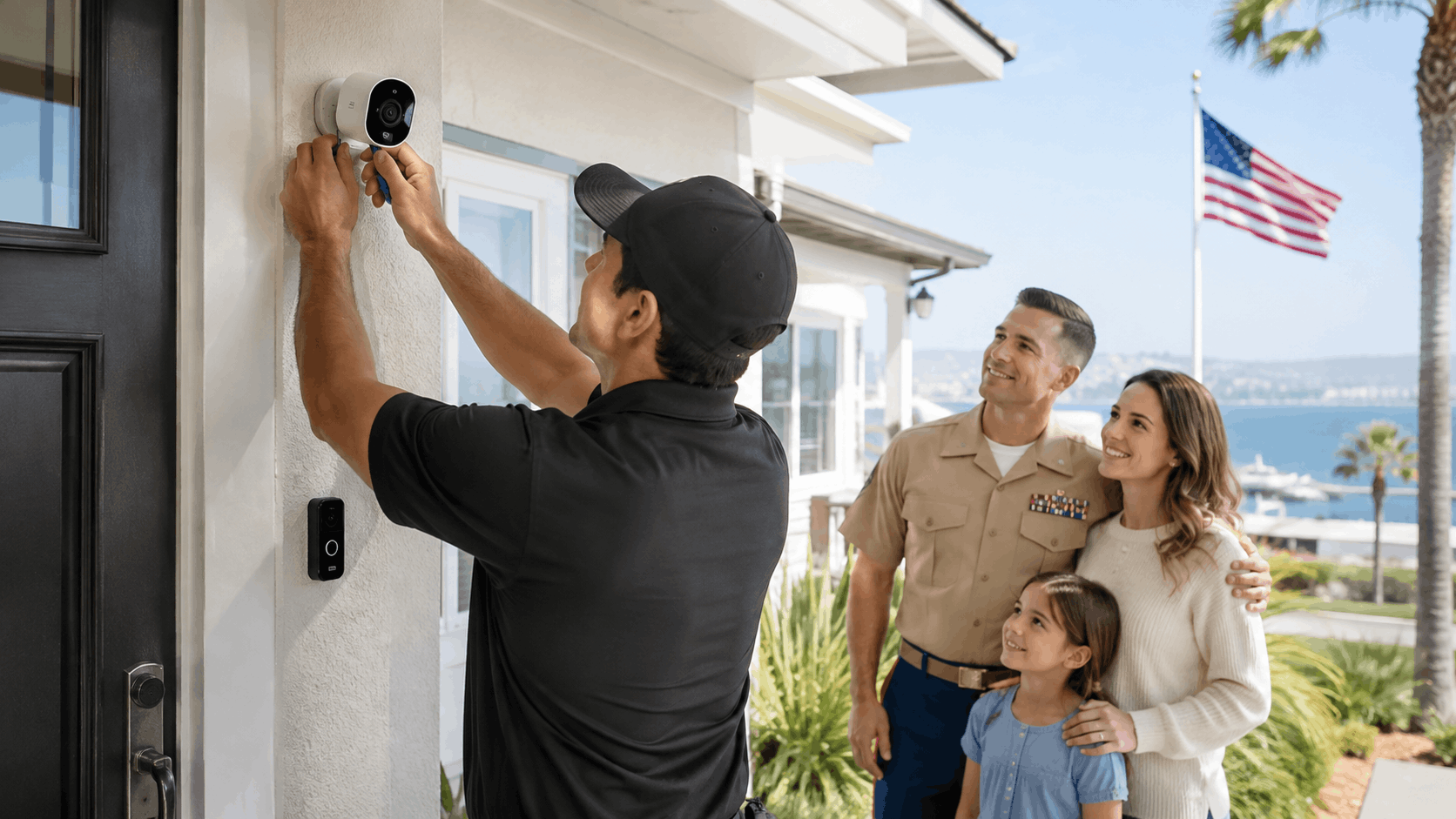
Military households can often save on both equipment and monitoring. We honor a military discount for Navy families connected to NAB Coronado and North Island. It is our way of supporting the families who keep the island's largest community running.
A monitored system can also lower homeowner or renter insurance. Many insurers offer a discount, sometimes 5 to 20 percent, for a professionally monitored alarm. The Insurance Information Institute notes that security systems are among the upgrades that can reduce premiums.
Fire and smoke monitoring can add further savings on some policies. It is worth asking an insurer exactly which features qualify before choosing a plan. We help owners document the system for their insurer.
Between a military discount and insurance savings, the real cost often drops below the sticker price. Families should factor both in when planning. Those savings add up over the life of the system.
Need Help in San Diego?
Smart Shield Systems serves San Diego and all of San Diego County.
Why Coronado Families Choose Smart Shield Systems
Plenty of companies sell alarms, but few know Coronado street by street. Smart Shield Systems works the island directly, from the Village to the Cays. As a local security company rooted in San Diego, we bring knowledge a national chain cannot.
Our edge comes from three things: knowing the neighborhoods, understanding military life, and doing honest assessments before we sell anything. Here is what that looks like for island homeowners.
Local Knowledge of Island Streets and Neighborhoods
We know the difference between securing a Craftsman off Orange Avenue and a waterfront home in the Cays. Our local expertise covers Ocean Boulevard's beachfront row, the tight streets of the Village, and the towers of Coronado Shores. Each demands a different plan.
That familiarity speeds up every job. We already know the salt exposure along the beach, the canal approaches in the Cays, and the wiring quirks of the historic homes. There is no learning curve on the island for our team.
We serve the wider region too, from San Diego neighborhoods to nearby communities. But Coronado gets plans built for its exact conditions. Knowing the Coronado neighborhoods firsthand is what lets us cover each home properly.
When we walk a property, we are reading it against hundreds of similar island homes. That context leads to smarter coverage. It is the benefit of a company that actually works here.
Experience Serving Navy and Military Households
We have set up security for many Navy families over the years, so we understand the rhythm of military life. Deployment timelines, sudden PCS orders, and the need for flexible service are familiar territory. We build around those realities from the start.
Our contracts flex for relocation, our gear transfers to the next duty station, and our monitoring covers homes left empty for months. Military service families do not have to explain their situation twice. We already get it.
That experience shows in the details, like setting deployment alerts to reach a stateside spouse or configuring codes for a property manager. These are the exact needs Navy families raise. We solve them because we have solved them many times before.
Supporting the island's military community is part of who we are. These families trust us with their homes while they serve. We take that seriously.
Free Home Security Assessments
Every good system starts with a walkthrough, and ours are free. A security assessment means we visit the property, study the layout, and identify the real vulnerabilities. There is no charge and no obligation.
During the home walkthrough we check entry points, sightlines, water-facing sides, wiring limits, and salt exposure. Then we recommend coverage matched to that specific home, whether it is a Village cottage or a Cays waterfront property. The plan fits the house, not a template.
We explain what each piece does and why it belongs there, so owners understand the reasoning. No pressure, no upsell on gear that does nothing for the property. Just a clear picture of what protects the home.
Families can contact our team to schedule one anytime. It is the best first step for any Coronado homeowner weighing options. The walkthrough answers most questions before a single sensor goes up.
Final Thoughts
Coronado security is its own challenge, shaped by historic wiring, waterfront canals, salt air, and a military population always on the move. A plan that works inland will miss what island homes actually face. The right setup accounts for all of it.
For deployed and traveling families, the combination of professional monitoring, remote access, corrosion-resistant gear, and flexible service turns a worry into a solved problem. The house stays watched, the equipment holds up, and the system moves when orders do.
Smart Shield Systems knows these streets and these families. To protect an island home the right way, reach out for a free assessment or call our San Diego team for a consultation. We will build a plan that fits the property and the life around it.
Frequently Asked Questions
- Can I monitor my Coronado home while deployed overseas?
- Yes. A monitored system with cloud access lets a deployed service member open an app from overseas to view live cameras and review recorded footage when the connection allows. Motion and alarm alerts push to your phone and queue up during spotty service. You can also set alerts to reach a stateside spouse or family member and grant shared permissions to a property manager or neighbor, all controlled remotely from anywhere.
- How much does a home security system cost in Coronado?
- A basic wireless setup usually runs $400 to $900 in equipment, while a fuller system with multiple cameras, smart locks, and environmental sensors ranges from $1,500 to $3,500. Wireless installation is quick and often low-cost. Monthly monitoring typically falls between $20 and $60 depending on whether you add cloud video and environmental coverage. A free assessment gives an exact figure sized to your specific island home.
- Do you offer flexible contracts for military PCS moves?
- Yes. We offer short-term and month-to-month options built for families who relocate on military orders. If a PCS move sends you to a new duty station, you are not locked into paying for a home you have left. Because most island installs are wireless, the equipment comes off the walls and transfers to your next home. The plan matches your tour length, not a rigid multi-year term.
- Will salt air damage my outdoor security cameras?
- Salt air corrodes electronics faster than inland conditions, so standard cameras can pit and fail within a season along Ocean Boulevard or the beaches. We use weatherproof cameras rated IP66 or higher with sealed housings and corrosion-resistant materials built for coastal use. Regular cleaning every six to twelve months removes salt buildup and extends lifespan. Choosing marine-grade gear upfront saves you from repeated replacements on a beachfront property.
- Can renters install a security system in Coronado?
- Absolutely. Wireless systems mount with adhesive or a few small screws, so there is no drilling or wall damage that upsets a landlord. Cameras sit on shelves or clip to surfaces, and the panel plugs into an outlet. When you move, the whole setup comes down in an afternoon and travels with you, leaving the property untouched. We review your lease terms before installing so nothing risks your deposit.
- Do you install security cameras for Coronado Cays waterfront homes?
- Yes, and waterfront homes need special attention. Cays properties back onto canals with docks and side yards facing open water, so we place cameras to cover the dock, boat slip, rear sliders, and canal-facing sides. These water approaches are the weak points a street-facing setup misses. Because the canal side takes heavy salt exposure, we use corrosion-resistant, weather-rated cameras that hold up in the marine environment.
- Is professional monitoring worth it for an empty home?
- For a home that sits empty during deployments or travel, professional monitoring is worth it. Self-monitoring only alerts your phone, which fails when you are asleep, at sea, or unreachable. A 24/7 center receives every alarm, verifies it, and dispatches local responders immediately without waiting on you. That response happens even when no one connected to the home is available, which is exactly the situation deployed and traveling owners face.
- Are there military discounts on home security systems?
- Yes. We offer a military discount for Navy families connected to NAB Coronado and North Island. On top of that, a professionally monitored system can lower your homeowner or renter insurance, often by 5 to 20 percent depending on the insurer and the features included. Fire and flood monitoring may add further savings on some policies. Between the discount and insurance reductions, the real cost often drops well below the sticker price.
- How fast do responders reach homes on the island?
- Response times depend on local dispatch and the single-bridge access that shapes island travel. During heavy bridge traffic or a Navy event, crossing takes longer, so accurate first-time dispatch matters. Our monitoring center pinpoints the exact address and alarm type and can use camera verification to confirm a real threat, which helps responders prioritize and move without delay. Local knowledge of the streets speeds up the whole process.
- Can I add smart locks and lighting to my security system?
- Yes. Smart locks add keyless entry and temporary codes you can grant or revoke from anywhere, which suits travelers, renters, and deployed owners. Automated lighting runs believable on-and-off patterns so an empty home looks occupied and deters break-ins on quiet streets. Both tie into one app alongside your cameras and alarm, giving you full control of the whole system from a single screen, even from overseas.
S
Smart Shield Systems Team Team
Licensed security systems professionals serving San Diego and San Diego County.
Licensed in California · License #7623
Why trust Smart Shield Systems?
Founded in 2016, Smart Shield Systems is a licensed and insured security systems serving San Diego and San Diego County. All content is reviewed by our licensed technicians.

Need Help in San Diego?
Smart Shield Systems serves San Diego and all of San Diego County.
Related Articles
Tips & Advice
Solana Beach Security Systems: Coastal Affluent Property Service
A local guide to Solana Beach security systems for coastal affluent homes, covering salt air wear, discreet installs, smart integration, monitoring, and real cost ranges.
Tips & Advice
Bird Rock La Jolla Security: Coastal Property Camera Specialists
A local guide to coastal security cameras for Bird Rock and La Jolla homes, covering salt air challenges, gear selection, install, upkeep, costs, and local rules.
Tips & Advice
Del Mar Home Security: Bluff and Oceanfront Property Specialists
Del Mar coastal homes face salt air corrosion, bluff blind spots, and beach-side risks. Learn the equipment, placement, permits, and pricing that keep oceanfront property secure.