Tips & Advice
The Crosby Rancho Santa Fe Security: Custom Estate Coverage
Key Takeaways
- Crosby estates need layered perimeter coverage across acres, not a single doorbell camera, because large lots and long driveways create blind spots.
- A community gate reduces random traffic but does not replace home-level security, since staff, deliveries, and guests move freely inside.
- Larger estates typically need eight to twenty-plus cameras with 4K resolution and strong night vision to cover open acreage and detached structures.
- Smart locks with expiring access codes, automated away routines, and unified app control keep a large or seasonal home secure and easy to manage.
- 24/7 central station monitoring with cellular and battery backup brings fast sheriff dispatch even during outages or when owners are unreachable.
- Custom installs start with an on-site walkthrough, protect high-end finishes and landscaping, and follow Crosby HOA architectural guidelines.
- A local San Diego installer offers fast North County response, weather-rated equipment for the climate, and long-term maintenance and upgrades.
In This Article
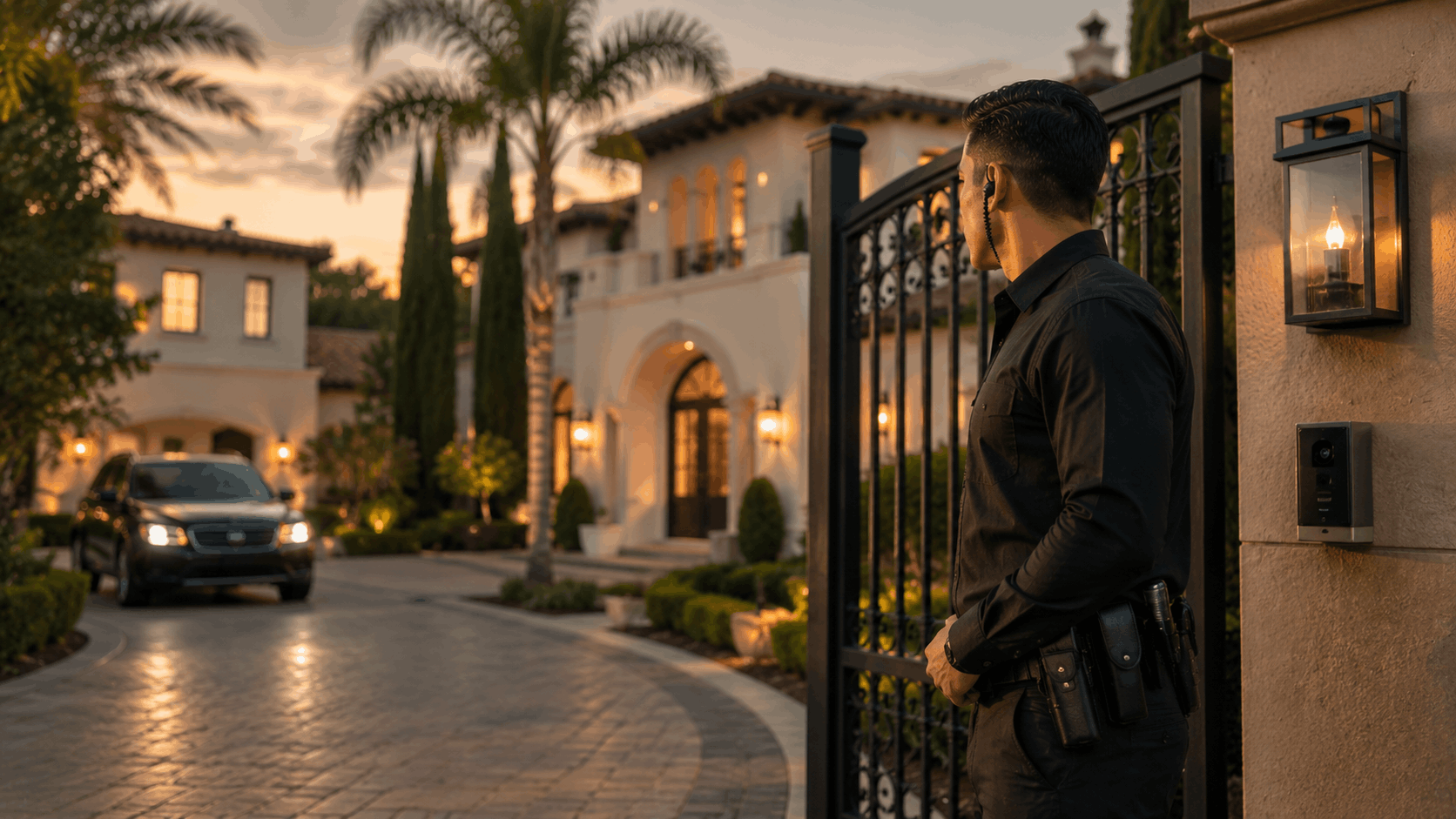
A homeowner in The Crosby steps off a red-eye flight after two weeks in Europe, drives up the winding roads off Del Dios Highway, and pulls through the community gate. As the driveway lights flick on, one question sits in the back of their mind: was the estate actually watched the whole time, or did the gate just give everyone a false sense of comfort? For owners of larger gated-community properties, that question comes up more than you might think.
Estates in The Crosby are not like the average San Diego home. They sit on bigger lots, have longer driveways, and often include casitas, pool houses, and wine rooms that need their own attention. A single doorbell camera cannot cover a multi-acre parcel that backs up to a golf fairway.
Why Estates in The Crosby Need a Different Security Approach?
Most security advice online is written for a 1,800 square foot tract home. That advice falls apart the moment you apply it to a 6,000 square foot estate on a full acre. The math changes, the blind spots multiply, and the risks shift.
Estate security in The Crosby has to account for the gated golf-community layout, the open acreage, and the high-value contents inside. Here is why the approach has to be different, and where standard plans leave gaps.
Large Lots and Long Perimeters Off Del Dios Highway
Homes near Del Dios Highway often sit on one to three acres, sometimes more. That kind of land creates a lot of edge to protect. A doorbell camera watches maybe fifteen feet of your front step, which leaves the other several hundred feet of perimeter wide open.
The problem gets worse with mature landscaping. Oaks, hedges, and slopes create natural cover where someone could move without ever crossing a camera view. We map these blind spots during our first visit because they are almost never where owners expect them.
Real perimeter coverage on large lots means layering devices. Cameras at the driveway, motion sensors along the fence line, and lighting at the darker corners all work together. One device cannot do the job on this much ground.
When we plan a system, we treat the property line as the first line of defense, not the front door. That shift in thinking is what makes estate coverage hold up over acres instead of feet.
The False Sense of Safety Behind a Community Gate
The Crosby has a guarded gate, and it does help. But a community gate is not the same as home-level protection. Plenty of people move freely inside the gates every single day.
Think about who comes and goes. Landscapers, pool techs, house cleaners, delivery drivers, contractors, and guests all pass through the guarded gate with routine access. The gate confirms they belong in the community, not that they belong on your specific property.
We have seen owners assume community access equals safety, then get surprised by a package theft or an unfamiliar vehicle in the driveway. The gate reduces random traffic, but it does not watch your casita or your side yard.
That is why home-level security still matters behind the gate. A layered system with cameras, sensors, and access control and smart locks gives you control over your own property, not just the neighborhood entrance.
High-Value Interiors and Detached Structures
Many Crosby estates hold art collections, temperature-controlled wine rooms, and finished basements. These interiors are worth protecting with their own zones and sensors, not one shared alarm for the whole house.
Detached structures make this more involved. A casita, guest house, or pool house sits away from the main home and needs its own coverage. Each one gets its own door and window sensors, and often its own camera.
Interior zones let you arm part of the estate while leaving another part active. You might arm the wine room and art wall overnight while the family moves through the kitchen. Zoning gives that flexibility without turning the alarm into an all-or-nothing switch.
We design these zones around how the family actually lives. A good system respects the daily flow of a large home while still watching the rooms that hold the most value.
Frequent Travel and Seasonal Vacancy
Crosby owners travel. Some keep the estate as a seasonal residence and leave it empty for weeks or months. A vacant home needs more attention, not less.
Remote monitoring lets an owner check the property from anywhere in the world. Live camera views, sensor alerts, and automated lighting routines all help keep watch when nobody is home. That matters when the house sits empty near a quiet stretch off Camino Del Sur.
Automated routines make an empty estate look lived in. Lights turn on and off, blinds move, and the property signals activity even during a long absence. We build these routines during setup so they run without any effort from the owner.
When paired with 24/7 alarm monitoring, a vacant home stops being an easy target. Someone is always watching, even when the driveway is empty for the season.
Perimeter and Driveway Protection for Crosby Properties
The best time to know someone is on your property is before they reach the front door. On a large estate, that means securing the outer edge first. Perimeter security buys time and warning that a doorbell camera never could.
Here is how we protect the driveway, the entry gate, and the wide-open borders that make Crosby homes both beautiful and hard to watch.
Gated Entries and Automated Driveway Sensors
Long driveways are common in The Crosby, and they are one of the most useful places to add detection. A driveway alarm alerts the owner the moment a vehicle turns in off the main road. That early warning changes everything.
Driveway sensors read vehicle movement well before a car reaches the house. On a 300-foot driveway, that can mean twenty or thirty seconds of advance notice. For a family or a monitoring team, those seconds count.
We tie these vehicle alerts into the same system that runs the cameras and alarm. When a car triggers the driveway sensor, the entry cameras start recording and the owner gets a phone alert. The pieces work as one, not as separate gadgets.
Automated gate control adds another layer. Pairing driveway detection with gate access control lets owners see who is arriving and decide whether to open the gate at all.
License Plate and Motion Cameras at Entry Points
Entry points deserve the sharpest cameras on the property. License plate recognition cameras, often called LPR, capture and log the plate of every vehicle that arrives. That record is worth its weight if anything ever goes wrong.
LPR cameras do more than record. They can flag known vehicles and alert on unknown ones. A cleaner who visits every Tuesday gets recognized, while a strange truck at midnight triggers a different response.
We place motion-activated recording at the property gate and main entry so nothing gets missed. These entry cameras capture faces, vehicles, and timing in clear detail. Our license plate recognition camera setup is built for exactly this kind of estate entrance.
The goal is a clean record of every arrival and departure. On a property this size, that log becomes the backbone of the whole system. It tells the story of who came and when.
Landscape and Golf-Course-Facing Blind Spots
Many Crosby backyards open onto the golf course. That view is gorgeous, but the golf course border is also a soft spot. Open fairways and mature landscaping give cover to anyone who wanders off the course toward the home.
These blind spots need dedicated cameras and thoughtful placement. A camera angled along the rear property line catches movement coming off the fairway. Without it, the most scenic side of the house becomes the least protected.
Landscape lighting plays a big part here. Well-placed lights remove the shadows that hide movement near hedges and slopes. We position lighting so it covers the darker garden areas without washing out the camera image.
We walk the golf-facing edge of every estate we design for. The fairway side almost always needs more attention than owners expect, and getting it right closes the biggest gap on the property.
Perimeter Lighting Tied to Security Events
Lighting is one of the oldest and best deterrents there is. Motion-triggered lighting that fires when a sensor detects movement sends a clear message. Someone is watching, and the property is not an easy mark.
The trick is tying that lighting to security events. When a camera or sensor picks up motion at night, the lights snap on and the camera records in better light. The two systems reinforce each other.
This deterrence works because it interrupts the plan. Most trouble depends on darkness and the belief that nobody is looking. A sudden flood of light removes both in a second.
We program these lighting rules during install so they run automatically. The owner never has to flip a switch. The estate defends itself the moment something moves where it should not.
Need Help in San Diego?
Smart Shield Systems serves San Diego and all of San Diego County.
Get Your Free Quote
Tell us about your property and we'll get back to you fast.
Camera Systems Built for Estate-Sized Coverage
Camera selection is where estate coverage really separates from a basic home kit. The number of cameras, their resolution, and how footage is stored all change on a large property. Here is how we scale a surveillance system to a Crosby estate.
How Many Cameras a Crosby Estate Usually Needs
Owners always ask about camera count first, and it is a fair question. A 4,000 square foot home on a smaller lot might need eight to twelve cameras. A 10,000 square foot estate on multiple acres can need twenty or more.
The coverage range depends on more than square footage. Lot size, number of detached structures, and driveway length all push the count up. A home with a casita and a pool house needs cameras those buildings would not otherwise require.
We count based on sightlines, not guesses. Every door, every corner of the home, the driveway, the gate, and the golf-facing rear all get accounted for. Then we add coverage for detached buildings and high-value zones.
The right number is the number that leaves no meaningful blind spot. Our home security camera installation team maps this out on site so the estate gets full coverage without wasting money on cameras that overlap.
4K Resolution and Night Vision for Wide Areas
Resolution matters more on big lots than on small ones. A camera watching a wide driveway or a long fence line has to capture detail across a lot of distance. 4K cameras hold that detail where lower resolution turns faces and plates into blur.
Night vision is just as important. Most trouble happens after dark, and open acreage gets very dark at night off Del Dios Highway. Strong low-light performance keeps the image usable when it counts most.
We match camera specs to each spot on the property. A tight entry camera and a wide backyard camera have different jobs. Picking the right lens and sensor for each location keeps the whole system sharp.
Clear footage is the difference between a useful record and a useless one. On an estate, where a single camera may cover a large area, that clarity carries a lot of weight.
Local Recording, Cloud Backup, and Storage
Footage has to go somewhere, and how it is stored matters. Most estates use a network video recorder, or NVR, for local recording on site. That gives fast access and holds a large amount of footage.
Cloud backup adds a safety net. If someone tampers with the on-site recorder, the cloud copy survives. We often set up both so video storage has redundancy, not a single point of failure.
Storage length is a common question. Many owners keep thirty days of continuous footage, with longer retention for entry and driveway cameras. The right window depends on how the family wants to review and how much activity the property sees.
We size storage to the camera count and resolution. A twenty-camera 4K system generates a lot of data, so the recorder and cloud plan have to keep up. We plan this out so footage is always there when someone needs to look back.
Live View From Phones and Tablets
Every system we install includes remote viewing from a phone or tablet. Owners open the mobile app and see every camera live, from anywhere in the world. That access is what makes travel less stressful.
The app does more than show live views. It sends alerts, plays back recorded clips, and lets the owner check on a specific event. A driveway alert can be verified in seconds without leaving a dinner across town.
For seasonal owners, this is the feature they use most. A quick check from a phone confirms the estate is quiet and secure. Pairing remote viewing with remote video monitoring and analytics adds smart alerts on top of the live feed.
We set up the app on every device the family uses and walk them through it before we leave. The system is only as good as how easily the owner can reach it.
Smart Home Integration and Automation
Security on a large estate works best when it connects to the rest of the home. Lighting, climate, locks, and access all tie together into one connected system. Here is how smart home integration makes a Crosby estate both safer and easier to run.
Smart Locks and Keyless Entry for Staff and Guests
Large estates have a lot of people coming and going. Housekeepers, landscapers, pool techs, and guests all need entry at different times. Smart locks handle this without a pile of physical keys floating around.
Temporary access codes are the answer. A cleaner gets a code that works Tuesday mornings and expires after. A guest gets a code for the weekend that stops working Monday. You control who enters and when, down to the hour.
This beats handing out keys that never come back. When a service ends, the code is deleted and access is gone. Our guest and temporary access code setup makes this simple to manage from a phone.
Keyless entry also logs every use. You can see exactly when the landscaper arrived and when they left. That record adds a layer of accountability that keys never offered.
Automated Lighting and Away Routines
An empty estate is safest when it does not look empty. Lighting automation makes a vacant home appear occupied. Lights come on in the evening and off at bedtime, following a natural pattern.
Away mode ties it all together. When the family leaves for a trip, one setting arms the alarm, adjusts the climate, and starts the lighting routines. The estate runs itself while everyone is gone.
These routines can vary the timing so the pattern does not look robotic. A porch light at 6 p.m., interior lights shifting through the evening, and a bedroom light later all mimic real life. Anyone watching sees a home in use.
We build these away routines around the owner's actual habits. The more the automation matches how the family normally lives, the more convincing it looks. That realism is what keeps a seasonal home from becoming a target.
Voice and App Control From One Dashboard
Nobody wants five different apps to run one house. We build systems around unified control, where cameras, locks, alarms, and lighting all live in one dashboard. One screen manages the whole estate.
Voice control adds convenience on top. A quick command can arm the system, lock the doors, or turn off the lights. For a large home, that saves a lot of walking around at night.
The single interface also reduces mistakes. When everything is in one place, it is easy to confirm the doors are locked and the alarm is set before bed. Our voice and app control setup brings these pieces together cleanly.
We configure the dashboard around how the family thinks about their home. Rooms, zones, and scenes are labeled in plain terms. The result is a system anyone in the household can run without a manual.
Water, Fire, and Environmental Sensors
Not every threat is an intruder. Water leaks, fire, and temperature swings can ruin a wine room or flood a finished basement. Environmental monitoring catches these problems early.
Leak sensors sit near water heaters, under sinks, and in basements. When they detect moisture, they alert the owner and the monitoring team right away. On a vacant estate, that early warning can save a floor or a collection.
Temperature sensors protect climate-sensitive spaces. A wine room that drifts too warm sends an alert before a collection is damaged. The same goes for freezing pipes during a rare cold snap.
Smoke and fire detection round out the picture. Paired with fire and smoke detection systems, these sensors bring help fast even when nobody is home to smell the smoke. The estate stays protected against more than just break-ins.
Need Help in San Diego?
Smart Shield Systems serves San Diego and all of San Diego County.
24/7 Professional Monitoring and Emergency Response
A camera that only records is a witness, not a guard. Professional monitoring turns a passive system into one that brings help. Here is how 24/7 monitoring works and why it matters most on a large, sometimes empty estate.
How Central Station Monitoring Works
When an alarm triggers, a central station receives the signal within seconds. Trained operators see what tripped and where. They follow a set process to confirm the event and dispatch help.
The steps are quick. The operator may call the home, check for a passcode, and review any linked camera view. If the event is real or unconfirmed, they move to alarm dispatch right away.
This whole cycle usually takes under a minute. That speed is what makes monitored systems worth it. A self-monitored setup depends on the owner seeing a phone alert, which does not happen at 3 a.m.
We connect every estate we install to a professional central station. Our alarm systems and monitoring service keeps eyes on the property around the clock, even when the family is asleep or overseas.
Coordinating With San Diego County Sheriff Coverage
The Rancho Santa Fe area is served by the San Diego County Sheriff. When an alarm is verified, the monitoring station coordinates with local dispatch to send deputies. Knowing the local response chain matters.
Verified alarms get priority. When camera footage or a second sensor confirms real activity, that verification speeds the sheriff response. A system that can confirm events, not just guess, gets faster help.
We set up systems to support this verification. Cameras tied to alarm zones let operators confirm what is happening before they call it in. That reduces delay and gives deputies better information on arrival.
Local dispatch works best when the address and access details are accurate and current. We keep that information updated so responders reach the right gate and the right home without confusion on a large property.
Cellular and Backup Power for Outages
A security system is useless if it goes dark during a power cut. That is why we build in cellular backup and battery backup. The system stays live even when the grid does not.
Cellular signal paths matter because internet can fail before power does. If someone cuts the internet line or it simply drops, the cellular connection keeps the alarm reporting. The central station still gets the signal.
Battery backup covers the power side. When the electricity goes out, the batteries keep cameras, sensors, and the alarm panel running. That coverage lasts hours, long enough to ride out most outages in the area.
Santa Ana winds and occasional grid issues make this real in North County. We size the backup to keep the estate protected through the kind of outages this region actually sees.
Reducing False Alarms on Large Properties
Large properties come with wildlife, wind, and pets. Without proper tuning, all of that triggers false alarms. Too many false alerts and people start ignoring the system entirely.
Sensor tuning solves most of this. Motion zones can be set to ignore small animals and swaying branches while still catching a person or vehicle. Camera analytics can tell the difference between a deer and an intruder.
We tune every sensor to the specific property. A camera facing the golf course gets different settings than one facing the driveway. That care keeps false alarm reduction high without leaving real gaps.
Fewer false alarms mean faster real response. When the central station trusts the signal, they act on it without hesitation. Good tuning keeps the whole system credible and quick.
Custom Design and Installation Process
No two Crosby estates are the same, so no two systems should be either. A custom install starts with real design, not a boxed kit. Here is how we plan and install a system without tearing up the home or the landscaping.
On-Site Assessment and Property Walkthrough
Everything starts with a site assessment. We visit the estate and walk the entire property with the owner. We map entry points, blind spots, driveway length, and network coverage.
This walkthrough is where the real plan takes shape. We look at where cameras have clear sightlines and where landscaping blocks a view. We check the golf-facing edge, the detached buildings, and the darker corners.
A proper security audit also covers the network. Cameras and sensors need reliable signal across acres, which many home networks cannot provide. We identify where we need to extend coverage before a single device goes up.
By the end of the visit, we have a device-by-device plan. The owner sees exactly where each camera, sensor, and lock will go and why. Nothing gets installed on a guess.
Wiring, Wireless, and Preserving Finishes
High-end interiors deserve a clean installation. We plan wiring routes that stay hidden and avoid damage to walls, trim, and finishes. On an estate, a sloppy install is not acceptable.
Sometimes wired is best, sometimes wireless options make more sense. Wired cameras give steady power and signal, while wireless devices avoid opening up finished walls. We mix the two based on each location.
Landscaping matters just as much. Running lines to a driveway camera or gate should not tear up mature planting. We route carefully and restore any ground we have to touch.
The finished install should look like it was always part of the home. Clean, hidden, and neat. That standard is what estate owners expect, and it is what we hold ourselves to.
Working With Crosby HOA and Architectural Rules
The Crosby has architectural guidelines, and equipment placement has to respect them. Exterior cameras, lighting, and gate hardware may need to fit community standards. We plan around those rules from the start.
Some installs require architectural review or approval. We prepare placement details so the community board can see exactly what is going where. That upfront work avoids delays and rework later.
Our familiarity with local HOA guidelines speeds this along. We know the kinds of questions boards ask and the details they want. That experience keeps projects moving instead of stalling on paperwork.
The goal is protection that fits the community's look. Equipment can be discreet and still do its job. We find that balance so the estate stays secure and compliant at the same time.
Training and Ongoing Support
A system is only useful if the owner knows how to run it. Before we leave, we provide owner training on the app, the dashboard, the locks, and the alarm. Everyone in the household learns the basics.
We walk through common tasks step by step. How to arm and disarm, how to add a guest code, how to check a camera, and how to set away mode. The training is hands-on, not a handout.
Ongoing support continues after the install. Questions come up, families change, and systems get expanded. We stay reachable to help with all of it, not just the first day.
Estate owners value a partner they can call years later. Our security system maintenance service keeps the system healthy long after the initial setup is done.
Need Help in San Diego?
Smart Shield Systems serves San Diego and all of San Diego County.
Why Local Matters: Smart Shield Systems in San Diego
A national installer does not know The Crosby. A local security company that works these neighborhoods every week does. Smart Shield Systems is based in San Diego, and that local knowledge shows up in every install.
Fast Service Across North County San Diego
Being local means we reach The Crosby quickly. Our team covers Rancho Santa Fe, the communities off Camino Del Sur, and the surrounding North County area. When something needs attention, we are not days away.
Fast response matters for service calls and system checks. A camera that goes down or a sensor that needs adjusting gets handled promptly. That speed keeps the estate protected without long gaps.
We know the routes and the neighborhoods around Del Dios Highway. That familiarity cuts drive time and gets a technician to the property faster. Local coverage is a practical advantage, not just a slogan.
Owners in nearby communities like Carmel Valley and Rancho Bernardo get the same quick service. Working across North County keeps our team close to every client we serve.
Familiar With Local Climate and Terrain
The local climate shapes equipment choices. The coastal marine layer brings damp mornings, and dry brush raises fire concern in the hills. Santa Ana winds add another factor entirely.
We choose weather-rated equipment that holds up to these conditions. Cameras and sensors mounted outdoors face moisture, heat, and wind out here. Gear that survives one season and fails the next is not worth installing.
Terrain matters too. Slopes, canyons, and mature trees affect where devices go and how signal travels. We account for the land, not just the building, when we design a system.
Knowing the local conditions means fewer surprises after install. Equipment lasts longer and works better when it is chosen for the exact environment it lives in.
Relationships With Area Builders and HOAs
Years of local work build relationships. We know area builders and understand how these estates are constructed. That knowledge helps when we plan wiring and placement in a specific home.
We also know the community boards. Familiarity with local HOAs and their review processes speeds approvals. We have submitted plans in these communities before and know what they look for.
These community relationships save owners time and hassle. Instead of learning the process from scratch, we bring experience that keeps projects on track. The approval step becomes routine rather than a roadblock.
Local roots also mean accountability. We live and work here, and our reputation depends on doing right by our neighbors. That matters when you are trusting someone with your home's security.
Long-Term Service and Upgrades
Security technology keeps improving. A system installed today should be able to grow with new cameras, better analytics, and added sensors. We plan for upgrades from the start.
Ongoing maintenance keeps everything running. Regular checkups catch a failing sensor or a lens that needs cleaning before it becomes a problem. Small attention now prevents big gaps later.
We are reachable years after the install, not just on day one. Systems evolve as families and homes change, and we handle those updates. A one-time installer who disappears does not serve an estate well.
Whether it is a system upgrade, a new addition, or a takeover of an old setup, we handle it. Our alarm system upgrades and takeovers keep long-term clients current without starting over.
Final Thoughts
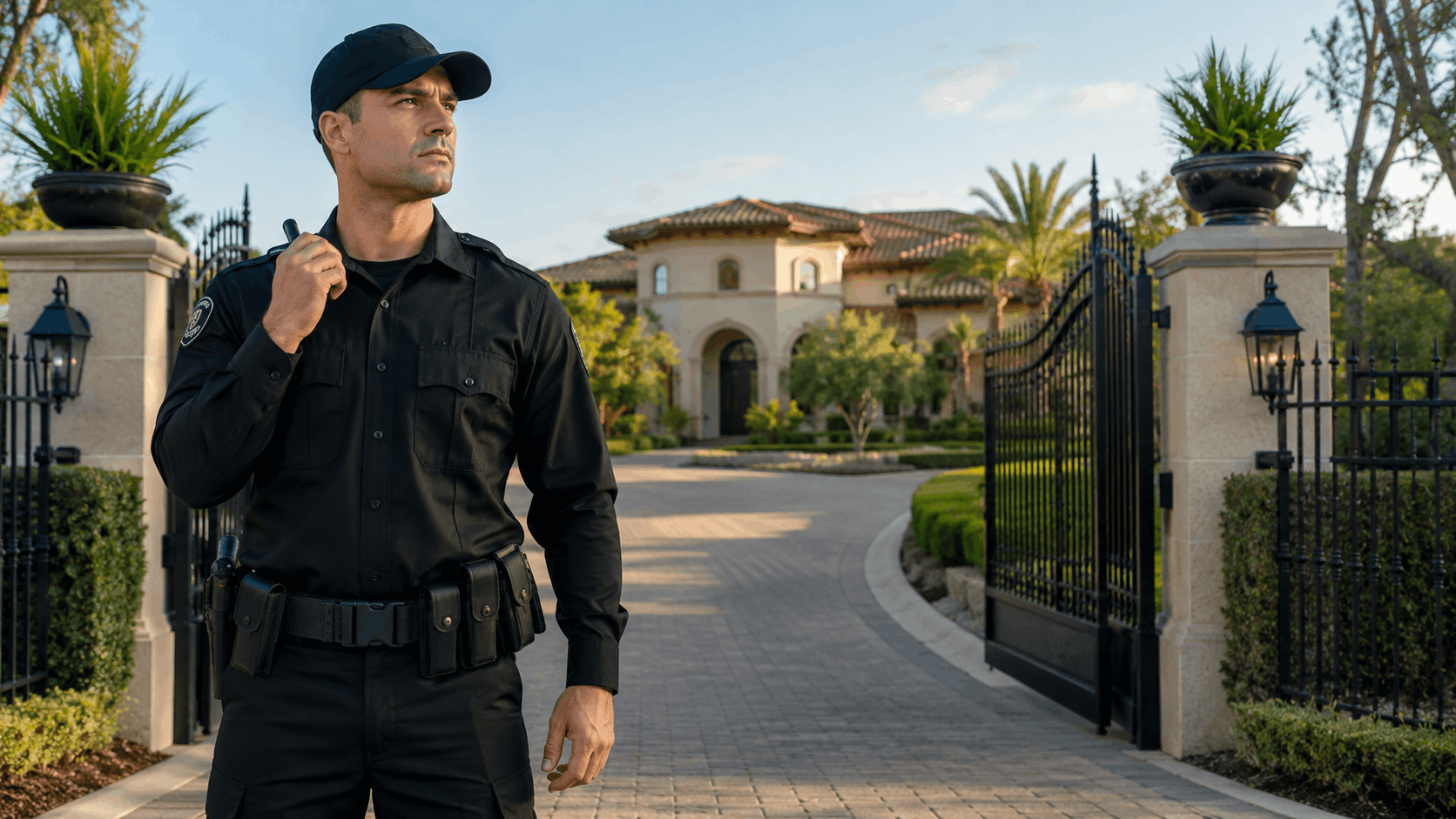
Estate security in The Crosby is a different job than protecting a standard home. The large lots, the golf-course borders, the detached structures, and the seasonal vacancy all demand a custom plan. A doorbell camera and a community gate are not enough on their own.
The right system layers perimeter detection, estate-sized camera coverage, smart home integration, and 24/7 monitoring. Done well, it protects the property whether the owner is home or halfway across the world. That is what custom estate coverage is built to do.
If you own an estate in The Crosby or Rancho Santa Fe and want a system built for your specific property, our team is ready to help. Contact Smart Shield Systems to schedule an on-site assessment and get a custom plan for your home.
Frequently Asked Questions
- How much does a custom estate security system cost in The Crosby?
- Security cost varies with property size, camera count, and monitoring plan. A larger Crosby estate with twenty-plus cameras, perimeter sensors, smart locks, and 24/7 monitoring runs well above a basic home kit. Because every estate is different, we price after an on-site assessment rather than guessing. That way the quote reflects your actual acreage, detached structures, and coverage needs instead of a generic package.
- How many cameras does a large Rancho Santa Fe home need?
- Camera count depends on square footage and lot size. A 4,000 square foot home often needs eight to twelve cameras, while a 10,000 square foot estate on multiple acres can need twenty or more. Driveways, gates, golf-facing rear yards, and detached buildings all add to the total. We count by sightlines during our walkthrough so no meaningful blind spot is left uncovered.
- Does the community gate mean I do not need my own system?
- No. The gated community gate reduces random traffic, but landscapers, cleaners, delivery drivers, and guests move freely inside it every day. The guard confirms someone belongs in the neighborhood, not on your specific property. Home-level security with cameras, sensors, and smart locks gives you control over your own estate. The gate and your system work together, not as replacements for each other.
- Can I check my property while traveling?
- Yes. Remote monitoring through a mobile app lets you view every camera live from anywhere in the world. You also get alerts, recorded clip playback, and the ability to verify events like a driveway sensor trigger. For seasonal owners who leave the estate empty, this remote access is the feature they use most to confirm the home is quiet and secure.
- Will installation follow Crosby HOA architectural rules?
- Yes. We plan equipment placement around Crosby HOA rules and architectural guidelines from the start. When a community board requires architectural review, we prepare placement details so they can see exactly what goes where. Our familiarity with local community boards speeds approvals and avoids rework. The result is protection that keeps the estate secure while fitting the community's look and standards.
- What happens during a power or internet outage?
- The system stays active. Backup power comes from batteries that keep cameras, sensors, and the alarm panel running when the grid goes down. Cellular backup keeps the alarm reporting to the central station even if the internet line fails or is cut. We size this backup to handle the kind of outages North County sees, including Santa Ana wind events that affect the grid.
- How fast can help arrive if an alarm goes off?
- When an alarm triggers, the central station receives the signal within seconds and follows a set process to confirm and dispatch. Verified alarms with camera footage get priority, which speeds the San Diego County Sheriff response for the Rancho Santa Fe area. The confirmation-to-dispatch cycle usually takes under a minute, far faster than depending on a homeowner to spot a phone alert.
- Can the system connect with my smart home devices?
- Yes. Smart home integration ties cameras, locks, lighting, and alarms into one dashboard. You can run everything from a single app or use voice control for common tasks like arming the system or locking doors. Away routines can automate lighting and climate to make an empty estate look occupied. We configure the integration around how your household actually uses the home.
- How long does a full estate installation take?
- Installation time depends on the size of the estate and the number of devices. A large Crosby home with many cameras, sensors, smart locks, and detached structures typically takes several days to a couple of weeks from assessment to a fully working system. Any required HOA approvals and network upgrades can add time. We give a clear timeline after the on-site walkthrough.
- Do you offer ongoing maintenance and upgrades?
- Yes. We provide maintenance plans with regular checkups that catch failing sensors or lenses that need cleaning before they become gaps. We also handle system upgrades as technology improves, adding new cameras, analytics, or sensors over time. Unlike an installer who disappears after day one, we stay reachable for years so your estate's security keeps pace with your home and family. For guidance on residential alarm standards and monitoring practices, the National Fire Protection Association and the Cybersecurity and Infrastructure Security Agency offer trusted resources. For local crime and safety information, the San Diego County Sheriff's Department serves the Rancho Santa Fe area.
S
Smart Shield Systems Team Team
Licensed security systems professionals serving San Diego and San Diego County.
Licensed in California · License #7623
Why trust Smart Shield Systems?
Founded in 2016, Smart Shield Systems is a licensed and insured security systems serving San Diego and San Diego County. All content is reviewed by our licensed technicians.

Need Help in San Diego?
Smart Shield Systems serves San Diego and all of San Diego County.
Related Articles
Tips & Advice
La Jolla Home Security: Estate-Grade Systems for Muirlands and La Jolla Farms
Estate-grade home security for La Jolla's Muirlands and La Jolla Farms: camera placement on coastal lots, gated access, monitoring, and wildfire readiness.
Safety & Prevention
Rancho Santa Fe Covenant Security: Estate Property and Private Community Specialist
A local expert guide to Rancho Santa Fe Covenant security, covering estate perimeter protection, gate systems, cameras, access control, and RSF Association rules.
Tips & Advice
The Bridges Rancho Santa Fe Security: Custom Estate System Service
A guide to custom estate security at The Bridges Rancho Santa Fe, covering system design, monitoring, local conditions, costs, and choosing the right local partner.